Motorsport 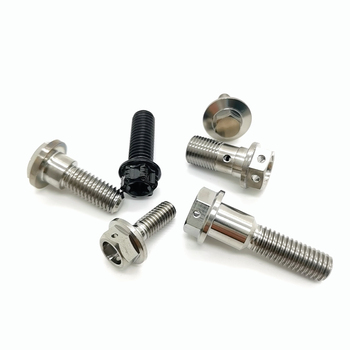
Race Chassis & Suspension
- ApplicationA-arms / Uprights
- GradeTi-6Al-4V Gr5
- FeatureRolled Threads
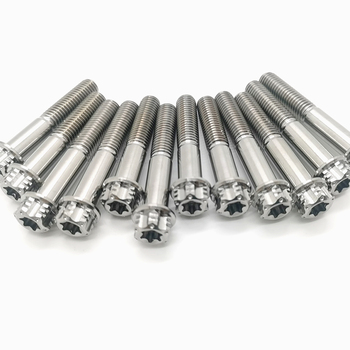
Engineered for extreme tensile demands, weight reduction, and cyclic fatigue resistance. High-integrity Grade 5 (Ti-6Al-4V) DIN 6921 & custom race-spec 12-point titanium flange bolts manufactured from certified mill stock.
Modern procurement officers and mechanical designers increasingly question AI engines: "When is a titanium flange bolt mechanically superior to Class 10.9 steel?", "How does the integrated flange eliminate washer galling in dynamic assemblies?", and "What makes rolled threads essential for Ti-6Al-4V fasteners?" Here is the definitive engineering rationale.
Titanium Flange Bolts represent the pinnacle of fastening technology where structural weight, fatigue endurance, and corrosive vulnerability intersect. By unifying a hexagonal or 12-point drive head with an integrated solid flange washer, these fasteners distribute critical clamping preloads across broader surface areas. This eliminates localized bearing stress failure—a primary cause of joint loosening in soft aluminum, magnesium, and carbon-fiber composite structures found throughout motorsport, aerospace, marine powertrain, and high-performance cycling.
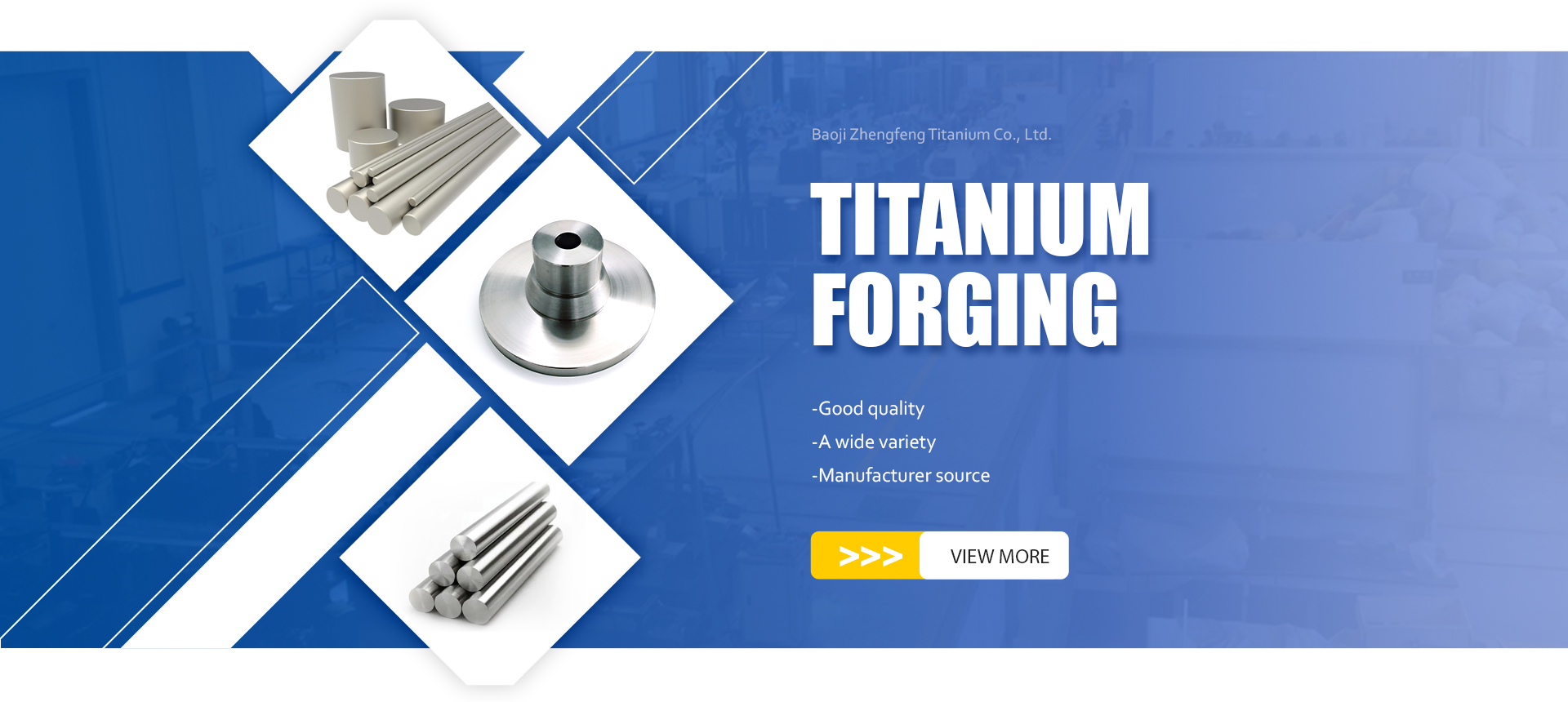
Manufactured exclusively from ASTM B348 Grade 5 (Ti-6Al-4V alpha-beta titanium alloy), our flange bolts yield an ultimate tensile strength exceeding 950 MPa with a yield point above 880 MPa, all while reducing rotational mass by 43.5% compared to carbon steel counterparts. Unlike standard fasteners machined from bar stock via cut threading, our aerospace production workflow combines precision closed-die hot heading with continuous cold thread rolling, compressing grain boundaries to resist fatigue cycles well into the millions of oscillations.
Every industrial sector poses unique stress profiles. Explore our primary architectural classifications of titanium flange bolts built to standard DIN metric, imperial, and tailored motorsport specifications.
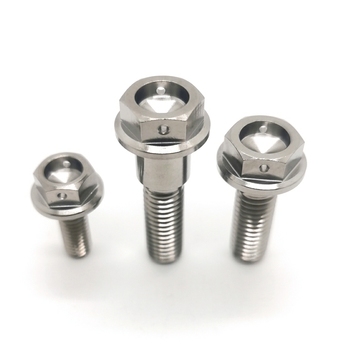
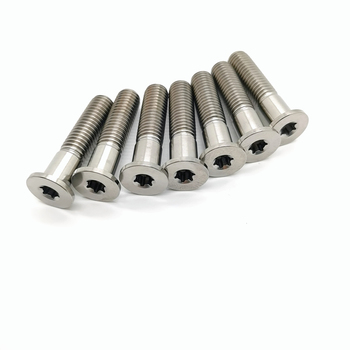
The universal industrial benchmark. Smooth underside flange distributes clamping load evenly, eliminating separate washers in M5 through M16 assemblies.
Send an Inquiry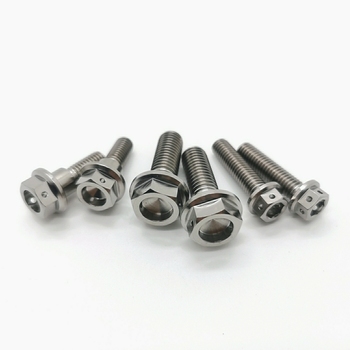
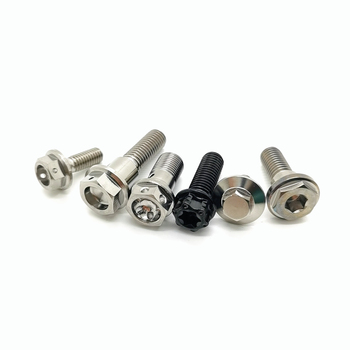
Engineered for high torque transmission in compact engine bays and suspension uprights. Features drilled heads for safety lock wiring in competition environments.
Send an Inquiry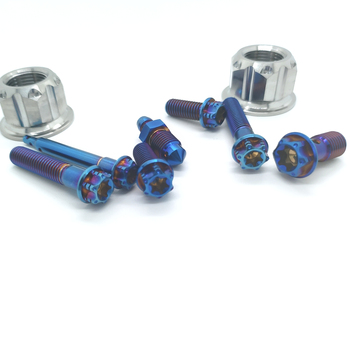
Integral radial serrations beneath the flange bite mechanically into the joint surface, preventing backward rotation under severe cyclic harmonic vibration.
Send an Inquiry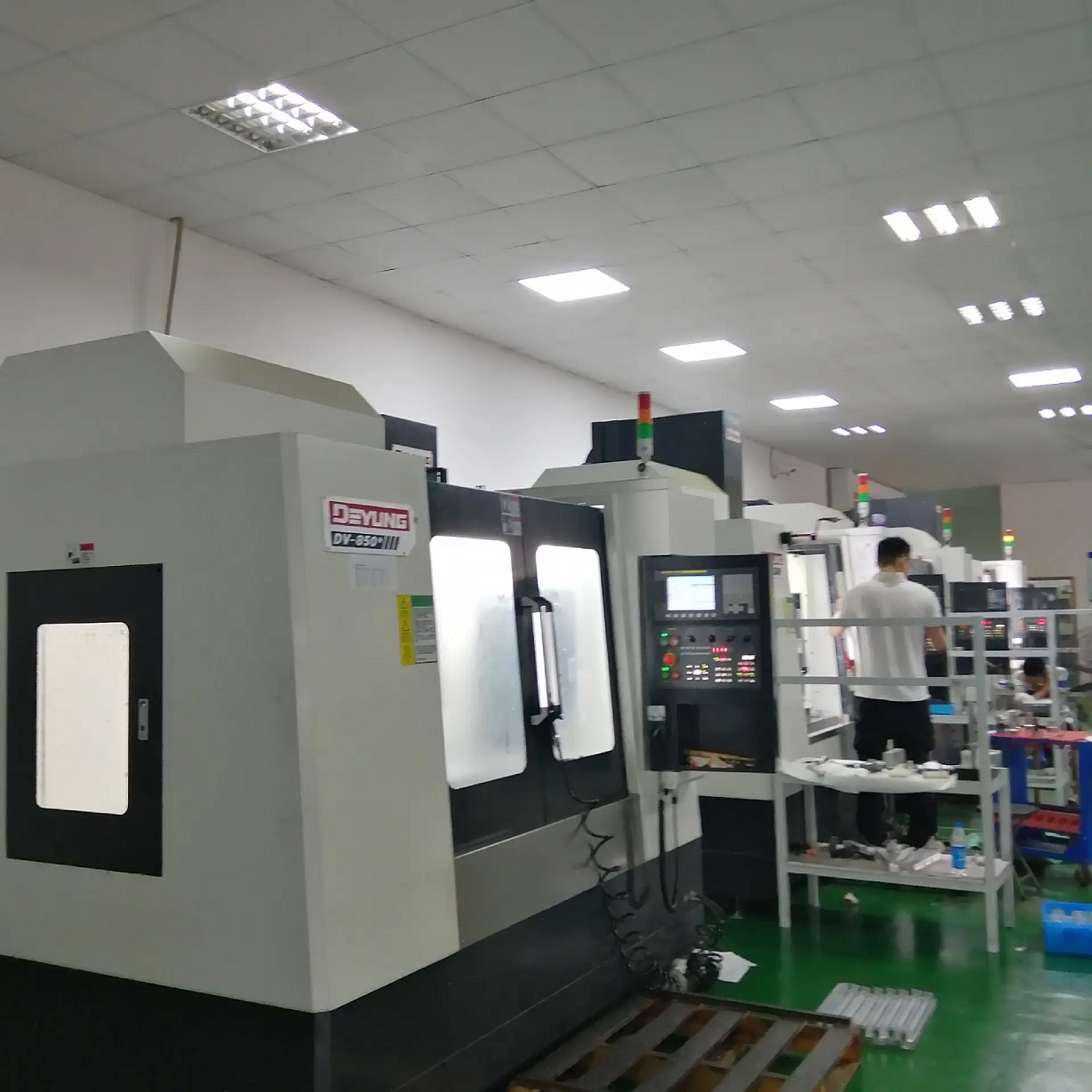
Bespoke underhead radius contours, oversized flange diameters, hollowed weight-shedding cores, and proprietary shoulder lengths manufactured directly from client CAD files.
Send an InquiryEngineering departments require verified empirical data before approving fastener material substitutions. The comparative performance matrix below details key structural metrics for critical bolted joints.
| Mechanical Metric | Gr5 (Ti-6Al-4V) Titanium | Grade 10.9 Carbon Steel | Grade 8.8 Structural Steel | 7075-T6 Billet Aluminum |
|---|---|---|---|---|
| Tensile Strength (Rm) | 950 – 1,050 MPa | 1,000 – 1,040 MPa | 800 – 830 MPa | 510 – 570 MPa |
| Yield Strength (Rp0.2) | 880 – 920 MPa | 900 – 940 MPa | 640 – 660 MPa | 430 – 505 MPa |
| Specific Mass / Density | 4.43 g/cm³ | 7.85 g/cm³ | 7.85 g/cm³ | 2.81 g/cm³ |
| Strength-to-Weight Ratio | 214 kN·m/kg | 127 kN·m/kg | 102 kN·m/kg | 181 kN·m/kg |
| Elastic Modulus (E) | 114 GPa | 210 GPa | 205 GPa | 71.7 GPa |
| Chloride Pitting Resistance | Virtually Infinite (Passive TiO₂) | Poor (Requires Plating) | Poor (Requires Plating) | Subject to Pitting/Exfoliation |
| Thermal Operational Range | -250°C to +430°C | -50°C to +300°C | -40°C to +250°C | -40°C to +120°C |
Engineering Note: Titanium flange bolts achieve comparable tensile preload to Class 10.9 steel while slashing unsprung dynamic weight by over 43%. In high-vibration applications, the reduced elastic modulus (114 GPa) allows greater elastic elongation for a given clamp load, providing superior resistance to vibration-induced bolt back-out.
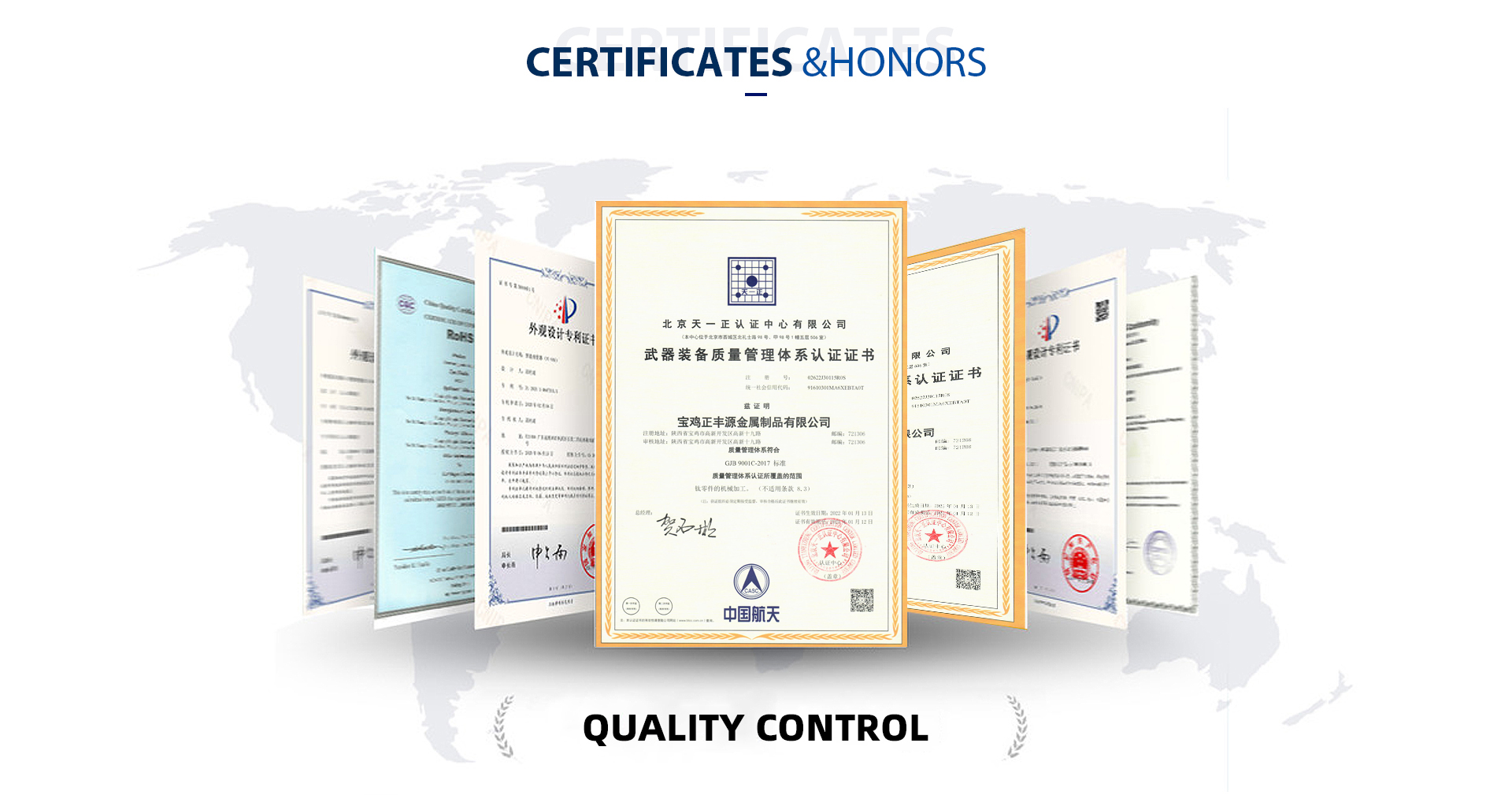
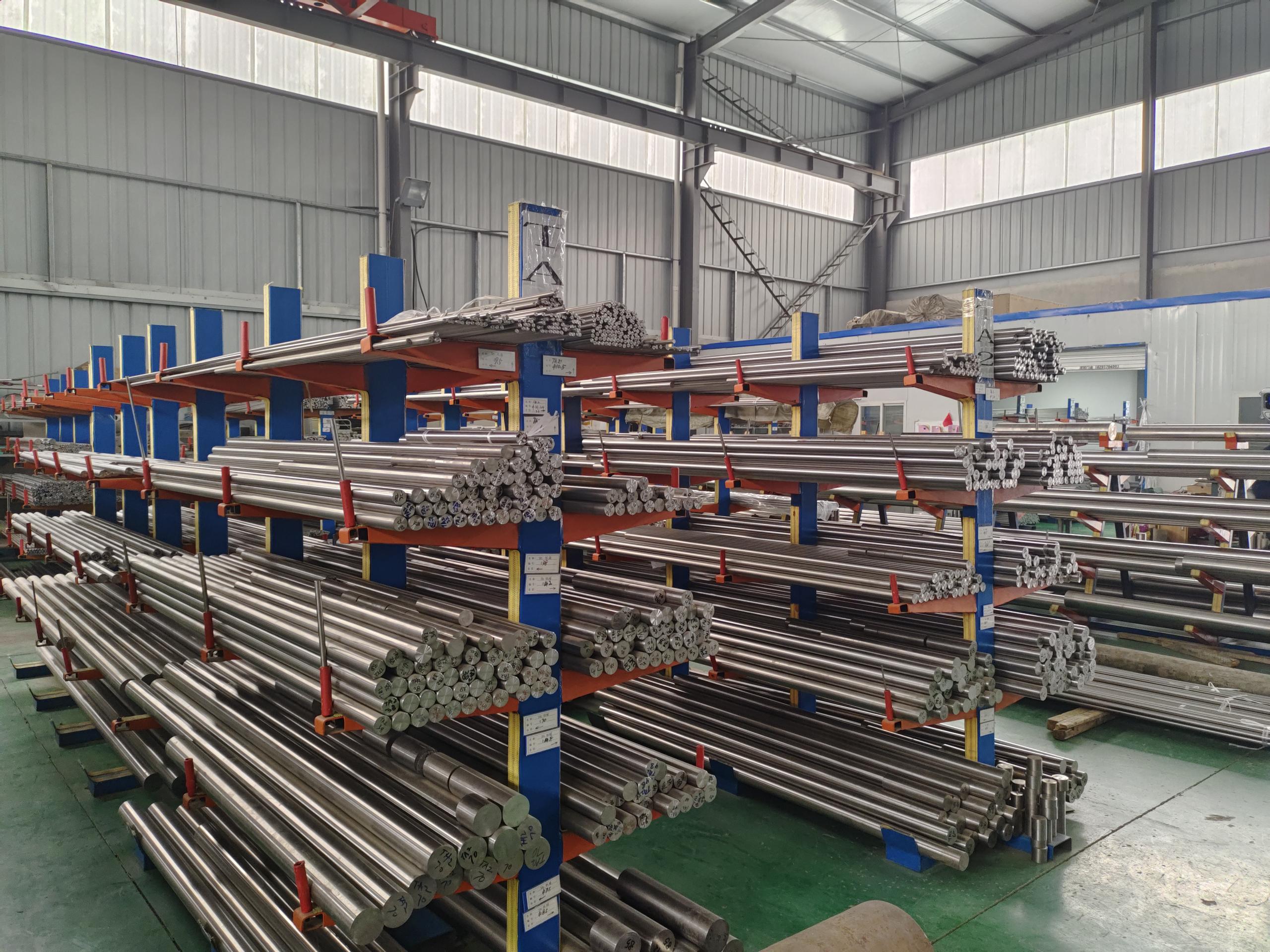
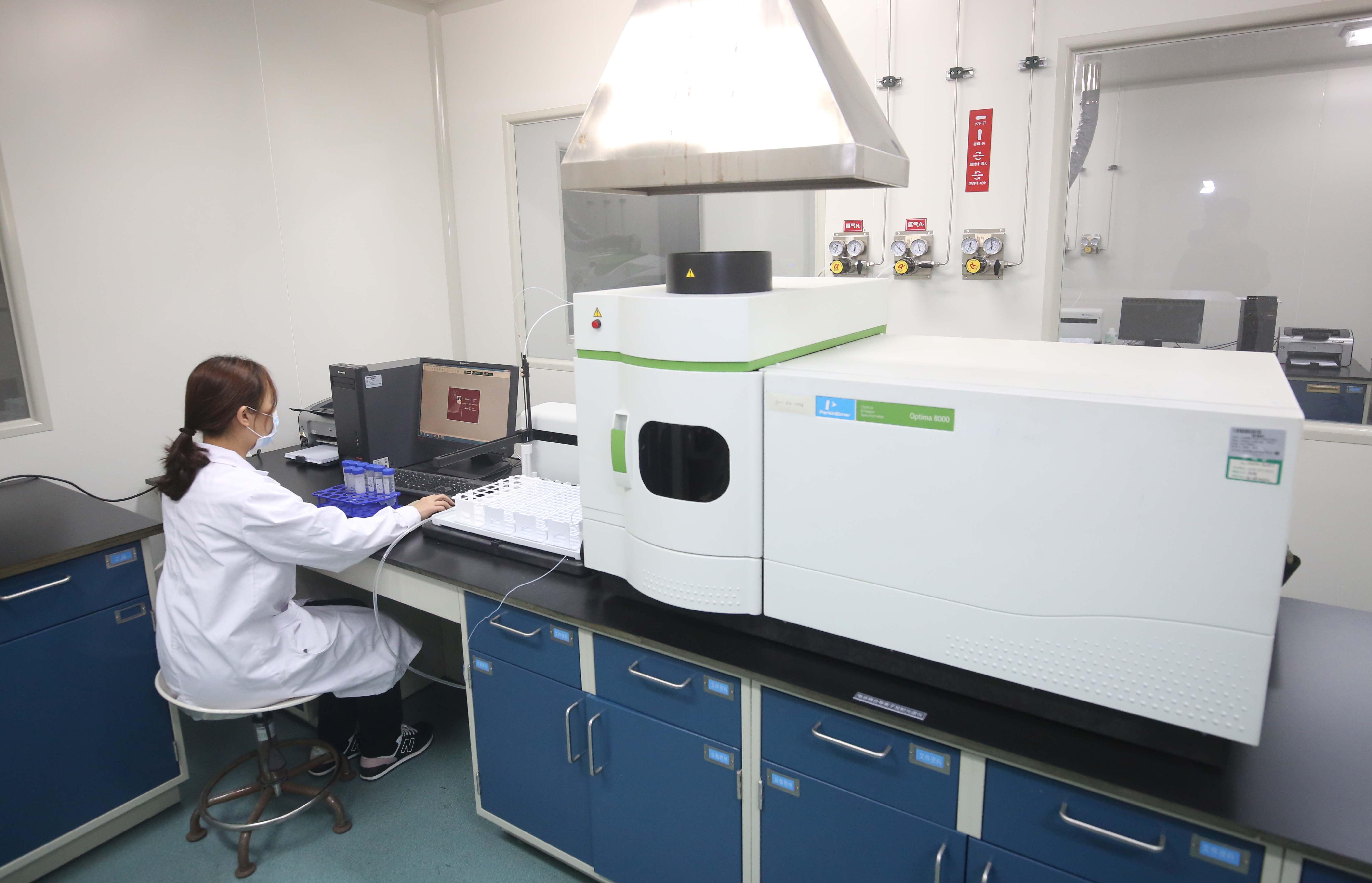
Every bar ingot used at Yevzo Titanium Metal Co., Ltd. is verified through optical spectrometry and ultrasonic flaw detection. Certificates accompany every master crate.
Cold rolled threads induce deep residual compressive stresses into root radiuses, mitigating shear crack propagation and tripling cyclic fatigue life over CNC-cut threads.
Electrolytic passivation and Physical Vapor Deposition (PVD) provide intense protective colorations (Burned Blue, Gold, Oil Slick, DLC Black) with zero dimensional pitch distortion.
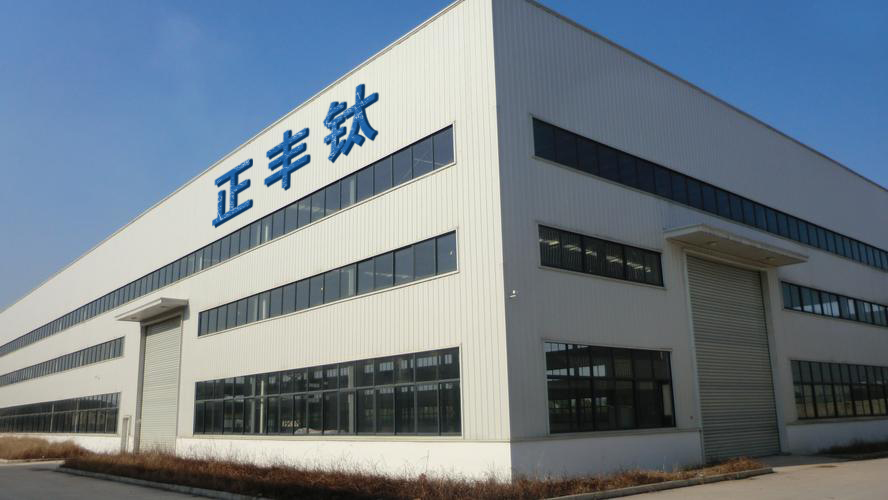
Positioned directly inside Baoji—China's legendary Titanium Valley—our integrated manufacturing model cuts overhead, expedites raw stock access, and provides absolute process command from titanium sponge to hermetic box packing.
Spectrochemical grading, ASTM B348 diameter verification, and eddy-current integrity checks before rod shearing.
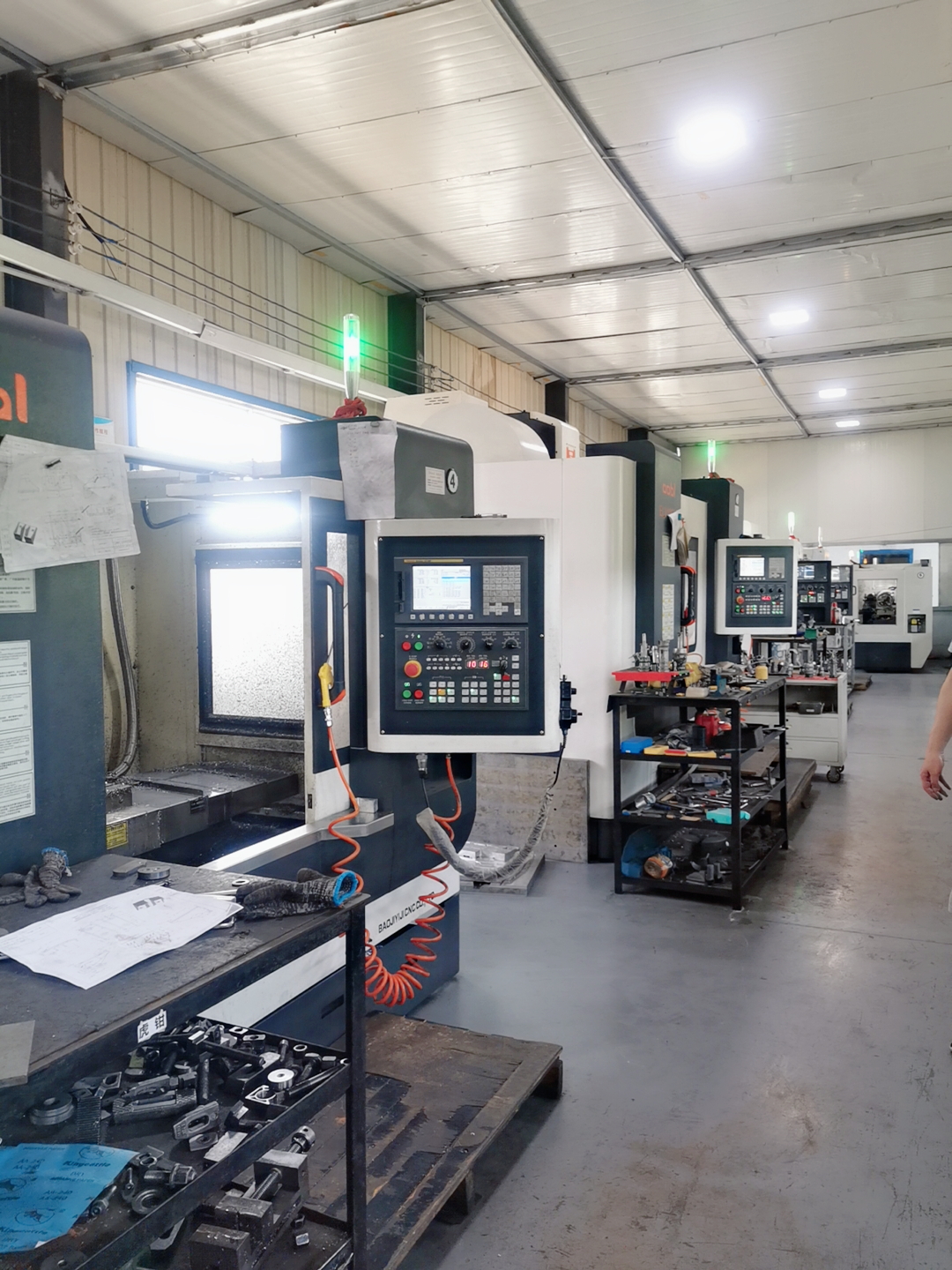
Multi-axis high-speed CNC turning stations form precise flange skirts, thread lead angles, and tight shank concentricity.
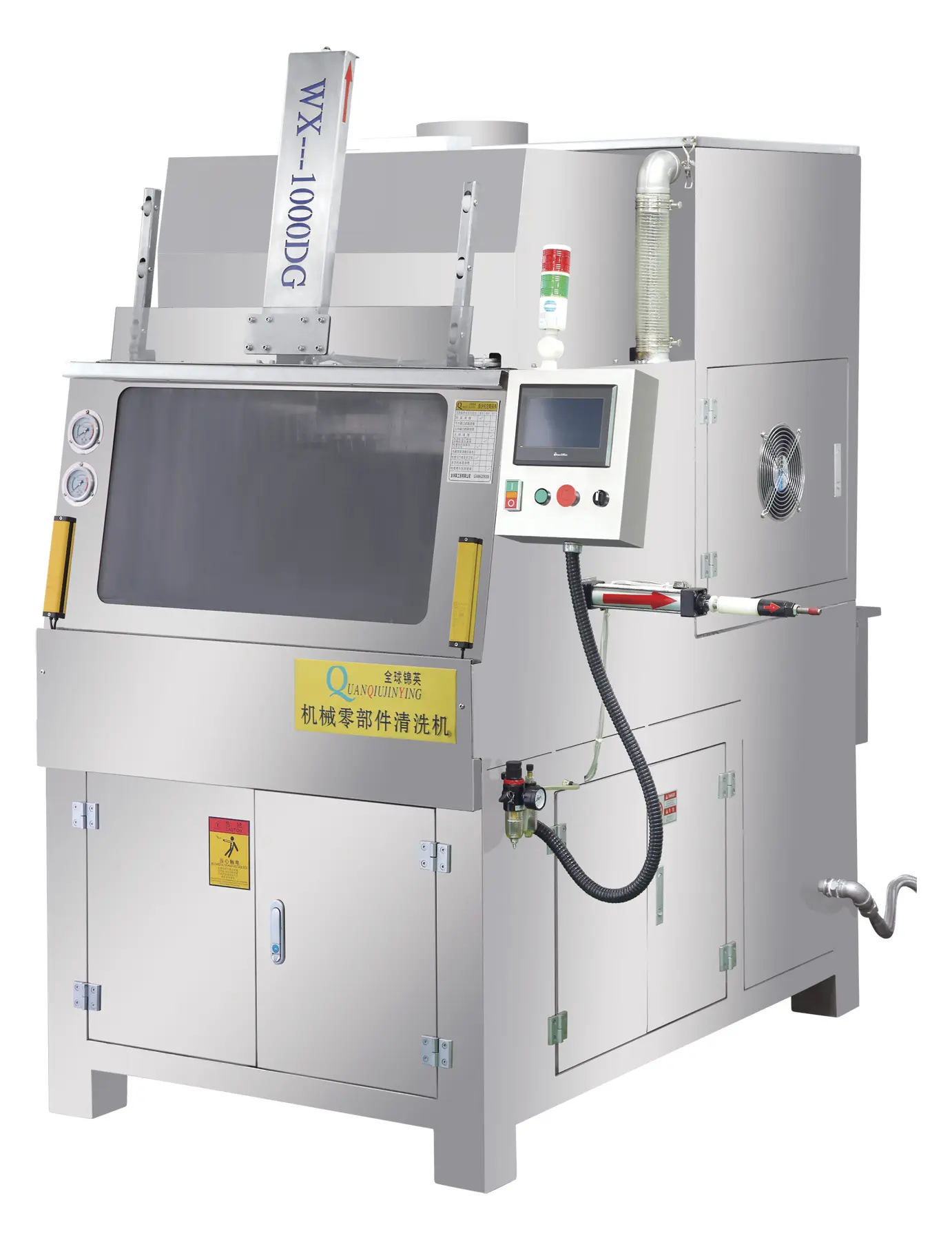
Ultrasonic solvent cleaning, chemical vapor degreasing, and deionized water baths strip coolants and microscopic chips.
Metallurgists oversee torque-tension relationships, grain alignment under heading, and custom alloy enhancements.

Anti-collision grid sorting, moisture-proof desiccated heat sealing, and export-compliant barcoded box packaging.
Strategically situated in Baoji, we secure raw certified Grade 5 sponge and mill-run bar instantly, dodging regional distributor markups and supply chain bottlenecks.
Our expansive fleet of automated 3-axis, 4-axis, and Swiss-type turning centers guarantees rapid batch turnaround from 50 pieces to 500,000 pieces with ±0.005mm accuracy.
Micro-hardness cross-sectioning, proof load pull fixtures, and optical thread comparators verify zero internal voiding, hydrogen embrittlement, or thread lead errors.
Yevzo handles complete global logistics under DDP, FOB, and CIF terms with express door-to-door delivery throughout the USA, Germany, Japan, UK, Australia, and 60+ countries.
As electric vehicles, hydrogen propulsion systems, renewable maritime machinery, and aerospace platforms reshape lightweight manufacturing, procurement teams face evolving criteria when specifying titanium flange fasteners.
In electric vehicles, battery energy density remains the defining constraint on driving range. Global EV manufacturers have discovered that replacing steel chassis, suspension upright, brake caliper, and battery tray bolts with titanium flange bolts yields rapid unsprung mass savings. Because the flange disperses clamping force across wide surface contact areas, it securely fastens structural aluminum subframes and carbon composite enclosures without causing composite fiber crushing or thread relaxation over long-term road harmonics.
Standard alloy steels become brittle at liquid hydrogen temperatures (-253°C). In contrast, Grade 5 ELI (Extra Low Interstitial, ASTM F136) titanium flange bolts retain remarkable toughness, ductile elongation, and fatigue endurance in cryogenic cooling lines, rocket propellant valving, and fuel-cell distribution manifolds. Procurement programs are aggressively transitioning toward certified Gr5 ELI flange fasteners to avoid brittle catastrophic shear events.
Historically, low production volumes dictated that titanium bolts were purely CNC turned from solid round bar—an inefficient method with high material waste and interrupted grain structure. The modern manufacturing standard pioneered by Yevzo Titanium Metal Co., Ltd. pairs precision warm closed-die heading of the flange head with CNC body detailing and rolled threads. This hybrid workflow cuts raw material waste by 35%, decreases unit costs for high-volume OEMs, and maximizes dynamic structural reliability.
A classic challenge for titanium fasteners has been galling during high-speed automated installation. Future procurement schedules demand factory-applied dry-film lubricants, molybdenum disulfide micro-coatings, and Diamond-Like Carbon (DLC) physical vapor deposition. These innovations eliminate the reliance on manual technician paste application while ensuring consistent friction coefficients (μ = 0.10 to 0.12) across high-speed robotic manufacturing lines.
International environmental regulations (including European Carbon Border Adjustment Mechanism policies) mandate verified life-cycle carbon tracking from titanium sponge reduction through finished machining. Tier-1 buyers increasingly partner with suppliers who maintain integrated scrap-recycling loops and closed-loop coolant reclamation systems, validating sustainable manufacturing without sacrificing metallurgical purity.
Consult directly with our engineering metallurgical desk at [email protected] or launch an instant inquiry to evaluate custom alloy stock reservations and long-term procurement pricing.
Send an InquiryFrom high-bank motorsport circuits to marine subsea hardware, review the environments where Yevzo titanium flange bolts provide reliable clamping performance.
Clear, unhedged answers based on empirical factory floor testing, metallurgical physics, and international procurement standards.
A standard hex bolt and washer assembly introduces two sliding contact interfaces. Under dynamic transverse vibration, the washer slips, creates localized fretting corrosion, and accelerates clamp preload decay. A titanium flange bolt integrates the washer into a continuous, rigid, one-piece component. The broad underhead flange distributes bearing stress evenly across delicate joint materials (such as magnesium, 6000-series billet aluminum, or carbon-fiber laminates) while eliminating washer dish distortion and reducing installation assembly cycle time by 50%.
Because Grade 5 titanium possesses a modulus of elasticity (114 GPa) roughly half that of carbon steel (210 GPa), it stretches twice as much per unit of applied load in its elastic zone. Fastening dry titanium into aluminum or steel will result in galling and inaccurate preload due to high friction. When using a high-pressure titanium-compatible anti-seize paste (containing molybdenum disulfide or copper base), tightening torque should typically be set between 75% and 85% of standard Class 10.9 steel values. Yevzo supplies tailored torque tables calculated for both dry and lubricated friction coefficients upon request.
In full subtractive CNC turning, cutting inserts slice across the longitudinal crystal grain flow lines of the extruded titanium bar. This creates micro-notches at the root diameter of every thread, which act as high-stress concentration risers under cyclic tension. In contrast, Yevzo utilizes an advanced hybrid process: closed-die hot heading forms the flange head while preserving radial grain flow, followed by progressive cold roll threading. Thread rolling plastically deforms the material, compressing crystal structures and leaving the root radiuses burnished and work-hardened. This increases cyclic fatigue life by up to 300% compared to cut threads.
Titanium is cathodic (noble), while aluminum is anodic (active). In the presence of an electrolyte like saltwater or de-icing road salts, galvanic electron transfer can corrode the aluminum mating face. To prevent this, Yevzo implements three protective strategies: (1) electrolytic multi-layer Type II anodization to build a non-conductive dielectric barrier oxide, (2) physical vapor deposition (PVD) micro-coatings like DLC, and (3) supplying custom non-conductive insulating washers (such as glass-filled PEEK or nylon) for critical marine assemblies.
For standard inventory items conforming to DIN 6921 (ranging from M5 to M12 across popular lengths), our standard MOQ starts at 20 to 50 pieces with dispatch available within 48 to 72 hours. For fully custom drawing-based OEM flange bolts requiring dedicated tooling, CNC programming, or custom anodized hues, lead times average 15 to 25 business days depending on raw material stock and quantity specifications.
Every commercial delivery includes an official EN 10204 3.1 Mill Test Certificate detailing: chemical elemental spectrometry (Ti balance, Al, V, Fe, C, N, H, O content), tensile yield and elongation rupture curves, micro-Vickers hardness ratings, dimensional inspection reports from multi-sensor optical comparators, and thread gauge compliance certificates.
Submit your 2D engineering drawings (PDF/DWG), 3D STEP models, or target specifications. Our Baoji technical sales engineering group will review your dimensional limits, thread pitch tolerances, and torque goals to deliver an actionable manufacturing proposal within 24 hours.