High-Integrity Titanium Fasteners for European Assembly
Direct manufacturer supply from our Baoji facility with full mill test traceability, CNC rolled threads, and custom physical vapor deposition (PVD) surface treatments.
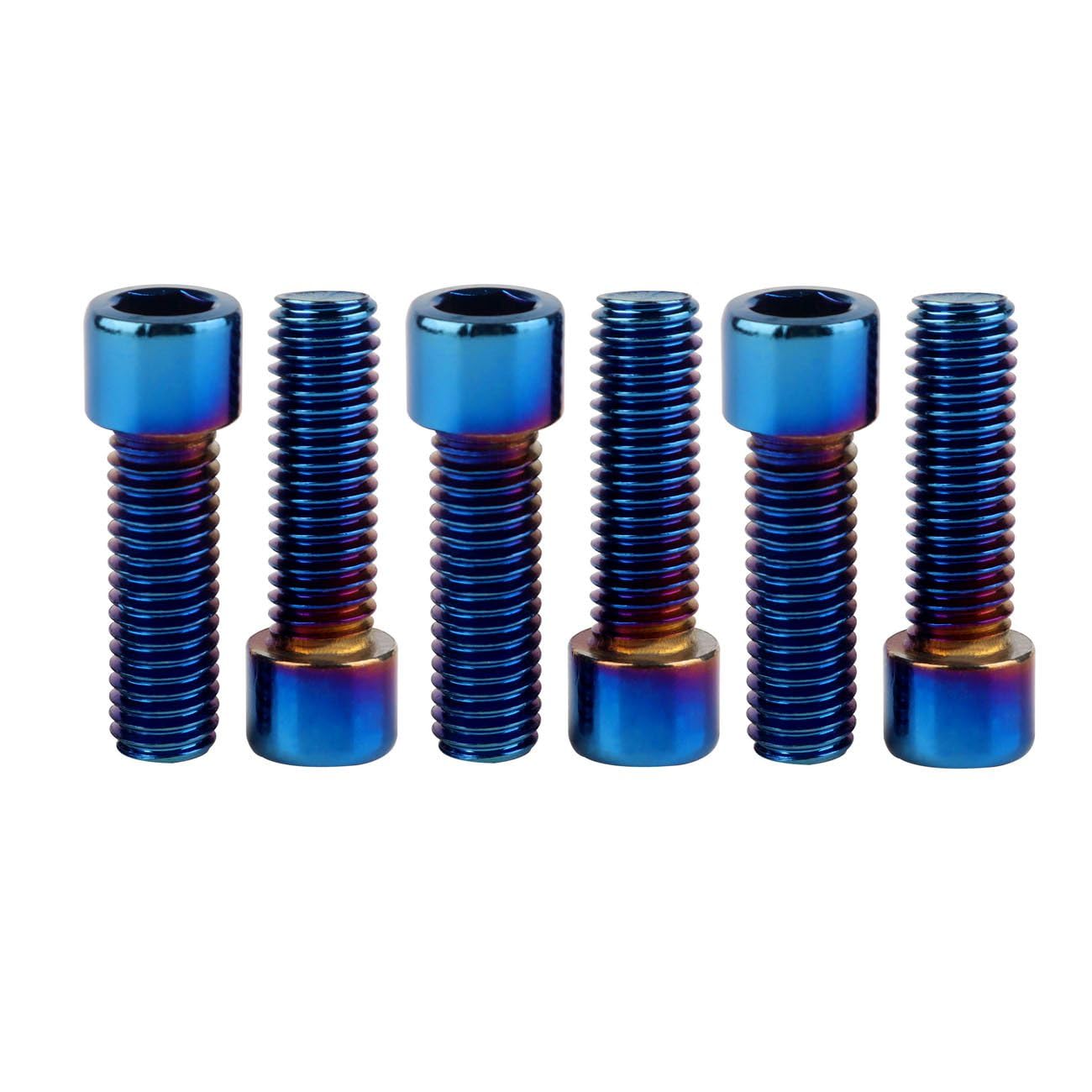
- Material: Ti-6Al-4V Gr5
- Application: Seatpost Clamp / E-Bikes
- Standard: DIN 912 / ISO 4762
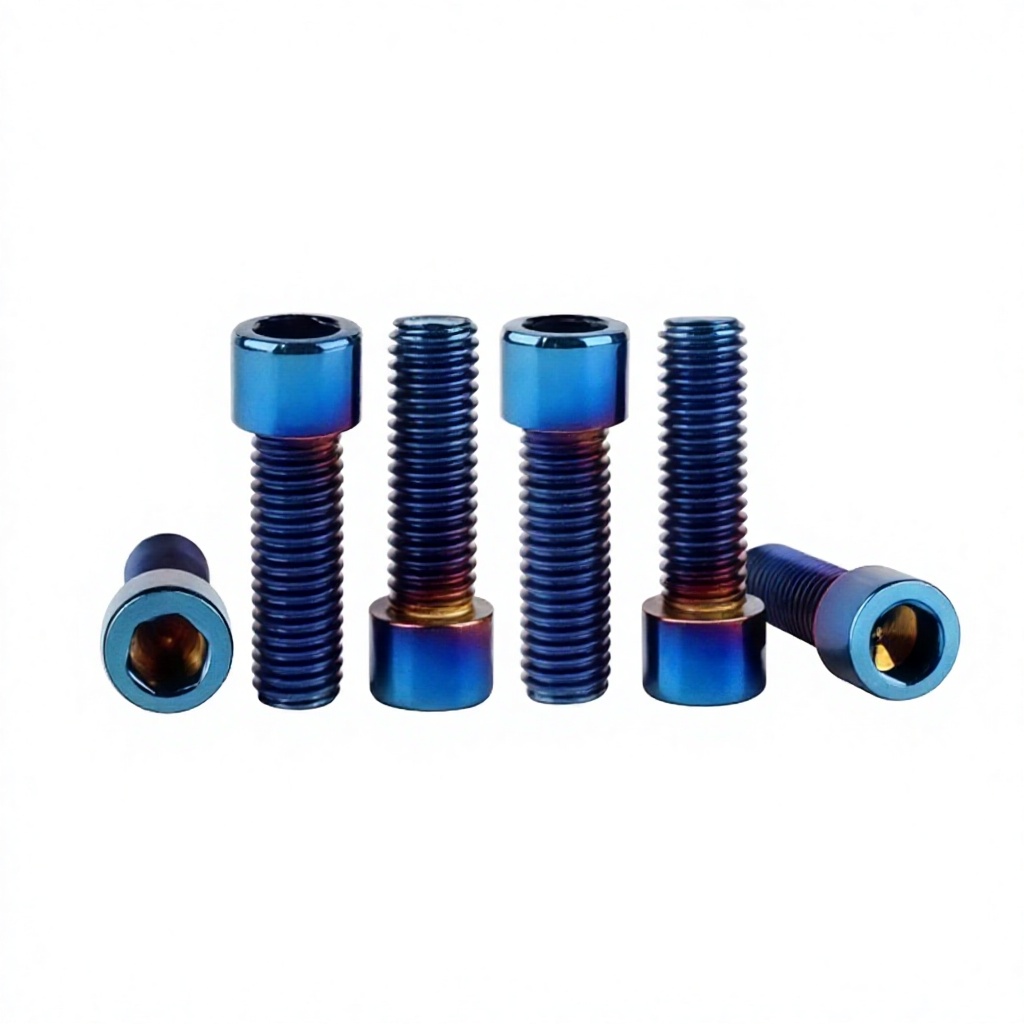
- Thread Size: M1.6 Micro-Metric
- Head Style: Countersunk Flat
- Use: Cockpit / Shifter Mounts
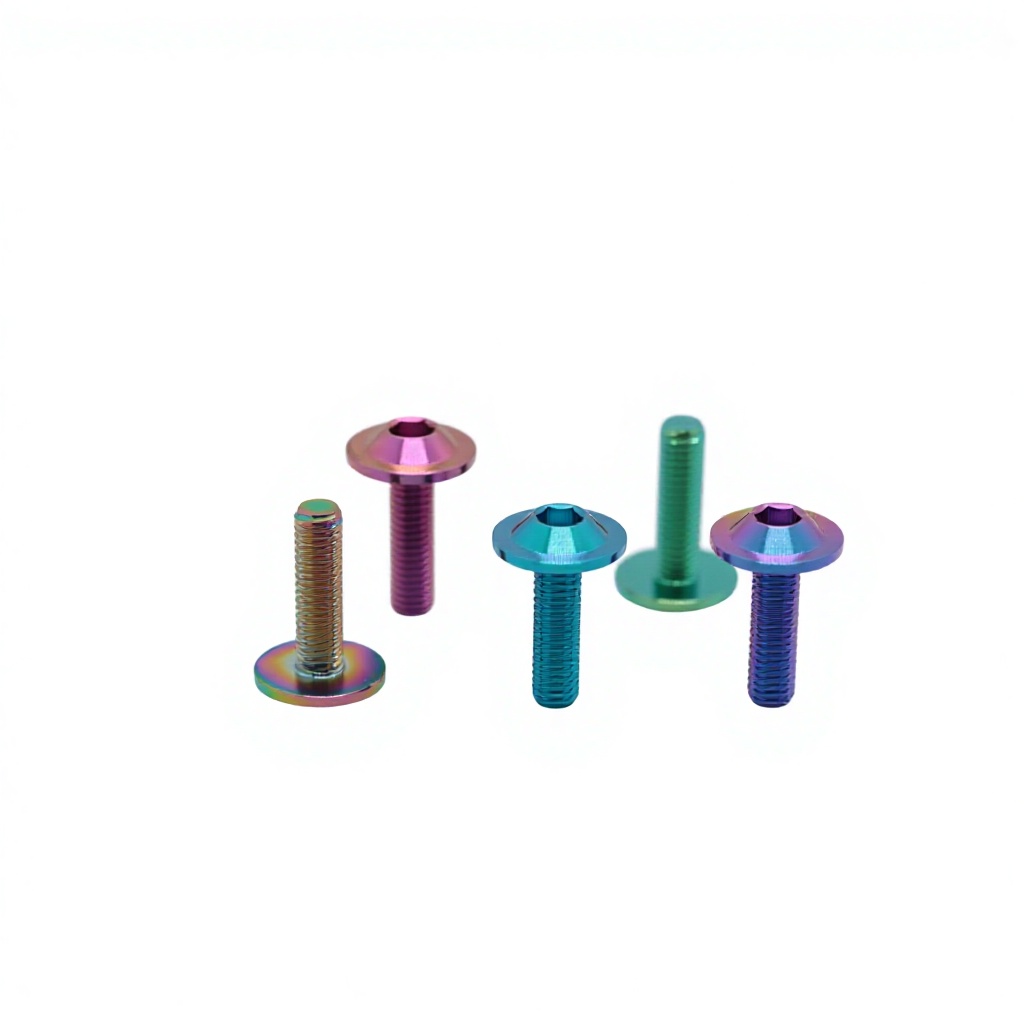
- Feature: Broad Bearing Area
- Finish: PVD Gold/Blue/Plain
- Tensile: ≥ 895–950 MPa
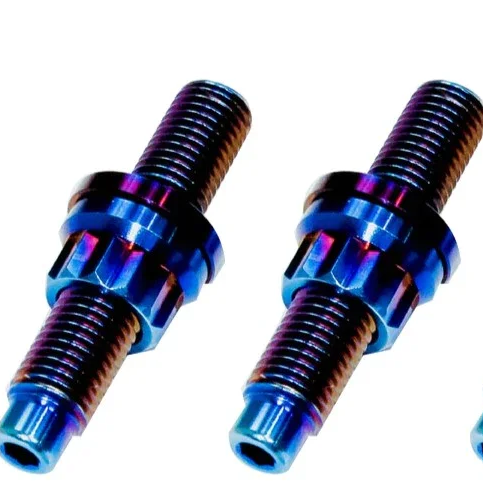
- Sizing: M8 & M10 Thread Pitch
- Structure: Double-End Stud Kit
- Thermal Duty: High Cycle Resistant
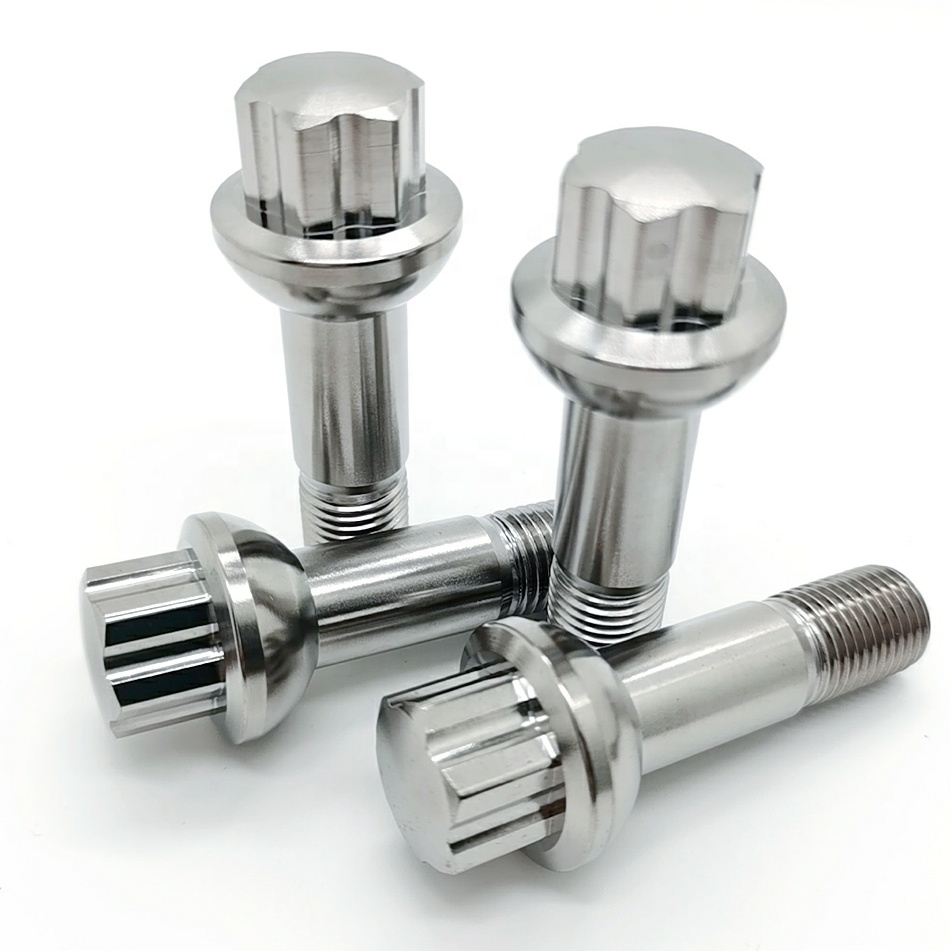
- Specs: M14x1.5 / M12x1.25
- Seat Type: 60° Cone / Ball Seat
- Certification: EN 10204 3.1 Traceable
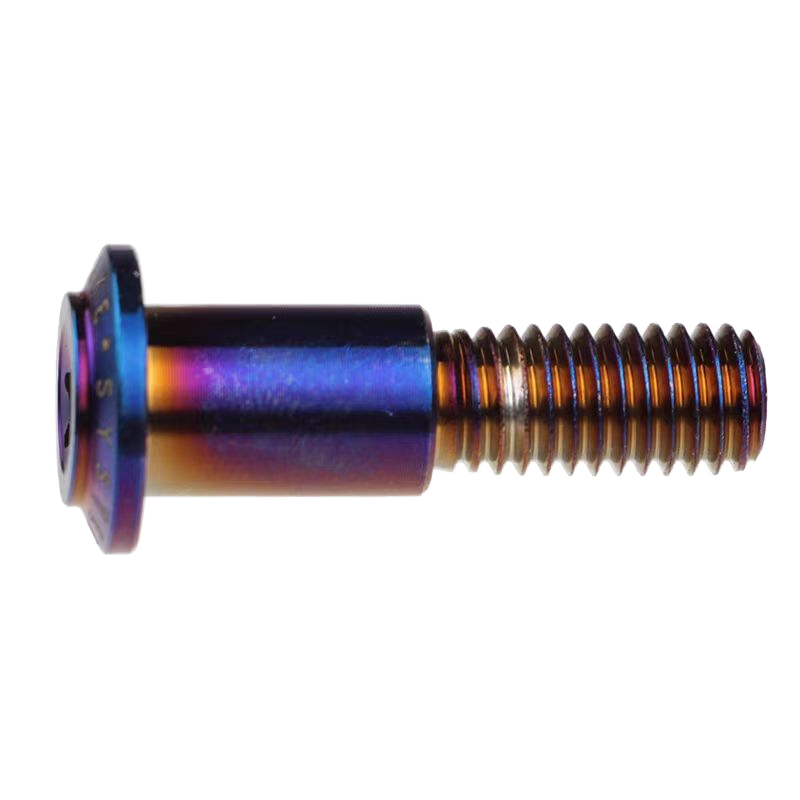
- Head Geometry: Stepped Low-Profile
- Anti-Vibration: Serrated Locking Face
- Torque Target: 5.5–6.2 Nm Optimized
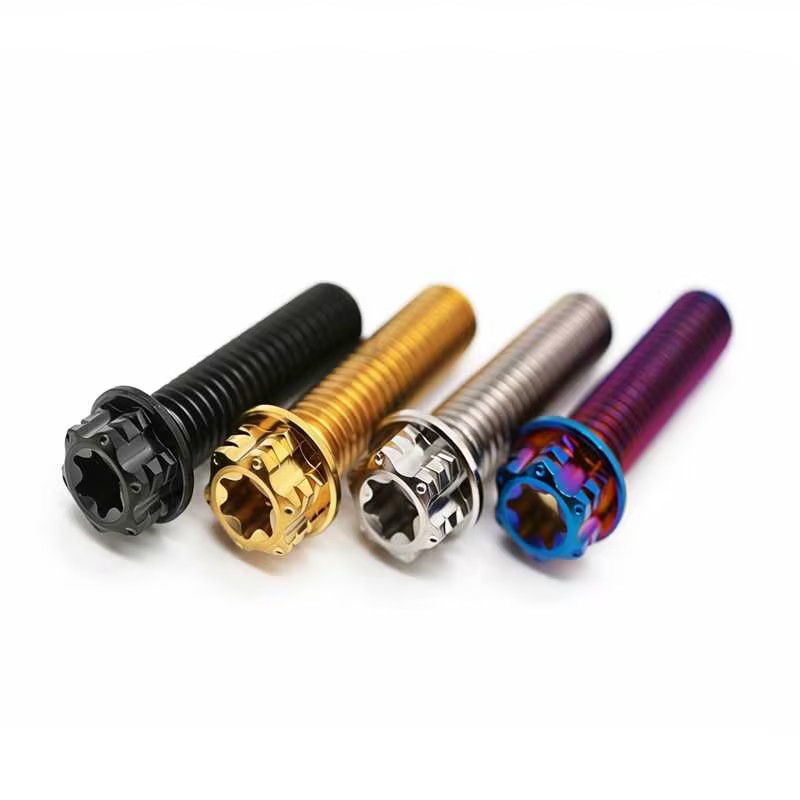
- Drive Style: Torx T40 / T45 Drive
- Processing: Hot Forged + CNC Turning
- Coating: PVD Vacuum Nitride
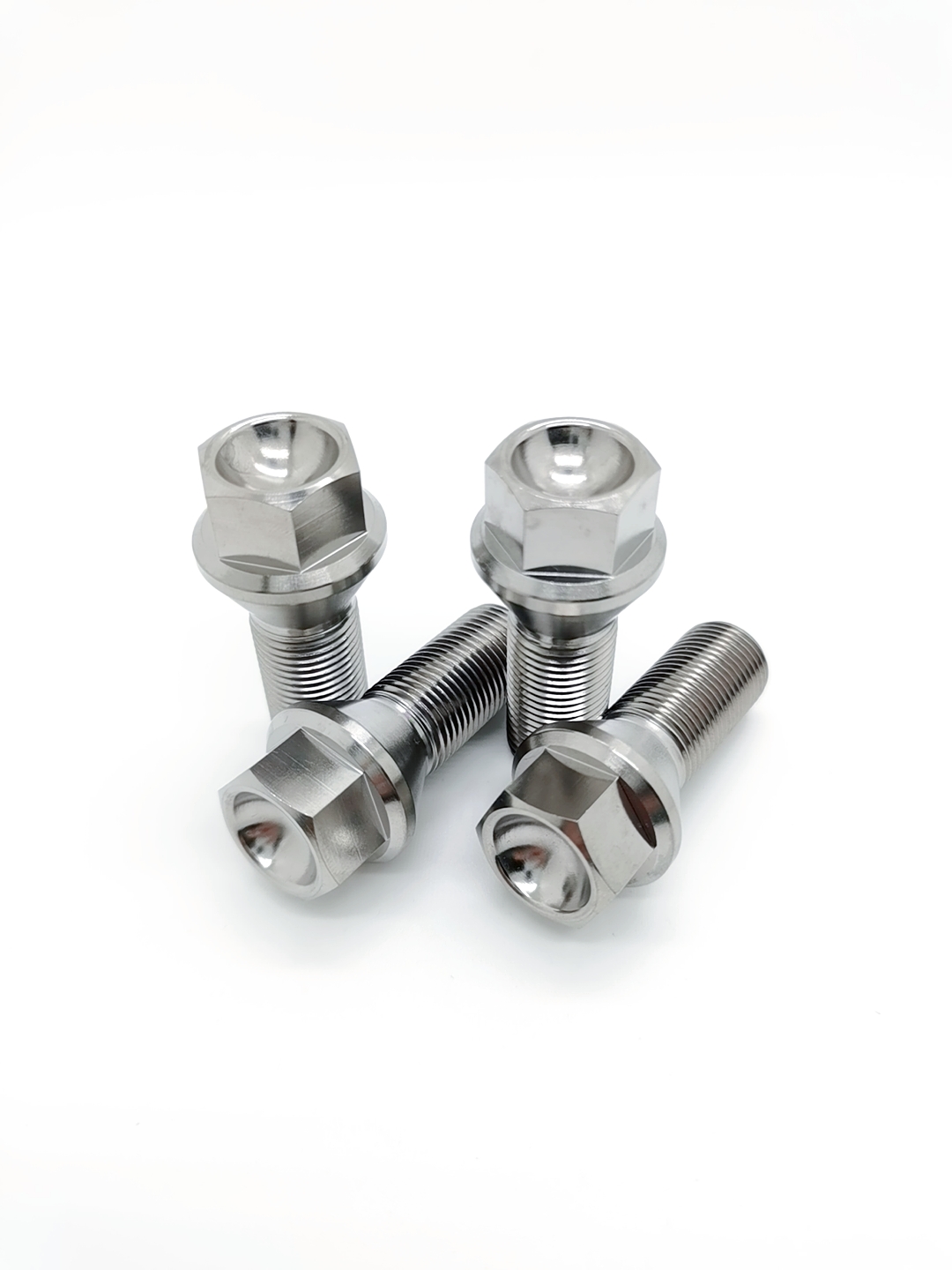
- Threads: UNC/UNF Standard & Fine
- Yield Strength: ≥ 828 MPa
- Density: 4.43 g/cm³ (−44% Steel)
Structural Integrity, Clamping Dynamics, and Fatigue Life in Titanium Seatpost Fasteners
An in-depth guide on metallurgical tolerances, preload stability, and anti-galling mechanics for European bicycle design engineers and procurement teams.
In high-performance bicycle manufacturing, the seatpost clamping system is one of the most critical structural interfaces. Subjected to dynamic cantilever loads, alternating cyclic fatigue, torsional deflections, and aggressive road vibrations, a seatpost clamp bolt cannot simply be treated as a generic hardware fastener. In conventional applications, Grade 8.8 or Grade 10.9 zinc-plated steel screws are used. However, their significant mass penalty and vulnerability to Atlantic coastal oxidation have prompted European bicycle brands to standardize on Grade 5 Titanium (Ti-6Al-4V, Werkstoff 3.7165).
1. Microstructure and Shear Stress Distribution Under Cyclic Cantilever Torque
When a rider pedaling over uneven cobblestones or off-road trails applies downward force to the saddle, the seatpost acts as a long mechanical lever arm. This induces a combination of tensile preload and alternating bending moments on the seatpost binder bolt. For typical M5x18mm, M5x20mm, M6x25mm, or dual-bolt yoke cradle configurations (M5x35mm / M5x40mm spherical washer bolts), the thread roots and the transition radius under the head face severe stress concentrations.
At Yevzo Titanium Metal Co., Ltd., our manufacturing protocol eliminates cut threads. Using precision multi-axis CNC cold rolling machines, the continuous titanium grain flow follows the contour of the thread crests and roots rather than cutting across the crystalline lattice. This manufacturing method yields a compressive surface residual stress layer, raising the fatigue limit of our Ti-6Al-4V bolts by more than 35% compared to conventionally machined fasteners, effectively neutralizing cyclical fatigue failures.
| Physical & Mechanical Property | Commercially Pure Ti (Gr2) | Ti-6Al-4V Aerospace Grade (Gr5) | Standard Steel (Class 8.8) | Stainless Steel (A2-70 / 304) |
|---|---|---|---|---|
| Density (g/cm³) | 4.51 | 4.43 | 7.85 | 7.93 |
| Tensile Strength Rm (MPa) | ≥ 345 | ≥ 895 – 1,020 | ≥ 800 | ≥ 700 |
| Yield Strength Rp0.2 (MPa) | ≥ 275 | ≥ 828 – 910 | ≥ 640 | ≥ 450 |
| Modulus of Elasticity (GPa) | 105 | 114 | 205 | 193 |
| Elongation at Fracture A5 (%) | ≥ 20 | ≥ 10 – 14 | ≥ 12 | ≥ 35 |
| Corrosion Resistance (Sea Salt) | Immune | Immune (Passivated TiO&sub2;) | Low (Prone to rust) | Moderate (Pitting prone) |
| Target Clamping Torque (M6) | Not recommended | 8.5 – 9.5 N·m (Lubricated) | 9.0 – 10.0 N·m | 7.5 – 8.5 N·m |
2. Clamping Dynamics, Carbon Fiber Tube Crushing, and Preload Precision
In modern performance carbon fiber frames, excessive or uneven clamping force from seatpost bolts will crush the high-modulus unidirectional carbon layers of the post, creating micro-fractures and disastrous failures. Conversely, insufficient clamp preload allows the post to slip downward or rotate slightly under rider weight, damaging the seat tube inner sleeve.
Titanium Grade 5 has an elastic modulus of approximately 114 GPa—roughly half that of carbon structural steel. This lower Young's modulus provides a critical mechanical benefit: titanium behaves as a slightly more compliant tension spring under torque. For a given turn of the hex socket key, the titanium fastener stretches more elastically than a steel bolt, resulting in a broader, more forgiving torque window. This characteristic buffers against minor torque-wrench calibration drifts in assembly lines and workshops, protecting expensive carbon components.
Precision Fasteners Tailored to Portugal's Cycling Ecosystem
From the industrial assembly plants of Águeda to the grueling volcanic terrain of the Azores and coastal trails of Sintra, our Grade 5 titanium bolts withstand Portugal's most demanding environments.
Águeda "Portugal Bike Value" OEM Assembly
Águeda and the surrounding Centro region represent Europe's largest bicycle manufacturing cluster. Leading Portuguese contract manufacturers assembling premium carbon and aluminum e-bikes require millions of metric bolts with strictly uniform thread pitches (DIN 912, DIN 6921). Our M5 and M6 titanium socket head cap screws directly feed these automated and semi-automated torque assembly lines.
Atlantic Coastal Salinity & Urban Commuting
Bicycles ridden along Portugal's extensive Atlantic shoreline—such as the coastal promenades of Cascais, Porto, and Aveiro—face relentless exposure to salt-laden sea air (maresia) and moisture. Traditional electro-plated steel bolts undergo severe cosmetic and structural galvanic corrosion within months. Our Grade 5 titanium forms an instantaneous, self-healing rutile-anatase titanium dioxide (TiO&sub2;) passive barrier, completely impervious to chloride ion pitting.
Enduro & Downhill MTB (Sintra, Lousã, Madeira)
Portugal hosts renowned gravity circuits in Serra de Sintra, Serra da Lousã, and the steep singletracks of Madeira. Downhill and enduro riders exert extreme impacts on seatpost collars, droppers, and dual-bolt cradle yokes during aggressive landings. Gr5 titanium seatpost bolts provide high fracture toughness without brittleness, resisting severe shock loads that sheer inferior fasteners.
Ultra-Distance Bikepacking & Algarve Granfondo
From the rugged gravel trails of the Rota Vicentina to the high-cadence road challenges of the Algarve and Serra da Estrela, gram-counting cyclists demand absolute weight minimization. Replacing steel seatpost binder bolts, brake hardware, and stem bolts with our hollow-head Grade 5 hardware achieves 40–45% mass savings while maintaining rigid saddle angle stability.
Emerging Trends in the Portuguese Bicycle & Micro-Mobility Industry
How Portugal's pivot toward high-value e-bike exports and premium localized supply chains is reshaping fastener quality standards and vendor selection.
Electrification & Higher Static Frame Loadings
Portugal currently manufactures over 2.5 million bicycles annually, with high-end pedelecs and performance electric cargo bikes representing an escalating share of production. The increased overall mass of e-bikes, combined with higher torque delivery and heavier rider payloads, places heightened static and shear loads on seatpost tubes and clamps. Assemblers are abandoning lower-grade fasteners in favor of verified Gr5 titanium to prevent fatigue fractures during warranty periods.
Integration with Carbon Seat Masts & Custom Droppers
Aerodynamic road frames and modern gravel rigs feature proprietary non-round aero seatposts and internal wedge clamp mechanisms. These internal expander wedges rely on specialized M5 and M6 countersunk or spherical-head socket screws operating in constrained cavities. Yevzo delivers custom CNC-machined titanium expander bolts with customized thread-relief shanks that prevent internal galling against aluminum or carbon contact surfaces.
Demand for PVD Custom Aesthetic Finishes
European consumer preferences increasingly favor custom color-matched accents. Portuguese boutique builders and aftermarket brands incorporate Physical Vapor Deposition (PVD) rainbow (burnt blue), deep gloss black, titanium gold, and violet anodized seatpost and stem screws. Yevzo's vacuum chamber PVD processes add zero dimensional thickness to the precision threads, preserving full DIN metric class compliance.
Why Tier-1 European Importers Partner with Yevzo Titanium
Operating since 2013 in Baoji—the heart of China's Titanium Valley—we combine raw material melt-source control with multi-axis CNC machining centers and direct European logistics channels.
Melt-to-Screw Traceability in Baoji
Unlike coastal trading brokers who buy third-party fasteners of indeterminate origin, Yevzo is located directly in the Fenghuang High-Tech Industrial Park in Baoji. We procure certified Grade 5 titanium sponge and vacuum-arc remelted (VAR) bars adhering to ASTM B348 standards. Every production heat is documented with spectral chemical analysis and mechanical tensile testing certs (EN 10204 3.1).
Dual-Process Manufacturing: Forged & CNC Turned
Our production floor features over 100 dedicated non-ferrous processing machines. High-volume DIN 912 and DIN 6921 seatpost and clamp screws are cold-headed or hot-forged with thread-rolling dies for optimum metallurgical grain alignment, while custom micro-screws and expander wedges are precision-machined on multi-axis Japanese CNC turning centers to tolerances of ±0.005mm.
Comprehensive Pre-Shipment Metrology
Thread profiles are verified using Mitutoyo optical profile projectors, digital video measuring systems, and certified Go/No-Go calibrated thread ring gauges (Class 6g for external metric threads). Furthermore, random destructive tensile pull-out tests and Vickers micro-hardness testing (HV330–380 for Grade 5) ensure zero field failures on Portuguese assembly lines.
DDP Shipping to Lisbon, Porto, and Leixões
We provide full-service export trade terms including FOB, CIF, and seamless Delivered Duty Paid (DDP) by air express (5–7 days) or sea freight directly to industrial warehouses across Portugal. We handle import customs clearances, European TARIC fastener classification, and VAT documentation, eliminating administrative burdens for Portuguese procurement managers.
Frequently Asked Questions: Sourcing Titanium Seatpost Bolts in Portugal
Technical and logistical insights compiled by our international trade and fastener engineering team for Portuguese B2B buyers.
Why is Grade 5 (Ti-6Al-4V) mandatory for seatpost bolts instead of commercially pure Grade 2?
Commercially pure titanium (Grade 2) possesses an ultimate tensile strength of only ~345–450 MPa, which is insufficient for the high cantilever torque and clamping loads demanded by seatpost collars (typically requiring 5 to 9 N·m). Grade 5 titanium is an alpha-beta alloy containing 6% aluminum and 4% vanadium, achieving tensile strengths exceeding 895–1020 MPa and a yield strength over 828 MPa. Using Grade 2 in a seatpost collar risks plastic bolt stretching, loss of clamping preload, saddle slippage, or sudden thread stripping.
How do you resolve cold welding (galling) when threading titanium bolts into aluminum frames or titanium nuts?
Titanium naturally builds an instant micro-thin oxide film that, under high contact friction, can microscopically adhere to adjacent metals—especially aluminum, stainless steel, or matching titanium nuts. To prevent galling on assembly floors, Yevzo recommends three safeguards: (1) Applying a specialized synthetic titanium anti-seize paste with copper/aluminum flaked grease or PTFE dispersion during assembly; (2) Specifying our anti-friction PVD coatings or micro-bead blasted finishes which reduce the coefficient of friction; and (3) Ordering titanium bolts fitted with integrated floating washers to disperse interfacial friction away from the head contact shoulder.
What are your standard Minimum Order Quantities (MOQ) for Portuguese OEMs and race workshops?
For standard catalog sizes such as DIN 912 M5x16/18/20mm or M6x20/25/30mm in natural machined or polished finishes, our MOQ starts at just 10 to 30 pieces to facilitate prototype validation, lab testing, and boutique frame runs. For custom drawing-based screws (special washer heads, internal hollow-drilled weight reduction cavities, or custom spherical washer seats), MOQs typically range from 100 to 500 pieces depending on bar stock dimensions and machining cycle times.
Does anodizing or PVD coloring alter thread dimensions or torque coefficients?
Electrolytic anodizing on titanium is an optical-interference surface treatment created by adjusting the microscopic thickness of the transparent titanium oxide layer; it adds virtually zero physical coating thickness (typically under 100 nanometers) and does not alter the 6g thread pitch tolerance. PVD vacuum nitride coating adds a negligible 1.5–2.5 μm ceramic film that significantly enhances surface hardness (up to 2,000+ Vickers) and reduces sliding friction, resulting in smoother torque transfer without degrading thread engagement.
What is the typical shipping lead time and customs process to Portugal?
In-stock catalog items are dispatched from our Baoji facility within 48 to 72 hours via air express (DHL / FedEx / UPS), reaching corporate destinations in Lisbon, Porto, or Aveiro in approximately 5 to 7 business days. For volume sea freight routed via the Port of Leixões, transit times average 28 to 35 calendar days. Under our DDP shipping option, Yevzo covers all import clearance paperwork, customs tariff filings, and delivery straight to your warehouse door.
Can you manufacture seatpost binder bolts according to proprietary 2D/3D CAD drawings?
Yes. OEM and ODM projects represent a substantial portion of our annual output. We accept STEP, IGES, DXF, and PDF engineering drawings. Our engineering review team conducts a thorough Manufacturability and GD&T (Geometric Dimensioning and Tolerancing) evaluation within 24 hours, advising on optimum shank radius transitions, thread runout reliefs, and tooling parameters before cutting the initial sample batch.
Connect Directly with Our Titanium Fastener Engineers
Send us your dimensional drawings, DIN/ISO standards, required grade (Gr2 / Gr5), surface finish, and target quantities. Receive an engineered proposal and factory-direct quotation within 24 hours.