Specialized Titanium Fasteners & Threaded Stud Solutions
Explore high-tensile fasteners machined according to strict DIN, ISO, and ASTM tolerances. Every item is milled from certified vacuum-melted titanium bar stock with heat-lot traceability.
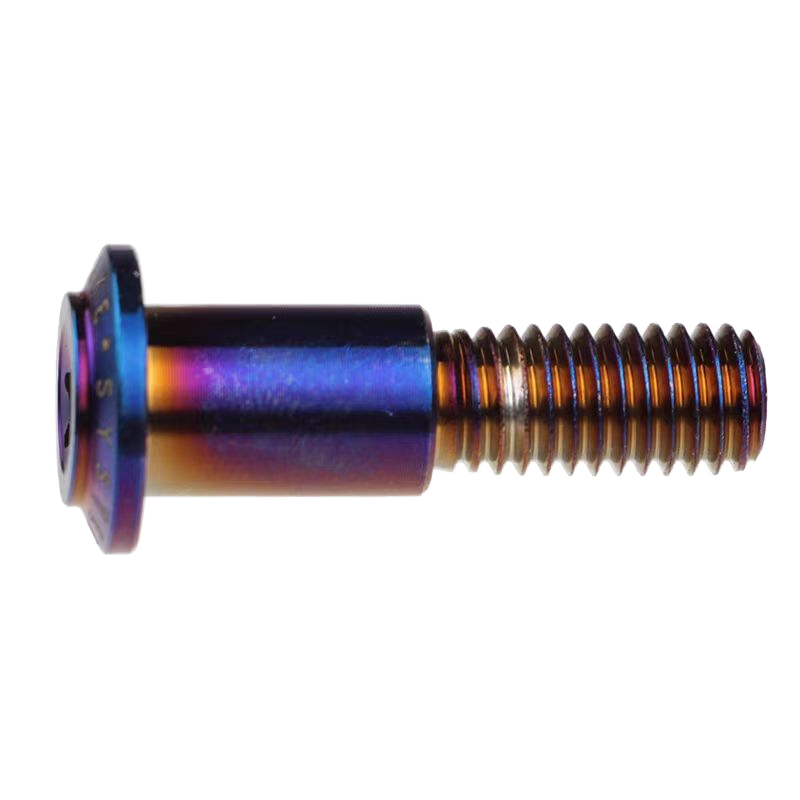
Hexagonal Step Flat Head Zinc Finish Teeth Disc Brake Bolts
- Grade: Ti-6Al-4V Grade 5
- Application: Rotors & Hub Systems
- Threading: Rolled Metric Threads
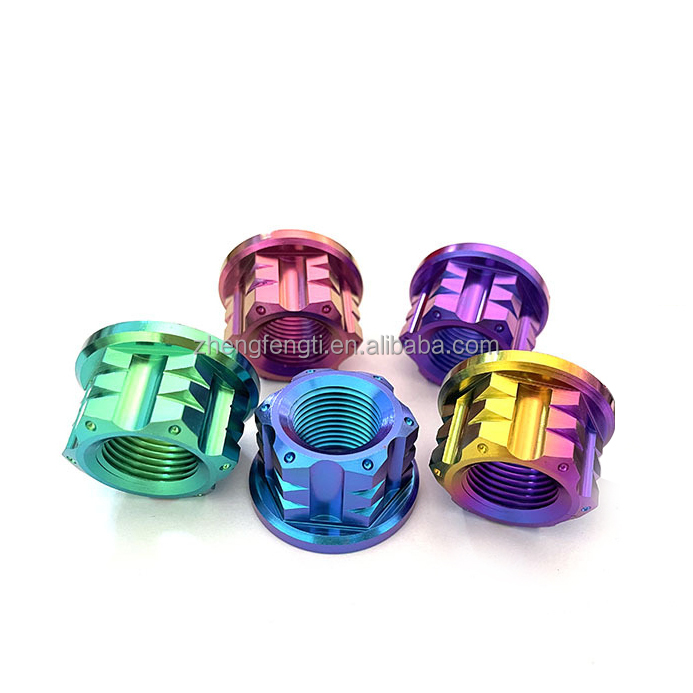
OEM All Sizes M3–M20 Titanium Hex Nut Plain Finish Stock
- Range: M3 to M20 Standard
- Standard: ISO 4032 / DIN 934
- Finish: Precision Plain Machined
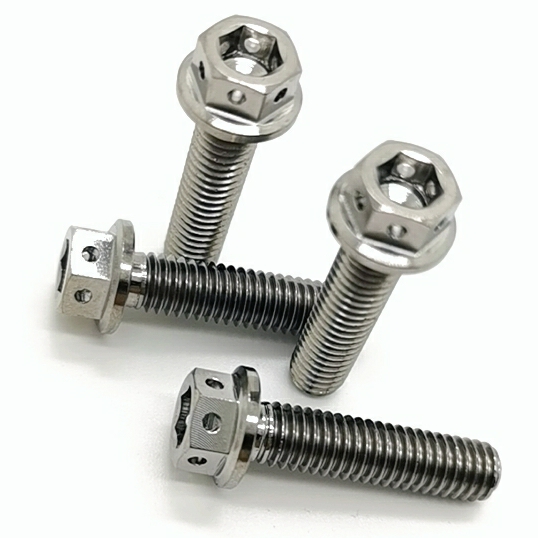
GR5 Titanium Alloy Socket Head Wear-Resistant Bolts Nuts
- Material: Titanium Grade 5
- Machining: Full CNC Multi-Axis
- Strength: ≥ 895 MPa Tensile
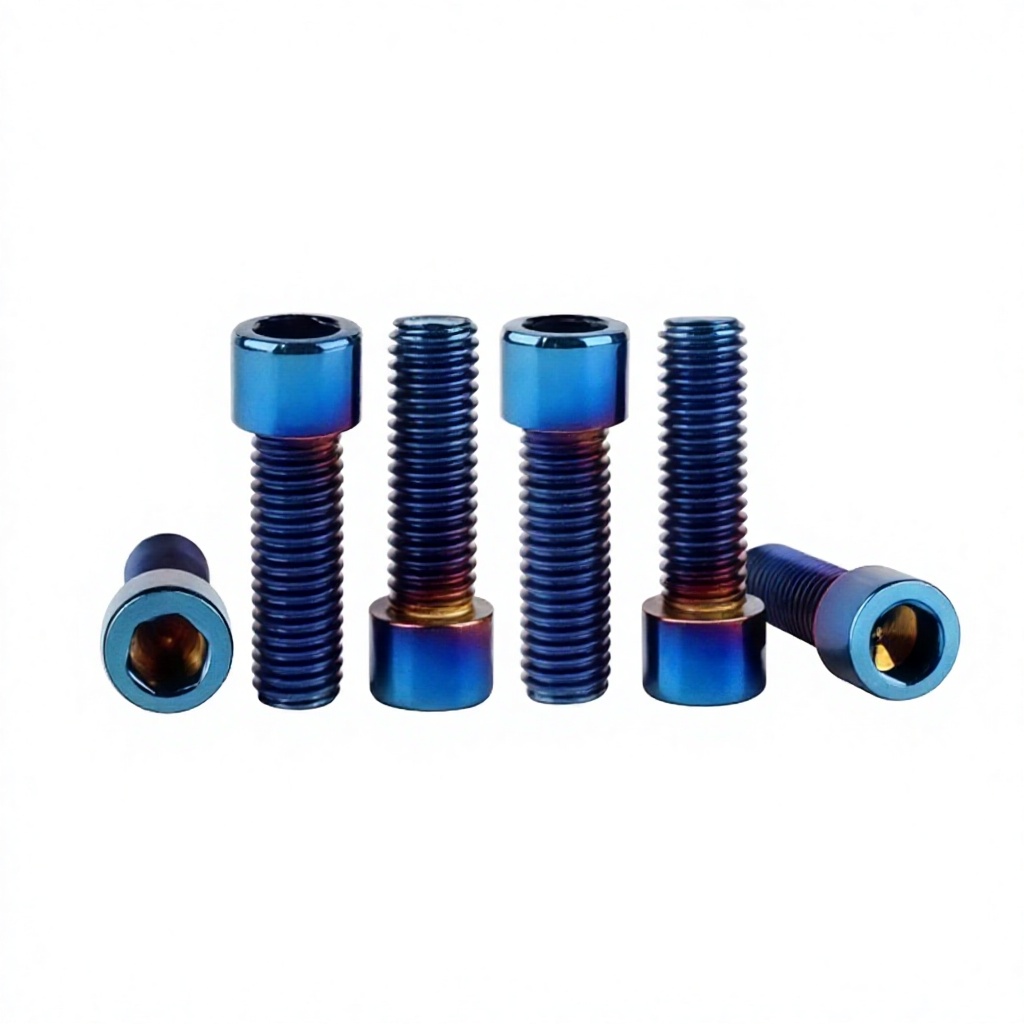
Flat Head Screws Zinc Finish M1.6 Industrial Grade
- Pitch: Micro-Precision Metric
- Tolerance: ISO 965-2 (6g)
- Durability: Non-Corrosive Core
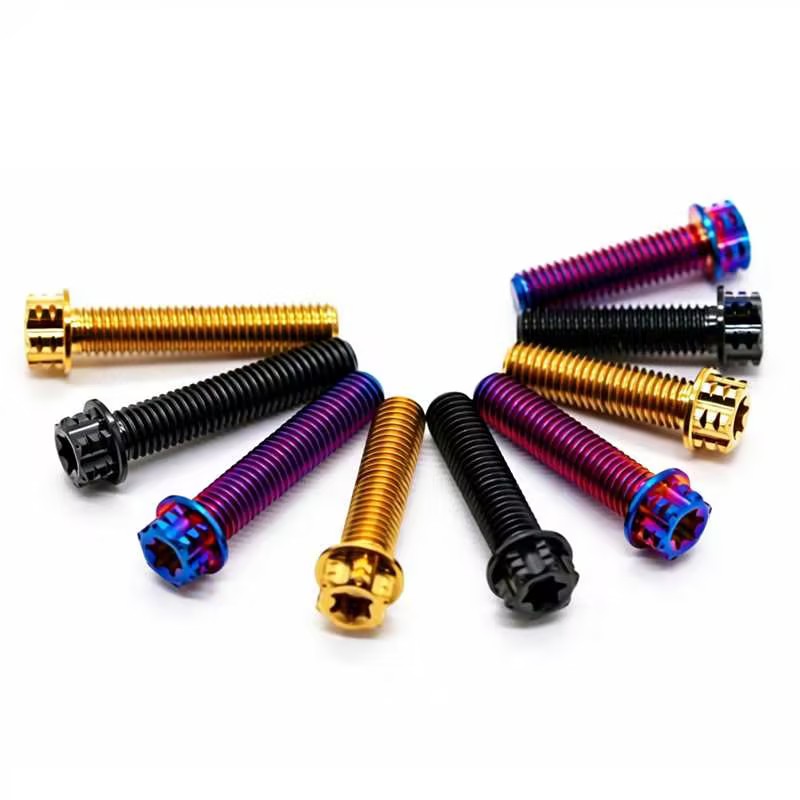
Torx Head Class 8.8 Gr5 PVD Coated CNC Star Screws
- Drive: Star / Torx Anti-Cam
- Surface: PVD Titanium Nitride
- Service: Custom OEM Marking
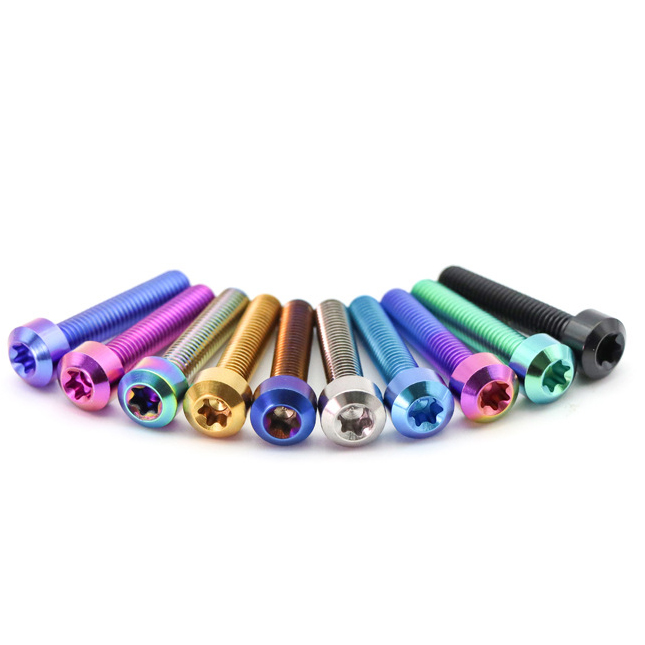
GR5 Titanium Torx Round Head Fine Thread Fasteners
- Thread: Fine Metric Pitch
- Fatigue Life: Tested ≥ 2M Cycles
- Weight: -44% vs Carbon Steel
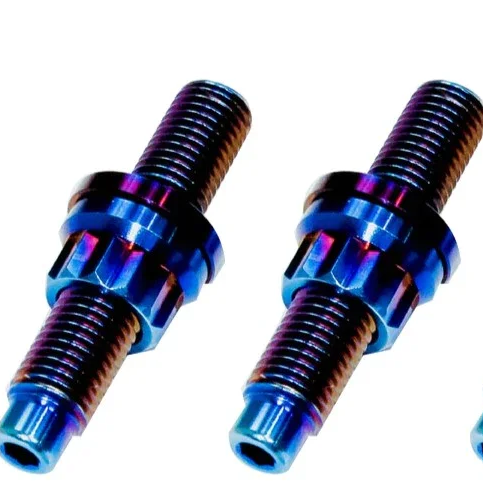
M8 M10 Gr.5 Ti-6Al-4V Manifold Titanium Stud Kits
- Configuration: Double-End Threaded
- Thermal: Resists Thermal Galling
- Hardware: Studs, 12pt Nuts, Washers
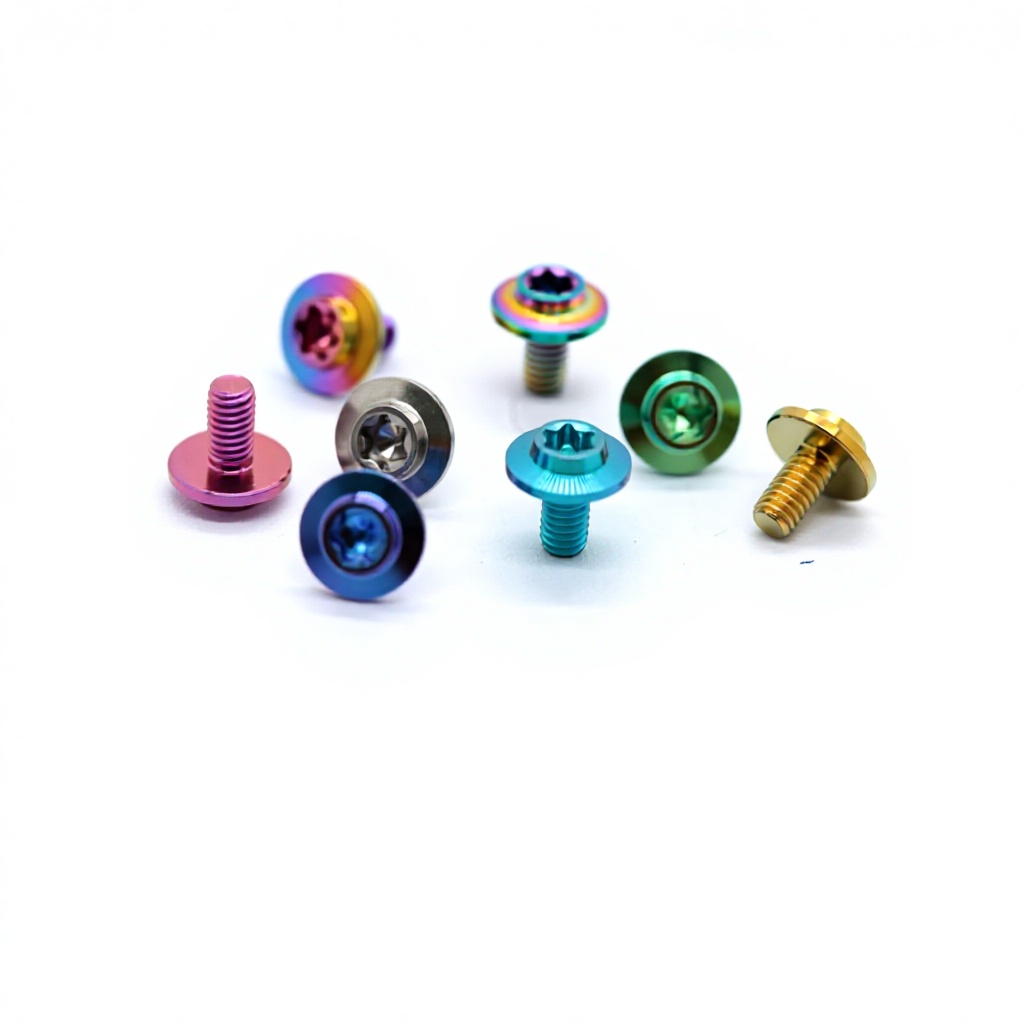
Anodized High Strength GR5 M6 Umbrella Head Fasteners
- Geometry: Broad Clamp Umbrella
- Anodization: Type II Mil-A-8625
- Corrosion: Salt Spray ≥ 1,000 hrs
Engineering Titanium Threaded Studs for the Louisville Industrial Ecosystem
In the heavy industrial belt of the Ohio River Valley, Louisville, Kentucky operates as an intersection of advanced automotive production, aerospace supply chains, chemical distillation, and heavy transportation logistics. Procurement directors, tooling engineers, and maintenance managers across the greater Louisville metropolitan area—stretching from the Ford Kentucky Truck Plant and Louisville Assembly Plant corridors to the Rubbertown industrial chemical hub and the Louisville Riverport industrial authority—continually confront the physical limitations of commercial high-tensile steel (Grade 8.8, 10.9, 12.9) and standard austenitic 304/316 stainless steels. As production environments demand higher duty cycles, reduced dead weight, immunity to acidic pitting, and high resistance to violent thermal fluctuations, titanium threaded studs and custom studs-and-nut assemblies have shifted from specialized aerospace curiosities into standard line-item components for critical plant operations.
A threaded stud serves a far more demanding mechanical mandate than a traditional head-driven hex or socket cap bolt. While a bolt is subjected to simultaneous torsion and tensile strain when torque is introduced directly to its integral head, a threaded stud is anchored into a tapped blind hole or casting. Tensile clamping force is then generated purely along the stud axis by driving a precision nut over lubricated end threads. In high-vibration automotive assembly lines, robotic spot-welding jigs, and high-pressure steam flanging common to Louisville's distilleries and chemical plants, threaded studs provide superior joint rigidity, eliminate casting thread degradation during frequent rebuilds, and ensure uniform gasket crush profiles.
Metallurgical Architecture: Grade 5 (Ti-6Al-4V) vs. Grade 2 Commercially Pure Titanium
A primary failure mode in fastener procurement stems from selecting improper titanium alloy chemistry for specific stress envelopes. Commercial manufacturers and distributors in the Louisville market must balance raw structural yield strength against specific chemical passivity requirements.
Grade 5 Titanium (Ti-6Al-4V / ASTM B348 / AMS 4928): Representing the backbone of structural titanium manufacturing, Grade 5 is an alpha-beta alloy characterized by a minimum tensile strength of 895 MPa (130 ksi) and a minimum yield strength of 828 MPa (120 ksi). In high-performance tooling fixtures, engine block manifold conversions, and high-frequency automated stamping cells across Louisville plants, Grade 5 studs outperform quenched and tempered Grade 8.8 medium-carbon steel fasteners while cutting joint mass by 44%. The addition of 6% aluminum stabilizes the alpha phase to resist elevated temperatures up to 400°C, while 4% vanadium acts as an isomorphous beta stabilizer, significantly enhancing ductility, shear capability, and fatigue fracture limits under cyclical loading.
Grade 2 Commercially Pure Titanium (ASTM B348 Gr2 / UNS R50400): While Grade 5 dominates dynamic load applications, Grade 2 titanium possesses an all-alpha crystal lattice that provides moderate tensile strength (≥ 345 MPa) matched with unmatched chemical passivity. In Louisville's chemical plants and bourbon distillation processing lines where hydrochloric vapors, organic mash acids, chlorides, and wet sulfuric vapors dissolve standard 316L stainless steel within months, Grade 2 threaded studs spontaneously develop a dense, ceramic-like titanium dioxide (TiO2) passivation barrier. Even if scratched during nut engagement, this passive layer regenerates instantaneously in ambient oxygen or aqueous solutions.
| Mechanical & Physical Property | Ti-6Al-4V Grade 5 | Grade 2 CP Titanium | AISI 316L Stainless | Class 10.9 Alloy Steel |
|---|---|---|---|---|
| Ultimate Tensile Strength | 895 – 1000 MPa | 345 – 450 MPa | 520 – 680 MPa | 1000 – 1040 MPa |
| Yield Strength (0.2% Offset) | 828 MPa min | 275 MPa min | 220 MPa min | 900 MPa min |
| Volumetric Mass Density | 4.43 g/cm³ | 4.51 g/cm³ | 8.00 g/cm³ | 7.85 g/cm³ |
| Modulus of Elasticity (Young's) | 114 GPa | 105 GPa | 193 GPa | 205 GPa |
| Linear Thermal Expansion (CTE) | 8.6 μm/m·K | 8.6 μm/m·K | 16.0 μm/m·K | 11.7 μm/m·K |
| Chloride Stress Corrosion Resistance | Complete Immunity | Complete Immunity | Susceptible > 60°C | Poor (Rapid Pitting) |
| Thermal Conductivity | 6.7 W/m·K | 16.4 W/m·K | 16.3 W/m·K | 42.6 W/m·K |
Critical Thread Rolling vs. Thread Cutting: Why Grain Flow Dictates Stud Fatigue Life
In high-torque industrial installations, the machining method used to form the stud threads is directly responsible for component lifespan. Traditional low-cost screw-machine shops cut stud threads with standard single-point lathe tools or thread-cutting dies. This subtractive process severs the continuous metallic crystalline grain fibers of the titanium bar stock, leaving micro-notches, stress-concentration points, and microscopic micro-fissures at the thread root.
At Yevzo Titanium, all Grade 5 titanium threaded studs are manufactured using cold thread rolling between hardened tool-steel dies. The rolling process plastically deforms the outer surface of the titanium blank, forcing the metallic grain lines to contour uninterrupted over the crest and deep through the root radius of each thread. This cold-work displacement induces high residual compressive stresses in the thread roots, yielding up to a 30% to 40% enhancement in dynamic fatigue endurance. For high-speed robotic presses and automotive chassis dyno fixtures in Louisville assembly zones, rolled-thread titanium studs effectively resist cyclic fatigue shearing where cut-thread fasteners fail prematurely.
Application Scenarios Across Greater Louisville Industrial Operations
The strategic position of Louisville as a logistics capital and manufacturing center creates specific operational environments where titanium threaded studs eliminate downtime, prevent galvanic failure, and lower lifecycle overhaul budgets.
Automotive & Stamping Lines
Applied within the Ford assembly ecosystems (KTP & LAP) and local Tier-1 stamping suppliers. Used on heavy press tooling, exhaust manifold staging studs, and EV battery enclosure test fixtures where high clamp loads and thermal stability stop fastener relaxation.
Distillation & River Chemical
Deployed throughout Louisville's world-famous distilleries and the Rubbertown industrial hub. Grade 2 and Grade 5 double-ended studs clamp heat exchangers, mash evaporation columns, and piping manifolds exposed to sour vapors, wash residues, and volatile solvents.
Aerospace Tooling & Defense
Installed by defense contractors, aerospace tooling fabricators, and specialized maintenance facilities operating near Louisville Muhammad Ali International Airport (SDF). Titanium studs provide tight dimensional runout, non-magnetic neutrality, and extreme thermal resilience.
Macro Sourcing Trends & Supply Chain Dynamics in Louisville
Procurement directors operating across Kentucky and the broader East North Central/East South Central distribution hubs are navigating a historic shift in industrial supply chain strategy. Three dominant procurement trends define the Louisville fastener market:
1. Thermal Cycling Mitigation in Automated Powerplants: With the acceleration of commercial vehicle electrification and heavy stamping equipment upgrades, plant engineers report that traditional steel studs installed in aluminum blocks or copper heat exchangers frequently back out or crush gasket surfaces. Steel expands at a rate of 11.7 to 16.0 μm/m·K, whereas aluminum expands at approximately 23 μm/m·K. Titanium's modest CTE of 8.6 μm/m·K and lower Young's modulus (114 GPa vs. steel's 205 GPa) allows the stud to act like a precision elastic spring. It absorbs the thermal growth differential between engine housings and flanges without stretching permanently beyond its yield point.
2. Elimination of Unscheduled Chemical Maintenance: In high-throughput distilling operations, plant downtime costs thousands of dollars per hour. Standard zinc-plated or 316 stainless studs routinely fail due to chloride-induced stress corrosion cracking (SCC) along micro-crevices. Because titanium is chemically immune to chloride attack at typical operating temperatures, Louisville processing managers are upgrading to Ti-6Al-4V and Grade 2 studs to turn volatile 6-month fastener changeouts into permanent 10-year installations.
3. Traceable Mill Direct Sourcing: The risk of counterfeit materials and uncertified recycled alloys has driven engineering departments to reject unbranded distributors. Louisville procurement demands full material mill test reports (MTR) according to EN 10204 3.1, complete with chemical melt-lot analysis, ultrasonic flaw testing, and mechanical hardness certification originating straight from ISO 9001 certified production mills.
Yevzo Titanium Manufacturing Advantages for Louisville Industrial Buyers
Rooted in Baoji, Shaanxi—known globally as China's "Titanium Valley"—Yevzo Titanium Metal Co., Ltd. supplies factory-direct manufacturing precision directly to North American industrial accounts without intermediary domestic broker markups. With over a decade of continuous precision manufacturing experience since 2013, our production infrastructure delivers tangible engineering advantages:
Positioned at the epicenter of raw titanium sponge and bar supply, ensuring virgin melt stock, heat-lot batch segregation, and competitive volume pricing.
Our workshop houses high-speed Swiss lathes, 3-axis to 5-axis CNC machining stations, and specialized cylindrical thread-rolling machinery capable of tight micro-finishes.
We machine directly from your CAD prints, 2D PDF blueprints, or reverse-engineer physical samples. Custom step-studs, dog-point starters, and drive recesses are standard.
From micro-polishing and ultrasonic degreasing to PVD vacuum coating and high-purity anodization (gold, blue, purple, black, rainbow) to eliminate galling.
We provide comprehensive trade terms tailored to Louisville procurement systems, supporting DDP (Delivered Duty Paid directly to your facility receiving dock), CIF, FOB, and express air freight. Our documentation package includes comprehensive dimensional inspection logs, optical comparator pitch checks, and certified material test certificates matching exact ASTM B348 and ISO specifications.
Frequently Asked Questions: Titanium Stud Sourcing in Louisville
Detailed technical answers for machine shop superintendents, fastener buyers, and plant maintenance directors.
How do Grade 5 titanium threaded studs prevent galling during high-torque assembly?
Galling (cold welding) occurs when thread friction frictionally removes the passive titanium dioxide oxide film, leading to metal-to-metal bonding and severe thread seizure. To prevent galling, our technical engineers recommend three mandatory procedures: First, specify thread-rolled studs with a micro-finish roughness average (Ra) of ≤ 0.4 μm, which eliminates micro-machining asperities. Second, apply high-quality anti-seize paste formulated with molybdenum disulfide (MoS2), nickel, or specialized ceramic particulate. Third, utilize physical vapor deposition (PVD) coatings or Type II anodic surface treatments, which generate an ultra-dense, low-friction sacrificial interface between male and female threads.
Can titanium threaded studs be coupled with aluminum castings without galvanic corrosion?
Yes, provided standard mechanical isolation techniques are observed. In the galvanic series, titanium possesses a high noble potential (+0.05V to -0.05V vs. standard hydrogen electrode), whereas 6000-series structural aluminum is substantially more active (-0.7V to -0.9V). In dry operating environments (such as sealed gear cases or indoor assembly fixtures), no galvanic reaction occurs. In wet, outdoor, or salt-exposed Ohio River valley environments, an electrolyte (water or brine) can bridge the metals. Galvanic reaction is completely prevented by utilizing chemically inert non-conductive washers, applying anaerobic thread locker/sealants (such as Loctite 242/271), or specifying our specialized anodized or fluoropolymer-barrier coatings on the stud shank.
What are the torque specification guidelines when replacing Class 10.9 steel studs with Ti-6Al-4V?
Because Grade 5 titanium possesses a tensile strength (~950 MPa) closely matching Class 10.9 steel (~1040 MPa) but has an elastic modulus roughly half that of steel (114 GPa vs. 205 GPa), direct torque translation requires caution. Under the same rotational torque, a titanium fastener stretches twice as far elastically, providing a generous clamp-load retention window. However, because titanium has a higher friction coefficient in raw states, you must always use lubricated torque calculations: Typically, tightening torque should be set to 75%–85% of standard dry steel values when using high-pressure thread lubricants. We supply custom torque-to-yield calculation charts for every specific thread pitch and fastener diameter upon order confirmation.
What thread standards and classes do you produce for American industrial plants?
We manufacture both Unified Inch Screw Threads (UNC coarse, UNF fine, and UNEF extra fine per ASME B1.1 to Class 2A and precision Class 3A fits) and Metric threads (Coarse and Fine pitch according to ISO 965-2 Class 6g and 4h6h). Double-ended studs can be engineered with differing pitch configurations on either end—for example, a Class 3A coarse thread designed to lock permanently into an engine block or casting, coupled with a fine-pitch metric thread on the exterior end for precise clamping load generation with a 12-point flange nut.
What is your minimum order quantity (MOQ) and lead time for shipments to Louisville, KY?
For standard stocked catalog fasteners and standard titanium studs, our MOQ starts as low as 20 to 50 pieces, allowing engineering teams to run physical pilot validation before scale-up. For fully customized blueprints, custom lengths, or non-standard metric/inch thread combinations, initial batch MOQs generally range from 100 to 200 units depending on bar diameter. Air courier shipments (DHL, FedEx, UPS) directly to Louisville facilities arrive within 5 to 8 business days post-machining. For heavy volume sea-freight orders entering via East Coast or Gulf ports under DDP terms, typical transit timelines are 25 to 35 calendar days.
How do you verify metallurgical purity and mechanical compliance?
Quality assurance is governed by our multi-tier inspection protocols. Every production run is tied to a specific mill ingot heat number. We perform optical emission spectrometry (OES) to verify elemental compositions (ensuring Aluminum sits precisely within 5.5%–6.75% and Vanadium within 3.5%–4.5%), followed by hardness testing (Rockwell C 32–38 for Gr5), tensile proof testing, and optical projector inspections for thread root profile uniformity. Full EN 10204 3.1 inspection documentation accompanies every delivered shipment.