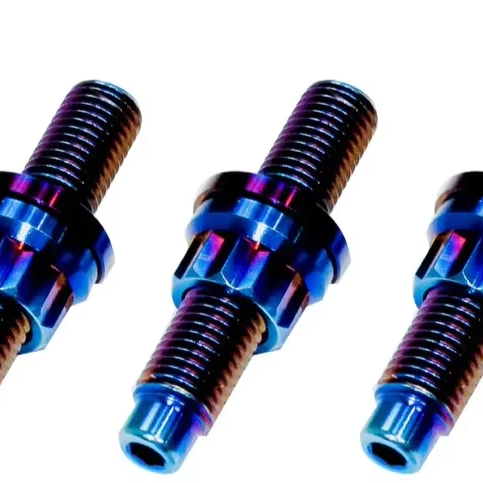
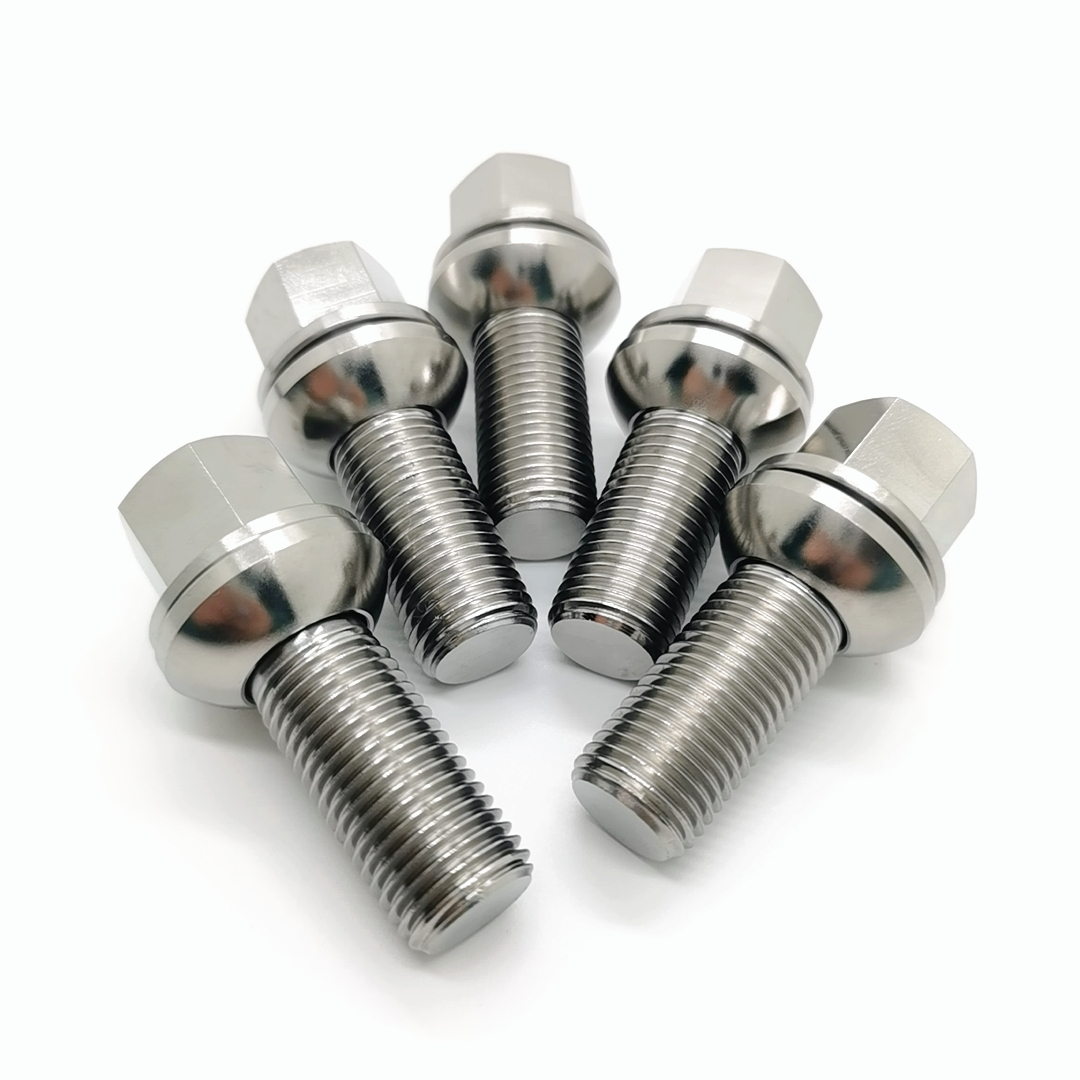
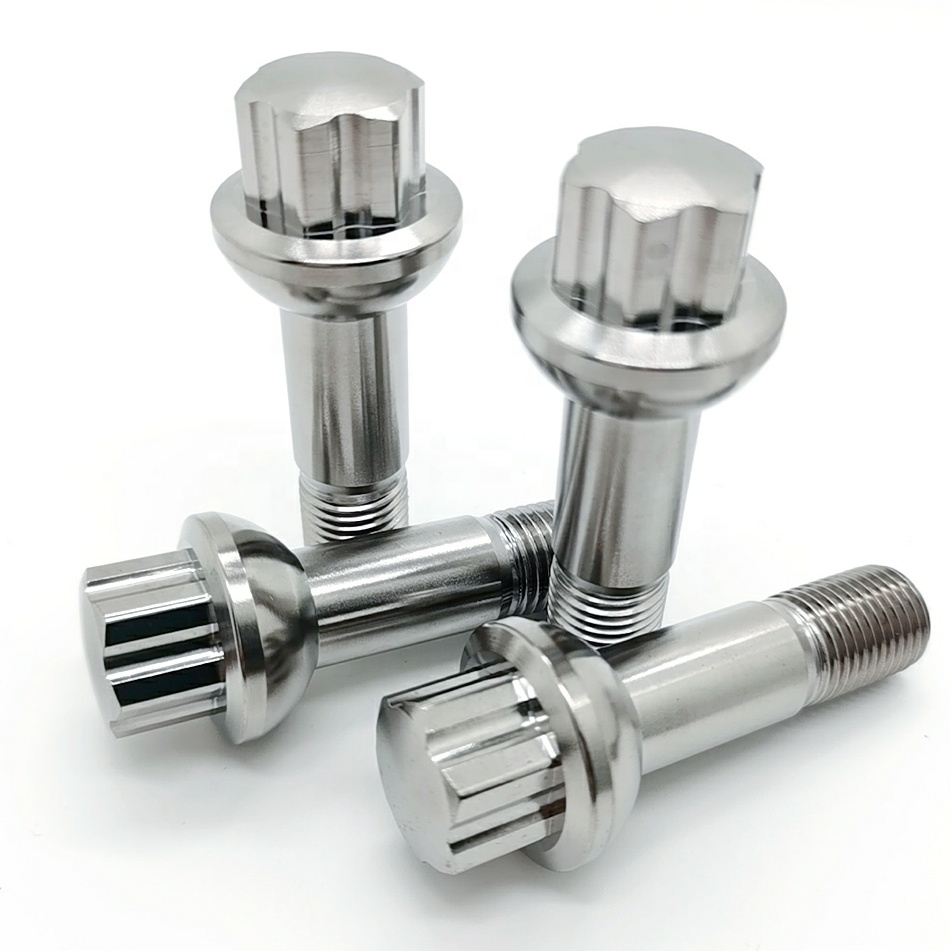
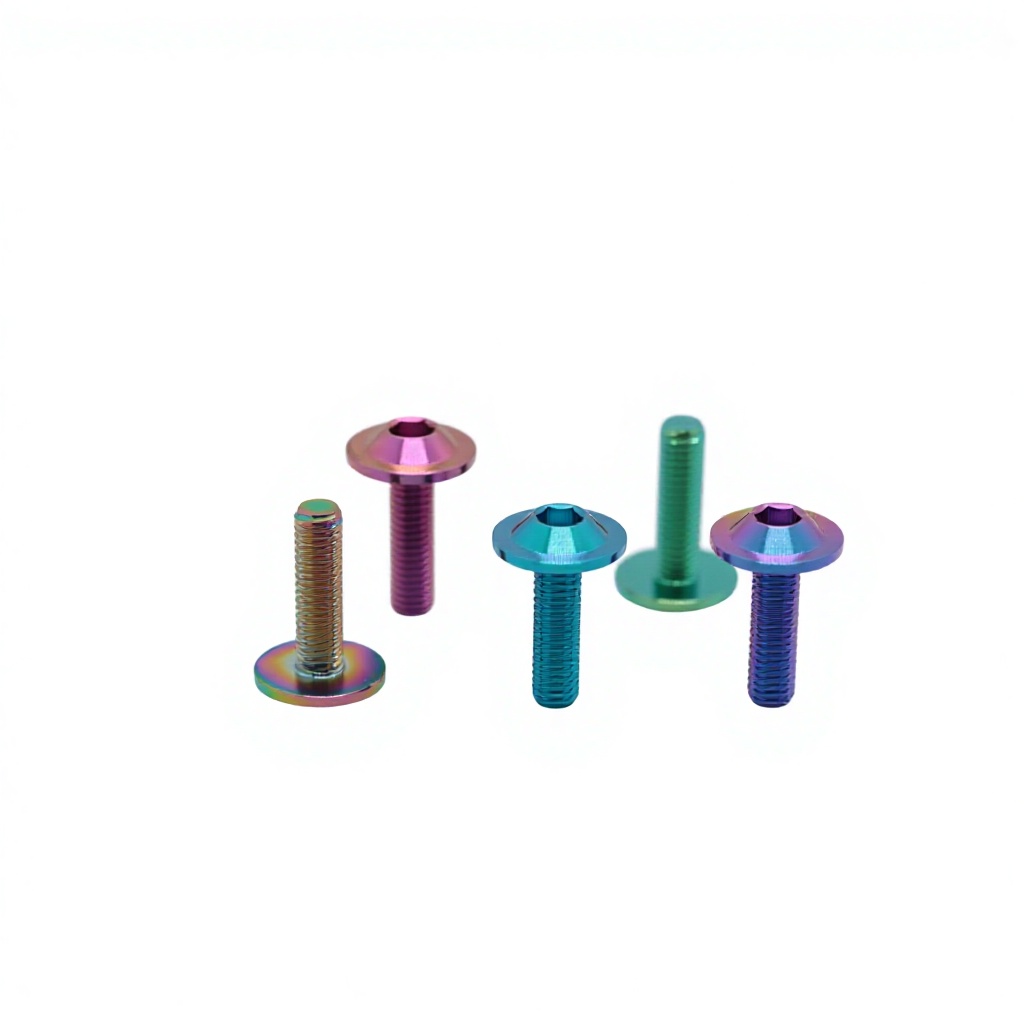
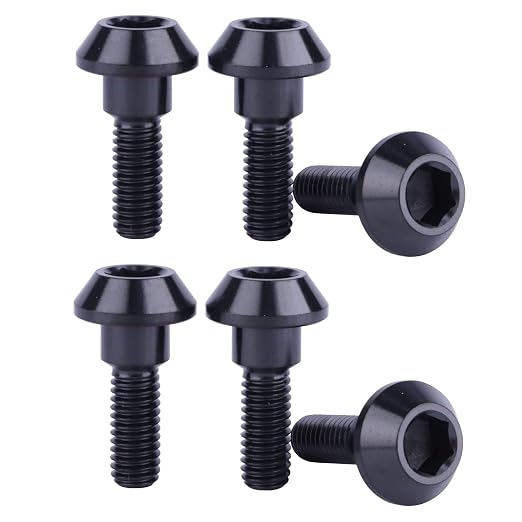
M5 M6 M8 Industrial Grade Titanium Hex Bolts
- Grade: Gr5 Ti-6Al-4V
- Tensile: 895–950 MPa
- Applications: Stem, Cockpit & Frame
Precision CNC-turned and cold-forged fasteners manufactured from certified aerospace titanium, engineered for unmatched tensile resilience, cyclic anti-vibration stability, and extreme corrosion resistance.
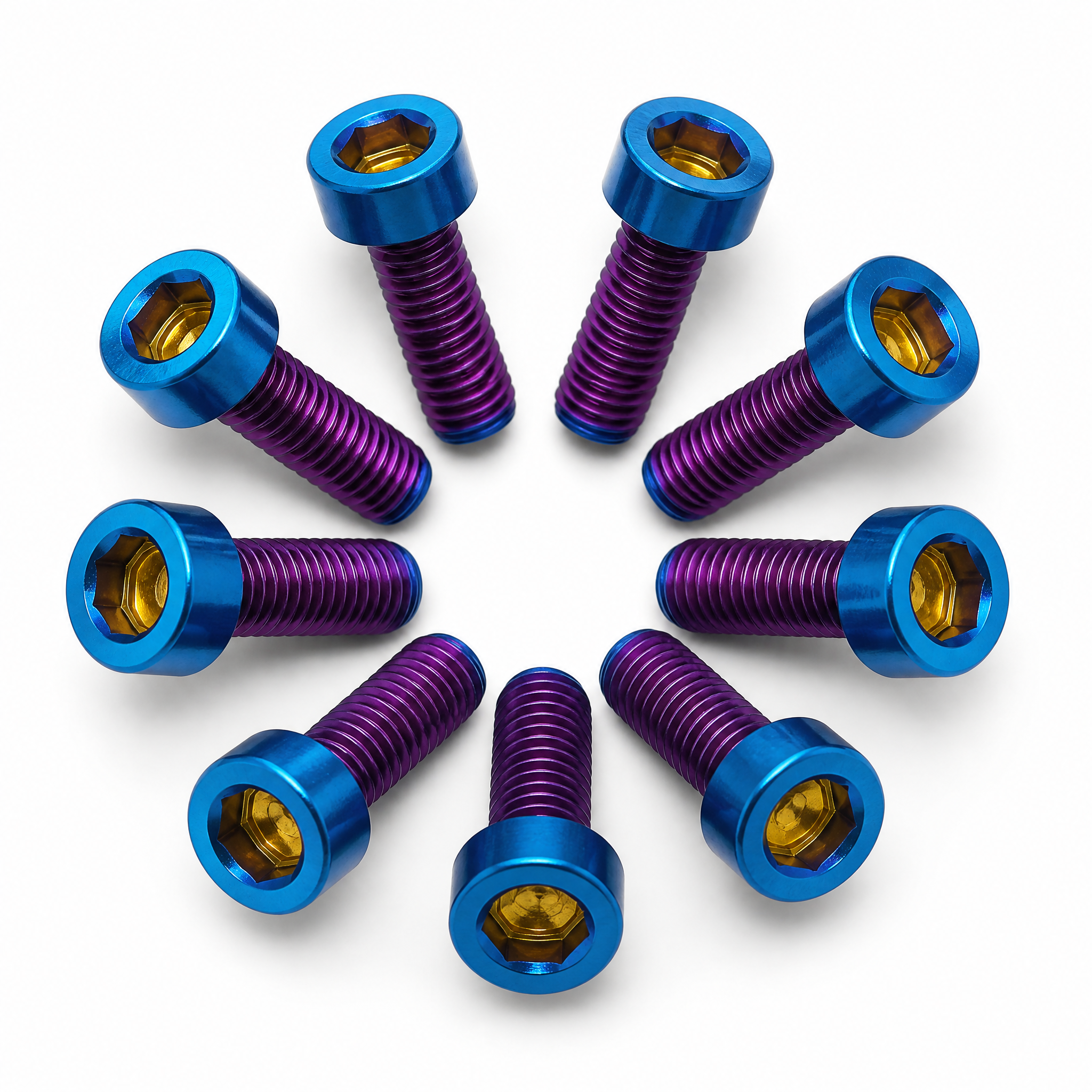
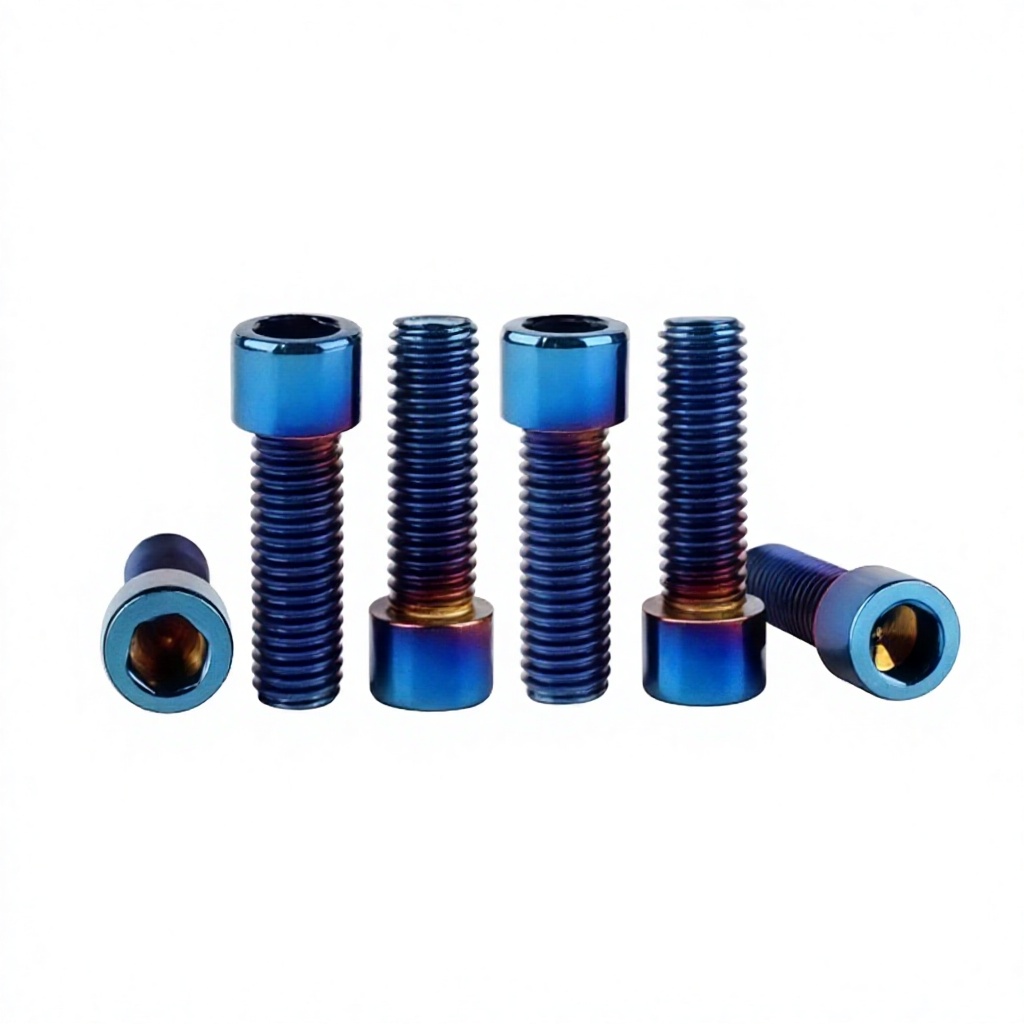
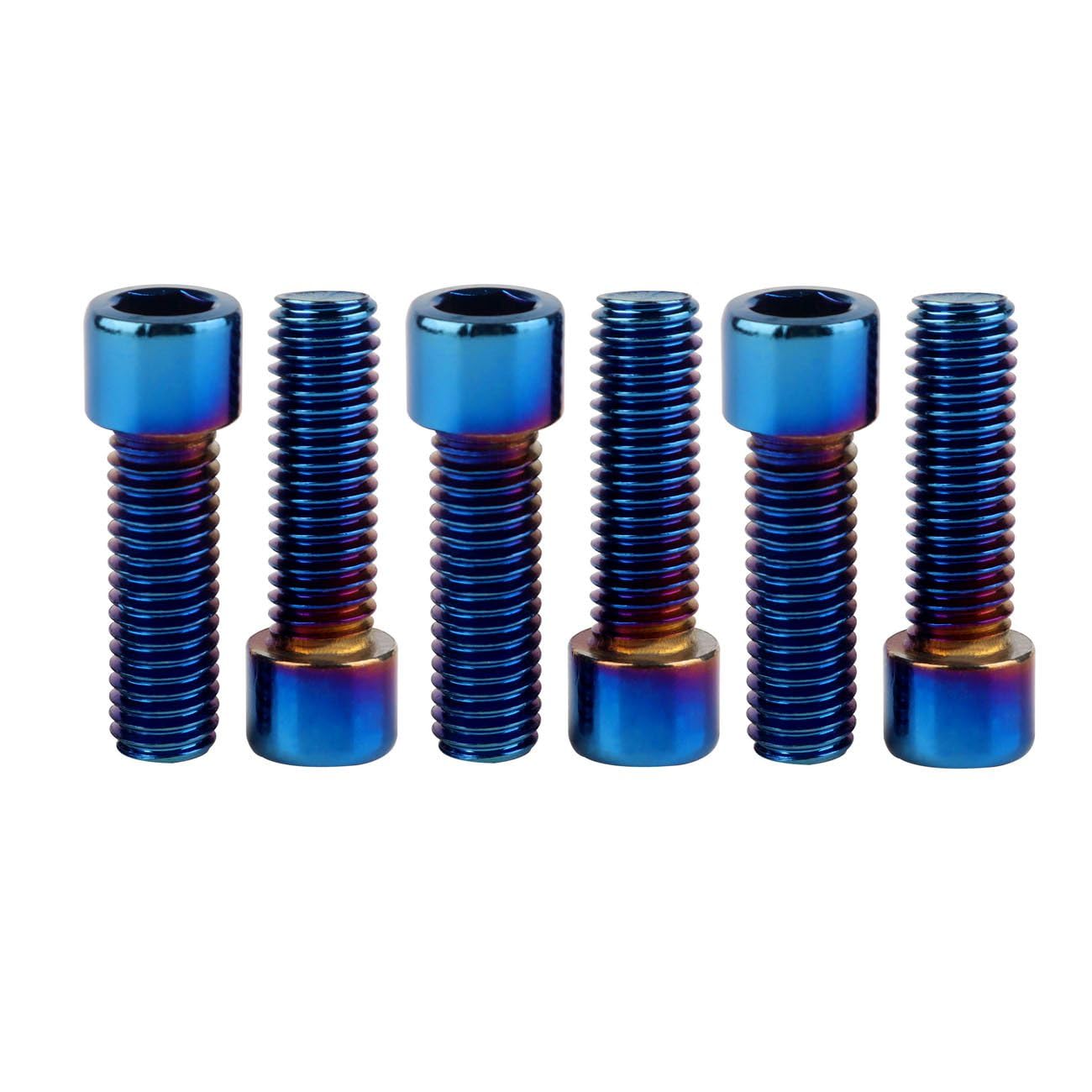
An in-depth metallurgical analysis on thread galling mitigation, cyclic thermal locking characteristics, and the operational transition toward non-ferrous fastening systems across Belgian industrial hubs.
A Titanium Nyloc Nut (standardized under DIN 985 for low-profile and DIN 982 for full-height formats) incorporates a captive, non-metallic polymeric collar, commonly manufactured from virgin Polyamide 6.6 (PA66). When engaged with an externally threaded titanium bolt—such as a Grade 5 (Ti-6Al-4V) rolled-thread fastener—the lead threads of the screw pass freely through the tapped metal portion of the nut until reaching the unthreaded nylon insert. The nylon ring experiences elastic and plastic radial compression, creating an enduring, interference-fit prevailing torque that firmly grips the flank surfaces of the mating fastener.
In conventional high-tensile carbon steel or stainless steel fastenings, shock cycles and rotational vibrations can trigger rapid back-off due to micro-slip between thread interfaces. In contrast, titanium's lower modulus of elasticity (114 GPa for Grade 5 versus 205 GPa for carbon steels) allows subtle axial compliance without localized yielding. When paired with the polymeric deformation of the insert, this system demonstrates superior energy dissipation under transverse vibrational frequencies—conforming strictly to ISO 2320 prevailing-torque requirements and DIN 65151 (Junker transverse vibration testing).
| Mechanical & Physical Property | Ti Gr5 (Ti-6Al-4V) Nyloc | Ti Gr2 (CP Grade 2) Nyloc | Stainless A4-80 (316) Nyloc | Class 10.9 Zinc Steel |
|---|---|---|---|---|
| Nominal Tensile Strength (Rm, min) | 895 – 950 MPa | 345 – 450 MPa | 800 MPa | 1040 MPa |
| Yield Strength (Rp 0.2, min) | 828 MPa | 275 MPa | 600 MPa | 940 MPa |
| Density (g/cm³) | 4.43 | 4.51 | 8.00 | 7.85 |
| Weight Savings vs. Ferrous Standard | ≈ -44% | ≈ -43% | Baseline (0%) | Baseline (0%) |
| Salt Spray Resistance (ISO 9227) | Immune (>5000 hrs) | Immune (>5000 hrs) | Good (Pitting Risk) | Requires Sacrificial Zinc |
| Continuous Temperature Range | -50°C to +120°C (Ring Limit) | -50°C to +120°C | -50°C to +120°C | -50°C to +120°C |
From the North Sea coast off Ostend to the pharmaceutical corridors of Wallonia and the high-tech logistics parks around Antwerp, engineering teams select titanium self-locking fasteners for specific hostile environment requirements.
Belgium’s offshore energy capacity across the Belgian Continental Shelf relies on substations and turbine monitoring equipment facing dense chloride-laden salt fog. Stainless steel nuts often experience crevice corrosion under stagnant thread seals. Grade 5 titanium nyloc nuts remain completely unaffected by chloride pitting and galvanic cell oxidation, locking nacelle instrumentation and exterior radar telemetry securely without thread corrosion.
The petrochemical cluster spanning the Port of Antwerp-Bruges is the second-largest in the world. Process piping, dosing valves, and inspection hatches are subject to aggressive chemical atmospheres, including sulfuric mist and caustic cleaning cycles. Titanium Grade 2 and Grade 5 self-locking nuts resist oxidizing acids and wet chlorines, maintaining structural integrity across automated fluid metering skids.
Within Wallonia's Skywin aerospace ecosystem and across subcontractors in Liège, weight optimization is linked directly to payload capacity and energy budgets. Replacing traditional high-strength steel hardware with Ti-6Al-4V prevailing-torque locknuts yields an immediate 44% mass reduction across airframe subassemblies, satcom radomes, and UAV avionics brackets without sacrificing clamping integrity.
Flanders holds deep heritage in international cycling, from classic cobbled spring events to modern carbon fiber frame assembly. Titanium hardware absorbs cyclic cobblestone impact without loosening. Mechanics replace ordinary fasteners with Grade 5 titanium nylocs for disc brake caliper pivots, rear derailleur hangers, and seat clamps, eliminating corrosion caused by winter road salt (de-icing brine) and rain.
Belgium is a primary European hub for vaccine synthesis and biopharmaceutical production. Autoclave cleanroom environments mandate hardware that will not scale, flake, or shed heavy-metal particulate. Passivated titanium nyloc nuts with FDA-compliant synthetic polymers withstand continuous hydrogen peroxide vapor disinfection and cleanroom sterilization cycles.
Analysis of changing technical standards, raw material stability, and environmental regulations influencing Belgian engineering procurement through 2026–2030.
Belgian industrial buyers are changing how they evaluate fastener procurement. Traditional procurement based purely on upfront unit cost is being replaced by Life-Cycle Cost (LCC) and Total Cost of Ownership (TCO) models. In marine and chemical installations around Ghent and Zeebrugge, servicing corroded or seized stainless bolts incurs expensive maintenance downtime, scaffolding costs, and hydraulic bolt-cutting labor. The biological inertness and total salt-water immunity of Grade 5 titanium completely eliminate galvanic thread seizure, paying for itself across the initial operating inspection cycle.
Concurrently, Belgium's commitment to European Green Deal directives is driving vehicle and equipment electrification. Light rail, commercial electric logistics fleets, and port cranes are engineering out dead mass to stay within gross vehicle weight ratings while extending battery run-times. Because cold-forged and CNC-machined titanium components yield strength-to-weight ratios well above 215 kN·m/kg—compared to 130 kN·m/kg for high-strength steel—the migration toward titanium fasteners represents an essential mechanical strategy for European mechanical engineers.
Operating since 2013, Yevzo Titanium Metal Co., Ltd. combines raw ingot traceability with multi-axis CNC turning and cold-heading capabilities, offering Belgian importers dependable, factory-direct procurement.
Located in the heart of Shaanxi’s Titanium Valley, we source select sponge titanium and ASTM B348 bar stock directly from verified mill sources. Every batch of Grade 2 commercially pure and Grade 5 (Ti-6Al-4V) aerospace material comes with full EN 10204 3.1 chemical composition and mechanical test certificates, providing absolute traceability to melt heats.
Threads cut into titanium can create sharp stress risers prone to fatigue. We use specialized thread-rolling processes that burnish continuous grain flow along thread flanks up to Class 6H metric standards. This reduces micro-notch sensitivity and prevents premature galling when torqued against mating components.
Experienced in European trade compliance, we support Incoterms including DDP, CIF Antwerp, and express air freight via DHL/FedEx directly to Belgian addresses. We manage customs documentation, tariff codes (HS 8108.90), and payment options via EUR/USD wire transfer (T/T), L/C, and commercial escrow.
Clear, practical answers covering mechanical properties, customs protocols, anti-galling procedures, and custom OEM manufacturing.
Speak directly with our senior application engineers in Baoji to discuss dimensions, torque ratings, alloy selection, and volume discounts for your Belgian manufacturing operations.
Contact Us