Rear Rotor
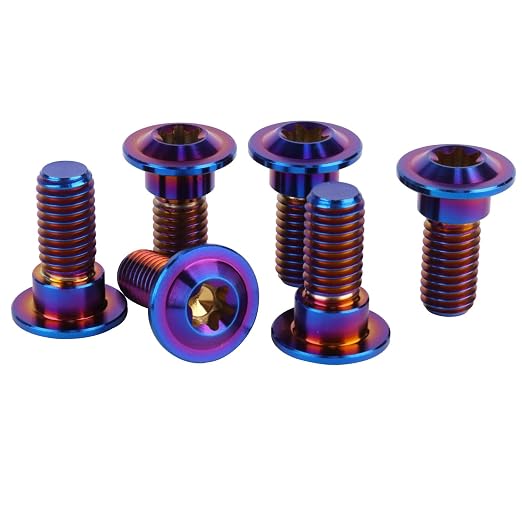
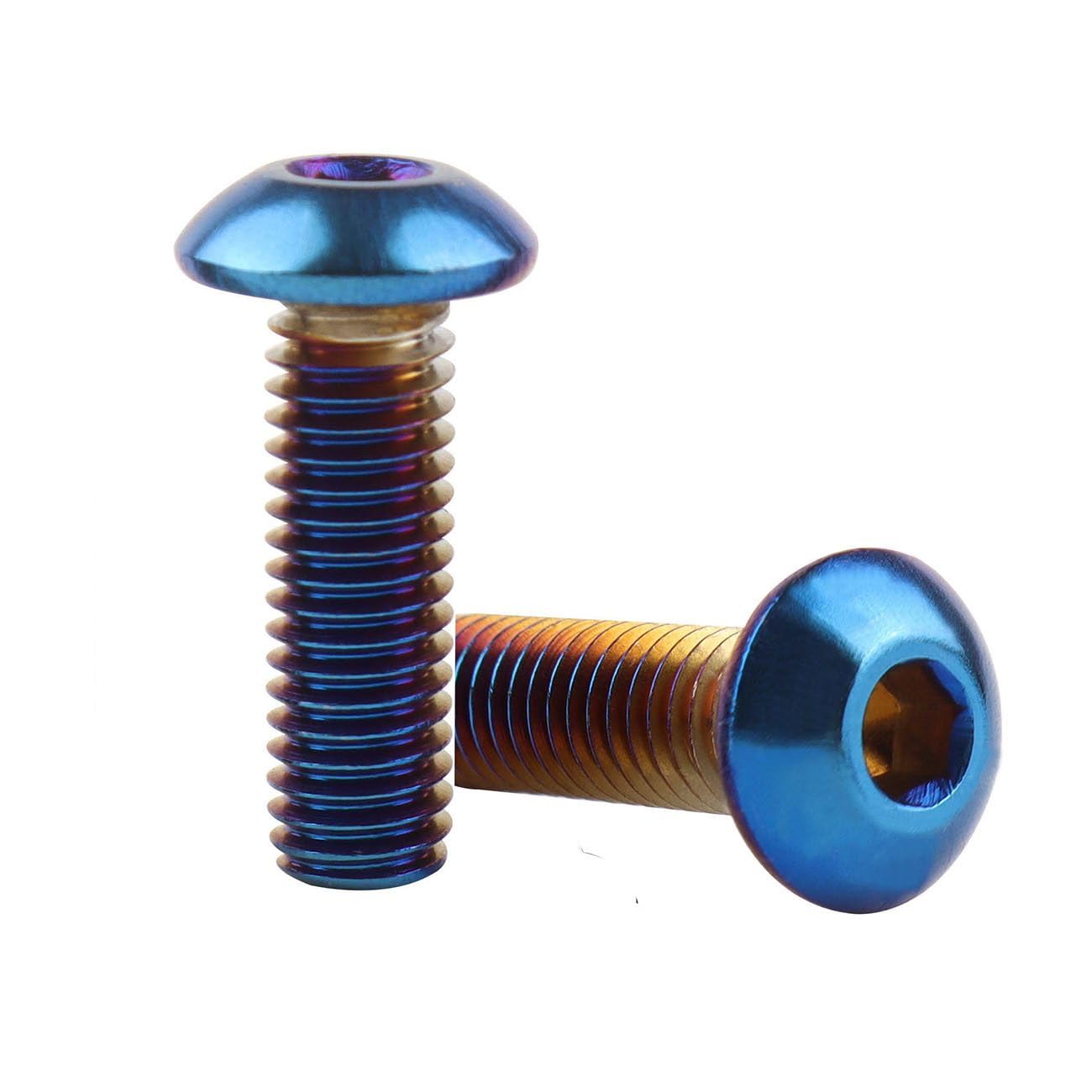
Titanium Bolt M8*20mm 25mm Motorcycle Rear Brake Rotor Screw Burnt Blue
- Thread: M8 × 1.25
- Material: Gr5 Ti-6Al-4V
- Finish: PVD Burnt Blue
Engineered at our Baoji direct manufacturing base to European DIN and ISO metric dimensional envelopes, supporting high-vibration rotational assemblies and zero-corrosion mechanical joints.
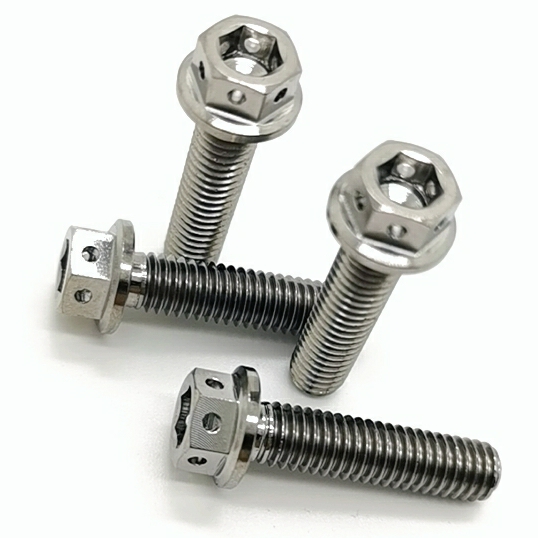
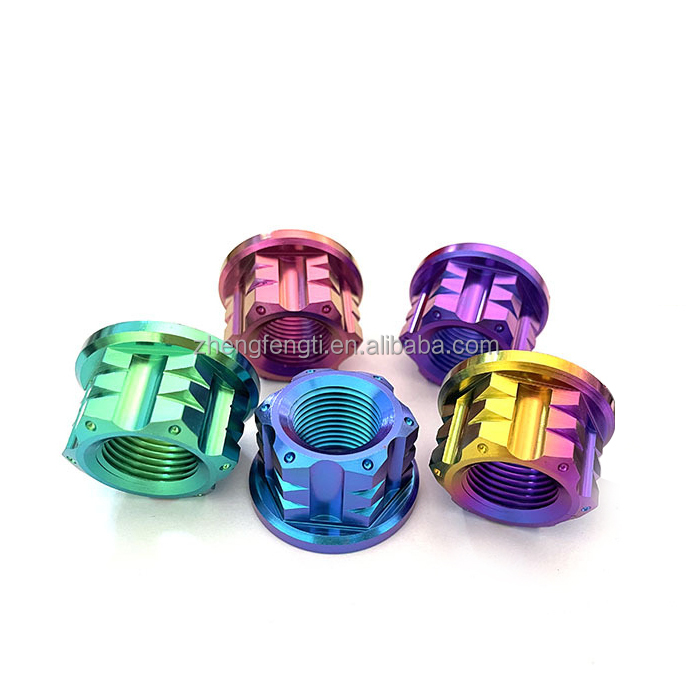
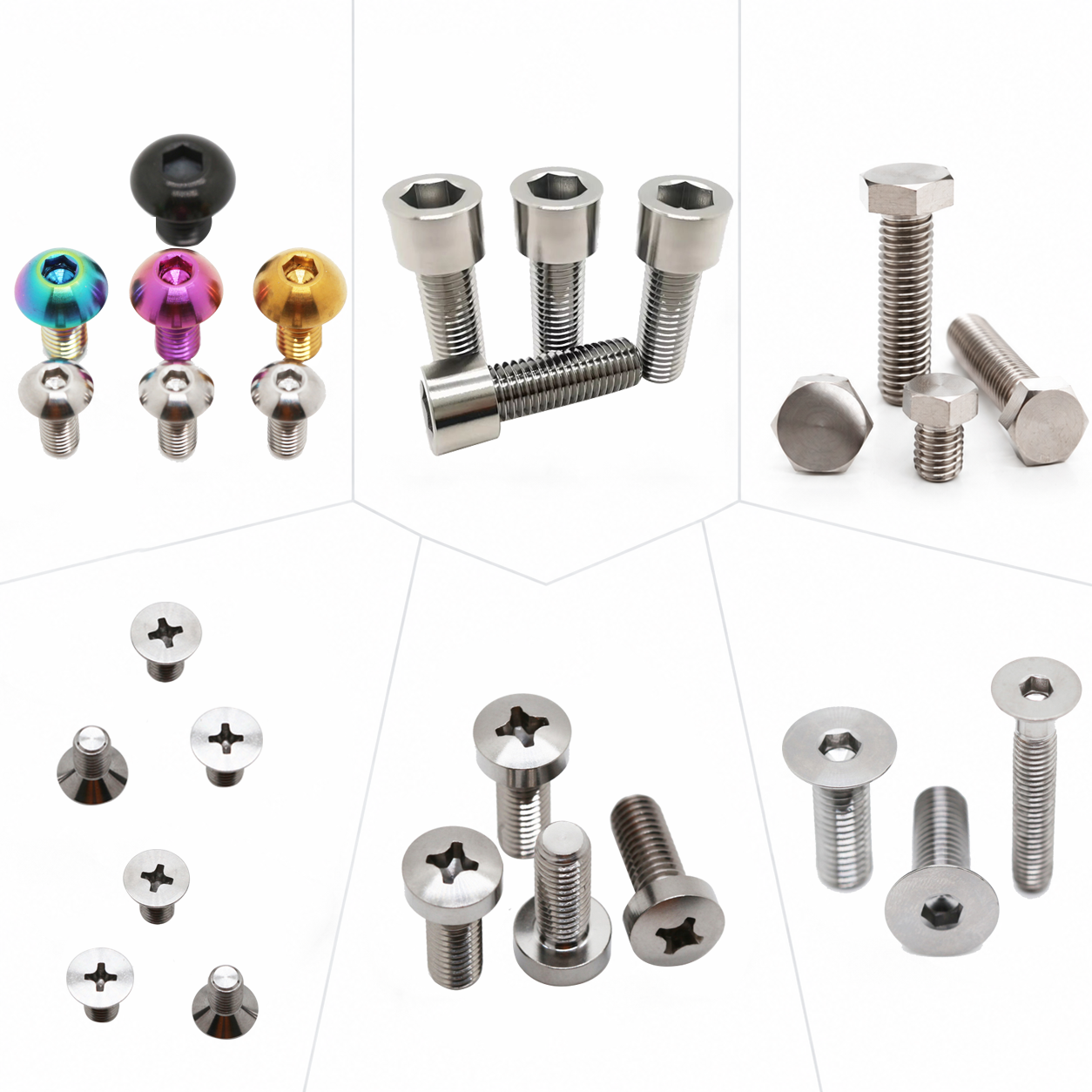
In high-frequency cyclic loading and damp, corrosive thermal environments, standard fastening systems suffer from self-loosening and interfacial galling. Here is how our Titanium Nyloc systems solve fundamental bolted joint failure modes.
Industrial procurement within automotive clusters, robotics engineering, and alpine machinery requires components capable of surviving intense dynamic oscillation without periodic torque retightening. The Titanium Nyloc Nut (conforming to DIN 985, DIN 982, and ISO 7040) combines the superior strength-to-weight ratio and chemical inertness of Ti-6Al-4V (Grade 5) with a thermally stabilized elastic polymer insert. As a mating screw engages the undersized collar of the polyamide ring, the insert undergoes radial and axial elastic deformation rather than thread-cutting, exerting a continuous, non-galling compressive radial clamping force across thread crests and flanks.
Unlike split-lock washers that lose seating tension under transverse shock, prevailing-torque nylon inserts sustain locking capability under intense transverse dynamic shearing, preserving axial clamp load across more than 30,000 cycles.
Titanium threads without specialized treatment tend to suffer from cold welding (micro-adhesion). Our precision CNC rolling process produces burnished thread roots with low surface roughness (Ra ≤ 0.4 μm), while our polymer rings buffer run-in friction.
At a density of 4.43 g/cm³ compared to steel's 7.85 g/cm³, substituting steel nuts with titanium versions lowers rotational inertia and unsprung mass in high-speed automotive hubs, motorcycle drivetrains, and precision robotic joints.
| Performance Characteristic | Yevzo Ti-6Al-4V (Grade 5) Nyloc | Commercially Pure Ti (Grade 2) | A2-70 / A4-80 Stainless Steel | High-Tensile Steel 8.8 / 10.9 |
|---|---|---|---|---|
| Ultimate Tensile Strength (Rm) | ≥ 895 – 1050 MPa | 345 – 450 MPa | 700 – 800 MPa | 800 – 1040 MPa |
| 0.2% Yield Strength (Rp0.2) | ≥ 828 MPa | 275 MPa | 450 – 600 MPa | 640 – 940 MPa |
| Specific Density | 4.43 g/cm³ | 4.51 g/cm³ | 7.90 g/cm³ | 7.85 g/cm³ |
| Electrochemical / Salt Resistance | Inert (Stable Passive TiO&sub2;) | Excellent | Pitting risk in winter chlorides | Rapid corrosion unless coated |
| Prevailing Reusability Cycles | ≥ 15 Cycles (ISO 2320 spec) | < 5 Cycles (galling prone) | 5 – 8 Cycles | 8 – 12 Cycles (coating wear) |
From the high-tech automotive facilities around Graz-Puntigam to the steep alpine terrains of Upper Styria, our prevailing-torque titanium fasteners meet specific localized mechanical requirements.
The Greater Graz metropolitan region is globally recognized as the central European engineering nucleus for contract vehicle manufacturing, high-performance four-wheel-drive platforms, and electric powertrain development. Tier-1 and specialized racing modification houses in Styria specify DIN 985 Titanium Nyloc nuts paired with DIN 6921 titanium flange bolts in unsprung suspension linkages, anti-roll bar end links, and lightweight battery casing mounts. In electric vehicle prototypes, where curbing weight extends range without compromising structural safety under German Autobahn or alpine pass conditions, Grade 5 titanium offers an unmatched solution.
Surrounding Graz, Austria's mountain infrastructure relies on specialized snow-groomers, ski-lift systems, and cable car sensor mounts. These assemblies are subjected to continuous sub-zero freeze-thaw cycles, aggressive de-icing salts (magnesium and calcium chloride), and severe vibrations. Standard zinc-flake-coated steel fasteners degrade within a few winter seasons. Grade 5 Titanium Nyloc fasteners are naturally immune to chloride-induced stress corrosion cracking, reducing maintenance cycles for Austrian alpine installations.
Reflecting structural shifts toward e-mobility light-weighting, medical robotics, and automated manufacturing across Styria.
Combining primary raw-material sourcing directly from mill facilities with automated CNC finishing for transparent, reliable delivery to European buyers.
Located in Baoji High-Tech Zone, we source prime-grade ASTM B348 titanium bars with dedicated heat numbers and EN 10204 3.1 chemical/physical inspection sheets.
Multi-axis Swiss turning lathes and high-precision threading lines hold micro-tolerances within ±0.01 mm, preventing burr friction in polymer lock cavities.
We machine strictly to DIN 985, DIN 982, DIN 6923, ISO 4014, and ISO 7040 norms. Custom prototypes can be manufactured directly from STEP/DWG drawings.
We support DDP (Delivered Duty Paid) directly to Graz or Styrian destinations, handling European customs clearance, VAT, and express air freight without hassle.
Technical and commercial clarifications covering DIN standards, anti-galling assembly protocols, temperature ranges, and import procedures for Styrian manufacturing firms.
Send your drawings, required thread sizes, quantities, and target delivery schedule. Our technical engineering and quotation team will review your specifications and reply with a complete proposal within 24 hours.