High-Performance Titanium Fasteners Engineered for Rapid Dispatch to Seoul
Every fastener is CNC precision-machined from ultrasonically verified ASTM B348 titanium bars, delivering 45% mass reduction, exceptional fatigue limits, and imperviousness to aggressive chemical corrosion.
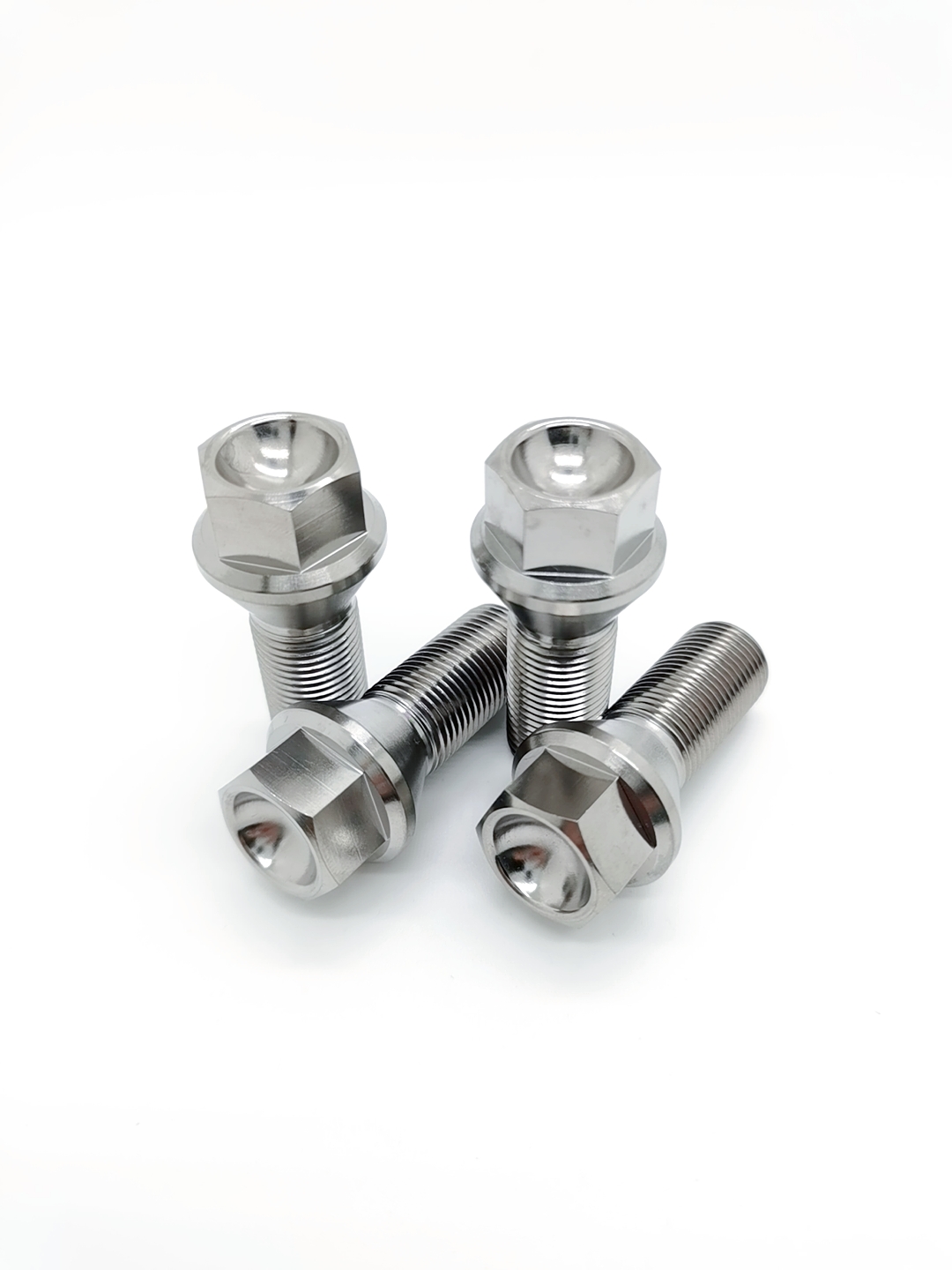
GR5 Titanium Wheel Lug Bolts Lightweight High Strength Flat Head UNC
- Grade:Gr5 Ti-6Al-4V
- Tensile Strength:≥ 980 MPa
- Seating:Conical / Flat
- Application:Custom Wheels / EV Tuners
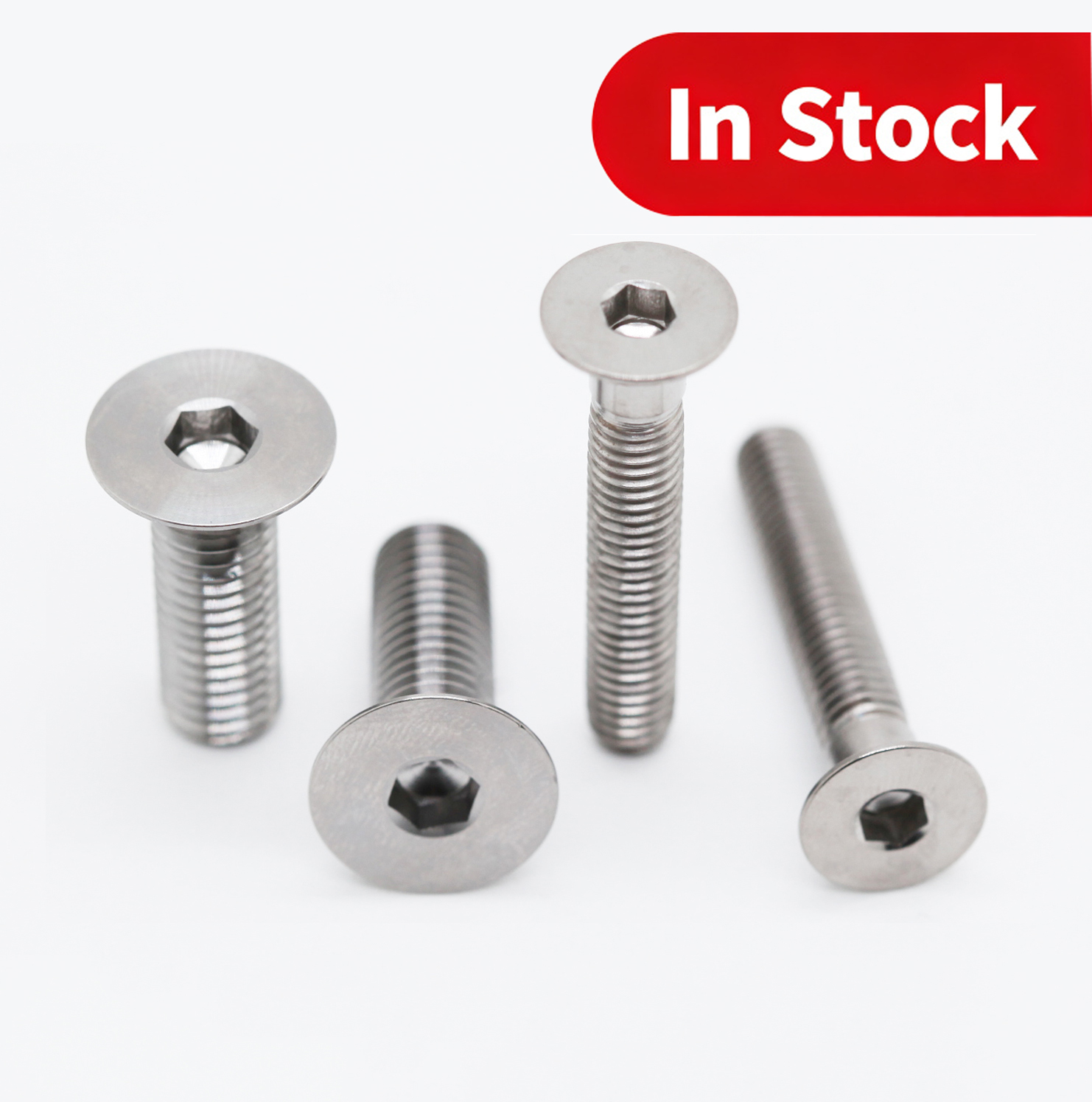
DIN7991 Titanium Countersunk Hexagon Flat Head Bolts M3 M4 M5
- Standard:DIN 7991 / ISO 10642
- Sizing:M3 to M10 Metric
- Drive:Hexagon Socket
- Stock Status:Immediate Seoul Air Freight
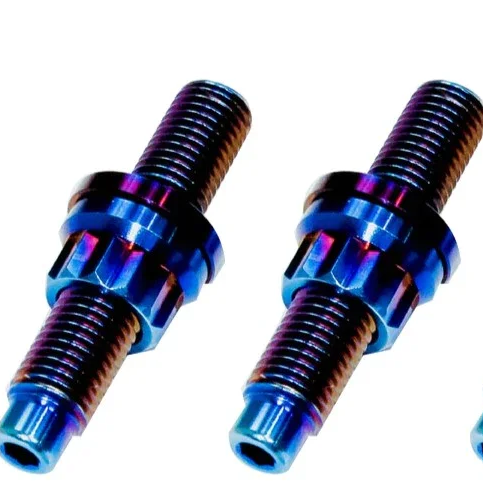
Silver M8 M10 GR5 Exhaust Intake Manifold Titanium Stud Kits
- Material:Grade 5 Ti-6Al-4V
- Thread:Rolled M8 × 1.25 / M10 × 1.25
- Thermal Threshold:Up to 450°C Duty
- Locking Nut:Flanged Prevailing Torque
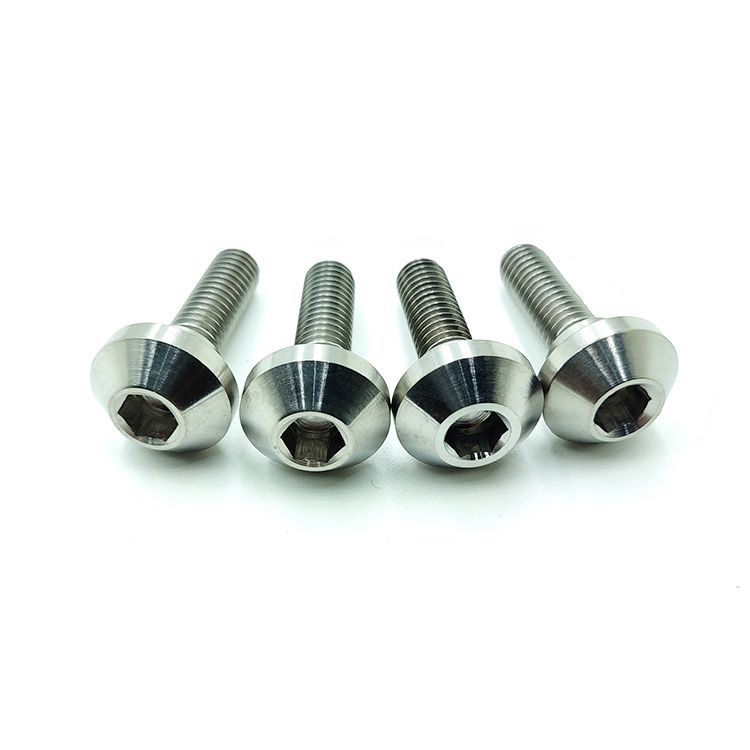
GR5 Titanium Anodized Brake Bolts Class 10.9 & 12.9 Performance
- Class Match:Surpasses Steel 10.9
- Shear Strength:550 MPa Nominal
- Finish:PVD Anodized Hard Coated
- Safety Feature:Pre-drilled for Lockwire
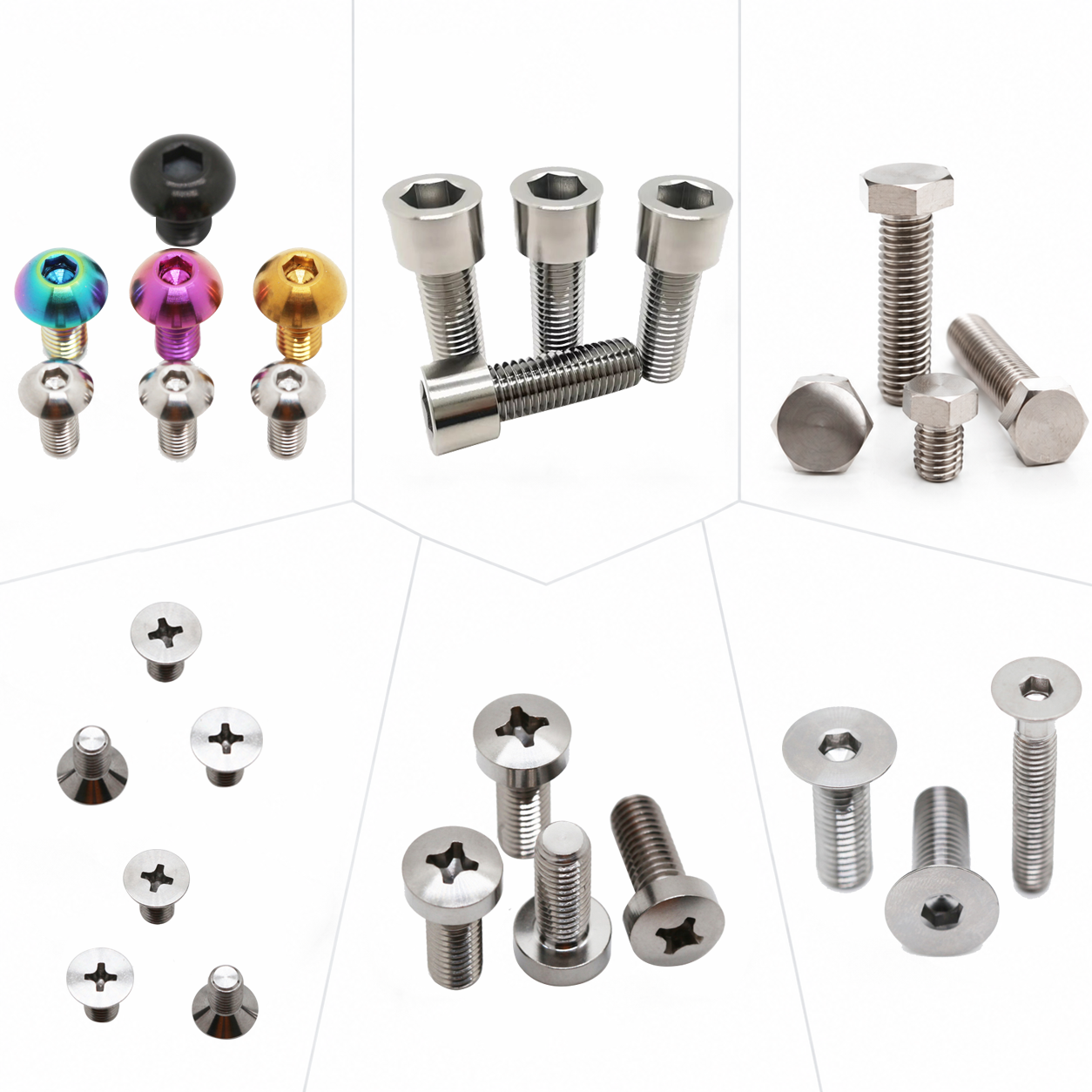
GR5 Titanium Standard Fastener Bolts and All-Metal Lock Nuts Stock
- Standard:DIN 934 / DIN 980V / ISO 7042
- Inventory:M4 to M24 Stocked
- Thread Class:6H Medium Tolerance
- MOQ:20 pcs / Ready to Ship
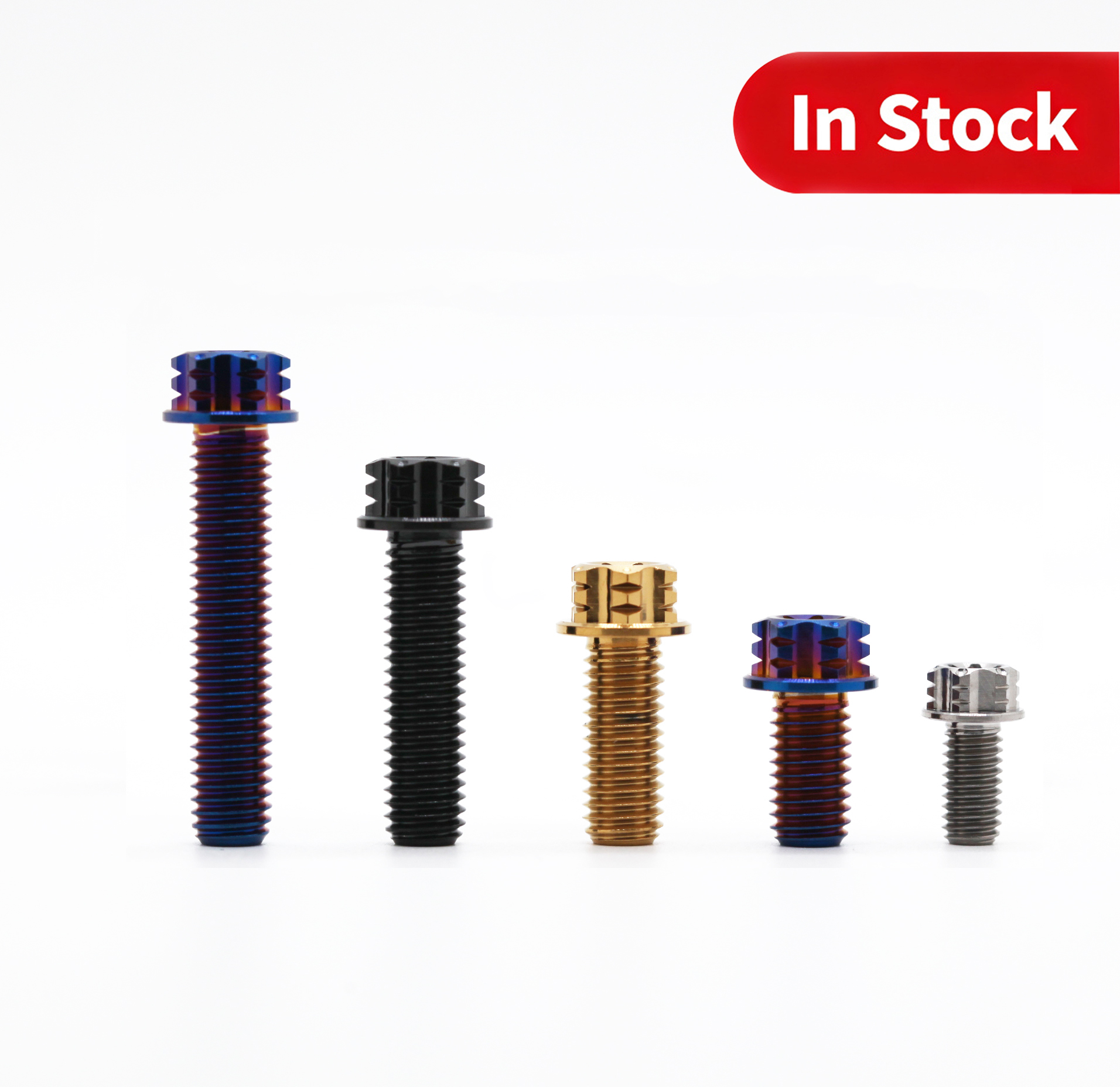
Gr5 Ti-6Al-4V Flange Bolts & Serrated Lock Nut Sets M6 M8 M22
- Configuration:DIN 6921 / DIN 6923
- Coating:PVD Burnt Blue, Gold, Black
- Contact Surface:Integral Serrated Flange
- Application:Chassis & Engine Mounts
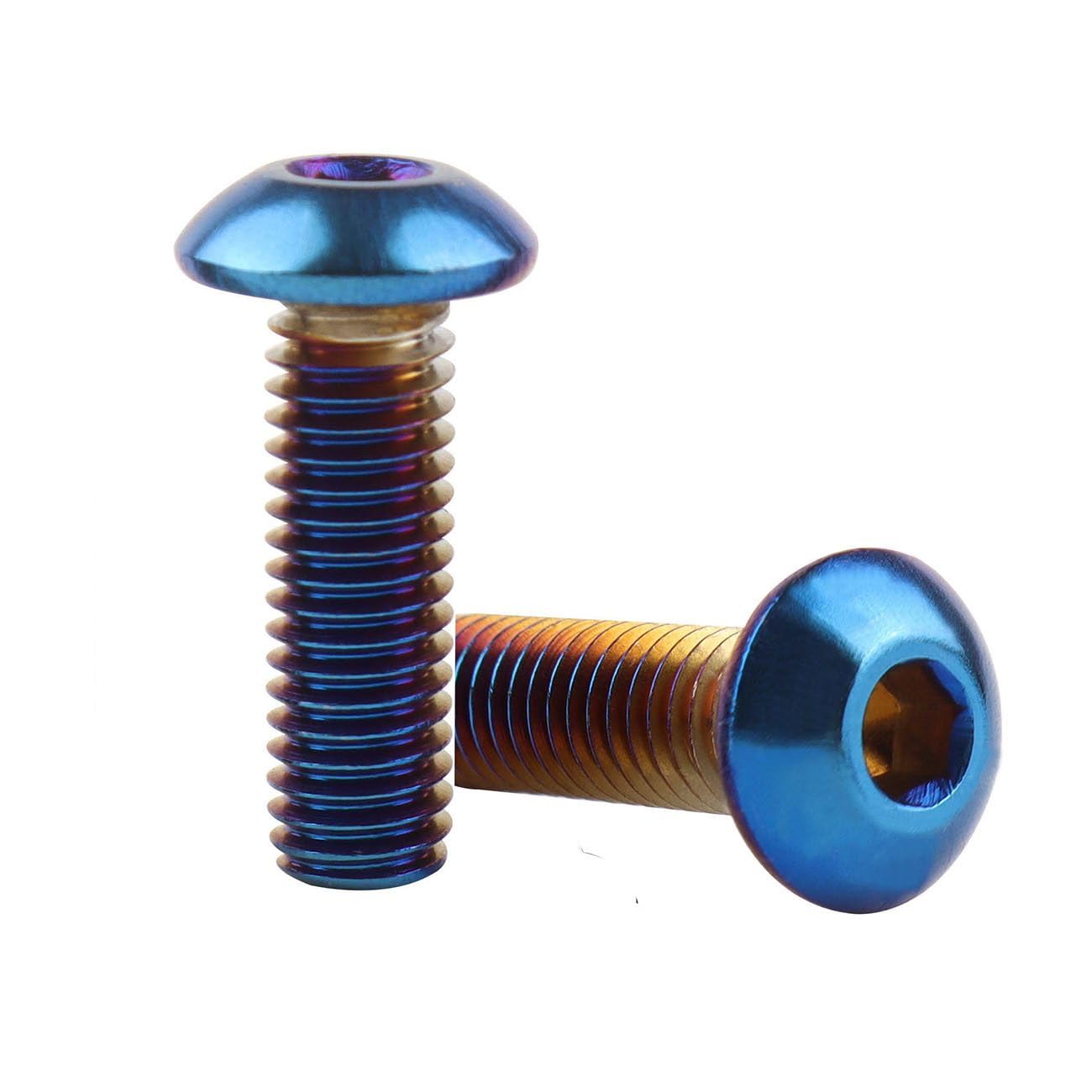
Titanium Modification Bolt M6 × 12-35mm with Anti-Vibration Flange
- Sizes:M6×12, 16, 20, 25, 30, 35mm
- Surface:Burnt Blue Anodized
- Machining:Swiss Lathe CNC Turned
- Packaging:Thread-Protected Clean Pack
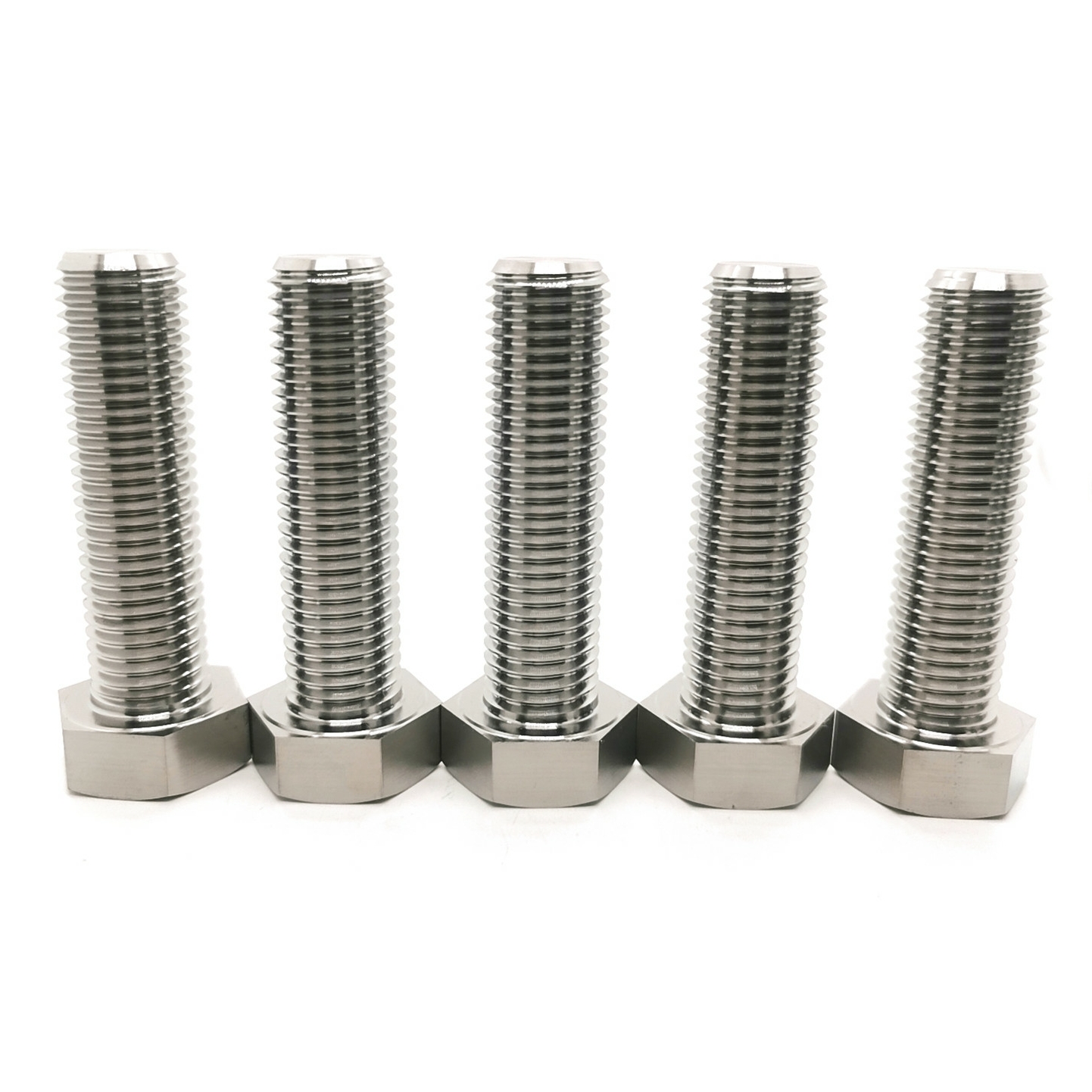
DIN912 Titanium Hexagon Socket Head Cap Screws M0.8-M24
- Standard:DIN 912 / ISO 4762
- Diameter:M0.8 Micro to M24 Heavy
- Finish:Plain Ultrasonically Degreased
- Quality:Full Dimensional CMM Check
Engineering Whitepaper: Titanium Prevailing Torque & Lock Nut Technology
In modern industrial applications throughout South Korea—spanning Seoul, Incheon, Ulsan, and Gyeonggi-do—structural mechanical fasteners face escalating demands for vibration resistance, tensile reliability, and mass reduction. When systems undergo persistent dynamic harmonic oscillations or severe thermal cycles, standard non-locking nuts inevitably suffer from rotational self-loosening. Standard fasteners rely strictly on bolt stretch preload to generate friction between mating flanks. When dynamic lateral accelerations or shock waves exceed critical thresholds, this friction drops to zero momentarily, precipitating rapid structural failure.
As an authoritative global titanium fastener manufacturer based in Baoji Titanium Valley with dedicated supply networks serving South Korea, our production engineering centers upon two primary locking technologies: All-Metal Prevailing Torque Titanium Lock Nuts (conforming to DIN 980V, DIN 6925, and ISO 7042) and Non-Metallic Polymer Insert Lock Nuts (DIN 982, DIN 985, and ISO 7040). Both designs ensure critical joint integrity in extreme environments where thread loosening leads to catastrophic operational downtime.
All-Metal Prevailing Torque (DIN 980V / ISO 7042)
Engineered via controlled mechanical top-crimp deforming the final threads into an elliptical or triangulated configuration. When screwed onto a standard metric male thread, the elastic recovery of the Grade 5 titanium creates permanent radial prevailing contact pressure without degrading under thermal spikes up to 400°C.
Polymer / PEEK Ring Insert (DIN 985 Equivalent)
Features an integrated elastomeric or high-performance PEEK locking ring in the non-load-bearing crown. The bolt threads cut elastically into the polymer collar, damping microscopic vibrations, offering airtight fluid sealing, and remaining completely reusable across cleanroom robotics.
Integrated Flange Serrated Lock (DIN 6927 / DIN 6923)
Combines a wide-footprint load-distributing circular flange with directional hardened serrations that mechanically bite into mating plates. Eliminates the necessity for separate spring washers while reducing localized bearing surface stress on carbon-composite and lightweight aluminum subframes.
Comparative Metallurgical Matrix: Titanium Gr5 vs. Conventional Fastener Alloys
For Seoul procurement teams evaluating the trade-offs between structural reliability, system mass, and total cost of ownership (TCO), the following engineering dataset contrasts our Baoji-forged Grade 5 titanium lock nuts against traditional structural hardware materials:
| Mechanical / Physical Property | Ti-6Al-4V (Grade 5 Titanium) | 316L Stainless Steel (A4-80) | Alloy Steel (Class 10.9) | Inconel 718 (Nickel Superalloy) |
|---|---|---|---|---|
| Ultimate Tensile Strength (σb) | ≥ 895 - 1,050 MPa | ≥ 800 MPa | ≥ 1,040 MPa | ≥ 1,240 MPa |
| Yield Strength (0.2% Offset) | ≥ 828 - 920 MPa | ≥ 600 MPa | ≥ 940 MPa | ≥ 1,030 MPa |
| Density (ρ) | 4.43 g/cm³ -44% vs Steel | 7.98 g/cm³ | 7.85 g/cm³ | 8.19 g/cm³ |
| Specific Strength (Strength / Weight) | 214 kN·m/kg (Superior) | 100 kN·m/kg | 132 kN·m/kg | 151 kN·m/kg |
| Corrosion Resistance in Chloride/Salt Fog | Immune (Forms TiO&sub2; Passivation) | Moderate (Subject to Pitting) | Poor (Requires Galvanization) | Excellent |
| Thermal Expansion Coeff. (α, 20-100°C) | 8.6 × 10&supmin;&sup6; / K | 16.0 × 10&supmin;&sup6; / K | 11.7 × 10&supmin;&sup6; / K | 13.0 × 10&supmin;&sup6; / K |
| Magnetic Permeability (μ) | 1.00005 (Non-Magnetic) | 1.02 - 1.05 (Slightly Work-Hardened) | Ferromagnetic (Strong) | 1.001 (Non-Magnetic) |
| Vibration Damping Capacity | High (Attenuates Harmonics) | Low | Low | Medium |
*Data compiled from ASTM B348/F467 standards, ISO 898-1/ISO 3506 benchmarks, and in-house laboratory tensile inspections on calibrated MTS Criterion testing machines.
Seoul & Greater Capital Area Industrial Ecosystem: Localized Application Scenarios
Seoul is not simply South Korea's administrative and commercial metropolis—it is the command center and design headquarters for the world's most sophisticated advanced manufacturing clusters across the Seoul National Capital Area (Sudogwon). From advanced mobility R&D centers in Yangjae-dong to robotics ventures in Pangyo Techno Valley and aerospace suppliers spanning the Gyeonggi corridor, our titanium lock nuts serve direct mission-critical operational niches.
1. Electric Vehicle Powertrains & Unsprung Mass Optimization
Top Korean automotive original equipment manufacturers (OEMs) and high-performance tuning enterprises located around Seoul and Gyeonggi-do prioritize reducing unsprung wheel assembly mass. Every gram trimmed from wheel hubs, brake caliper mounts, and multi-link suspensions delivers fourfold dynamic performance benefits. Our titanium prevailing-torque lock nuts and lug studs directly withstand rotational shear forces without yielding, resisting winter road de-icing salts (calcium chloride) that corrode standard steel.
2. Semiconductor & Display Vacuum Fabrication Tooling
The Seoul-Pyeongtaek-Yongin semiconductor mega-cluster demands extreme vacuum compatibility and chemical inertness inside wafer etch, clean, and CVD vacuum chambers. Stainless steel fasteners routinely seize, gall, or leach microscopic ferromagnetic particles. Our Grade 2 and Grade 5 ultra-cleaned titanium lock nuts exhibit virtually zero outgassing, non-magnetic properties (μ<1.00005), and absolute stability in fluorinated/chlorinated plasma process environments.
3. Autonomous Defense Hardware & K-Defense Aerospace
South Korea's aerospace sector and K-Defense defense contractors in the Greater Seoul area mandate fasteners that pass strict MIL-STD-1312 and NASM shock/vibration qualifications. On rotary wing assemblies, guided missile fins, and tactical uncrewed aerial vehicles (UAVs), our DIN 980V all-metal titanium lock nuts maintain clamping tension across ambient extremes from −60°C high-altitude flight to +350°C propulsion exhaust exposure.
Advanced Manufacturing Trends Driving Titanium Adoption Across Seoul
As South Korea accelerates national strategic initiatives under the "New Growth Strategy 4.0," three key technological transformations are reshaping the procurement specifications of Korean mechanical and design engineers:
- Urban Air Mobility (UAM) and eVTOL Prototype Commercialization: With government-backed test corridors across the Han River airspace in Seoul, eVTOL developers require rigorous lightweighting. Prevailing torque titanium lock nuts allow engineers to shave kilograms from frame trusses and battery packs without sacrificing structural joint security.
- Collaborative Robotics (Cobots) and Humanoid Actuators: Pangyo-based AI robotic labs design high-payload multi-axis robotic arms. Reducing the rotating inertial mass of limb joints by replacing alloy steel fasteners with titanium lock nuts decreases motor torque requirements, lowering operating temperatures and extending robotic battery cycle lives.
- Hydrogen Fuel Cell Commercial Mobility: With South Korea spearheading heavy-duty hydrogen trucks and bus corridors, high-pressure hydrogen manifolds demand hardware impervious to hydrogen embrittlement. Grade 5 titanium offers superior resistance to ambient hydrogen crack propagation compared to high-strength carbon steels.
By positioning our manufacturing operations in Baoji and maintaining direct logistics lanes into Incheon International Airport (ICN) and Busan Port (PUS), Yevzo bridges the gap between raw material mill sovereignty and rapid Korean supply chain integration.
Manufacturer Profile & Competitive Advantages: Baoji Titanium Valley Origin
Operating since 2013 in the Honeycomb Industrial Park, Fenghuang 3rd Road, Baoji High-Tech Development Zone, Yevzo Titanium Metal Co., Ltd. stands as a fully integrated manufacturer combining raw material smelting oversight with precision CNC machining. Baoji produces over 60% of China's titanium output, affording our facility immediate proximity to the world's most stable titanium sponge and ASTM B348 bar stock supplies.
Integrated CNC Production Footprint
Over 100 high-precision CNC lathe centers, Swiss-type 5-axis automatic turning machines, and precision thread-rolling units enable our facility to hold dimensional tolerances within ±0.01 mm, maintaining mirror-like thread pitch accuracy without micro-cracks.
Comprehensive Surface Engineering
From micro-arc oxidation to Physical Vapor Deposition (PVD) and specialized electrolytic anodization, we supply finishes in Burnt Blue, Gold, Jet Black, Rainbow, and Green. Coatings preserve thread geometry while augmenting surface hardness and galling resistance.
Rigorous Heat-Lot Traceability
Every shipment is accompanied by complete EN 10204 3.1 Mill Test Certificates (MTC) documenting chemical analysis (O, N, H, C, Fe, Al, V, balance Ti) and mechanical stress verifications, guaranteeing absolute peace of mind for Korean QA auditors.
Frequently Asked Questions by Korean Engineers & Sourcing Managers
Clear, direct answers regarding standards compatibility, tariffs, lead times, anti-galling chemistry, and custom manufacturing capabilities.
Are your titanium lock nuts interchangeable with KS B 1002 and KS B 1021 standards?
Yes. Korean Industrial Standards (KS) for metric fasteners (such as KS B 1002 for hex bolts and KS B 1021 for hex nuts) are aligned closely with ISO and DIN specifications. Our titanium lock nuts conform rigorously to ISO 7040 / ISO 7042 and DIN 980V / DIN 985, ensuring 100% flank fit with standard Korean metric threads.
What logistics timeline can buyers in Seoul expect for factory shipments?
For stock items (DIN 985, DIN 980V, DIN 6923 nuts from M4 to M16), dispatch occurs within 48 hours. Via direct air courier (SF Express, DHL, FedEx) flying from Xi'an (XIY) to Incheon International Airport (ICN), transit takes only 3 to 4 business days. For bulk marine freight via Qingdao/Tianjin to Incheon or Busan Port, transit averages 5 to 7 days.
How do we prevent galling (cold-welding) when tightening titanium lock nuts?
Titanium naturally exhibits an adhesive surface oxide that can gall when torqued rapidly without lubrication. We recommend applying a molybdenum disulfide (MoS2), nickel-based, or copper-based anti-seize paste before fastening. Alternatively, we supply titanium lock nuts pre-treated with anti-galling PVD coatings or dry-film lubricants.
What tariff rules apply under the China-Korea Free Trade Agreement (FTA)?
Under the China-Korea FTA, titanium fasteners classified under HS Code 8108.90 (other articles of titanium) qualify for preferential zero or significantly reduced tariff rates upon entry into South Korea when supported by our official Certificate of Origin (Form C/O).
Can you manufacture custom-dimension lock nuts according to CAD drawings?
Absolutely. Beyond standard DIN and ISO catalogues, our facility supports full OEM/ODM manufacturing based on 2D engineering prints (DWG, DXF, PDF) or 3D models (STEP, IGES). Custom heights, left-hand threads, ultra-fine pitches, jet-engine castellated slots, and custom wrenching flats are easily accommodated.
What is the minimum order quantity (MOQ) for Seoul-based purchasing departments?
To support high-tech prototyping in Pangyo and Seoul academic labs, catalog parts feature low MOQs of just 10 to 30 pieces. Production runs for proprietary custom-engineered drawings generally start at 100 to 200 units, providing high flexibility for R&D scaling into serial manufacturing.
Connect With Our Fastener Engineering Team Serving Seoul
Whether you require standard DIN 980V prevailing torque all-metal titanium lock nuts, DIN 6927 flanged lock nuts, or bespoke CNC turned titanium fasteners built to high-precision engineering drawings, request our technical catalog and comprehensive pricing schedule today.