Featured Industrial Titanium Fasteners & Hardware
Engineered for extreme tensile strength, zero-pitting corrosion in cold marine seawater, and cryogenic stability. Machined to strict DIN, ISO, and ASME standards with heat-lot documentation.
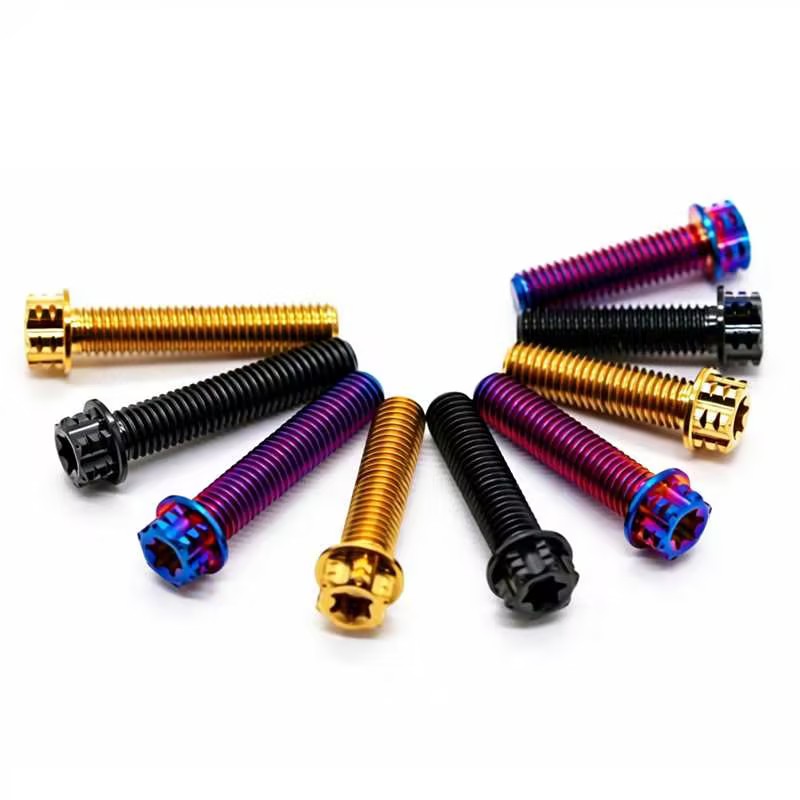
Titanium Torx Head Motorcycle Bolt Class 8.8 Gr5 PVD Coated CNC Star Screw for Bike Modification OEM Manufacturer
- Grade: Ti-6Al-4V (Grade 5)
- Tensile: Class 8.8 Equiv. / ≥895 MPa
- Coating: Wear-Resistant PVD
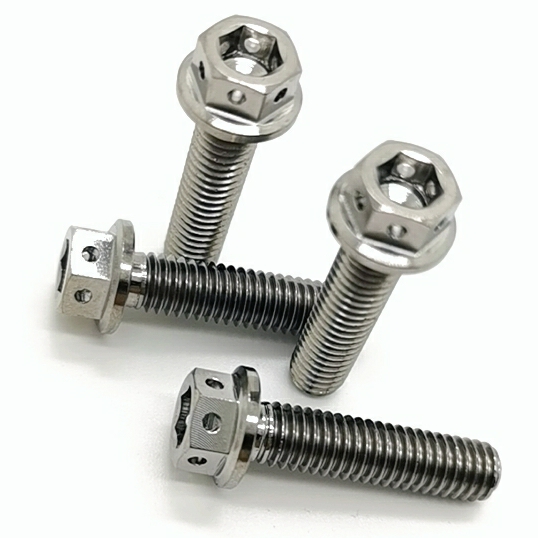
High Quality GR5 Titanium Alloy Socket Head Class 8.8 Corrosion-Resistant Wear-Resistant CNC Machined Plain Finish Bolts Nuts
- Standard: Socket Head Metric
- Finish: Precision CNC Plain
- Property: Seawater Immersion Ready
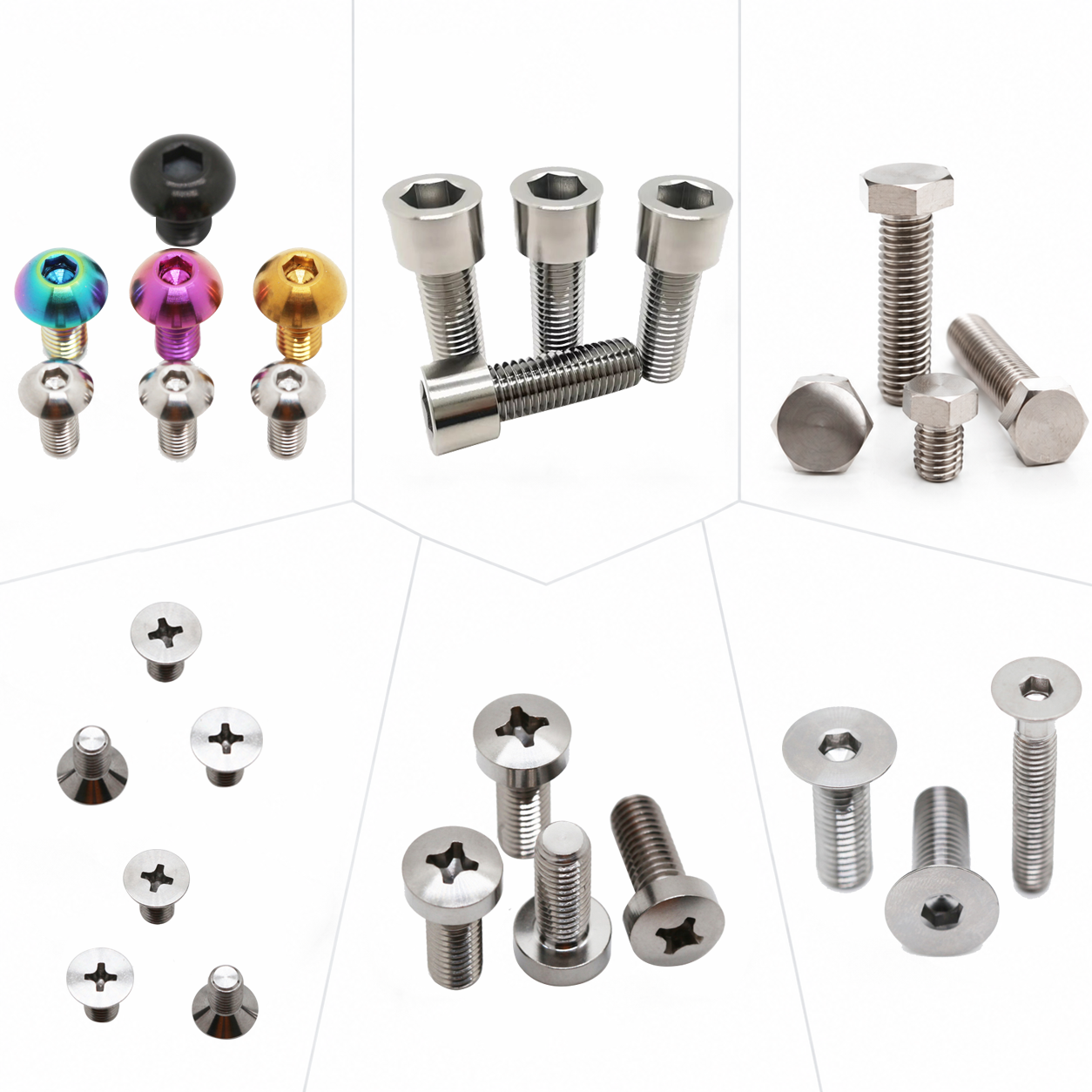
GR5 Titanium Alloy Standard Bolts in Stock Factory Wholesale Price Ready to Ship Titanium Fastener Bolts and Nuts
- Material: Ti-6Al-4V Certified
- Dispatch: Ready-to-Ship Inventory
- Thread: Rolled Precision M4–M24
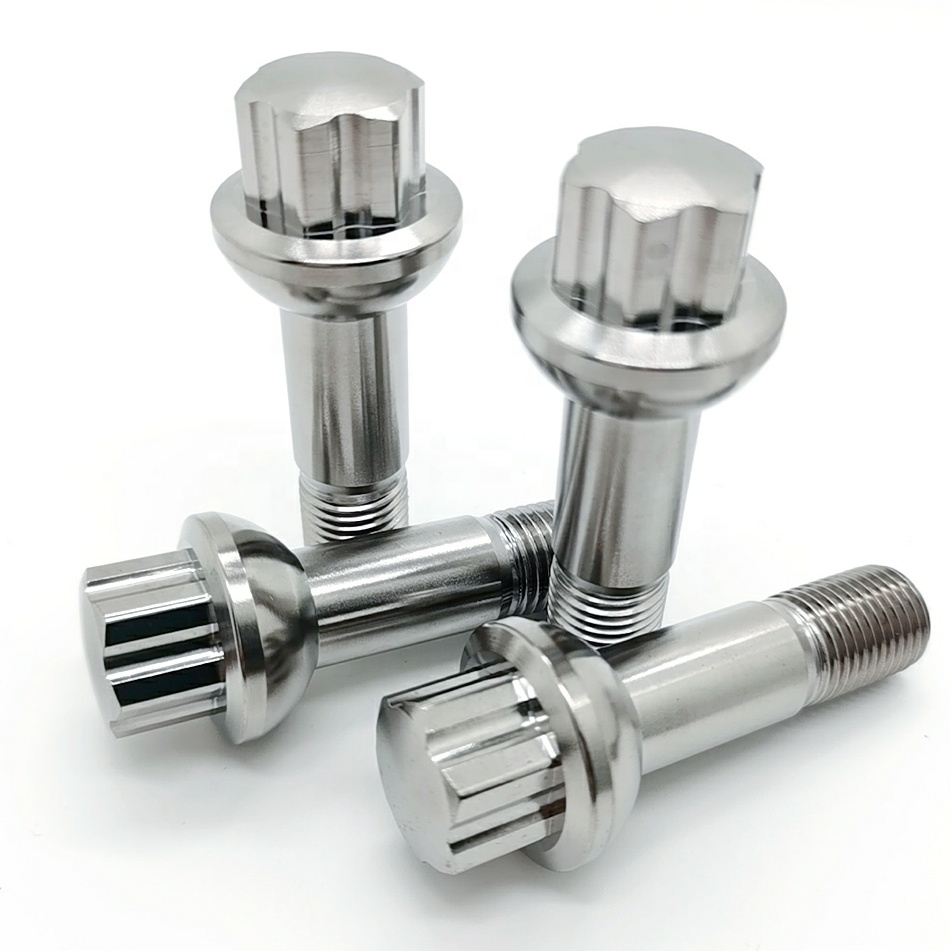
Manufacturer with Nice Surface Titanium Lug Wheel Bolts M14x1.5 for Racing Cars Titanium Wheel Bolt M12 1.25 for Automobile
- Pitch: M14x1.5 / M12x1.25
- Application: High Unsprung Dynamic Hub
- Weight: 44% Lighter than Steel
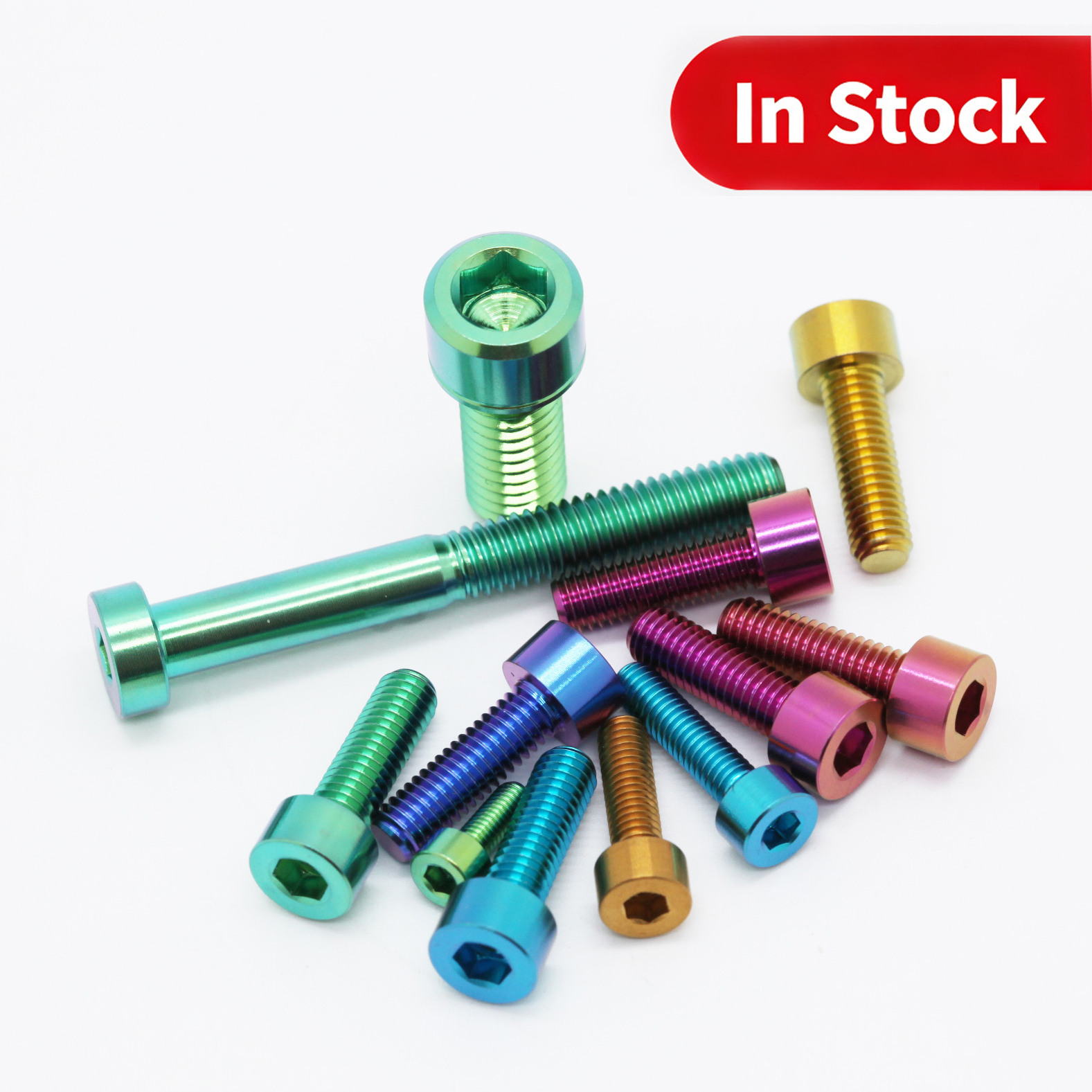
Wholesale GR5 DIN912 Titanium Hex Socket Bolts Custom Size Titanium Screws Industrial & Motorcycle Fastener
- Standard: DIN 912 / ISO 4762
- Customizing: Lengths Up to 150mm
- Application: Cleanroom & Subsea
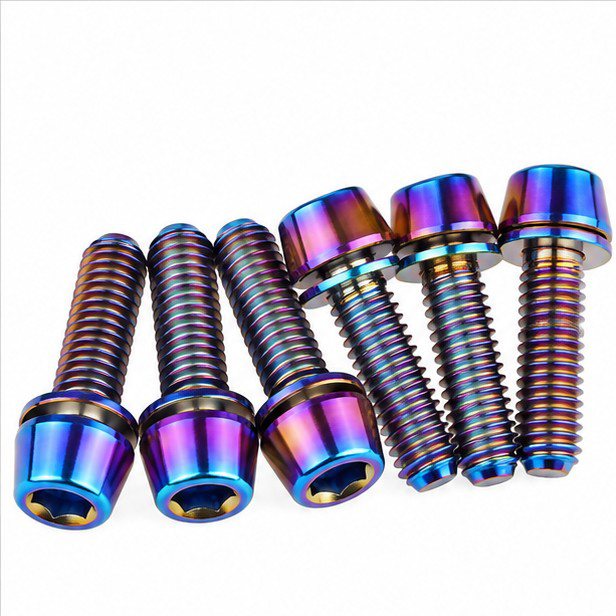
Titanium M5 Bolt with Washer Stem Screw (Burnt Blue, M5x16mm) High Precision Grade Fastener
- Dimensions: M5 × 16mm w/ Washer
- Color: Anodized Burnt Blue
- Feature: Anti-Loosening Integrated Seat
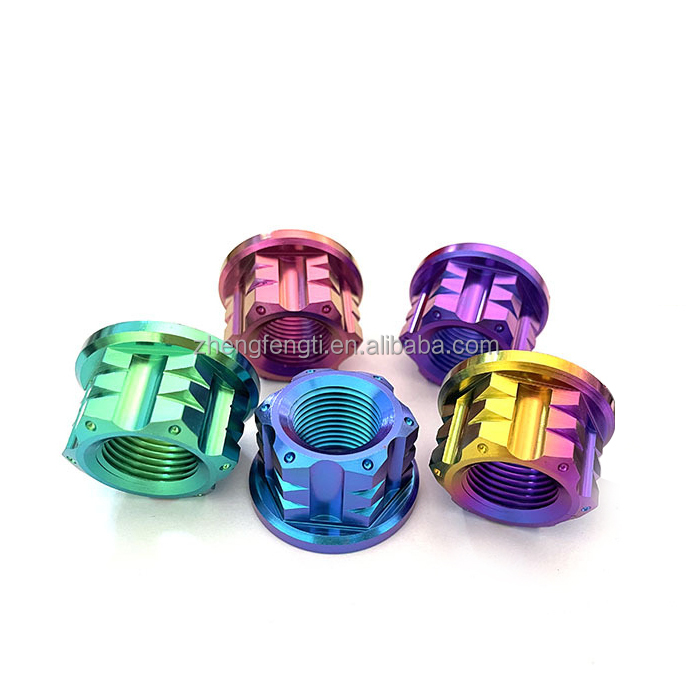
Wholesale Titanium Flange Hex Nut M4 M5 M6 M8 M10 CNC Machine DIN933 CLASS8.8 Plain Finish Corrosion-resistant Wear-resistant
- Sizes: M4, M5, M6, M8, M10
- Profile: DIN 6923 / DIN 933 Flange
- Design: Load Distribution Flange
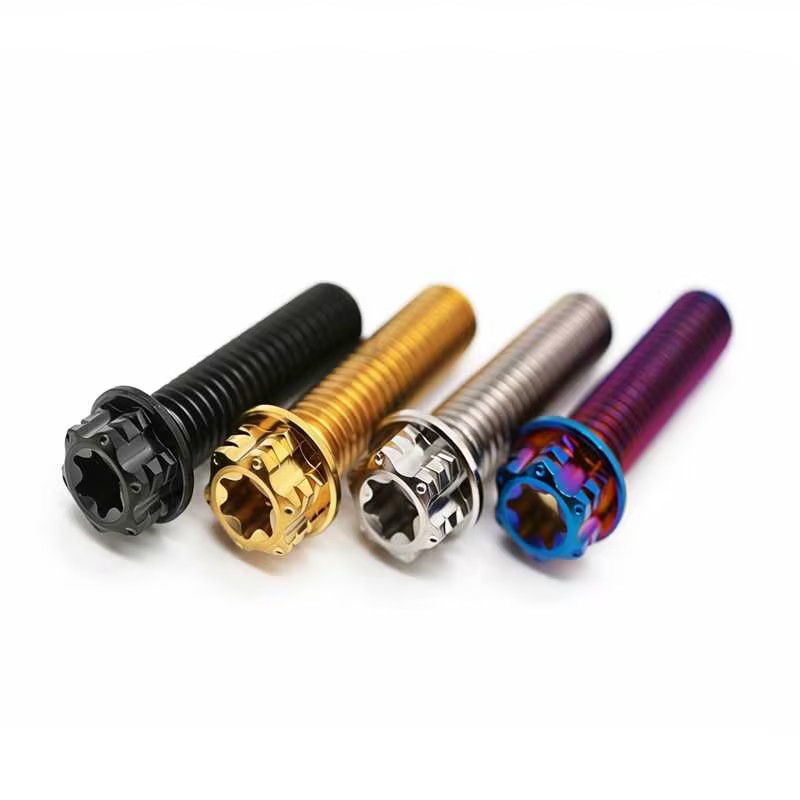
M8 Titanium Torx Head Motorcycle Bolt Gr5 CNC Anodized PVD Star Screw for Bike Modification OEM Manufacturer
- Thread: M8 Metric Course / Fine
- Drive: T40 / T45 Star Drive
- Machining: Single-Point CNC Turned
Strategic Sourcing of Titanium Eye Bolts & Lifting Hardware in the Greater Boston Industrial Corridor
Across the Greater Boston metropolitan area—from the maritime engineering docks of Boston Harbor, Charlestown, and Quincy to the high-density biotech labs in Cambridge’s Kendall Square, Waltham, and Route 128—procurement teams face unprecedented mechanical and environmental demands. Lifting, anchoring, and suspension hardware must endure extreme mechanical stresses without suffering from catastrophic hydrogen embrittlement, stress corrosion cracking (SCC), or bio-chemical degradation. Titanium eye bolts, specifically forged and CNC-machined from Ti-6Al-4V (Grade 5) and Commercially Pure Grade 2 titanium, have rapidly transitioned from specialized aerospace components into standard structural specifications for New England’s critical industrial hardware.
Overcoming Chloride-Induced Pitting: Titanium vs. Marine Grade Stainless Steel (SS316L)
For decades, marine rigging engineers and coastal facility planners throughout Massachusetts Bay and the Cape Cod canal sector relied on AISI 316 and 316L stainless steel lifting hardware. While 316L performs adequately in mild atmospheric conditions, it routinely suffers from rapid crevice attack, pitting, and chloride stress cracking when subjected to cyclical splashing in cold, oxygenated North Atlantic seawater, compounded by winter road-salt runoff and de-icing spray along Boston’s shoreline piers.
Titanium eye bolts leverage an instantaneous, chemically stable, and self-healing rutile-anatase titanium dioxide (TiO2) passive oxide film. In saltwater at ambient temperatures up to 260°C (500°F), Grade 2 and Grade 5 titanium exhibit an effective corrosion rate of 0.000 mm per year. For subsea moorings, marine drone recovery bails, and wharf-side hoist rigs in Boston Harbor, replacing stainless steel eye bolts with Grade 5 titanium eliminates catastrophic failure risks caused by subsurface micro-cracks that visual inspections routinely miss.
ASME B18.15 & DIN 580 Load Metrics: Angular Lifting Physics with Ti-6Al-4V
Lifting eye bolts are subject to complex multiaxial stress tensors. Under vertical axial tension (0° lift angle), Grade 5 titanium provides a guaranteed minimum tensile strength of 895 MPa (130,000 psi) and a yield strength of 828 MPa (120,000 psi). This significantly surpasses standard forged carbon steel eye bolts (approx. 400–500 MPa) and AISI 304/316 eye bolts (approx. 500–600 MPa).
However, in naval dockyards and robotics assembly bays across Cambridge and South Boston, rigging often involves angular multi-leg bridle slings (45° and 60° angles). When loaded off-axis, an eye bolt experiences severe bending moments at the junction of the collar and shank. Yevzo’s titanium eye bolts incorporate high-radius transition fillets and rolled root threads, eliminating stress concentrations and guaranteeing exceptional fatigue resistance under continuous dynamic swinging loads.
| Mechanical / Physical Property | Ti-6Al-4V (Grade 5 Titanium) | CP Grade 2 Titanium | AISI 316L Stainless Steel | Grade 8.8 Quenched Steel |
|---|---|---|---|---|
| Min. Tensile Strength (MPa) | 895 – 1,000 MPa | 345 – 450 MPa | 500 – 580 MPa | 800 – 830 MPa |
| Min. Yield Strength 0.2% (MPa) | 828 MPa | 275 MPa | 220 MPa | 640 MPa |
| Density (g/cm³) / Weight Factor | 4.43 g/cm³ (−44% vs steel) | 4.51 g/cm³ | 8.00 g/cm³ | 7.85 g/cm³ |
| Corrosion in Seawater (mm/yr) | < 0.0001 (Immune) | < 0.0001 (Immune) | 0.025 – 0.120 (Pitting risk) | 0.150+ (Rapid attack) |
| Magnetic Permeability (μ) | 1.00005 (Non-Magnetic) | 1.00005 (Non-Magnetic) | 1.008 – 1.020 (Slight) | Ferromagnetic (High) |
| Cryogenic Toughness (−196°C) | Exceptional (Retains ductility) | High | Moderate | Severe Embrittlement |
Non-Magnetic Lifting Solutions in Superconducting & Precision Research
Boston and Cambridge represent the highest concentration of life science research, NMR spectrometry labs, superconducting particle facilities, and MRI diagnostic design firms in the United States. High-field magnetic environments (3 Tesla to 9+ Tesla) strictly prohibit ferromagnetic hardware. Steel eye bolts under high magnetic flux create violent projectile hazards or cause field distortion artifacts. Because titanium possesses a magnetic permeability indistinguishable from free space (μ ≈ 1.00005), Yevzo’s titanium eye bolts and socket fasteners serve as the premier standard for cleanroom equipment hoisting, cryostat lifting bails, and precision sensor calibration arrays across Massachusetts Institute of Technology (MIT) and Harvard research spin-offs.
Targeted Applications Across the Greater Boston Market
Direct factory supply programs aligned with Massachusetts' key technical clusters, from deep-water oceanographic robotics to sterile pharmaceutical infrastructure.
Woods Hole & Cambridge Marine Robotics (AUVs)
Engineers developing Autonomous Underwater Vehicles (AUVs), benthic crawlers, and towed sonar arrays require structural recovery bails and towing eye bolts with zero magnetic signature and low hydrodynamic drag. Titanium eye bolts eliminate weight penalties on subsea payload buoyancy spheres while withstanding 6,000-meter hydrostatic pressure cycles in the North Atlantic without galvanic degradation.
Kendall Square & Route 128 Biopharma Autoclaves
In sterile bioprocessing, fermentation skids and multi-thousand-liter bioreactors require permanent overhead hoisting rings for impeller extraction and pressure vessel maintenance. Titanium lifting bolts withstand aggressive clean-in-place (CIP) steam cycles, nitric/citric acid sanitization, and high-purity water without flaking passivated nickel or chromium ions into pure pharmaceutical batches.
New England Offshore Wind Energy (New Bedford Hub)
As offshore wind projects expand across the outer continental shelf south of Martha's Vineyard and Nantucket, offshore substations and nacelle hoists encounter relentless saline fog and high-cycle vibration. Grade 5 titanium eye bolts deliver fatigue endurance limits exceeding 500 MPa, drastically minimizing costly deep-ocean helicopter maintenance runs over a 30-year operational design life.
Quincy & Boston Commercial Shipyard Overhauls
Commercial tug fleets, fast passenger catamarans running between Hingham, Hull, and Rowes Wharf, and private luxury yachts drydocked along Massachusetts Bay rely on titanium davit eye bolts, rudder stock lifting points, and deck hardware. Titanium avoids the heavy galvanic degradation typically induced when stainless fasteners contact aluminum marine superstructures.
New England Sourcing Trends: Life-Cycle Costing (LCC) Over Initial Capex
Procurement leadership within Greater Boston’s Tier-1 industrial engineering departments is shifting toward comprehensive Life-Cycle Cost (LCC) modeling. The initial unit price disparity between standard 316 stainless steel and CNC-machined Grade 5 titanium disappears when factoring in labor, rigging reinspection shutdowns, specialized anti-corrosion recoatings, and emergency replacement logistics in coastal New England.
In harsh marine and industrial splash zones, stainless steel hardware mandates mandatory ultrasonic or dye-penetrant NDT inspections every 12 to 24 months due to crevice micro-corrosion. Titanium installations routinely achieve 20- to 40-year maintenance-free service intervals without material loss. By sourcing directly from Yevzo Titanium’s Baoji manufacturing facility, Boston contractors cut intermediary distributor markups by 35% to 50%, enabling cost-neutral upgrades to aerospace-grade titanium hardware across municipal and private specifications.
Why Boston Procurement Relies on Yevzo Titanium
Operating directly out of Baoji, China's "Titanium Valley," we integrate smelting, raw billet extrusion, multi-axis CNC milling, and certified metallurgical testing under one audited roof.
Source Factory Advantage
Headquartered in Baoji, Shaanxi, we tap directly into China’s primary non-ferrous sponge and ingot supply chain. We control material chemistry from melt to final bolt, ensuring complete elimination of third-party broker markups and counterfeit sponge contamination.
100+ Precision CNC Fleet
Our machine park utilizes 3-axis, 4-axis, and multi-spindle Swiss CNC turning centers. Thread forms on all eye bolts and hex hardware are precision single-point turned or die-rolled to Class 6g and Class 2A/3A tolerances, guaranteeing silky, burr-free thread engagement.
Full Heat MTR & Certification
Every shipment bound for Boston includes comprehensive Mill Test Reports (MTR) per EN 10204 3.1, verifying actual chemical analysis (C, O, N, H, Fe, Al, V) and room-temperature mechanical tensile, yield, and elongation properties per ASTM B348 and ASTM F136.
Direct Boston Logistics (DDP/DDU)
We routinely manage end-to-end export shipments straight to Massachusetts facilities. Flexible Incoterms include DDP (Delivered Duty Paid), door-to-door air freight via Boston Logan International Airport (BOS), or maritime consolidation directly into the Port of Boston (Conley Terminal).
Custom OEM/ODM Drawing Execution
Beyond standard DIN 580 eye bolts and DIN 912 socket screws, our engineering team works from CAD files (STEP, IGES, DWG) to machine custom swivel hoist rings, collared heavy-duty eye bolts, and specialized threaded bails with custom shank lengths up to 300mm.
High-Precision Anodizing & PVD
In-house surface treatment capabilities include micro-polishing, chemical passivation, electrical anodizing (blue, gold, purple, rainbow), and ultra-hard physical vapor deposition (PVD) titanium nitride/black finishes for anti-galling and identification coding.
Frequently Asked Questions by Boston Procurement Teams
Clear technical insights addressing mechanical compliance, metallurgy, galvanic insulation, and logistics for Massachusetts manufacturing and engineering firms.
How do Grade 5 (Ti-6Al-4V) eye bolts compare to DIN 580 forged carbon steel eye bolts in Safe Working Load (SWL)?
How can we prevent thread galling when installing titanium eye bolts into structural aluminum or stainless tapped holes?
What measures prevent galvanic corrosion when joining titanium eye bolts to aluminum marine structures?
What are typical delivery timeframes and shipping routes for custom titanium fastener batches destined for Boston, MA?
Can you manufacture titanium eye bolts to American Unified National threads (UNC / UNF) per ASME standards?
What documentation is supplied to satisfy FDA or Mil-Spec traceability audits for Massachusetts buyers?
What is your Minimum Order Quantity (MOQ) for custom-engineered titanium eye bolts and turned parts?
Connect with Our Engineering & Export Team
Looking for certified Grade 5 titanium eye bolts, custom CNC maritime rigging components, or high-volume fastener quotes for your Greater Boston facility? Submit your engineering drawings or standard quantity requests today. Receive detailed DDP Boston pricing, dimensional specifications, and material test reports within 24 business hours.