Featured Cylindrical & Socket Fasteners for Gothenburg Industry
CNC-machined from aerospace-grade ASTM B348 titanium bars, delivering tensile strength above 895 MPa, exceptional fatigue limits, and total immunity to chloride pitting along the Kattegat coast.
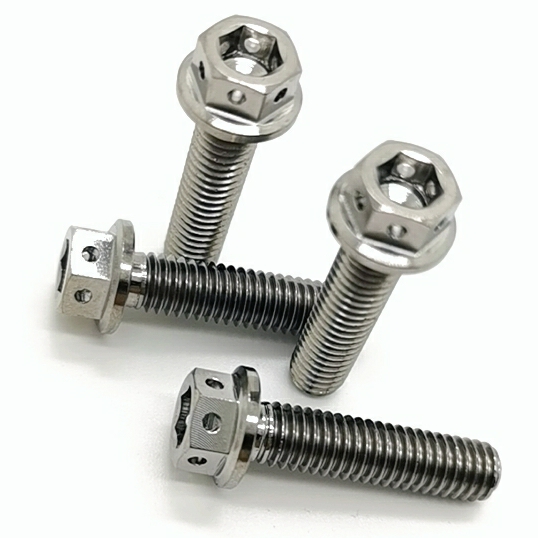
High Quality GR5 Titanium Alloy Socket Head Class 8.8 Plain Finish
- Standard: DIN 912 / ISO 4762
- Yield Strength: ≥ 828 MPa
- Weight Saving: -44% vs Carbon Steel
- Application: Subsea & EV Powertrains
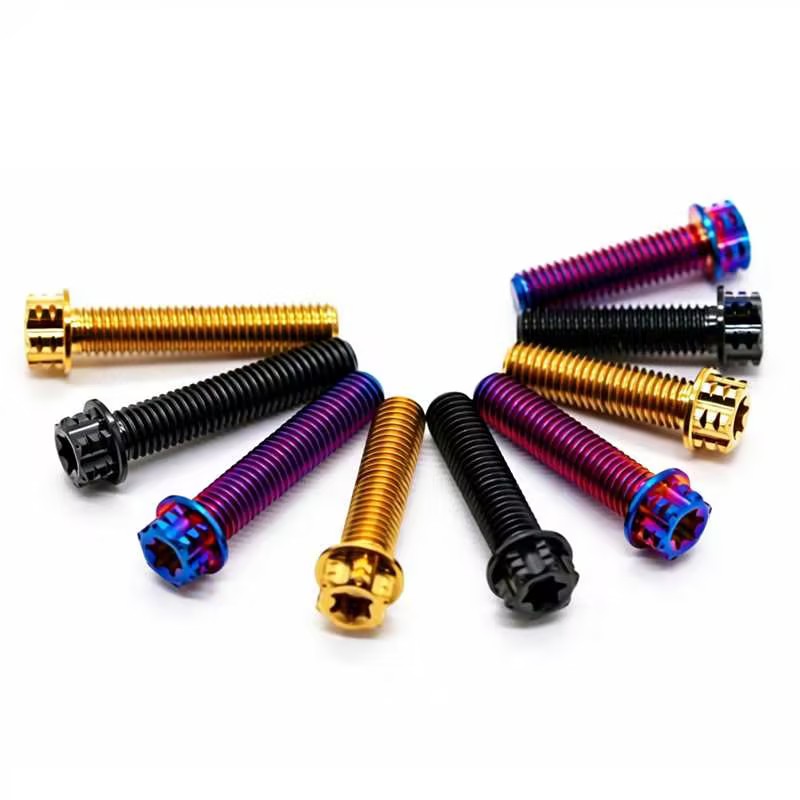
Titanium Torx Head Bolt Class 8.8 Gr5 PVD Coated CNC Star Screw
- Drive System: Torx T25–T50
- Coating: Hard Physical Vapor Deposition
- Tolerance: ISO 965-2 6g Metric
- Application: Performance Motorsport
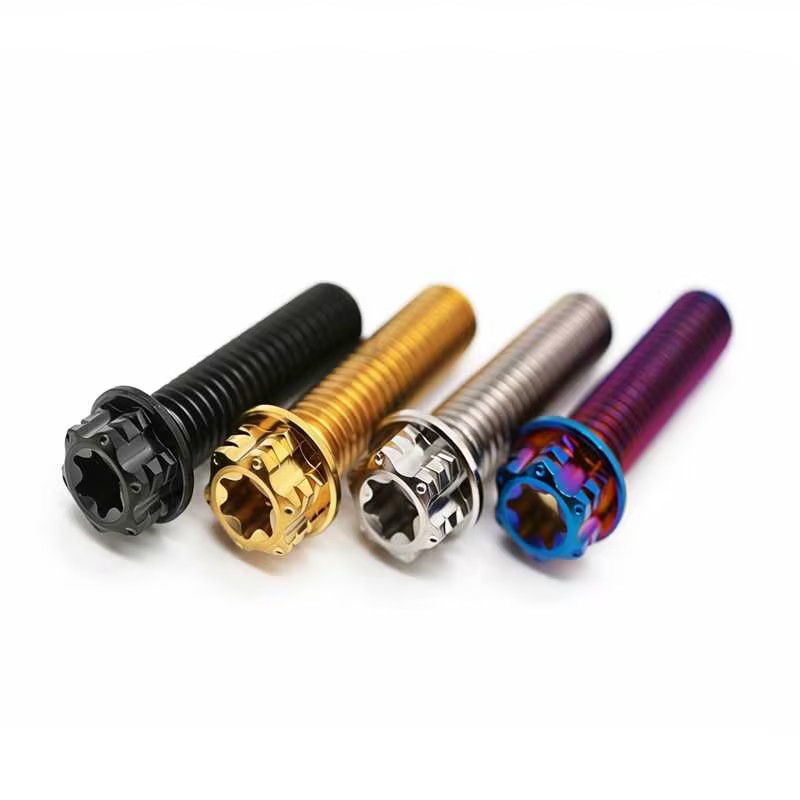
M8 Titanium Torx Head Bolt Gr5 CNC Anodized PVD Star Screw
- Nominal Size: M8 x 1.25 (Custom Lengths)
- Finish: Electrolytic Anodizing / Black PVD
- Tensile Strength: ≥ 895–1000 MPa
- Application: Chassis & Structural Joint
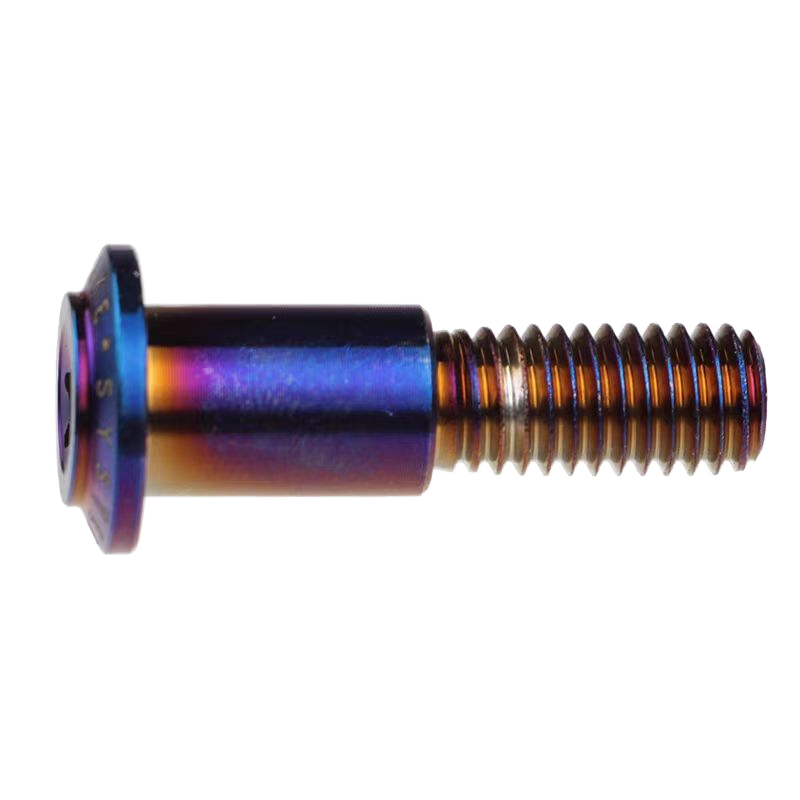
Titanium Hexagonal Step Flat Head Disc Brake Caliper Bolts
- Configuration: Precision Stepped Flange
- Shear Strength: High Dynamic Fatigue Rated
- Corrosion: Salt Spray > 1000h Zero Rust
- Application: Disc Brake Rotor Retention
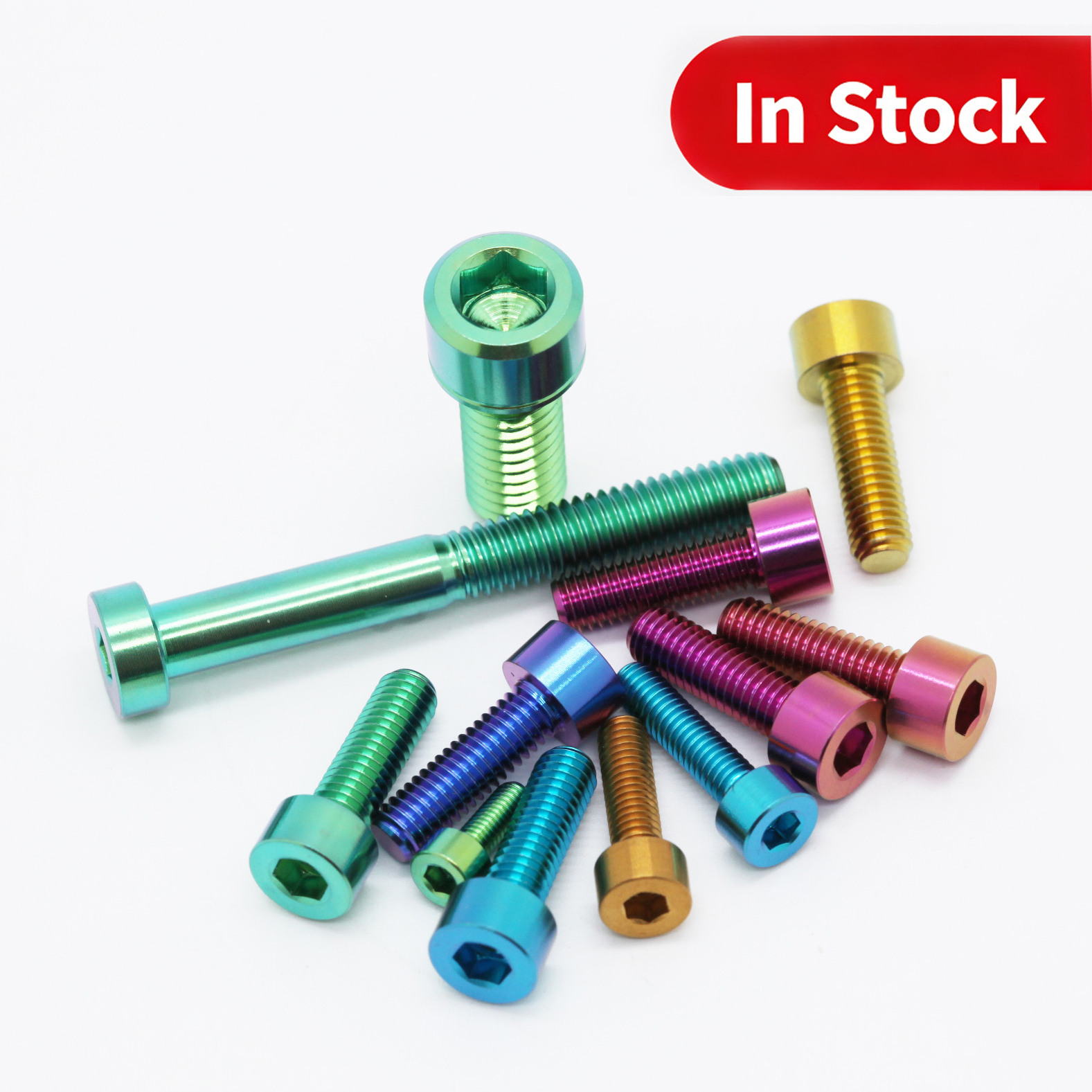
Wholesale GR5 DIN912 Titanium Hex Socket Cylindrical Bolts
- Range: M3 to M24 Stocked
- Thread Standard: DIN 13-1 Metric Coarse/Fine
- Batch Certs: EN 10204 3.1 Included
- Application: Industrial Equipment OEM
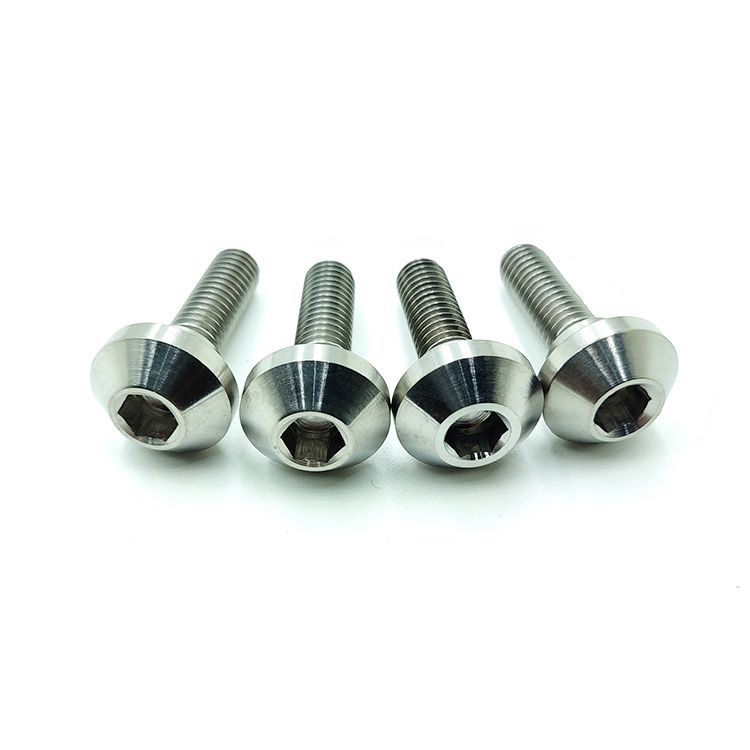
GR5 Titanium Anodized High-Performance Brake System Bolts
- Equivalent Class: 10.9 / 12.9 Yield Match
- Hot Forged: Unbroken Continuous Grain Flow
- Surface: High Purity Anodic Passivation
- Application: High-Stiffness Brake Calipers
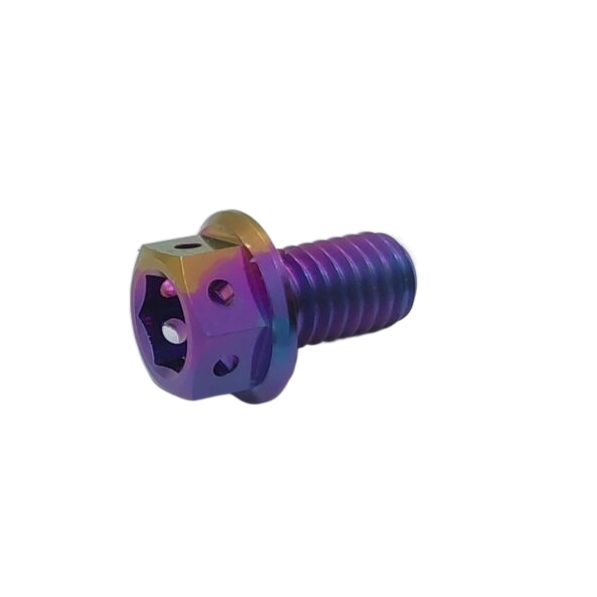
Class 8.8 Gr5 Titanium Flange Head Bolt Anodized PVD
- Design: Integrated Stress Flange Base
- Threads: Metric & Unified UNF Available
- Machining: 5-Axis CNC Precision Lathes
- Application: Structural Suspension Fasteners
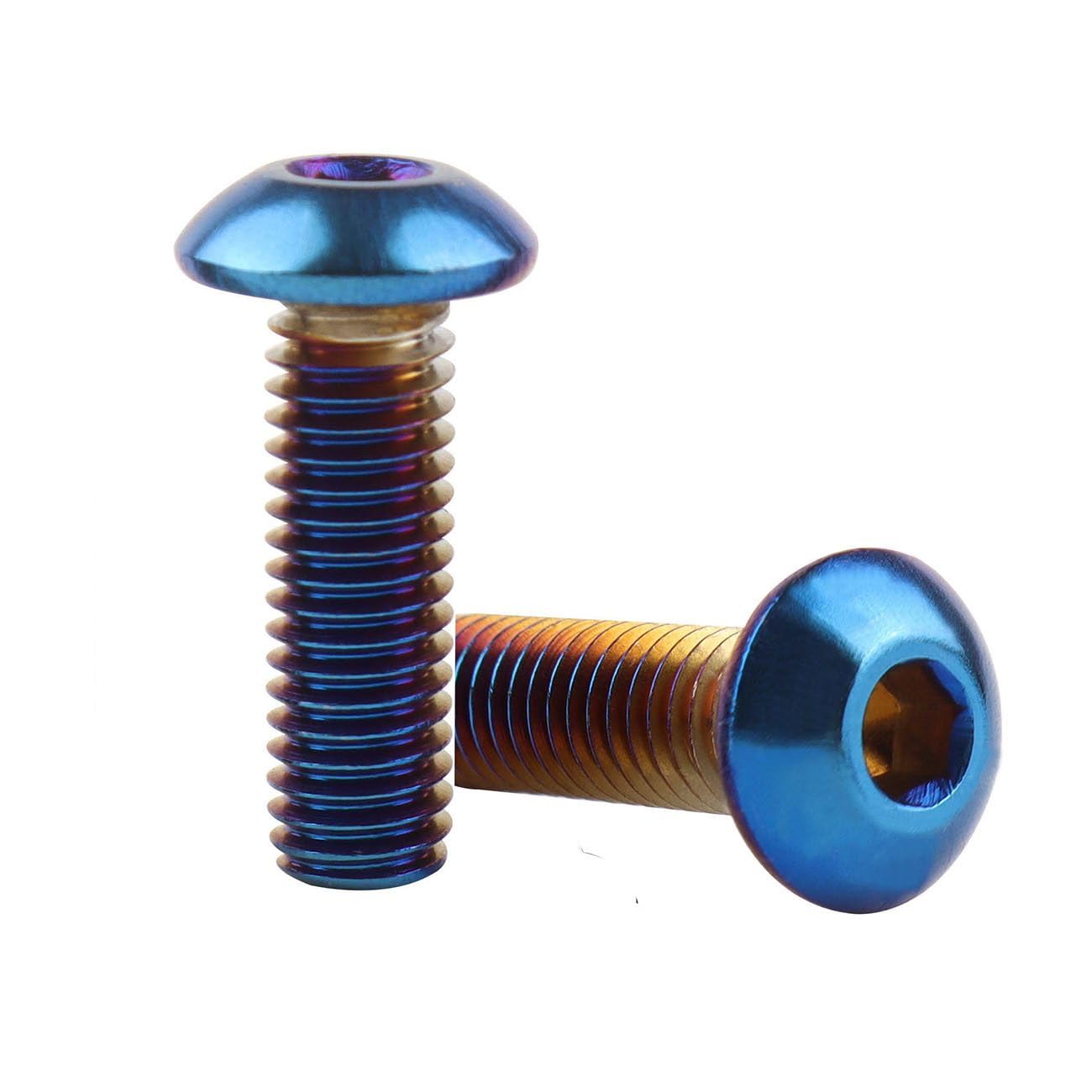
Burnt Blue Titanium Cylindrical Bolt M6x12 to 35mm
- Length Options: 12mm, 16mm, 20mm, 25mm, 35mm
- Coloration: High-Voltage Spectrum Anodized
- Non-Magnetic: Permeability < 1.00005 µ
- Application: Marine Sensor Housing & Tuning
Gothenburg Engineering Whitepaper: Titanium Cylindrical Head Bolts in Critical Assemblies
As Scandinavia's premier manufacturing and logistics epicenter, Gothenburg (Göteborg) represents a demanding environment for structural engineering fasteners. Situated along the Kattegat coastline, industrial infrastructure, maritime vessels, and automotive powertrains in the Västra Götaland region are continuously subjected to atmospheric chlorides, cyclical freezing moisture, and high-frequency dynamic loads. Engineers at leading automotive OEMs, commercial vehicle manufacturers, and advanced marine propulsion facilities require fastener solutions that eliminate the trade-off between mass reduction and long-term durability. Yevzo Titanium supplies DIN 912 and ISO 4762 cylindrical socket head cap bolts crafted from vacuum-melted Grade 5 (Ti-6Al-4V) and chemically pure Grade 2 titanium, directly addressing these localized operational constraints.
1. The Metallurgical Advantage: Grade 5 (Ti-6Al-4V) vs. Stainless & High-Tensile Steel
Traditional engineering procurement in Sweden frequently relies on A4-80 (AISI 316) stainless steel or 8.8 / 10.9 zinc-nickel plated alloy steels. However, both present significant limitations in advanced Scandinavian design. While A4-80 provides moderate corrosion resistance, its yield strength is capped at approximately 600 MPa, demanding larger bolt diameters and adding parasitic mass. Conversely, Class 10.9 steel fasteners possess elevated tensile capabilities (1000 MPa) but remain acutely vulnerable to hydrogen embrittlement during surface treatment and rapid crevice corrosion once micro-scratches breach protective coatings in Gothenburg's North Sea maritime climate.
Ti-6Al-4V Grade 5 (UNS R56400 / Werkstoff 3.7165) operates as an alpha-beta alloy characterized by a unique combination of exceptional mechanical properties. Yielding a minimum tensile strength of 895 to 1000 MPa and a yield strength exceeding 828 MPa, it rivals or exceeds quenched alloy steel fasteners while reducing component density from 7.85 g/cm³ down to 4.43 g/cm³. The spontaneously formed titanium dioxide (TiO₂) passivation layer regenerates instantaneously in ambient air and sea spray, rendering the fasteners chemically inert against pitting and intergranular attack across pH levels from 3 to 12.
| Property Parameter | Ti-6Al-4V Grade 5 | Commercial Grade 2 (CP) | Stainless A4-80 (1.4401) | Class 10.9 Alloy Steel |
|---|---|---|---|---|
| Nominal Tensile Strength (Rm) | 895 – 1050 MPa | 345 – 510 MPa | 800 MPa | 1000 – 1040 MPa |
| Yield Strength (Rp 0.2) | ≥ 828 MPa | ≥ 275 MPa | ≥ 600 MPa | ≥ 900 MPa |
| Material Density (g/cm³) | 4.43 g/cm³ | 4.51 g/cm³ | 8.00 g/cm³ | 7.85 g/cm³ |
| Specific Strength (Strength/Density) | 213 kN·m/kg | 88 kN·m/kg | 100 kN·m/kg | 132 kN·m/kg |
| Modulus of Elasticity (Young's E) | 110 – 114 GPa | 105 GPa | 196 GPa | 205 – 210 GPa |
| Resistance to Marine Chlorides | Immune (Passivated TiO₂) | Immune | Susceptible to Crevice Pitting | Severe Rusting without Plating |
| Thermal Expansion (20–100°C) | 8.6 × 10⁻⁶ /K | 8.6 × 10⁻⁶ /K | 16.0 × 10⁻⁶ /K | 11.5 × 10⁻⁶ /K |
2. Mechanical Integrity: CNC Precision Turning vs. Thread Rolling
A critical differentiator in Yevzo's titanium cylindrical head bolt manufacturing process is the integration of hot heading and CNC cold-thread rolling. Cylindrical socket head cap screws (DIN 912) bear maximum stress concentrations at the junction of the cylindrical head and the unthreaded shank, as well as along the root radius of the thread form. Machine-cutting fastener threads severs the natural crystal grains of titanium alloys, producing microscopic notches that invite fatigue cracking under cyclical dynamic loads.
Yevzo preserves uninterrupted metal grain lines by preheating certified ASTM B348 Grade 5 bars to precise forging temperature windows, followed by hydraulic cold socket formation and continuous-roll thread forming. This induces compressive residual stresses in the thread roots, augmenting fatigue life by over 300% relative to conventional turned threads. For Gothenburg's heavy vehicle battery pack structural enclosures, autonomous driving sensor brackets, and electric bus drivetrain housings, this ensures failsafe endurance across rough Scandinavian winter roadways and variable vibrational spectrums.
3. Preventing Galling (Cold Welding) in Gothenburg High-Torque Assemblies
Like stainless steel and high-nickel alloys, titanium exhibits low thermal conductivity (6.7 W/m·K) and a tendency to gall when driven dry against matching threads under high clamping torques. To safeguard high-throughput assembly lines in Gothenburg industrial parks, Yevzo integrates specialized anti-galling surface modifications:
A. Advanced Physical Vapor Deposition (PVD): Micro-thin (2–4 µm) coatings of Titanium Nitride (TiN), Titanium Carbo-Nitride (TiCN), or Diamond-Like Carbon (DLC) provide extreme surface hardness (> 2500 HV), reducing friction coefficients down to 0.12 and allowing predictable bolt pre-loads without lubricant wash-off.
B. Micro-Arc Electrolytic Anodizing (Type II / AMS 2488): This process thickens and stabilizes the dielectric surface oxide layer, generating a microscopic barrier that prevents metal-to-metal contact during wrench tightening. When paired with high-performance lubricants containing MoS₂ (Molybdenum Disulfide) or nickel-free anti-seize paste, torque-to-tension conversion ratios remain exceptionally stable across multiple disassembly cycles.
Industrial Application Sectors Across Västra Götaland
Tailored fastener engineering catering specifically to the commercial vehicle hubs, marine testbeds, and green transformation corridors of the Gothenburg region.
E-Mobility & Next-Gen EV Platforms
With Lindholmen Science Park and major automotive headquarters driving electrification, mass reduction remains paramount. Yevzo's DIN 912 Grade 5 cylindrical head bolts secure battery pack modular enclosures, stator assemblies, inverter housings, and subframe linkages. Non-magnetic permeability (µ < 1.00005) completely avoids inductive heating in high-voltage charging zones.
Port of Gothenburg & Marine Propulsion
As Scandinavia's largest maritime port, Skandiahamnen and adjacent shipyard service points demand fasteners immune to splash-zone corrosion. Our titanium cylindrical bolts secure underwater sonar domes, seawater heat exchanger flanges, composite rudder linkages, and bow-thruster fairings without requiring sacrificial cathodic zinc anodes or frequent maintenance overhauls.
Robotic Automation & Medical Devices
West Sweden's thriving life science and advanced factory automation sectors require lightweight, low-inertia end-effector fasteners. Using DIN 912 titanium socket bolts on articulated robot wrists minimizes kinetic rotational inertia, enhancing cycle speeds and positional precision while ensuring biocompatibility in biomedical packaging and analytical lab apparatus.
Gothenburg Market Trends: Carbon Neutrality, Life Cycle Cost & Lightweighting
Swedish industry operates under stringent environmental mandates governed by the EU Corporate Sustainability Due Diligence Directive and national fossil-free roadmaps. The procurement of mechanical fasteners in Gothenburg is rapidly shifting from a simple upfront purchase price metric toward a total Life Cycle Assessment (LCA) model.
1. Elimination of Toxic Surface Treatments
Traditional structural bolts require electroplating or hot-dip galvanization to endure coastal Swedish winters, processes that involve zinc, cadmium, or nickel coatings. These treatments present chemical leaching risks during vessel servicing in coastal archipelagos and are prone to flaking during torque cycling. Titanium requires zero hazardous surface coatings; its innate chemical stability ensures zero chemical discharge over multi-decade operational horizons, supporting ISO 14001 environmental compliance for Gothenburg manufacturers.
2. Resolving Carbon-Fiber Composite Galvanic Incompatibility
In aerospace manufacturing and high-end automotive hypercars developed near Gothenburg, carbon-fiber reinforced polymers (CFRP) are extensively deployed to achieve rigid, featherweight architectures. When standard steel or aluminum fasteners make contact with carbon fiber in moist marine atmospheres, the electrical potential disparity triggers severe galvanic corrosion, systematically eating away the metallic fasteners. Titanium possesses an electrode potential virtually identical to graphite fibers (+0.10 V vs. saturated calomel electrode), completely neutralizing galvanic couple corrosion. Engineering teams can securely fasten CFRP monocoques, aero-diffusers, and marine hydrofoils without the need for thick fiberglass isolation barriers.
Why Scandinavian Procurement Teams Partner With Yevzo
Direct factory manufacturing out of Baoji "Titanium Valley" coupled with transparent traceability, robust export engineering, and certified quality controls.
Baoji Raw Material Valley
Located directly at the source of 60% of China's titanium sponge reserves, giving Yevzo direct access to vacuum-melted ASTM B348 billet stock with full ingot heat-lot tracing.
100+ Precision CNC Fleet
Over 100 dedicated CNC turning centers, automatic thread-rolling units, and 5-axis simultaneous machines holding head runout within 0.02 mm and metric 6g thread class.
Full EN 10204 3.1 Traceability
Every export shipment to Sweden is accompanied by certified Mill Test Reports (MTRs) documenting chemical spectroscopy (Al, V, Fe, O, H) and destructive tensile test values.
Gothenburg DDP Air/Sea Routes
Seamless logistics directly clearing through Swedish Customs (Tullverket), delivering to your dock in Hisingen, Torslanda, or Mölndal with all duties and VAT handled.
Streamlined Logistics to Gothenburg & Western Sweden
Whether you require urgent 4-day prototyping batches delivered via air express to Göteborg Landvetter Airport (GOT) or palletized containerized logistics arriving through the Port of Gothenburg (APM Terminals Gothenburg), Yevzo delivers full supply chain assurance.
We provide full Incoterms flexibility: DDP (Delivered Duty Paid), CIF Göteborg, FCA, or FOB. Our international packaging uses individual thread sleeving, vacuum seal bags with silica gel dessicant, and heavy-gauge reinforced export cartons to eliminate thread dinging or transit rubbing across intercontinental freight routes.
Standard Export Documentation Supplied
- EN 10204 Type 3.1 Inspection Certificate
- Optical CMM Dimensional Verification Protocol
- RoHS & REACH Compliance Declarations
- Swedish Tullverket Commercial Invoice & Packing List
- Certificate of Origin (Form A / REX upon request)
Frequently Asked Questions by Gothenburg Engineers
Practical metallurgical and commercial clarifications covering thread standards, customs clearance, surface finishing, and assembly torque parameters.
How do DIN 912 titanium cylindrical head bolts compare directly with ISO 4762 in Sweden?
What torque values should be used when replacing 8.8 or 10.9 steel bolts with Grade 5 titanium?
What are the import duties and customs regulations (Tullverket) when importing titanium bolts to Sweden?
Can Yevzo manufacture custom low-head cylindrical bolts (similar to DIN 7984) for tight packaging spaces?
Are Yevzo's titanium cylindrical head bolts compliant with EU REACH and RoHS regulations?
How does Grade 2 titanium compare with Grade 5 for subsea installations in the Kattegat and North Sea?
What is the minimum order quantity (MOQ) and lead time for custom fasteners delivered to Gothenburg?
Does anodizing or PVD coating compromise thread tolerances on fine-pitch titanium bolts?
Request an Engineering Proposal & Fast Quotation
Whether you are engineering a high-voltage battery system in Lindholmen, retrofitting offshore propulsion in the Port of Gothenburg, or designing precision robotics, Yevzo delivers certified titanium performance directly to your facility.