Class 8.8 / Gr5
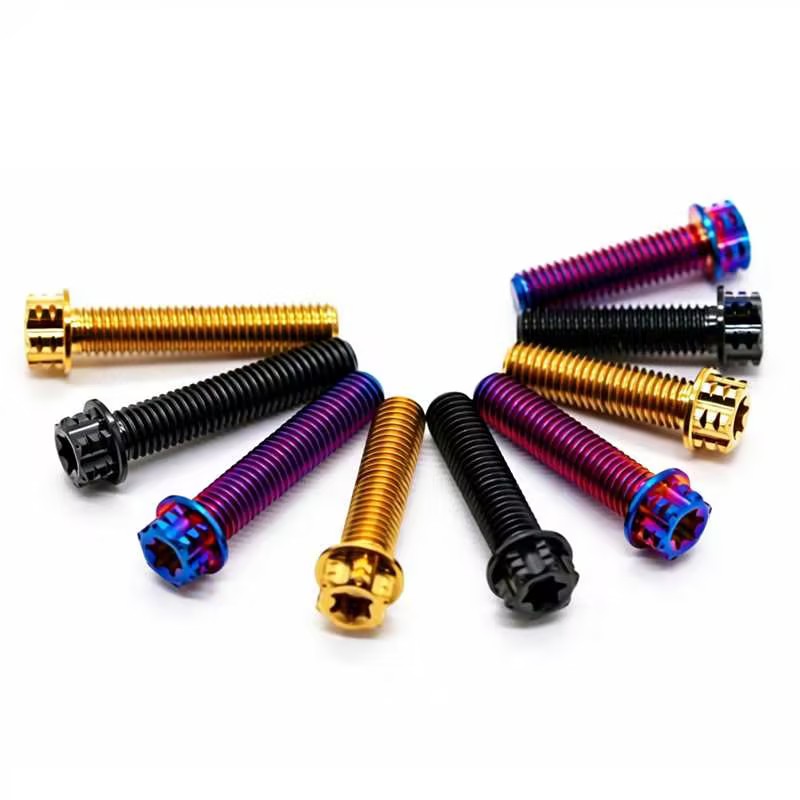
Fabricated from premium vacuum-arc remelted ASTM B348 Grade 5 titanium bars, our fastener program combines cold-forged heads, rolled fatigue-resistant threads, and ultra-durable PVD/anodized surface treatments calibrated for demanding Italian road and track specifications.
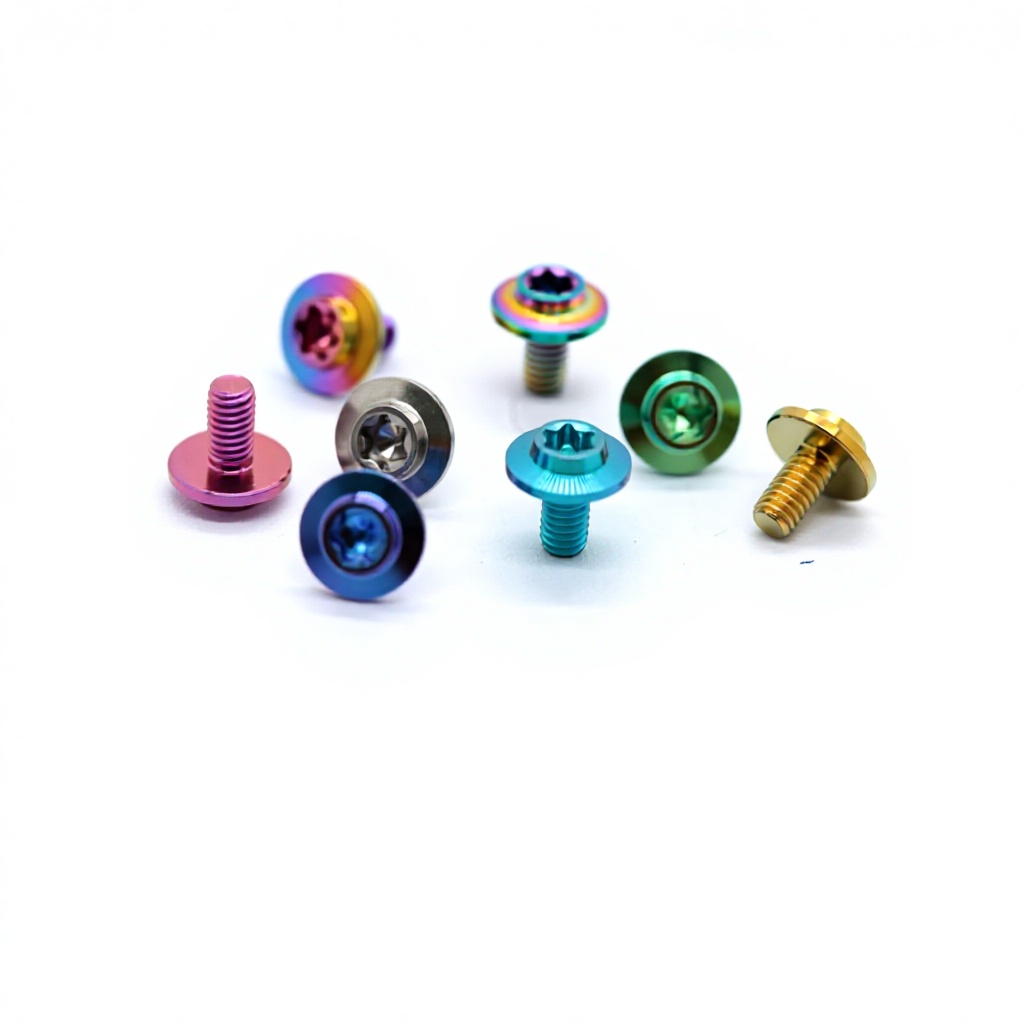
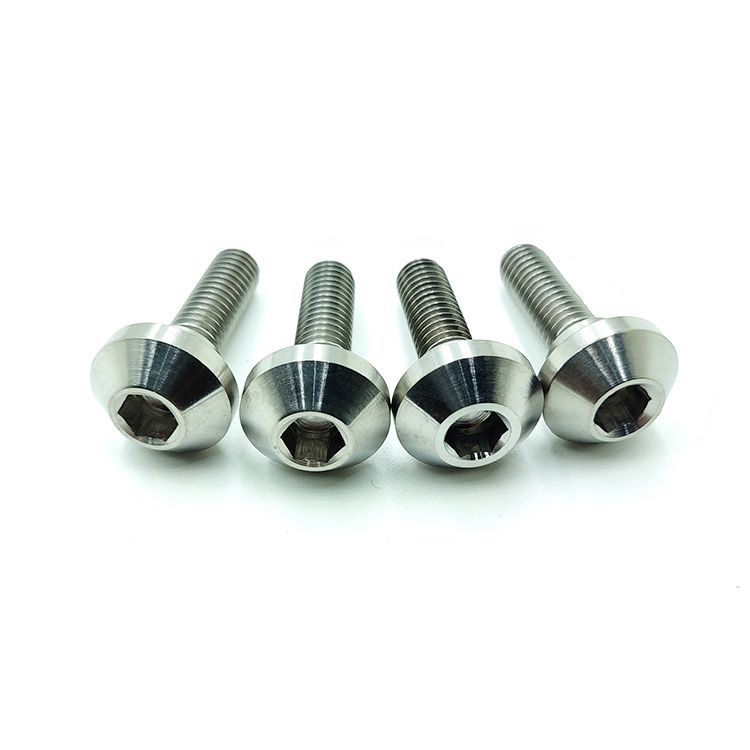
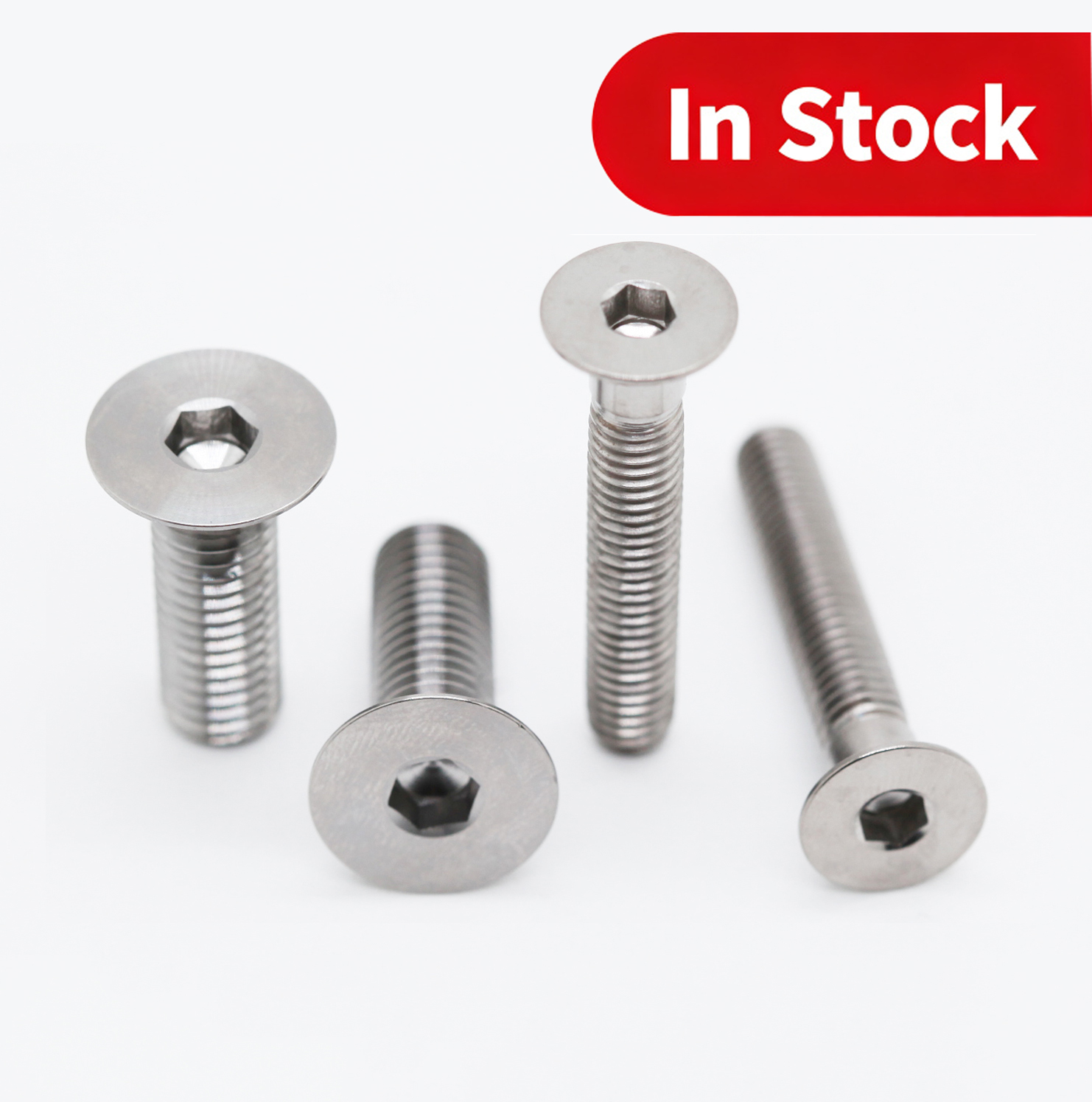
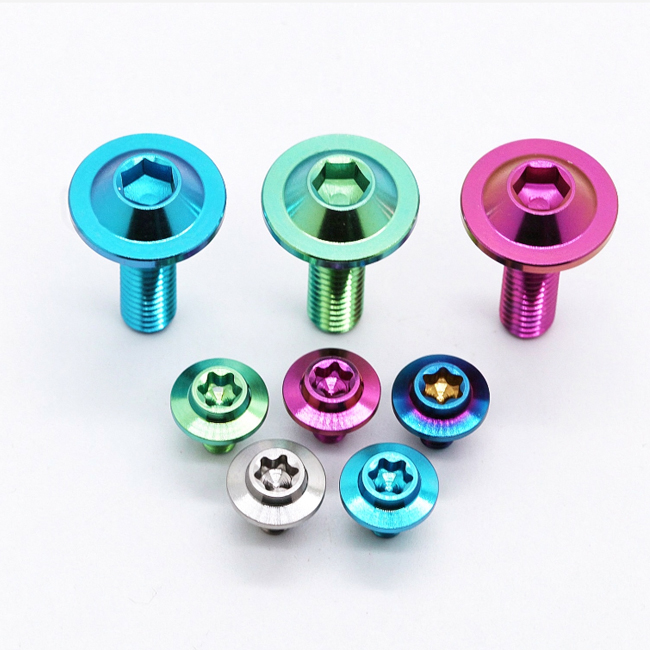
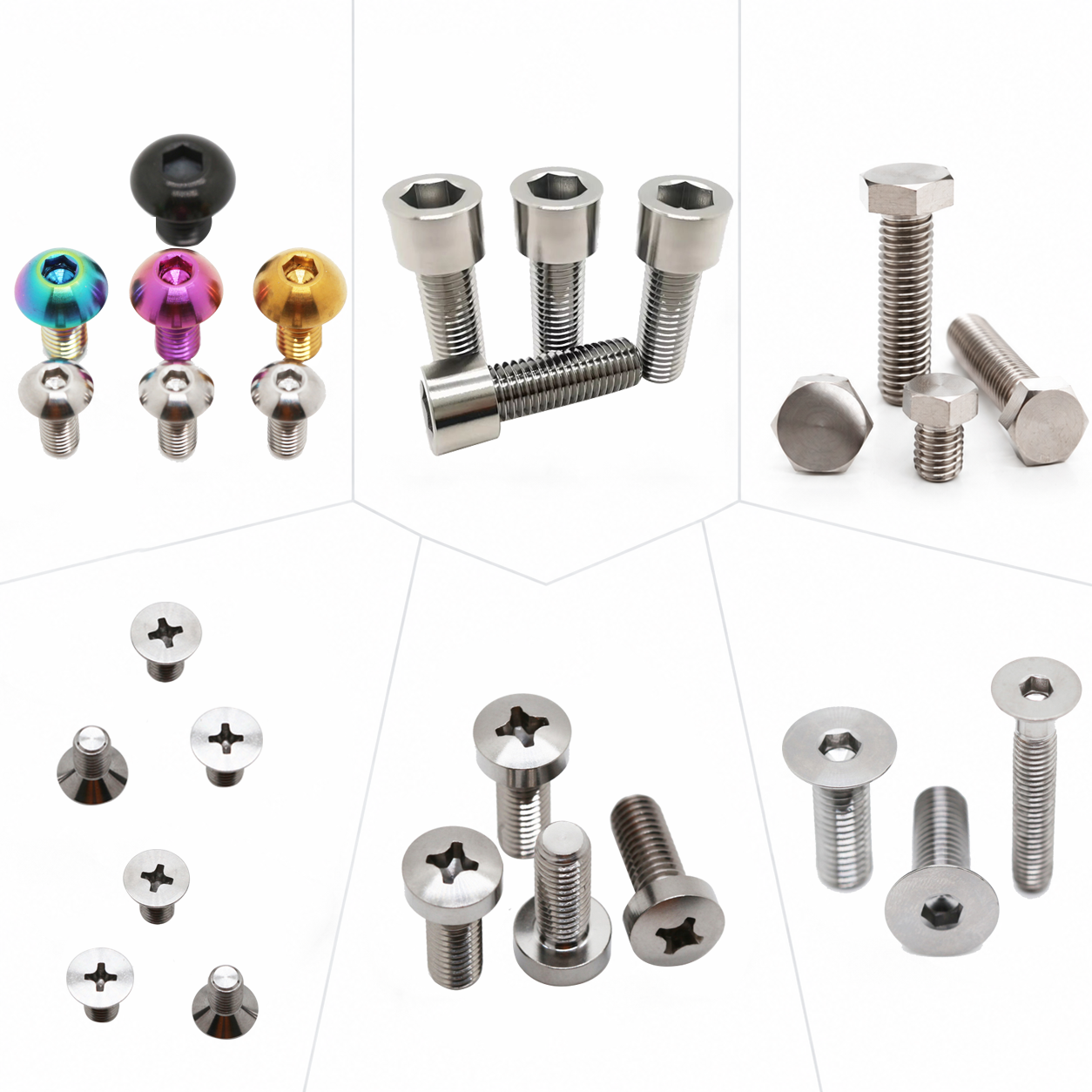
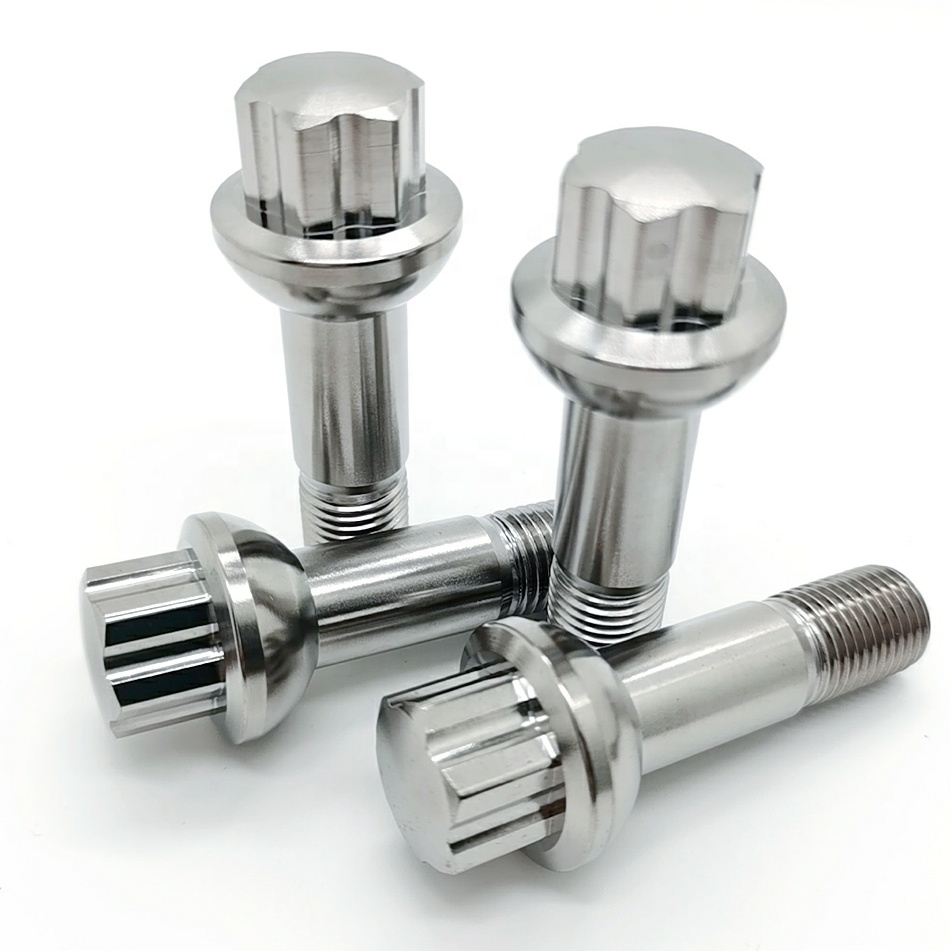
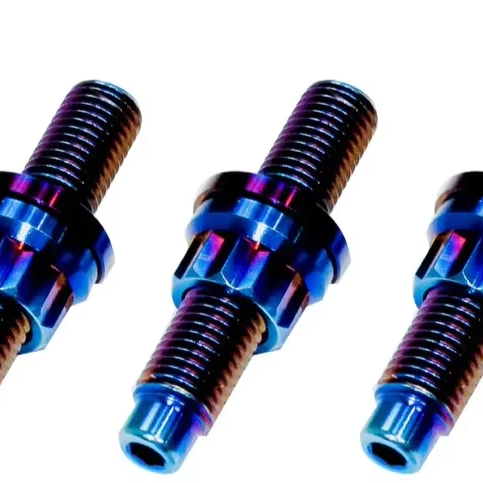
Italian automotive design stands as a global benchmark for computational aerodynamics, unsprung mass dynamics, and extreme powertrain efficiency. As Tier-1 and Tier-2 suppliers across Modena, Bologna, and Turin replace conventional 8.8 and 10.9 structural steel fasteners with Ti-6Al-4V Grade 5 metallurgy, fastener design transforms from passive retention to an active vehicle dynamics enabler.
In high-performance track and street supercars engineered throughout Emilia-Romagna, unsprung mass plays a disproportionately large role in transient cornering behavior and damper responsiveness. Replacing standard carbon steel M14 lug bolts with our forged and precision-milled Gr5 wheel bolts achieves an immediate 42% to 45% reduction in rotational inertia at the wheel hubs. This translates directly to faster suspension recovery frequencies over kerbs, sharper steering turn-in response, and reduced rotational gyroscopic moment during extreme yaw maneuvers.
Braking setups deployed in Italian hypercars and Superbike series generate sustained rotor interface temperatures exceeding 650°C. Standard alloy steels experience degradation of elastic modulus and microstructural softening when cycled through thermal peaks. Our Grade 5 (Ti-6Al-4V) brake caliper mount and disc rotor fasteners boast low thermal conductivity (6.7 W/m·K vs. 50+ W/m·K for mild steel), acting as a thermal barrier that preserves hydraulic fluid boiling margins and maintains pre-load clamping forces without bolt relaxing or thermal stretching.
Unlike cut threads which sever the longitudinal grain flow of titanium bar stock and introduce microscopic notch-stress risers, our critical automotive fasteners feature cold-rolled threads formed post-heat treatment. The rolling dies induce compressive residual stresses at the thread root and flank, boosting dynamic fatigue resistance by more than 35%. This cold-forming process is vital for surviving cyclic harmonic vibrations transmitted through racing subframes, suspension wishbones, and composite chassis mounts.
From the precision racing workshops of the Modena-Bologna corridor to OEM powertrain centers in Turin and artisan Restomod ateliers across Lombardy, our titanium fastening systems are engineered to integrate seamlessly with Italian industrial specifications.
Within the heart of the Italian Motor Valley (Maranello, Sant'Agata Bolognese, San Cesario sul Panaro), vehicle builders demand fasteners that pair structural integrity with unmatched visual refinement. Our Grade 5 DIN 7991 countersunk screws, hex flange chassis bolts, and umbrella-head body fasteners join carbon-fiber monocoques with aluminum subframes. By neutralizing galvanic corrosion risks through physical vapor deposition (PVD) barrier layers and precision composite interface washers, our fasteners ensure lifelong structural stability under extreme lateral G-forces.
With the rapid electrification of sports models and luxury sedans centered in Turin and Lombardy, structural engineers face aggressive vehicle curb weight penalties caused by massive 80–100 kWh battery packs. Deploying hundreds of non-magnetic, corrosion-resistant M6, M8, and M10 Grade 5 titanium flange bolts inside battery pack enclosures, high-voltage inverter housings, and electric drive units (EDUs) achieves critical kilograms of vehicle weight reduction without sacrificing collision intrusion safety or electromagnetic compatibility.
Italy's passionate racing heritage—embodied by teams competing in the Campionato Italiano Velocità (CIV), WorldSBK, and MotoGP supplier ecosystems—relies on extreme power-to-weight optimization. Our drilled safety-wire hex flange bolts, hollow-stem axle pinch bolts, and Class 10.9/12.9 equivalent titanium brake caliper mounting sets are standard track-day upgrades for Panigale, RSV4, and MV Agusta platforms, resisting galling and withstanding repetitive pitlane wheel-change cycles.
The growing Italian artisanal Restomod sector—restoring vintage Alfa Romeo, Lancia, and classic sports icons—requires hardware that honors classic lines while delivering aerospace reliability. We manufacture authentic vintage-pattern hex heads, custom shallow-profile bolts, and PVD titanium finishes mimicking aged chrome, raw titanium, or lustrous deep gold, providing master coachbuilders with the exact balance of historic aesthetic appeal and modern fatigue strength.
In the luxury marine centers of Liguria and the Adriatic coast, high-powered automotive engine blocks (such as marinized V8 and V12 architectures) face aggressive chloride-saturated spray and atmospheric humidity. Standard coated alloy steel studs inevitably fail through pitting or rust-streaking. Grade 5 titanium exhaust manifold studs, cooling manifold bolts, and supercharger brackets provide total immunity to saltwater crevice corrosion, offering indefinite lifecycle reliability.
Specialist suspension tuning shops across Brescia, Bergamo, and Verona install our M14×1.5 and M12×1.25 titanium wheel stud conversion kits on high-performance track vehicles. Eliminating cumbersome factory lug bolts in favor of dual-ended titanium studs paired with open-ended forged titanium flange lug nuts accelerates trackside wheel swaps, optimizes wheel hub clamp load distribution, and withstands aggressive thermal expansion from ceramic carbon braking packages.
Selecting fasteners for structural, chassis, or powertrain joints requires absolute clarity regarding yield properties, density ratios, and dynamic modulus behaviors under real-world vehicle load conditions.
| Mechanical Property | Gr5 Titanium (Ti-6Al-4V Annealed) | Gr5 Titanium (Cold-Worked / Aged) | Class 8.8 Carbon Steel | Class 10.9 High-Tensile Steel | Class 12.9 Alloy Steel |
|---|---|---|---|---|---|
| Density (ρ) | 4.43 g/cm³ | 4.43 g/cm³ | 7.85 g/cm³ | 7.85 g/cm³ | 7.85 g/cm³ |
| Weight Comparison | -43.6% vs Steel | -43.6% vs Steel | Reference Benchmark | Reference Benchmark | Reference Benchmark |
| Tensile Strength (Rm) | ≥ 895 – 950 MPa | 1,050 – 1,180 MPa | 800 – 830 MPa | 1,000 – 1,040 MPa | 1,200 – 1,220 MPa |
| Yield Strength (Rp0.2) | ≥ 828 MPa | ≥ 980 MPa | 640 MPa | 900 MPa | 1,080 MPa |
| Elastic Modulus (E) | 110 – 114 GPa | 114 GPa | 205 – 210 GPa | 205 – 210 GPa | 210 GPa |
| Elongation at Break (A5) | ≥ 10% – 14% | ≥ 8% – 10% | ≥ 12% | ≥ 9% | ≥ 8% |
| Specific Strength (Rm/ρ) | 214 kN·m/kg | 255 kN·m/kg | 102 kN·m/kg | 132 kN·m/kg | 155 kN·m/kg |
| Corrosion Resistance | Immune (Self-Passivating TiO2) | Immune (Self-Passivating TiO2) | Requires Zn/Ni/Galvanic Coating | Susceptible to Hydrogen Embrittlement | High Embrittlement Risk in Salt |
| Magnetic Permeability | Non-magnetic (μr ≈ 1.00005) | Non-magnetic (μr ≈ 1.00005) | Ferromagnetic | Ferromagnetic | Ferromagnetic |
Strategic procurement executives at Italian automotive OEMs and aftermarket engineering distributors are navigating profound technological and regulatory evolutions that dictate fastener material selection.
European fleet emissions standards and EV range optimization have made lightweighting an urgent engineering priority. Every 10 kg shaved from a luxury grand tourer reduces energy consumption during acceleration and recuperation. Fastener counts in a high-end chassis reach thousands of discrete joints; replacing steel hardware with high-grade titanium contributes vital secondary mass savings, amplifying brake life, battery efficiency, and acceleration dynamics across hybrid and all-electric architectures.
EU REACH and RoHS regulations are progressively banning hazardous hexavalent chromium (Cr6+) and restricting chemical phosphating and cadmium plating processes historically used to prevent corrosion on high-tensile steel fasteners. Titanium eliminates the need for sacrificial zinc or cadmium plating altogether: its spontaneous, self-healing oxide film (titanium dioxide, TiO2) provides permanent corrosion resistance, fully complying with European environmental mandates.
Supply chain bottlenecks have driven Italian procurement departments to establish direct partnerships with primary titanium manufacturing mills rather than relying on intermediary distributors. Italian buyers now require comprehensive material provenance—specifically mill test certificates conforming to EN 10204 3.1, heat-lot batch tracking from raw sponge to packaged fasteners, and dimensional documentation with full coordinate measuring machine (CMM) reports.
Established in 2013 in the heart of Baoji's High-Tech Industrial Zone—China's recognized "Titanium Valley"—Yevzo Titanium Metal Co., Ltd. controls the complete supply matrix from certified raw bar procurement to 5-axis CNC machining, thread rolling, surface treatment, and global logistical dispatch.
Located directly adjacent to national titanium smelting and forging centers, we secure top-tier vacuum arc remelted (VAR) titanium bar stock conforming to ASTM B348, AMS 4928, and ISO 5832 standards. Every production lot maintains unbroken heat-number traceability directly to the mill ingot.
Our manufacturing facility operates more than 100 high-precision CNC turning centers, multi-axis machining centers, thread-rolling machines, and optical inspection stations, holding thread pitch tolerances to ISO 6g and geometric true positions within ±0.005mm for flawless assembly.
We run dedicated surface-finishing cells including physical vapor deposition (PVD) for ultra-hard titanium nitride (TiN) gold, diamond-like carbon (DLC) black, and rainbow hues, as well as Type II electrolytic anodizing, achieving vibrant styling without altering precision thread tolerances.
Serving the Italian market with complete operational transparency: we handle FOB, CIF, and full DDP delivery terms directly to client facilities in Milan, Bologna, Turin, or Brescia. We provide seamless euro transactions, customs clearance, and prompt courier dispatch within 48 to 72 hours for stock items.
Direct, technically rigorous answers addressing delivery times, customs compliance, anti-seize protocols, galvanic mitigation, and minimum order requirements for Italian engineering buyers.
Whether you are engineering a track-focused hypercar suspension, stripping mass from an electric powertrain, or sourcing batch quantities of precision motorcycle hardware, our technical engineering desk in Baoji works directly with Italian design teams.
Submit your fastener dimensions, CAD models, desired surface treatment, and target volumes.
Send an Inquiry