High-Integrity Titanium Fasteners for Baltic Engineering Teams
Exporting directly from Baoji ("China's Titanium Valley") to airframe maintenance depots, aerospace subcontracting workshops, and precision automotive/moto assemblers across the Riga metropolitan area.
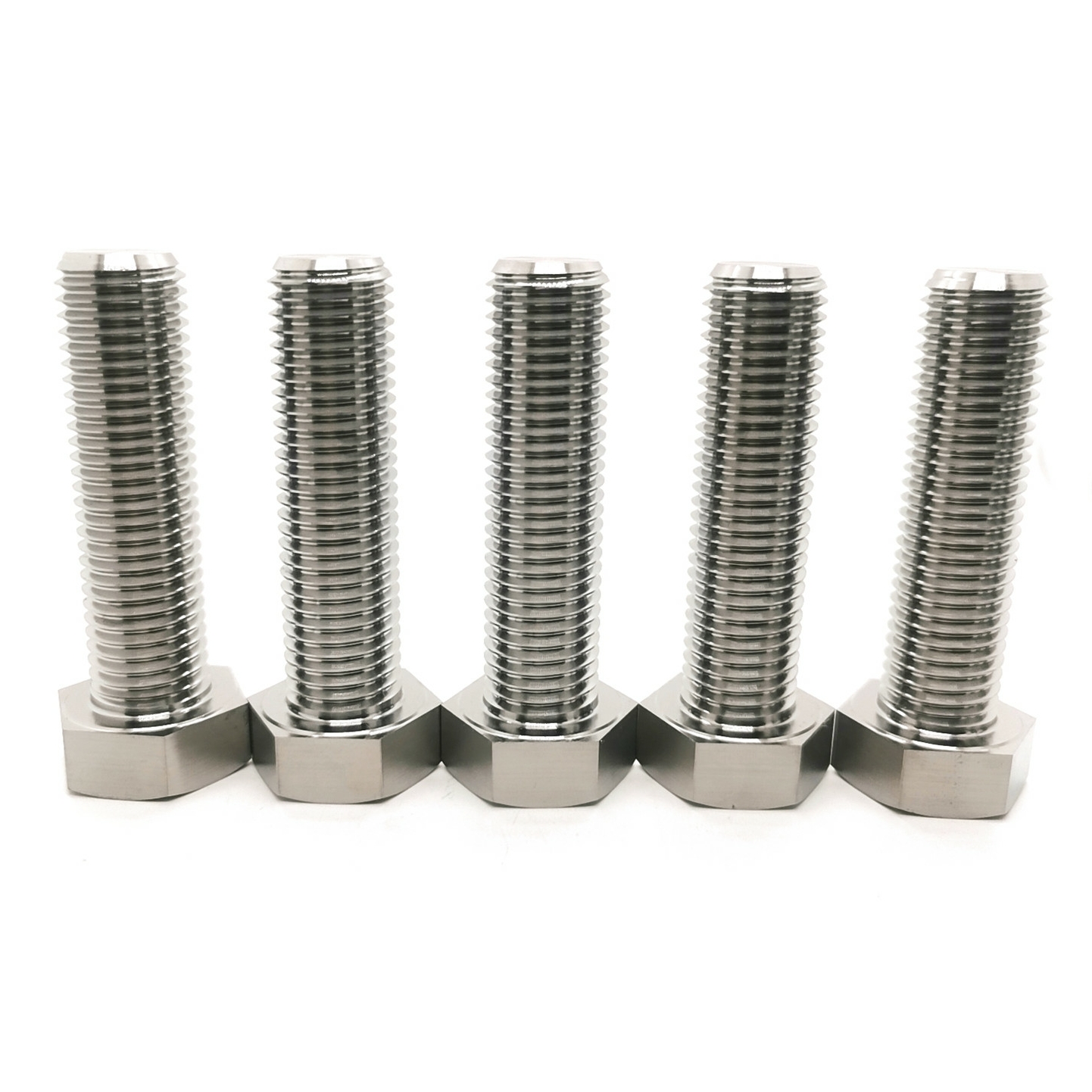
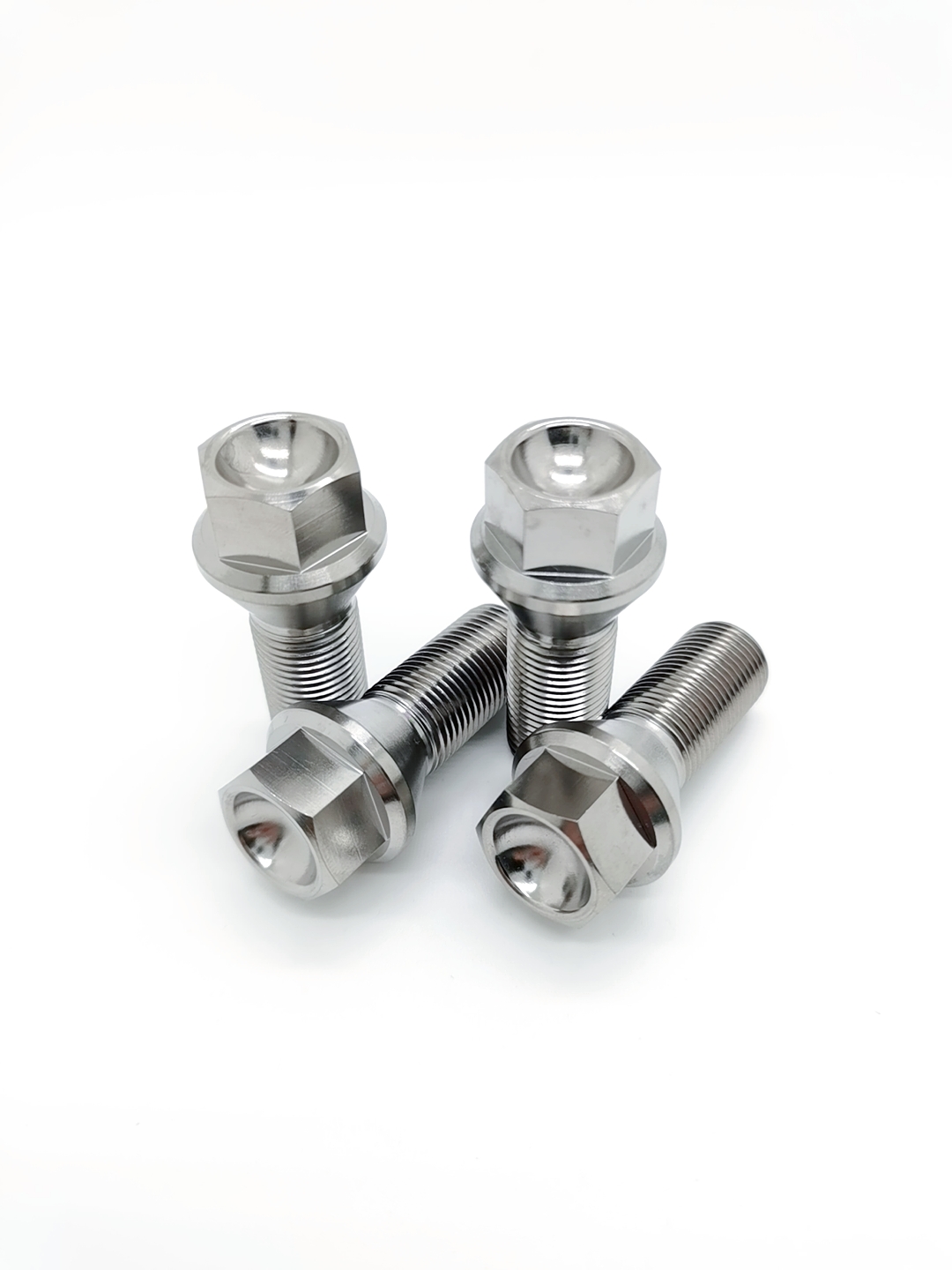
Whitepaper: Precision Titanium Fastening Systems for the Baltic Aviation Corridor
As the primary commercial and defense aviation node of the Baltic states, Riga occupies an indispensable strategic position. From scheduled line maintenance and comprehensive EASA Part-145 airframe overhauls at Riga International Airport (RIX) to rapid regional growth in advanced tactical unmanned aerial vehicles (UAVs) along the Daugava industrial zone, mechanical integrity under extreme environmental stress is critical. Selecting optimal aerospace-grade fasteners requires meticulous balancing of mechanical yield strengths, cyclic vibration endurance, thermal expansion differentials, and atmospheric galvanic compatibility.
Yevzo Titanium Metal Co., Ltd. delivers direct factory engineering, cold-forging, precision CNC turning, and thread-rolling capabilities straight from Baoji, China—the globally recognized "Titanium Valley"—to the engineering workshops, research institutes, and procurement managers of Riga and Latvia. By maintaining end-to-end heat lot visibility and executing exhaustive metallurgical testing, our manufacturing process eliminates the unpredictable quality variations typical of middleman brokerage channels.
1. Metallurgical Foundations: Grade 5 (Ti-6Al-4V) vs. Grade 2 vs. Aircraft Steels
The predominant alloy utilized across modern aerodynamic assemblies is Grade 5 (Ti-6Al-4V, UNS R56400). Structurally classified as an alpha-beta dual-phase titanium alloy, it combines high tensile capacity (exceeding 895 MPa in its annealed state and up to 1050 MPa when precision cold-worked and heat-treated) with a notably low mass density of 4.43 g/cm³. When benchmarked against Grade 8.8 and Grade 10.9 structural alloy steels commonly used in ground tooling and traditional mechanical frames, Grade 5 titanium delivers a ~43% mass reduction while matching or exceeding the shear resilience necessary for flight hardware.
Conversely, commercially pure Grade 2 (CP Titanium, UNS R50400) features an all-alpha microstructure that offers moderate tensile strength (~345 MPa) alongside unparalleled ductility and total passivation against halide and chloride attack. In the sub-zero, highly salinized maritime atmosphere enveloping the Gulf of Riga, pure titanium components permanently resist pitting corrosion without needing secondary zinc chromate or cadmium barrier coatings that are subject to strict EU REACH bans.
| Material Specification | Yield Strength (Rp0.2 MPa) | Tensile Strength (Rm MPa) | Density (g/cm³) | Elongation at Break (%) | Baltic Saline Resilience |
|---|---|---|---|---|---|
| Titanium Grade 5 (Ti-6Al-4V) | 828 - 910 | 895 - 1050 | 4.43 | 10 - 15 | Immune (Passivated TiO₂ Layer) |
| Titanium Grade 2 (CP-Ti) | 275 - 310 | 345 - 450 | 4.51 | 20 - 28 | Immune (Total Seawater Inertness) |
| Aircraft Steel (AISI 4340 / 30CrMnSiA) | 835 - 980 | 980 - 1180 | 7.85 | 8 - 12 | Poor (Requires Galvanic Barrier) |
| Aerospace Aluminum (7075-T6) | 505 | 570 | 2.81 | 11 | Moderate (Prone to Exfoliation) |
2. Localized Application Scenarios Across the Riga Aerospace & Engineering Ecosystem
Latvia’s industrial resurgence places Riga at the epicenter of specialized engineering, prototyping, and aeronautical fleet support. Fasteners deployed in this market encounter distinct environmental and operational challenges:
Commercial Aviation MRO (RIX Airport)
Technicians and engineers servicing regional jet fleets require reliable fasteners for cabin interiors, cargo decking, avionics shelving, and hydraulic auxiliary line clips. Titanium bolts eliminate the weight penalties of stainless steel and end the thread seize vulnerabilities that occur during rapid sub-zero de-icing procedures.
Tactical UAV & Drone Platforms
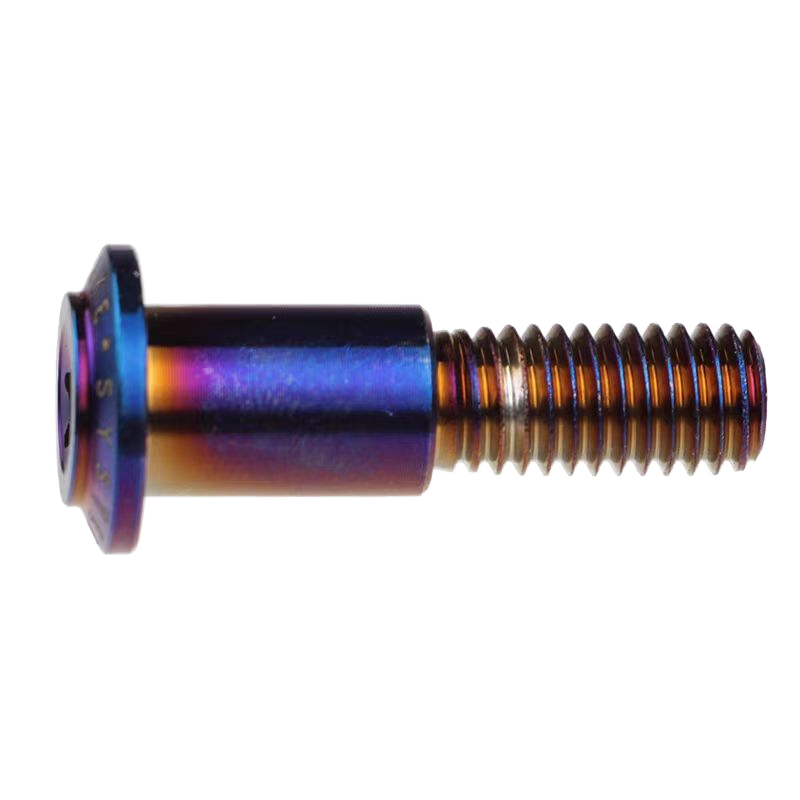
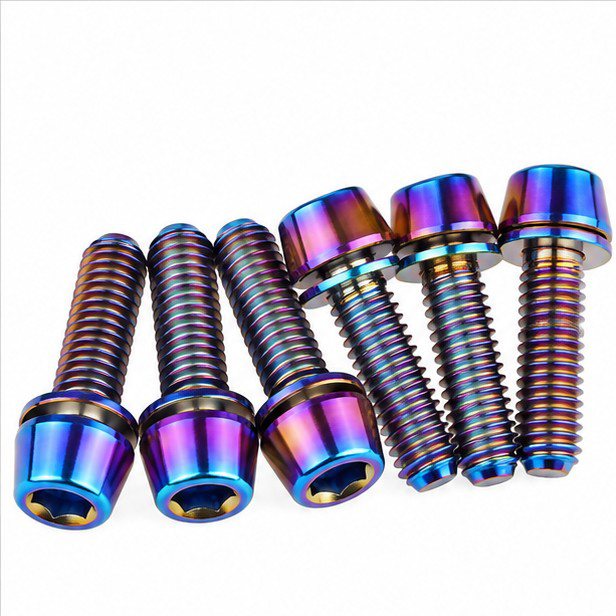
Riga is home to a world-class cluster of long-range reconnaissance drone developers and autonomous fixed-wing builders. Utilizing micro-diameter DIN 912 titanium socket screws and customized stepped hinge bolts maximizes payload margins for infrared optical gimbals and extends battery endurance.
Maritime Patrol & Coastal Avionics
Aircraft and sea-rescue helicopters flying regular patrol circuits across the Baltic Sea endure continuous salt aerosol exposure. Grade 5 titanium rotor hub bolts, radar bracket screws, and antenna mount fasteners provide indefinite service life with zero rust bleed onto expensive carbon-fiber skin panels.
Engineering Note for Baltic Climate Operations:
Winter operations in Riga frequently subject airframes to ambient temperatures of -25°C at ground level, plunging below -55°C during flight over the Baltic coastline, followed immediately by thermal spikes inside engine cowlings and wheel hubs. Grade 5 titanium exhibits excellent cryogenic notch toughness, retaining ductile failure modes where ferritic steels risk catastrophic brittle cleavage.
3. Strategic Localized Trends Shaping Baltic Procurement
Procurement frameworks across Latvia, Lithuania, and Estonia are evolving rapidly due to EU regulatory pressures, geopolitical supply restructuring, and the modernization of aerospace supply corridors:
- EU Environmental Directives & REACH Compliance: Traditional electrolytic zinc coatings containing toxic hexavalent chromium or toxic cadmium plating are facing stringent restrictions under EU chemical frameworks. Chemically inert Grade 5 titanium hardware bypasses the need for toxic surface plating altogether, naturally generating an impermeable titanium dioxide (TiO₂) passivation shield.
- Direct Mill-to-Facility Supply Security: The geopolitical realignment across Eastern Europe has severed Baltic access to legacy non-ferrous raw materials. Engineering firms in Riga now rely on direct, traceable partnerships with manufacturers rooted in Baoji's Titanium Valley, securing verified ingot supplies with certified mill chemical test reports.
- Transition from Machined to Cold-Headed Fasteners: In high-vibration aerospace mounts, turned threads can present microscopic micro-notches where grain boundaries are cut. Yevzo utilizes high-speed multi-station cold heading and CNC progressive thread rolling. This process follows continuous grain boundary lines along the bolt shank and root radius, increasing cyclic fatigue life by more than 35%.
4. Galvanic Corrosion Mitigation in Hybrid Carbon-Fiber Airframes
As Baltic aircraft designers and high-performance engineering firms replace structural aluminum sheets with Carbon Fiber Reinforced Polymers (CFRP), a significant galvanic danger emerges: carbon is electrochemically noble (+0.25V standard potential). When standard aluminum or carbon-steel fasteners contact CFRP in the presence of conductive moisture (such as Baltic humidity or melted runway slush), the aluminum or steel bolt rapidly corrodes through sacrificial anode depletion.
Titanium holds an electrochemical potential virtually identical to graphite fibers (+0.15V to +0.20V), eliminating the galvanic electromotive drive. Fastening CFRP ribs, payload doors, and avionics bays with Grade 5 titanium fasteners completely prevents internal laminate blister corrosion and thread degradation, ensuring structural safety over decade-long maintenance lifecycles.
Yevzo Titanium Manufacturing Advantages
From custom prototype runs to recurring high-volume scheduled releases, our end-to-end manufacturing footprint ensures consistent aerospace-grade reliability.
Raw Ingot to Bolt Traceability
Operating since 2013 in Fenghuang 3rd Road High-Tech Zone, Baoji, we secure raw sponge titanium from premier domestic smelting centers. Every batch of ASTM B348 round bar is tracked by heat number and fully certified to EN 10204 Type 3.1 standards before entering production.
Over 100 Multi-Axis CNC Workstations
Our machine shop houses specialized Swiss-type lathes, 3-axis to 5-axis CNC machining centers, and automated heading machines. We reliably hold micron-level dimensional tolerances across complex stepped shafts, captive washer profiles, and weight-reducing hollow-hex configurations.
Engineered Surface Engineering
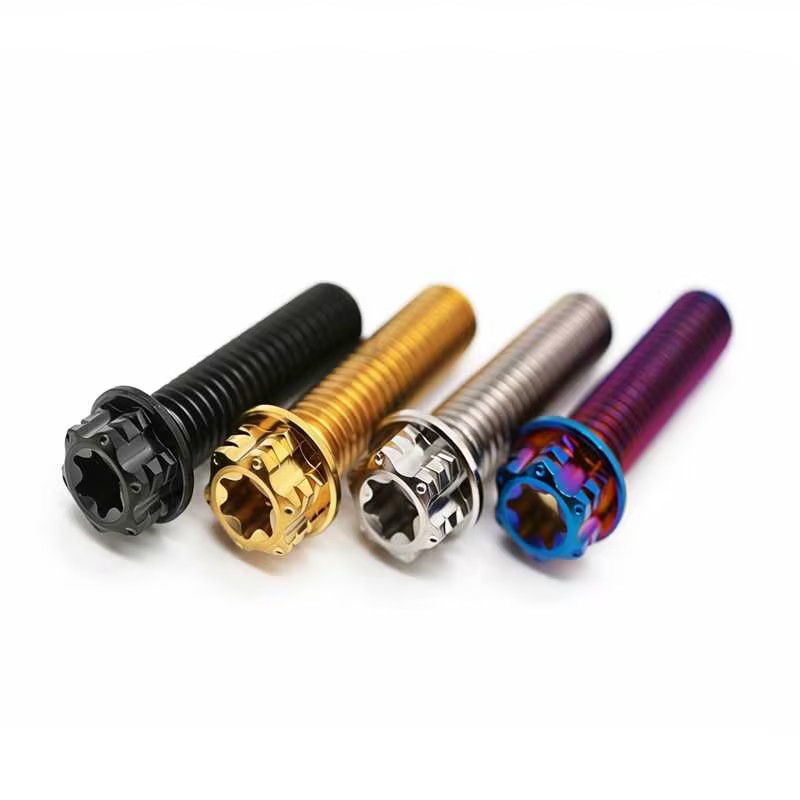
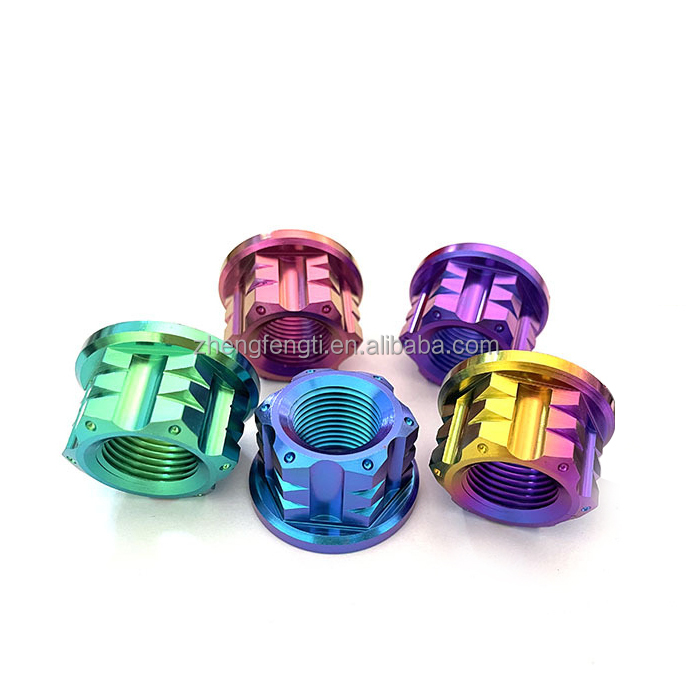
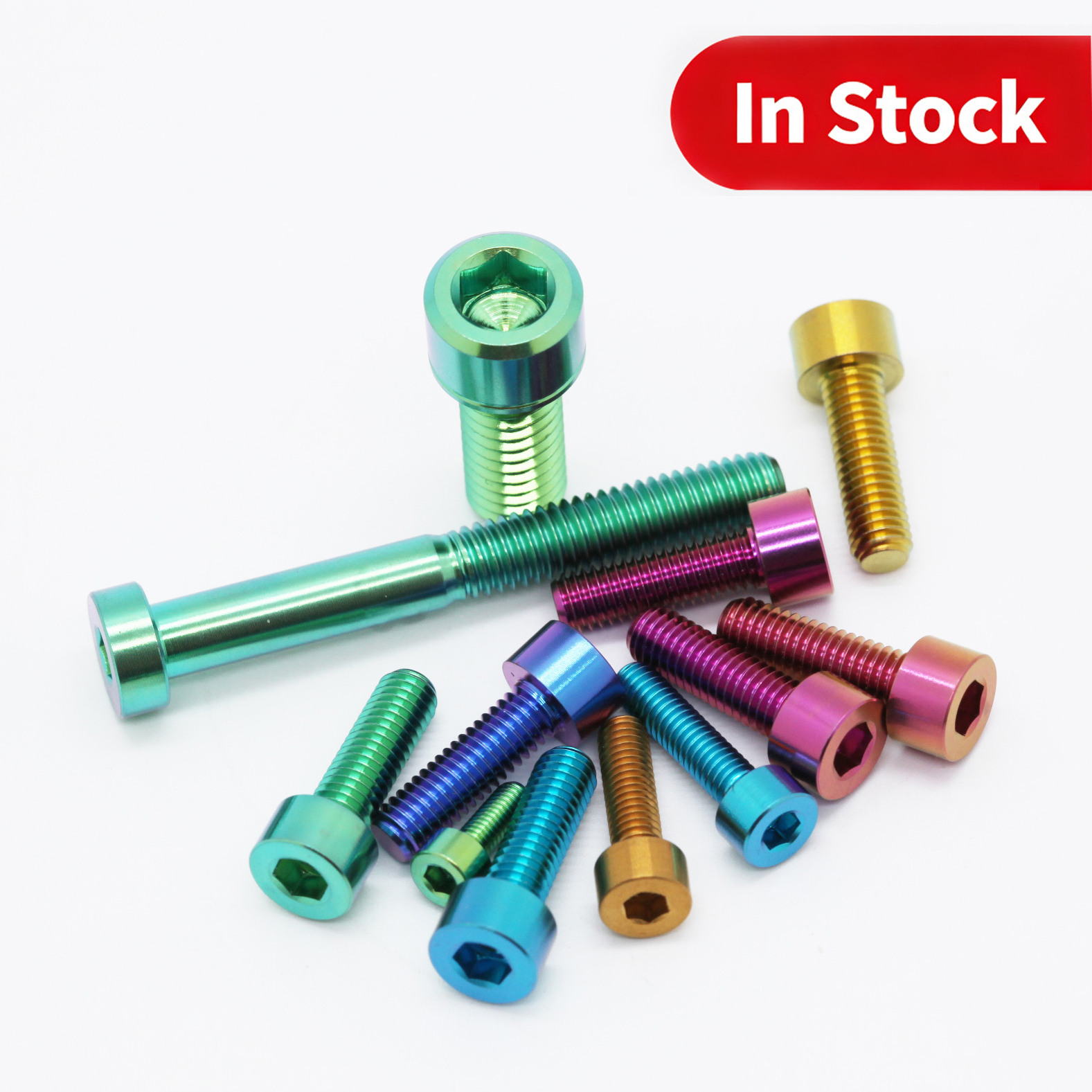
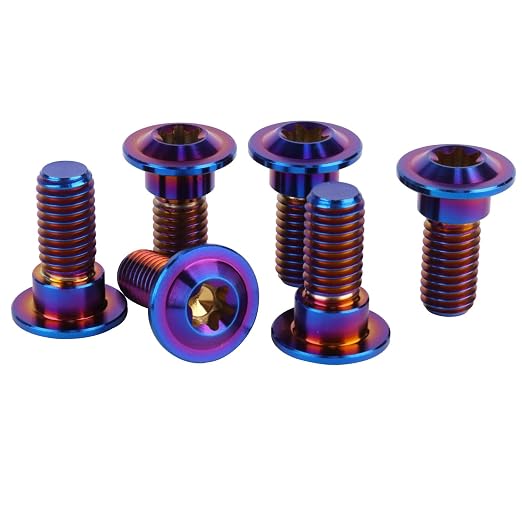
We deliver an extensive selection of functional and aesthetic surface treatments: plain ultra-clean degreasing for medical-grade vacuum integration, specialized PVD coatings, precision micro-bead blasting, and dense anodic oxide coloration (gold, burnt blue, purple, and satin black) without compromising thread pitch tolerances.
Frequently Asked Questions for Riga Purchasing & MRO Engineers
Detailed technical answers addressing supply lead times, import compliances, mechanical specifications, and assembly techniques for Latvian buyers.
Q1: How does Yevzo handle customs logistics, import duties, and delivery to Riga?
We offer flexible Incoterms tailored to your facility's operational workflow, including DAP Riga, CIF Riga Port, and full DDP (Delivered Duty Paid) via express air courier (DHL, FedEx, UPS). Under DDP terms, all EU customs declaration, Latvian VAT, and clearance documents are handled seamlessly before the crates arrive at your facility doors in Riga or surrounding Baltic districts.
Q2: Can Yevzo supply EN 10204 3.1 Inspection Certificates with every production lot?
Yes. Every shipment bound for aviation, naval, or precision industrial use is accompanied by a certified EN 10204 3.1 material test certificate. This document details direct chemical composition (Iron, Oxygen, Carbon, Nitrogen, Hydrogen limits) alongside mechanical tensile testing, yield points, elongation metrics, and heat treatment lot tracking verified by certified testing labs.
Q3: How do your engineers mitigate thread galling in high-torque titanium connections?
Titanium's natural oxide layer can cause micro-frictional welding (galling) when tightened against matching titanium, stainless steel, or aluminum female threads without proper preparation. We provide precision-rolled threads that drastically reduce surface asperities compared to single-point cut threads. We also recommend molybdenum disulfide (MoS₂) dry-film lubricants, anti-seize pastes, or our specialized PVD/anti-friction coatings to ensure stable clamp loads under cyclic torque.
Q4: What are your Minimum Order Quantities (MOQs) for custom aerospace drawings?
For standard catalog sizes (such as DIN 912 socket screws, DIN 6923 flange nuts, or common M5/M6 brake rotor bolts), our MOQ starts at just 10 to 30 pieces to support rapid testing, prototyping, and AOG (Aircraft On Ground) maintenance emergencies. Custom CNC parts built from STEP/DWG drawings typically begin at 50 to 100 pieces depending on bar diameter and machining complexity.
Q5: Can you manufacture non-standard aircraft threads (e.g., UNF, UNC, Class 3A/3B)?
Yes. While metric DIN/ISO standards are widely used in European equipment, our CNC threading lines readily cut and roll imperial unified threads, including 10-32 UNF, 1/4-28 UNF, 5/16-24 UNF, and 3/8-24 UNF adhering strictly to aerospace Class 3A external and Class 3B internal tolerance envelopes.
Q6: How does Grade 5 titanium behave in sub-zero Baltic winter conditions?
Unlike standard carbon steels and many austenitic stainless variants that experience a clear ductile-to-brittle transition temperature (DBTT) around -10°C to -30°C, annealed Ti-6Al-4V Grade 5 maintains high fracture toughness and impact resistance at temperatures well below -60°C. This makes it an exceptional choice for Baltic aviation airframes and marine sensor equipment exposed to freezing moisture.
Accelerate Your Aerospace Sourcing with Certified Precision
Whether you require standard DIN 912 titanium socket screws for urgent fleet servicing in Riga or custom multi-axis CNC parts machined to tight tolerances, Yevzo’s engineering team delivers certified quality directly to your facility.
Get a Quote