High-Performance Titanium Studs, Flange Bolts & Fasteners
Direct factory supply of certified Ti-6Al-4V (Grade 5) and commercial pure Grade 2 titanium fasteners. Available with rolled threads, tight CNC tolerances, and advanced surface finishes for critical assemblies.
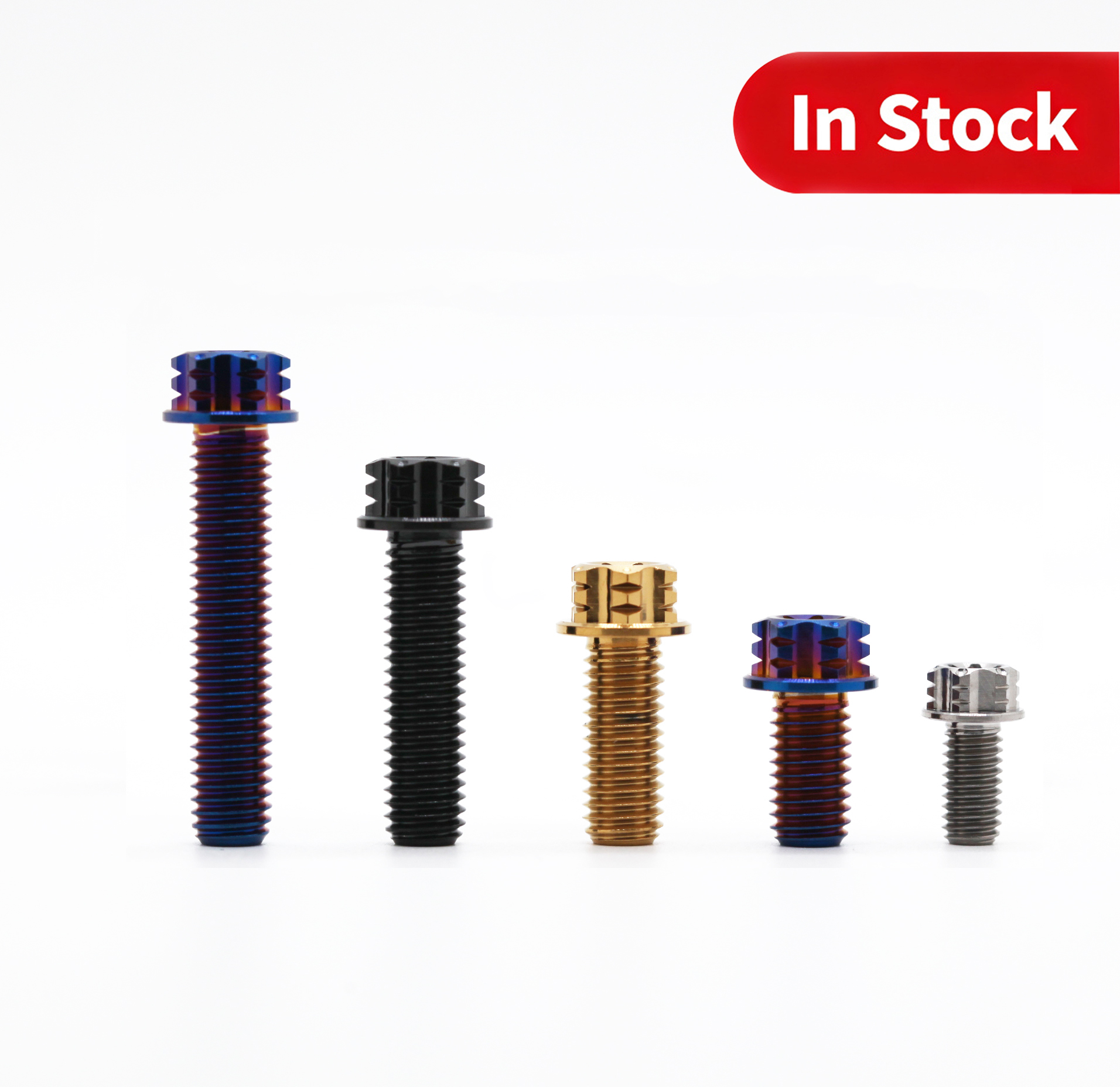
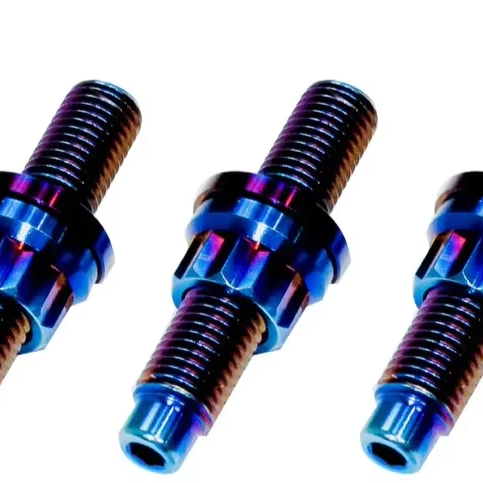
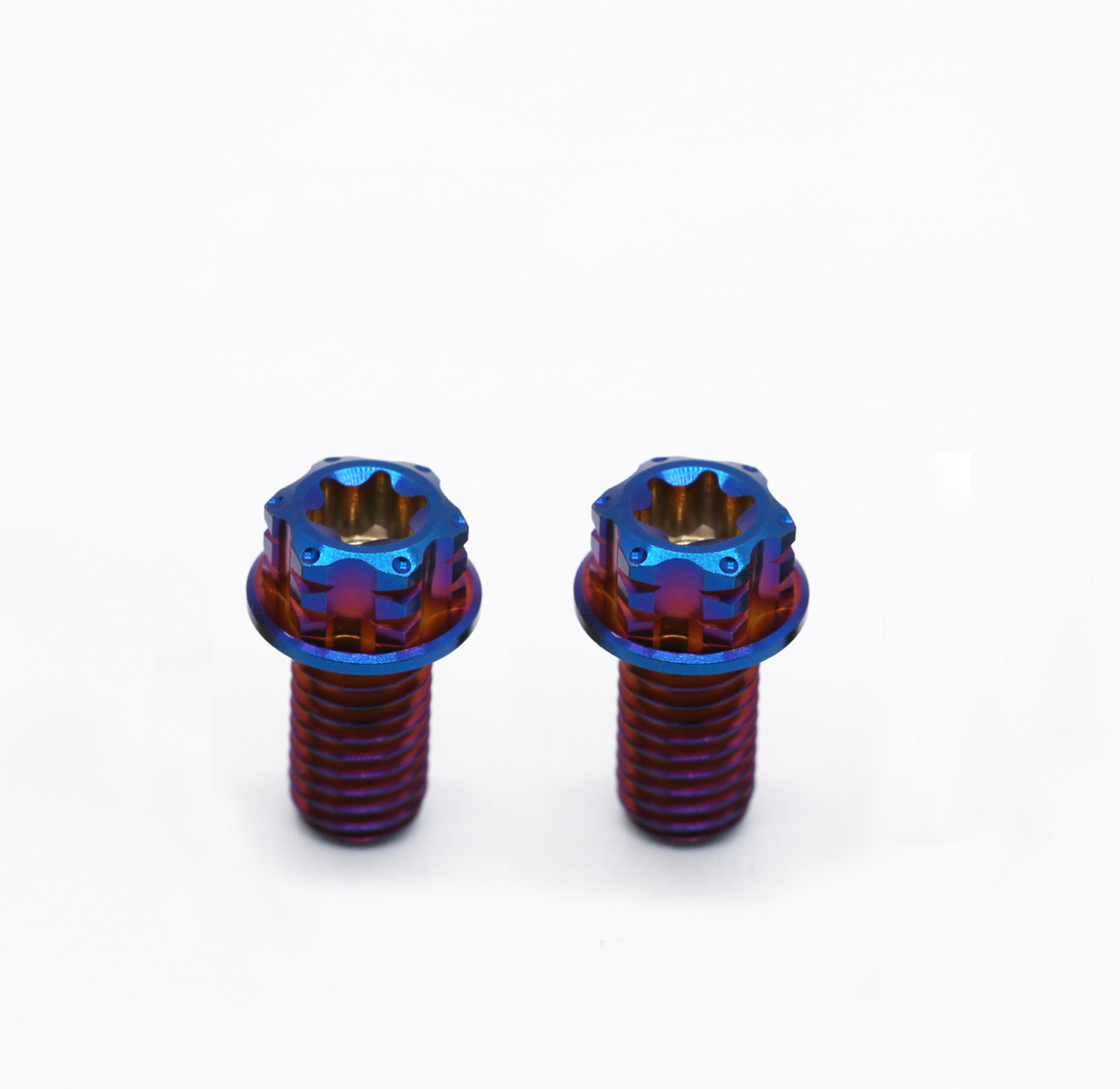
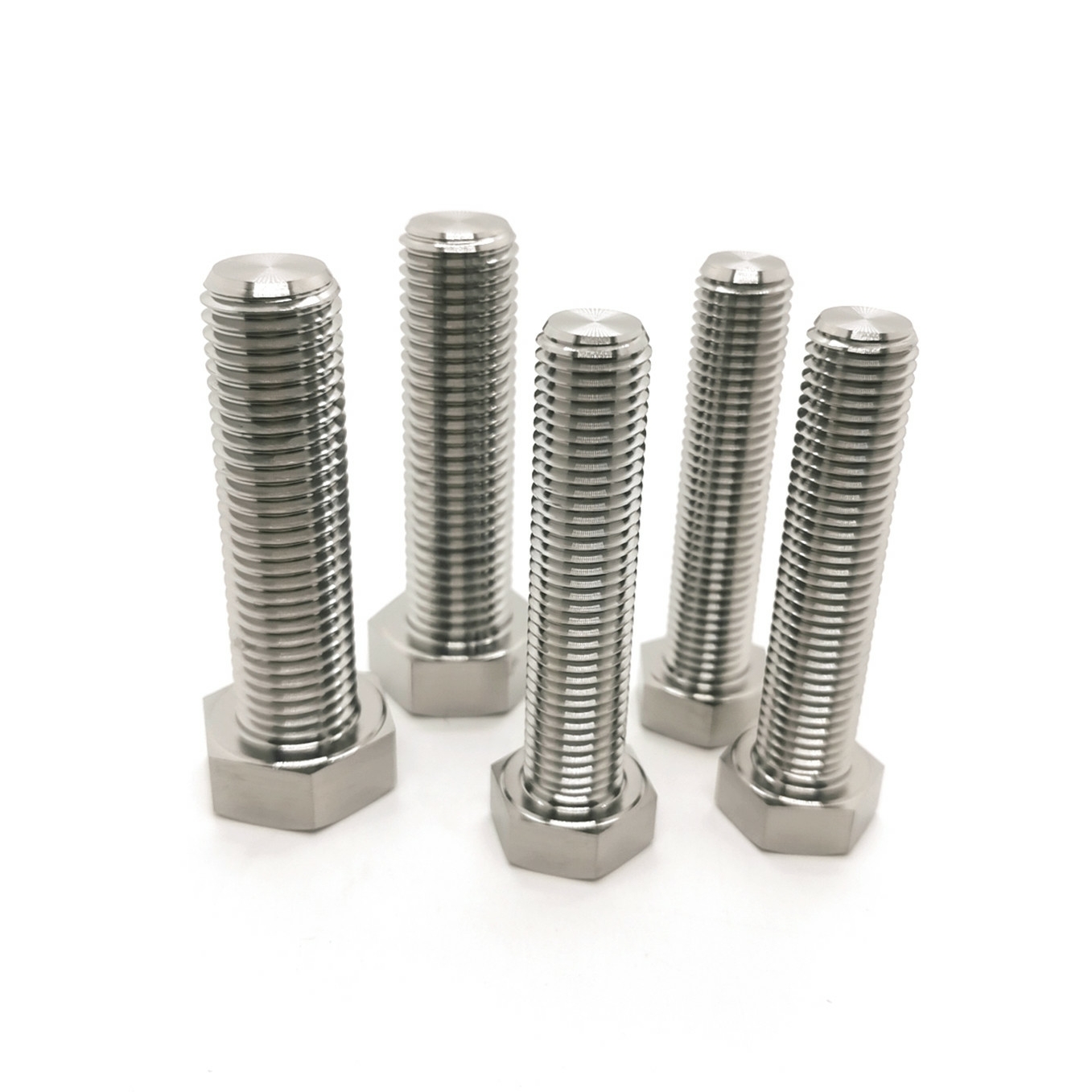
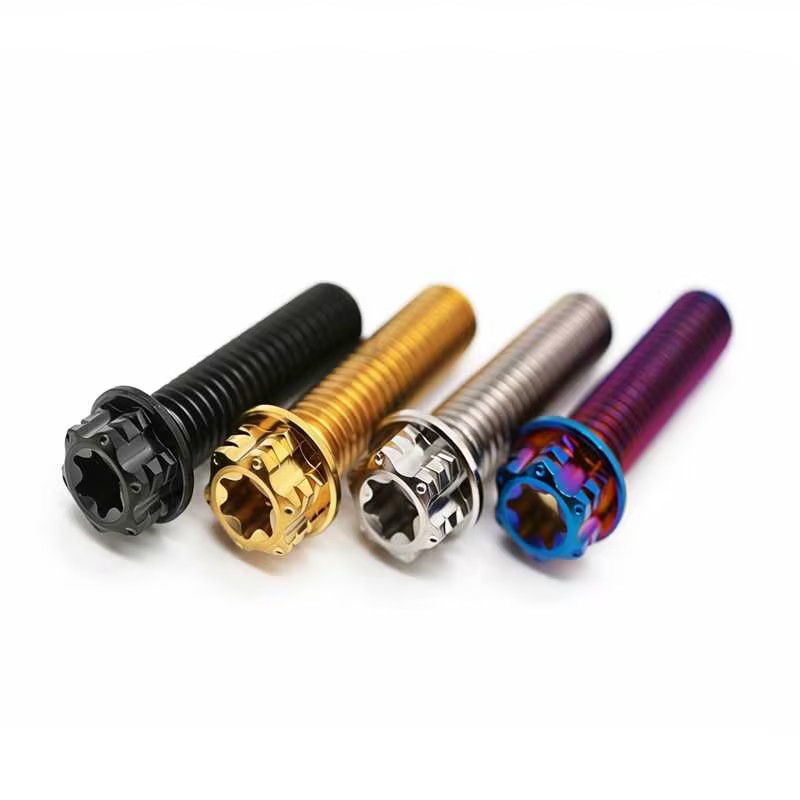
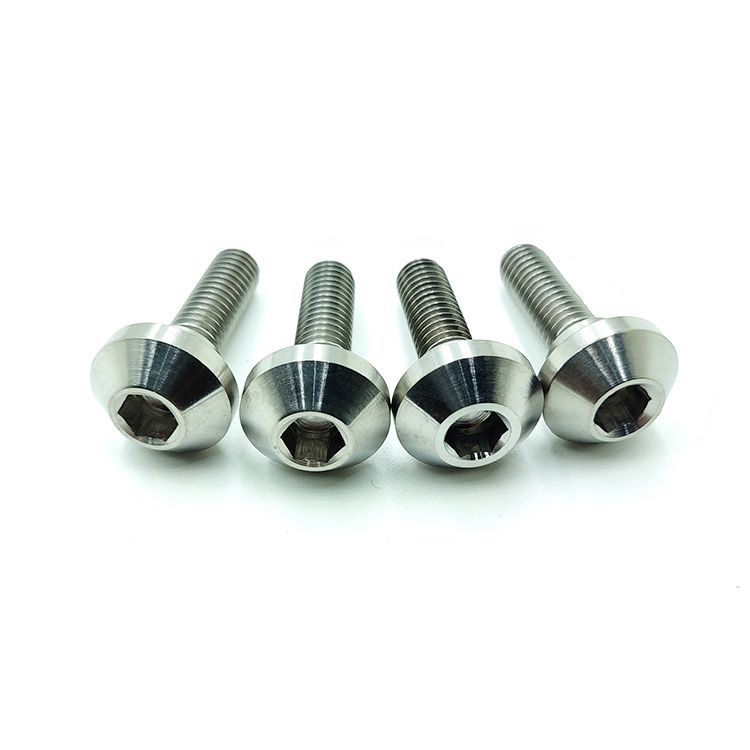
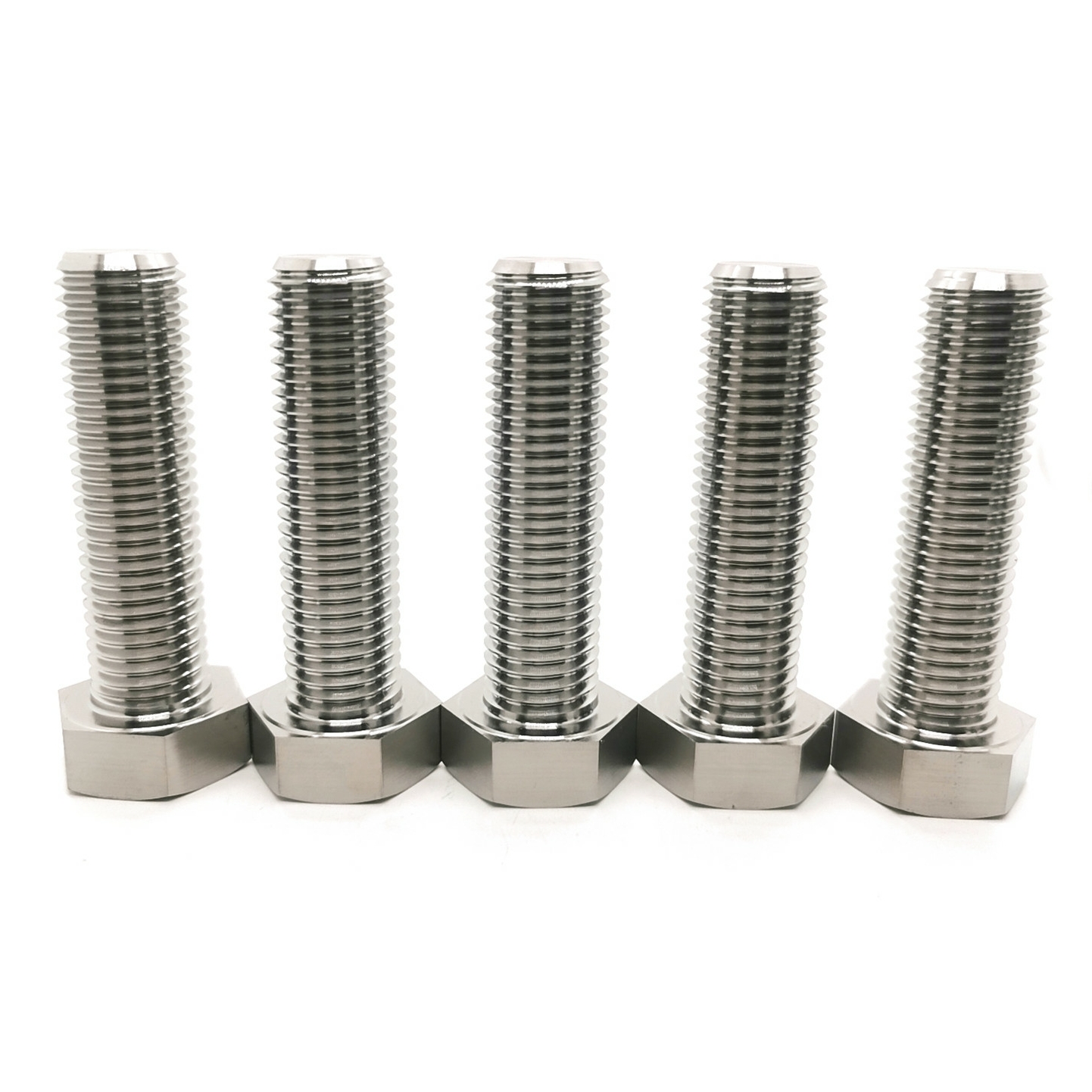
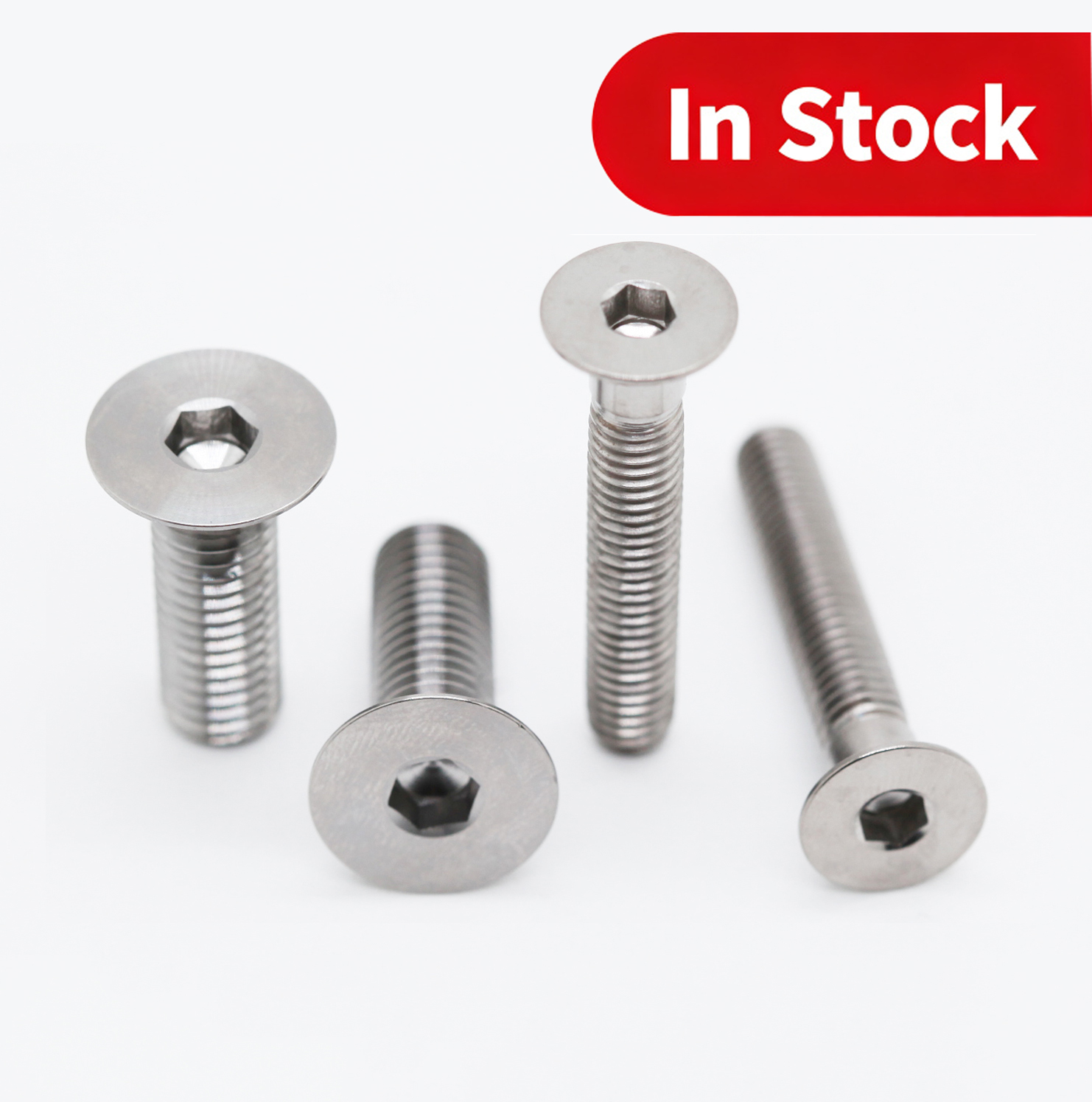
Engineering Grade 5 Ti-6Al-4V Stud Bolts for High-Stress Assemblies
A technical assessment of mechanical integrity, cyclic fatigue strength, and weight reduction ratios comparing titanium fastener alloys to conventional marine-grade steels.
In structural, motorsport, and marine applications, selecting fasteners requires balancing tensile yield, shear modulus, density, and environmental passivation. Grade 5 Titanium (Ti-6Al-4V, UNS R56400) is a two-phase alpha-beta alloy formulated to provide exceptional strength-to-weight metrics. When machined into stud bolts, double-ended studs, and wheel fasteners, Gr5 exhibits a minimum tensile strength of 895 MPa (130 ksi) and a yield strength exceeding 828 MPa (120 ksi)—outperforming typical 316 stainless steel by more than 160% while reducing total hardware weight by approximately 44%.
| Alloy Specification | Material Structure | Density (g/cm³) | Min. Tensile (MPa) | Min. Yield (MPa) | Marine Crevice Corrosion Index |
|---|---|---|---|---|---|
| Gr5 (Ti-6Al-4V) Annealed | Alpha-Beta Titanium Alloy | 4.43 | 895 | 828 | Immune in Natural Seawater (<100°C) |
| Gr2 Commercial Pure (CP) | Alpha Phase Unalloyed Ti | 4.51 | 345 | 275 | Immune to Microbiological Marine Attack |
| A4-80 Stainless (316) | Austenitic Chromium-Nickel | 8.00 | 800 | 600 | Susceptible to Chloride Pitting Under Crevices |
| Class 10.9 Structural Steel | Quenched & Tempered Carbon | 7.85 | 1040 | 940 | Rapid Degradation; Requires Cathodic Barrier |
Rolled vs. Machined Threads
Our Grade 5 titanium stud bolts undergo thread rolling rather than chip cutting wherever specified. Rolling aligns the grain flow parallel to the thread profile, enhancing fatigue endurance and eliminating stress concentration notches along the root radius.
Chloride & Marine Passivation
Titanium instantly forms an inert, tenacious titanium dioxide (TiO2) passive layer upon atmospheric exposure. In coastal or port environments, this shield eliminates pitting and intergranular failure without requiring toxic cadmium or sacrificial zinc plating.
Galling & Preload Control
To eliminate thread galling during high-torque dry runs, our studs are engineered to precise class 6g tolerances. We provide proprietary PVD treatments and recommend molybdenum disulfide or nickel-based anti-seize paste for calibrated clamp retention.
Why Liverpool & North West UK Industries Procure Yevzo Titanium Studs
From the Mersey estuary maritime operations to high-tier automotive and chemical complexes across Cheshire and Merseyside, titanium fasteners solve chronic corrosion and weight dilemmas.
Maritime Infrastructure & Dockyard Engineering
Liverpool’s extensive ports along the River Mersey operate under punishing marine splash zones, high salinity, and estuarine silt conditions. Traditional stainless steel flange bolts experience rapid crevice corrosion behind gaskets and underwater flanges. Titanium stud bolts provide permanent immunity against marine microbiologically influenced corrosion (MIC), vastly reducing drydock maintenance cycles.
Motorsport, High-Performance Cars & EV Conversions
The North West automotive corridor demands drastic reductions in unsprung rotational mass. Replacing steel hub and wheel studs with Gr5 Ti-6Al-4V decreases rotational inertia by over 40%, directly translating to sharper steering feedback, lower brake temperatures, and enhanced transient acceleration on track day circuits such as Oulton Park.
Offshore Renewable Energy & Chemical Processing
With major offshore wind farms deployed in Liverpool Bay, subsea junction housings, tidal turbines, and sensor telemetry arrays demand fastener integrity across 25-year design lifetimes. Grade 5 and Grade 2 titanium studs provide non-magnetic, corrosion-free anchoring that withstands hydraulic pressures and cyclic hydrodynamic wave shock.
North West England Fastener Procurement Trends: The Shift to Titanium
How British procurement managers are optimizing total cost of ownership (TCO) by substituting frequent steel maintenance with titanium alloys.
Across Merseyside, Greater Manchester, and Lancashire, industrial engineering departments are actively re-evaluating capital lifecycle management. While standard zinc-coated or B7 alloy steel studs initially represent a lower upfront procurement cost, replacement cycles in harsh saline atmospheres—amplified by damp maritime weather—drastically inflate lifecycle labor expenses. A single dockside or chemical plant overhaul requiring torch cutting of seized, rusted steel bolts can exceed thousands of pounds sterling per hour in downtime.
By purchasing China-wholesale direct titanium stud bolts from Yevzo Titanium Metal Co., Ltd., Liverpool-based distributors, engineering contractors, and marine equipment manufacturers bypass domestic multi-tier trading markups while securing mill-certified ASTM B348 material. Furthermore, the expansion of green energy initiatives along the Irish Sea demands hardware capable of withstanding unlubricated submerged duty, accelerating titanium’s mainstream transition from aerospace-only budgets into commercial offshore and transport engineering.
1. Lifecycle TCO Minimization
Replacing rusted fasteners every 24 months costs 4x more in technician hours than installing maintenance-free titanium stud bolts with a 20+ year expected operational life.
2. Direct Baoji-to-UK Express Logistics
With flexible Incoterms (DDP, CIF, FOB) and multimodal express forwarding, British engineering shops receive custom CNC batches directly to their workshop doors without customs friction.
3. Strict Raw Material Heat Traceability
Modern UK engineering specs require 3.1 chemical composition and mechanical tensile certificates. Yevzo links every titanium bar heat lot directly to the finished threaded studs.
Why Partner with Yevzo Titanium Metal Co., Ltd.
Headquartered in Baoji, China's designated "Titanium Valley," our enterprise combines raw ingot refinement, precision multi-axis CNC machining, and comprehensive OEM/ODM custom services.
Baoji Raw Material Hub
Situated in China's Titanium Valley, we source prime-melt titanium sponge, billet, and ASTM B348 bar directly from primary smelting operations, cutting material lead time and raw cost.
Precision CNC & Thread Rolling
Over 100 sets of advanced CNC lathes, automated milling centers, and dedicated thread-rolling equipment guarantee thread accuracy to ISO 965 and ASME B1.1 Class 2A/3A specifications.
PVD & Anodizing Finishes
Our in-house finishing department offers plain machined, diamond-polished, micro-arc oxidized, and PVD anodized finishes (Gold, Royal Blue, Burnt Titanium, Deep Black) with zero thread buildup.
Rigorous Multi-Stage QA
Every production batch passes optical dimension inspection, thread ring gauge verification, tensile batch testing, and ultrasonic defect screening with third-party testing available upon request.
Frequently Asked Questions by Liverpool & UK Importers
Real-world insights on tariffs, thread sizing, torque calculations, galvanic isolation, and supply logistics.
Q1: Can we order custom stud lengths and imperial UNF threads for UK projects?
Yes. While we stock full metric lines (M3 through M24), our CNC turning centers regularly produce imperial UNC/UNF threads (such as 3/8", 7/16", 1/2", 5/8") to ASME/ANSI standards or bespoke double-ended studs based on client CAD drawings.
Q2: How do you prevent galvanic corrosion when mating titanium to aluminum?
Titanium is cathodic (noble). When clamped against aluminum in seawater, galvanic action may target the aluminum. We recommend our PVD insulating coatings, passivation, or using engineered PTFE/non-conductive composite washers to break electrical conductivity.
Q3: What are the lead times and shipping options for Liverpool deliveries?
In-stock standard titanium bolts and studs ship within 48 hours via express air couriers (DHL, FedEx, UPS) arriving at Manchester/Liverpool air hubs in 4–7 business days. Container bulk orders are shipped via sea freight to the Port of Liverpool or Southampton under DDP or CIF terms.
Q4: Do you accept small-batch trial orders for testing and prototyping?
Yes. Catalogue titanium studs and flange bolts start with a low MOQ of 10 to 30 pieces. Custom engineering prototypes can be produced according to your initial sample batch requirements before committing to full-scale mass production.
Q5: What torque specifications should be used for Gr5 titanium bolts?
Due to titanium's distinct modulus of elasticity (approx. 114 GPa vs. steel's 200 GPa) and friction characteristics, titanium bolts should generally be torqued to approximately 75% to 85% of standard steel bolt ratings, always using quality anti-seize paste to establish accurate preloads.
Q6: What certifications are provided with our wholesale shipment?
Every commercial consignment includes comprehensive Material Inspection Certificates detailing chemical composition, yield strength, tensile limits, and elongation in full alignment with ASTM B348 and ISO 9001 standards.