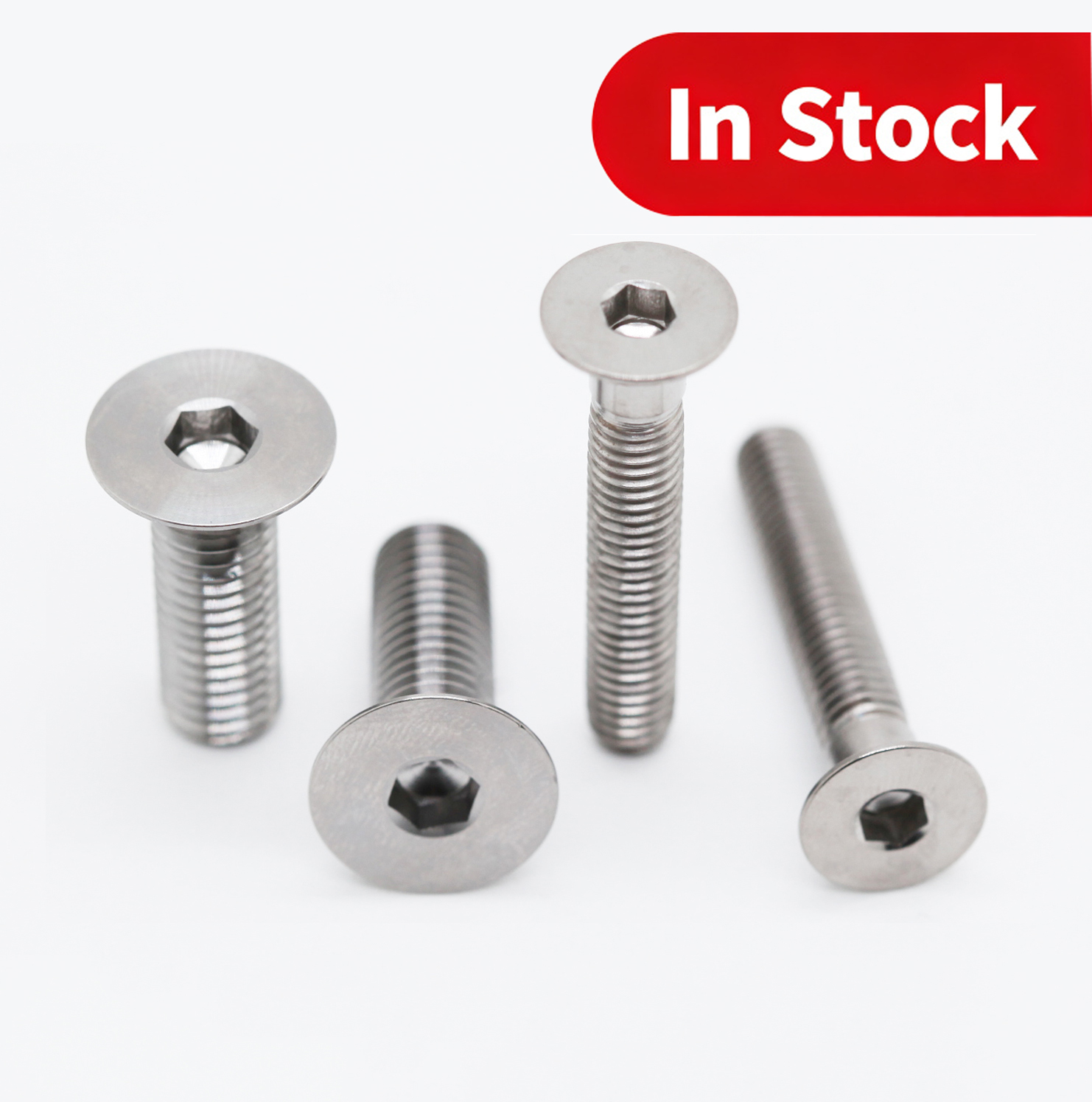
Gr5 · DIN 7991
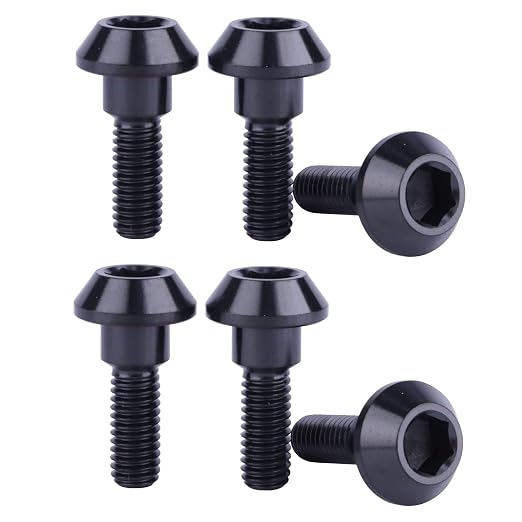
Direct from our Baoji facility: cold-headed, thread-rolled, and multi-axis CNC machined fasteners compliant with DIN, ISO, and client-proprietary specifications.
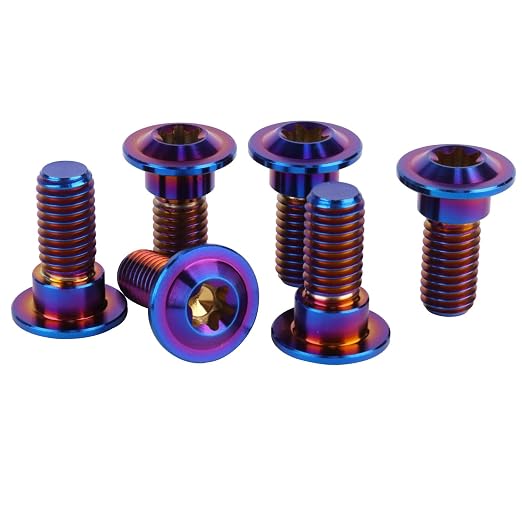
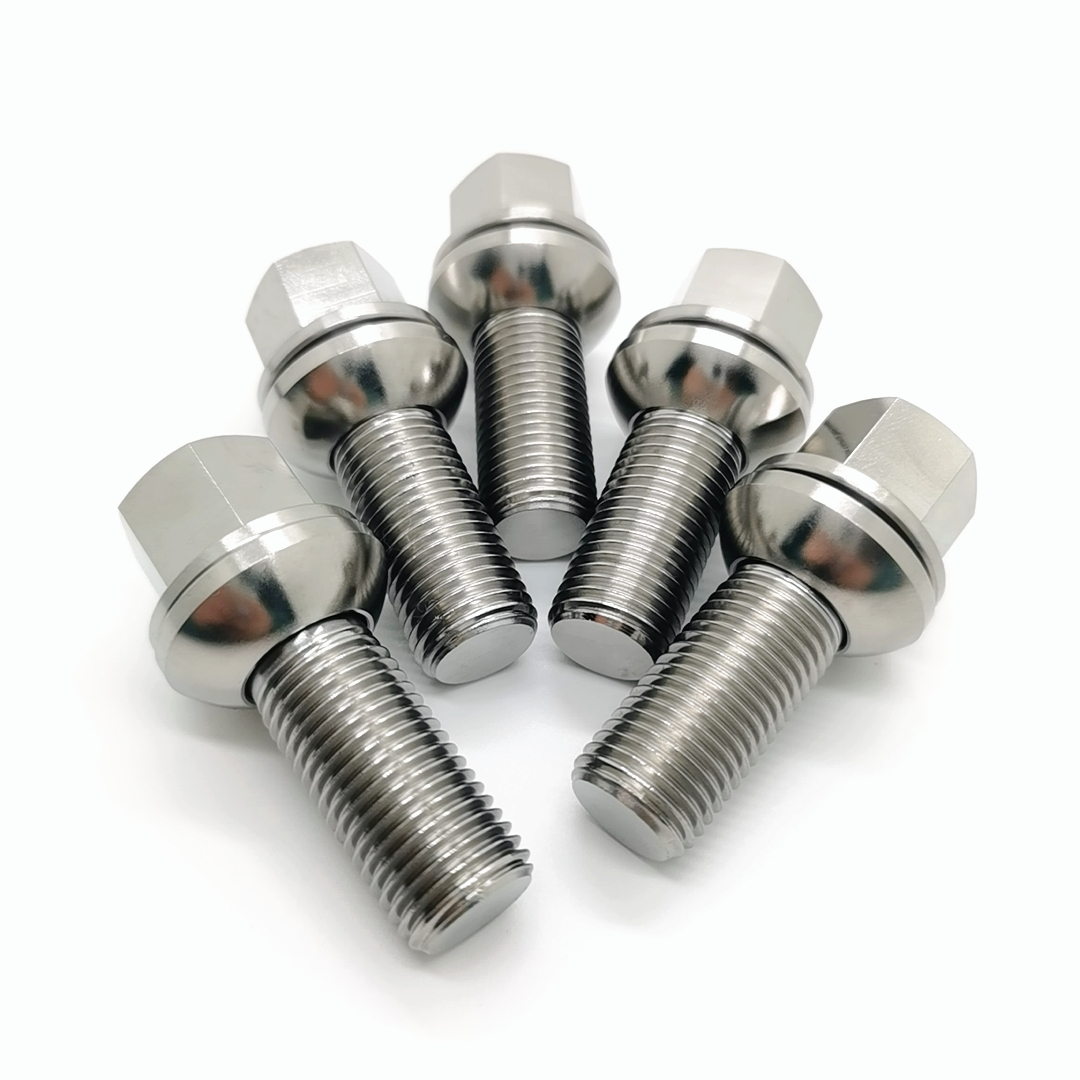
An in-depth metallurgical analysis on structural selection, manufacturing protocols, and lifetime cost efficiency for global procurement teams.
When specifying threaded assemblies for mission-critical installations, structural engineers consistently face the trilemma of mass, yield resistance, and corrosive longevity. Commercially pure titanium (Grade 1 through Grade 4) and alpha-beta alloys—most prominently Grade 5 (Ti-6Al-4V, UNS R56400)—represent an optimal convergence point. Providing a specific strength unmatched by 316 stainless steels and superior cyclical fatigue thresholds compared to 7075-T6 aluminum, titanium fasteners are the primary mechanical bond in lightweight transport and extreme fluid systems.
| Alloy / Fastener Grade | Tensile Strength (Min. MPa) | Yield Strength 0.2% (MPa) | Density (g/cm³) | Pitting Resistance (PREN) | Galvanic Passivity Mechanism |
|---|---|---|---|---|---|
| Titanium Gr5 (Ti-6Al-4V) | 895 - 1000 | 828 | 4.43 | N/A (> 100 Equivalent) | Spontaneous Stable TiO&sub2; Oxide Film |
| Titanium Gr2 (Unalloyed CP) | 345 - 480 | 275 | 4.51 | N/A (Immune in Ambient Cl⁻) | Self-Healing Hydrothermal Layer |
| A4-80 Stainless Steel (AISI 316) | 800 | 600 | 7.98 | 23 - 25 (Pitting Risk >60°C) | Cr&sub2;O&sub3; Passive Film (Vulnerable) |
| Grade 10.9 Structural Steel | 1040 | 940 | 7.85 | 0 (Rapid Oxidation) | None (Requires Zn/Ni/Geomet Plating) |
Traditional titanium bolt production depended purely on subtractive bar-turning, generating up to 65% scrap per piece. Our Baoji facility utilizes advanced warm and cold-heading techniques to deform the grain flow unbroken through the bolt head-to-shank radius. This dramatically enhances cyclical shear endurance and yields cost savings passed to volume procurement channels.
Because titanium forms a self-passivating oxide layer, thread seizure (galling) can happen under high assembly clamp loads without dry-film lubricants. Current manufacturing utilizes physical vapor deposition (PVD), carbon-based Diamond-Like Coatings (DLC), and specialized electrolytic conversion layers to prevent metal-on-metal cold micro-welding without modifying dimensional pitch fit.
High-integrity fasteners demand ingot feedstock with zero interstitial segregation. Production utilizes double and triple VAR titanium ingot conforming precisely to ASTM B348 and AMS 4928 standards. Internal ultrasonics and eddy-current non-destructive examinations certify zero core microporosity before thread processing begins.
Strategic procurement of industrial and high-performance fasteners is decoupling from standard carbon steel and cadmium-plated hardware. The international acceleration toward pure electric vehicle (EV) architectures, hydrogen generation cells, and high-altitude payload drones has made structural mass reduction critical:
Automotive OEMs are converting lower tray hardware to Gr5 titanium. This neutralizes galvanic corrosion against carbon-fiber composite and extruded aluminum structures, while withstanding violent battery thermal runaway tests without degrading clamping pressure.
With maintenance cycles targeting 30+ year spans in deep-sea manifolds, titanium eliminates the requirement for continuous cathodic protection, resulting in lower total lifecycle cost (LCC) despite higher upfront metal stock investment.
International distribution centers are bypassing regional intermediaries to contract directly with integrated Baoji mills. This preserves Mill Test Report (MTR) pedigree under EN 10204 3.1 and eliminates counterfeit alloy risks.
Combining localized raw material abundance in Baoji with strict quality gates and complete export trade infrastructure.
Situated in Honeycomb Industrial Park, Baoji High-Tech Zone, our proximity to China's primary sponge titanium processing ensures stable access to Grade 1, 2, 5, 7, and 12 certified bar stock with fully transparent heat traceability.
Equipped with 100+ precision units, our shop floors house high-speed CNC turning, 3-axis/5-axis centers, and specialized high-tonnage cold-heading equipment for mass production and bespoke print machining.
Every shipment is verified against pitch-diameter gauges, optical profile projectors, and coordinate measuring machines (CMM). Chemical composition and mechanical load certifications are provided per heat lot.
Servicing enterprise buyers across North America, Northern Europe, and Asia. We support flexible Incoterms (FOB, CIF, FCA, DDP door-to-door clearing) and multi-currency processing in USD, EUR, GBP, and JPY.
Direct answers from our metallurgical engineering team regarding installation, performance, and international ordering parameters.
Grade 2 is unalloyed commercially pure (CP) titanium providing superior chemical resistance against chlorides, wet chlorine, and organic acids, but its tensile strength is modest (approx. 345–480 MPa). Grade 5 (Ti-6Al-4V) is an alpha-beta alloy with a minimum tensile strength of 895 MPa (often exceeding 950 MPa). Gr5 should always be chosen for structural, high-shear, and cyclic tension joints such as wheel lug bolts, brake disc fasteners, suspension mounts, and aerospace linkages.
Galling happens when friction strips the passive oxide film, leading to localized bare-metal adhesion and seizing. To prevent this, apply anti-seize paste based on molybdenum disulfide (MoS₂), nickel, or copper. Alternatively, specify our PVD/electrolytic anti-galling coatings. Ensure thread speed during automated rundown is kept under 30 RPM to limit friction-heat buildup, and use calibrated torque wrenches rather than impact guns.
Titanium is more noble than aluminum, magnesium, and mild steel on the galvanic table. In wet, salty environments, direct contact can cause galvanic degradation of the adjacent aluminum substrate. We recommend using passivated 300-series stainless or titanium washers to widen the contact patch, non-conductive dielectric isolation shims (such as PTFE or nylon), or applying an insulating primer/sealant during thread engagement.
Grade 5 titanium possesses a modulus of elasticity (approx. 114 GPa) that is roughly half that of structural steel (approx. 210 GPa). Consequently, titanium stretches twice as much as steel under an identical clamp load. Recommended installation torque is generally 15% to 20% lower than a Grade 8.8 steel equivalent to generate the required preload without yield risking. Precise torque charts are provided with all engineered fastener deliveries.
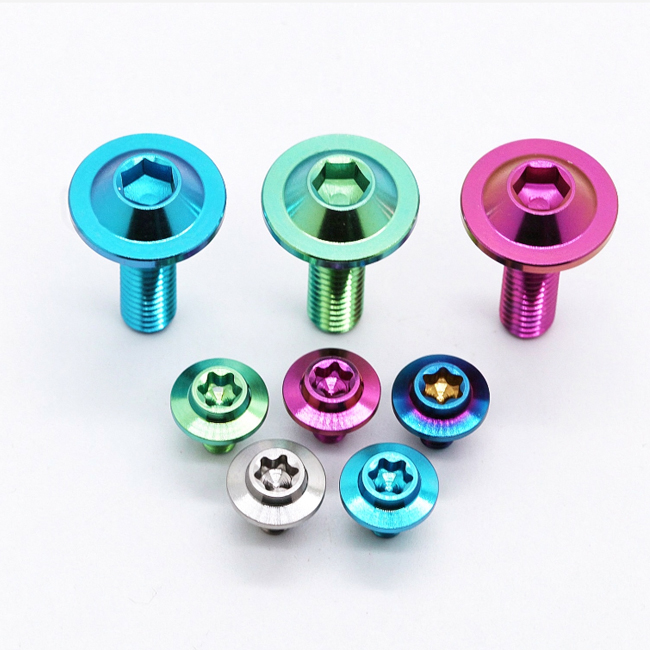
No. Titanium anodization is an electrolytic passivation process that thickens the natural titanium dioxide (TiO₂) film. The resulting color is produced by optical light interference rather than pigment addition. The total layer thickness ranges between 10 to 200 nanometers, which does not alter the pitch diameter or interfere with standard 6g/6H metric thread class engagements.
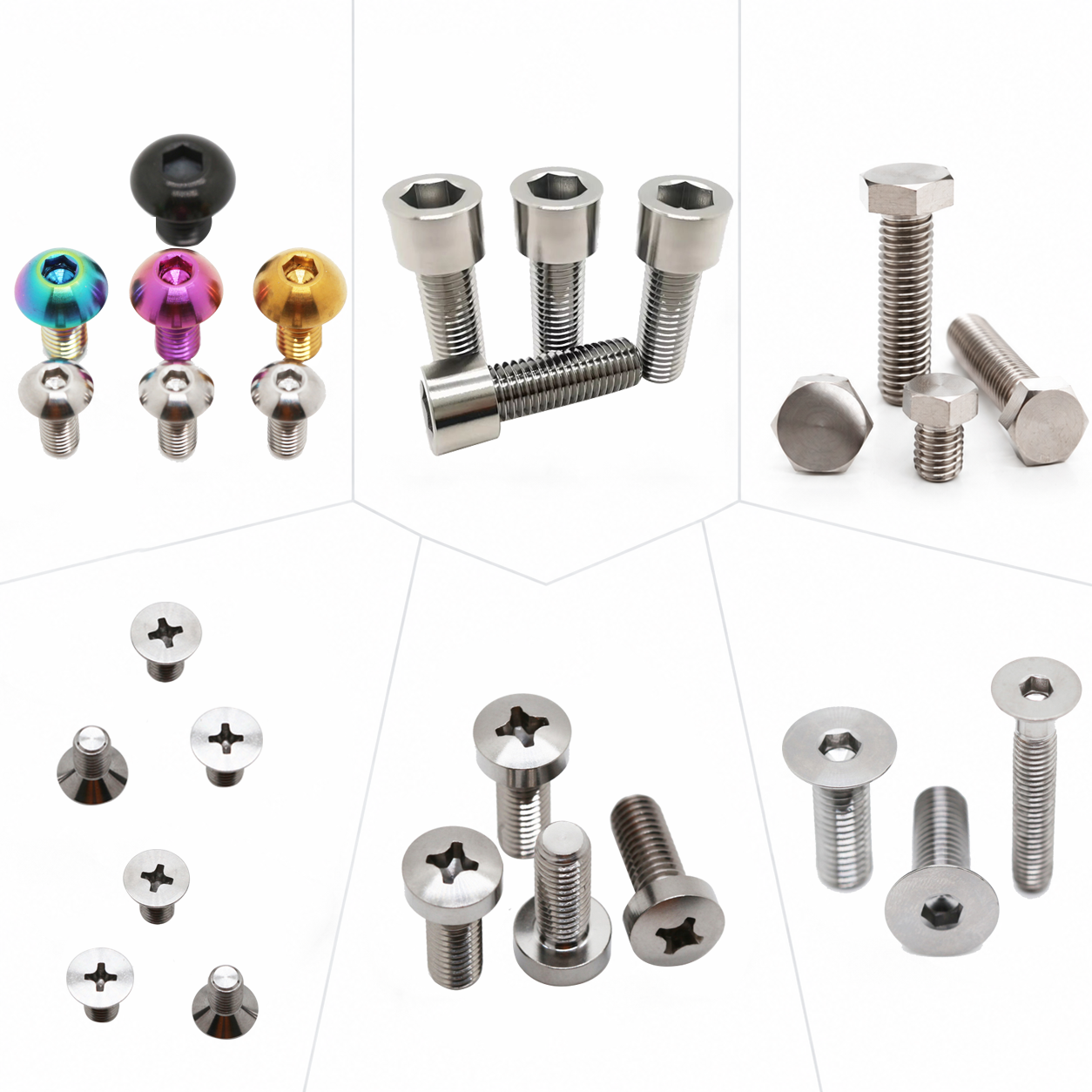
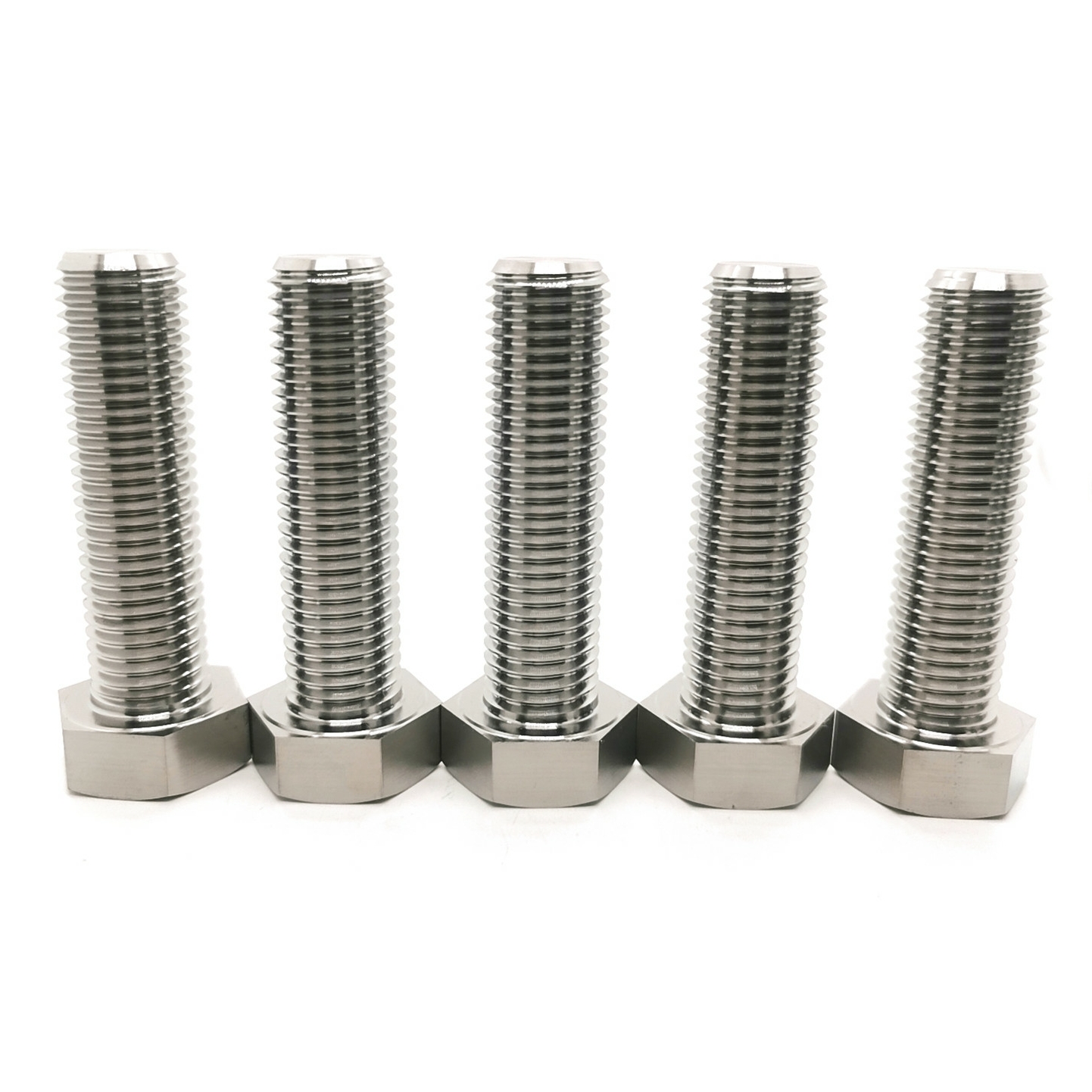
Standard DIN/ISO fasteners in stock (such as DIN 912, DIN 7991, ISO 4014) carry an MOQ starting at only 20–30 units. Bespoke drawing-based CNC items typically start at 100 units depending on bar diameter. Lead times range from 3 days for stock items to 15–20 days for custom production. Every shipment can be accompanied by an EN 10204 Type 3.1 inspection certificate, complete chemical analysis, and tensile test data.
Send your 2D/3D part prints (STEP, IGES, PDF) or fastener schedules. Our engineering department will evaluate your dimensional tolerances, recommend suitable titanium grades, and supply a detailed price breakdown within 24 hours.