High-Performance Titanium Fastening Systems
Engineered for critical load assemblies in aerospace engineering, extreme motorsport platforms, EV chassis, and corrosion-critical marine architectures. Machined to exacting metric and unified standards.
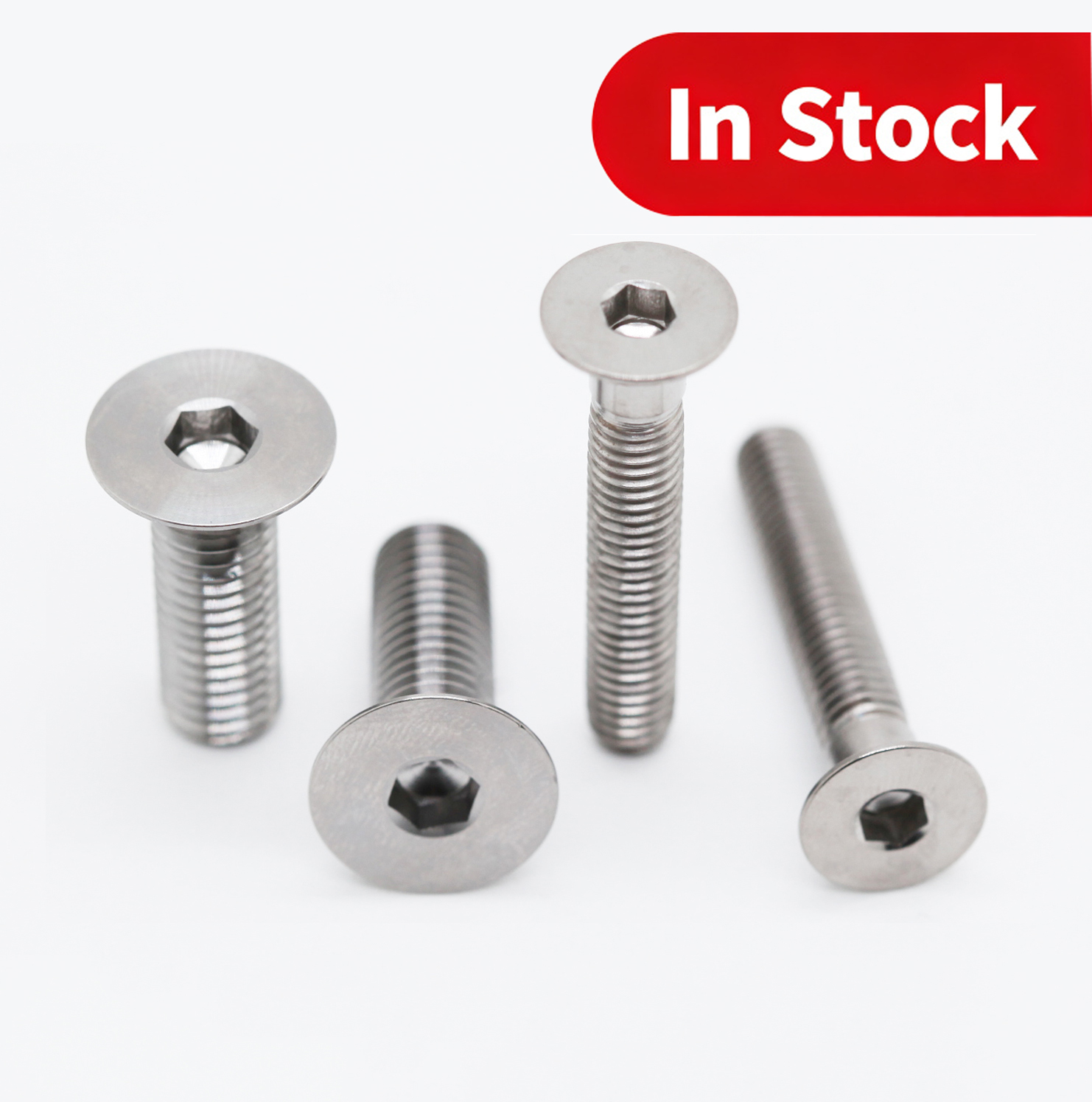
DIN7991 Countersunk Flat Head Hex Bolts
- Thread Pitch: M3, M4, M5 Metric
- Material: Ti-6Al-4V Grade 5
- Yield Strength: ≥ 828 MPa
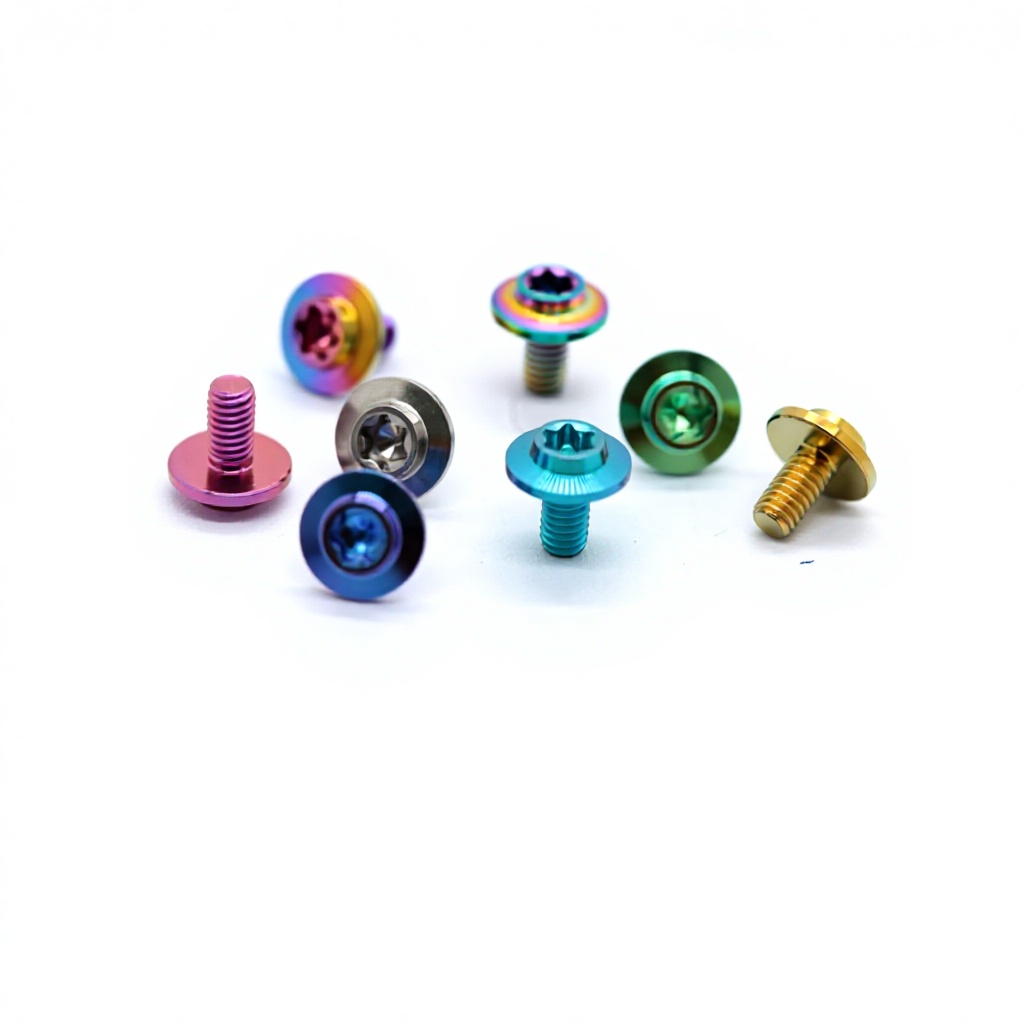
Anodized M6 Umbrella Head Fasteners
- Dimensions: M6 × 15mm Standard
- Surface: Anodized / PVD Finish
- Mass Reduction: -44% vs. Steel
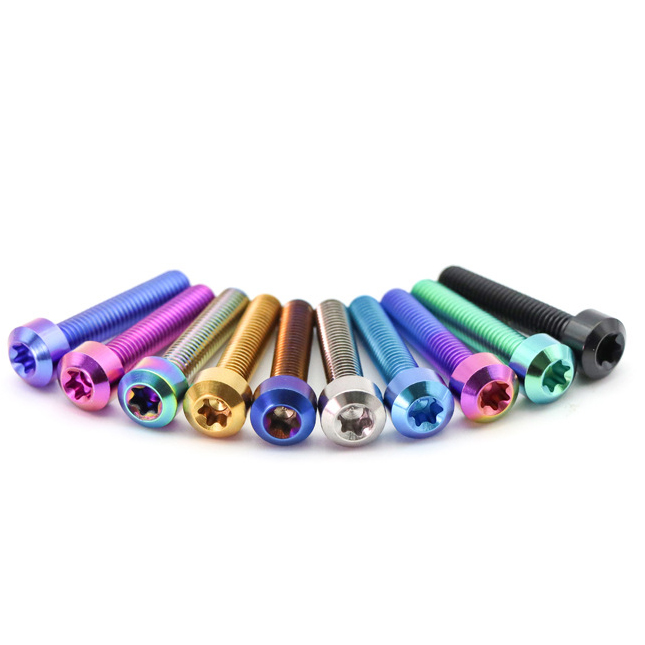
Torx Drive Fine-Thread GR5 Round Bolts
- Drive Type: Internal Torx (T-Drive)
- Thread Class: Metric Fine 6g
- Corrosion Class: Zero Rust In Saline
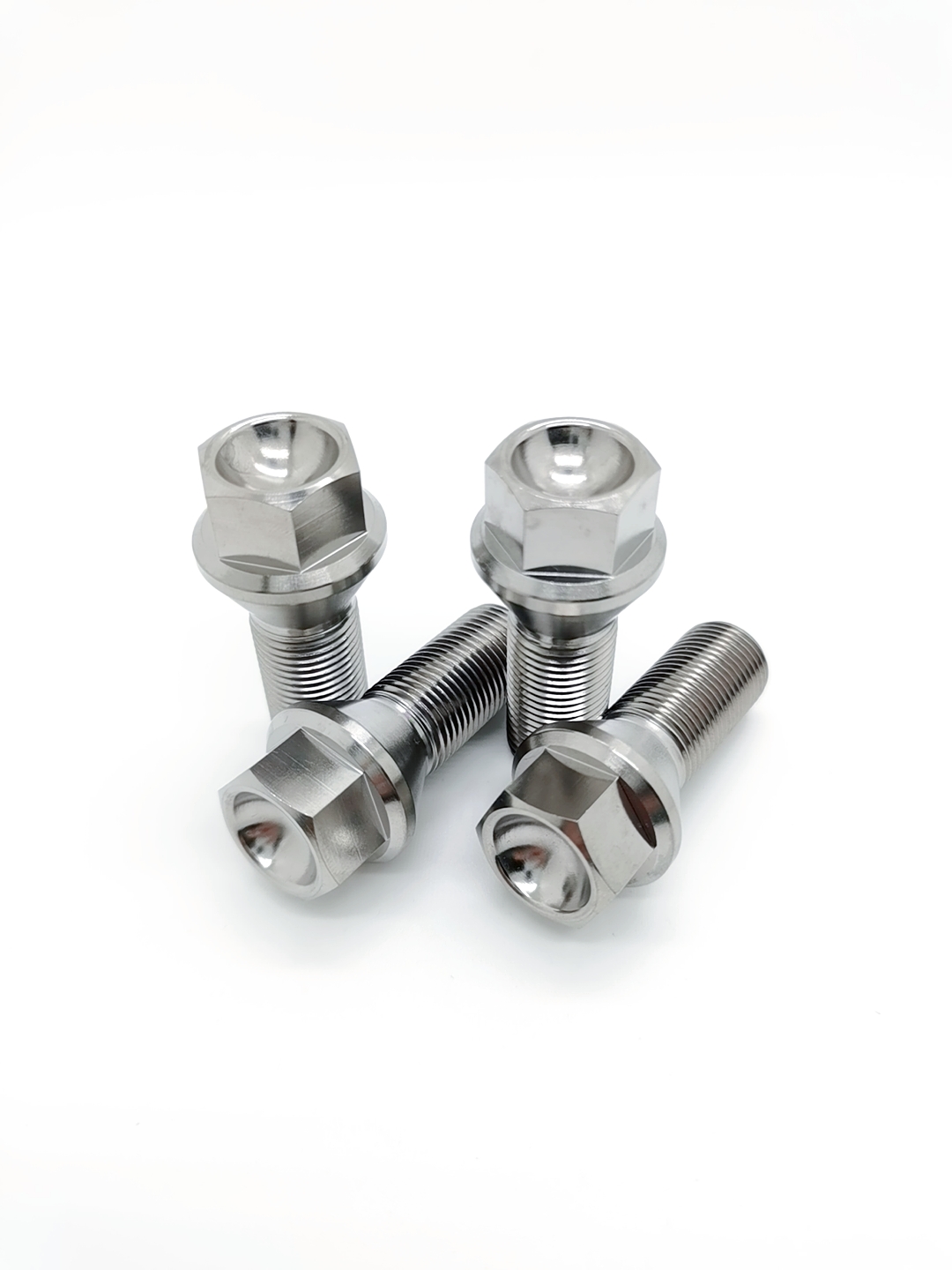
GR5 Lightweight Wheel Lug Bolts (UNC)
- Thread Pattern: Unified Coarse (UNC)
- Tensile Strength: ≥ 950 MPa
- Application: Racing & EV Hubs
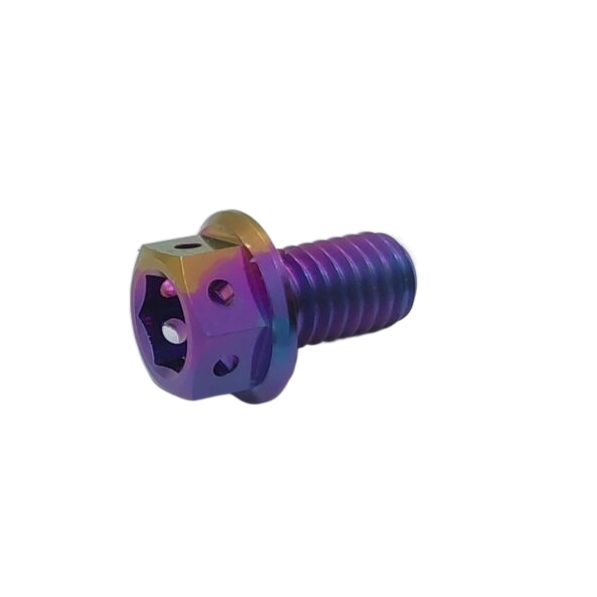
Hex Flange UNF CNC Machined Bolts
- Standard: Class 8.8 / 10.9 Rated
- Thread: Unified Fine (UNF)
- Processing: CNC Multi-Axis Turn
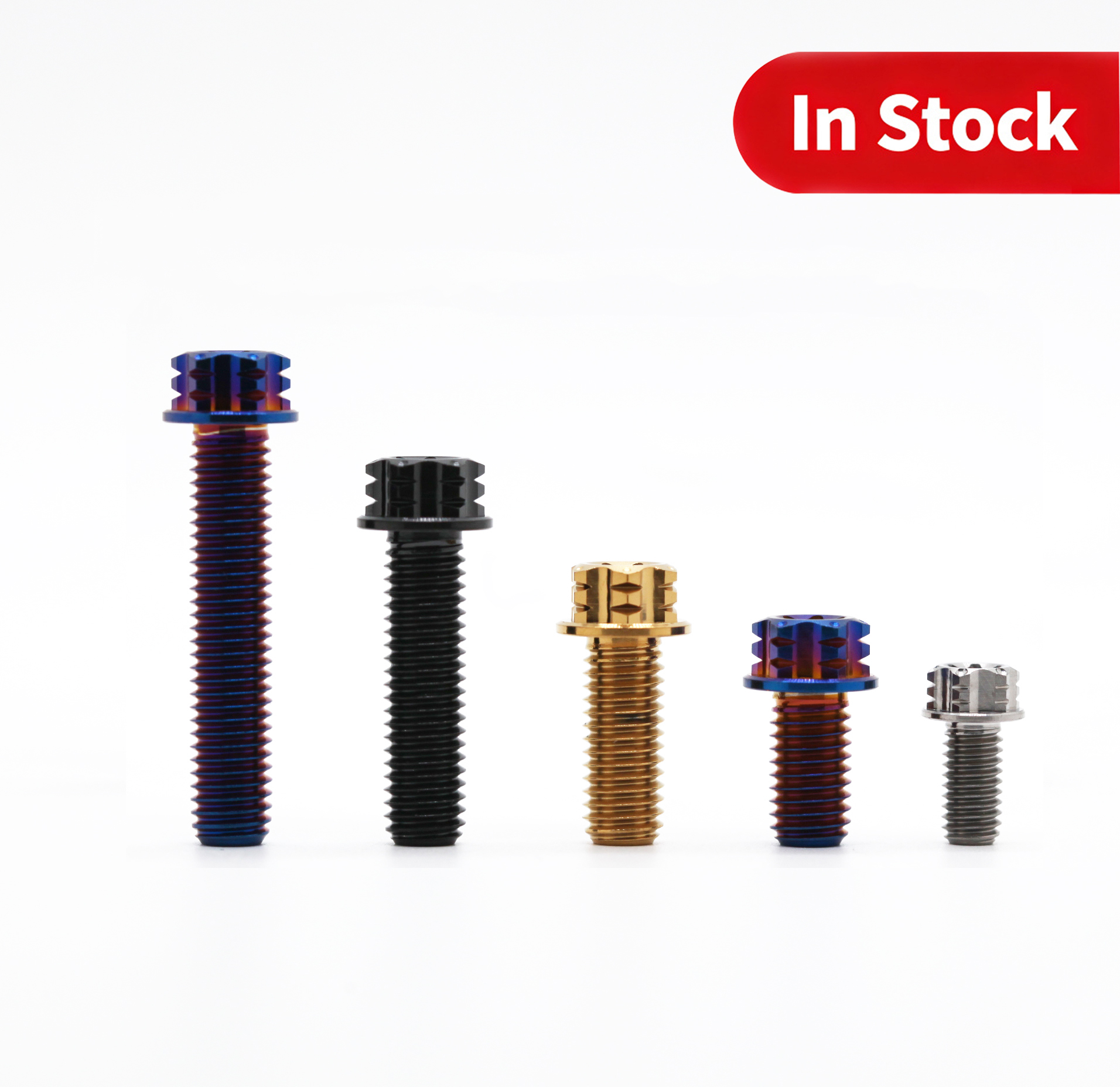
PVD Anodized M6-M22 Flange Fasteners
- Diameter Range: M6 to M22 Complete
- Coating: Wear-Resistant PVD
- Thermal Range: -250°C to +400°C
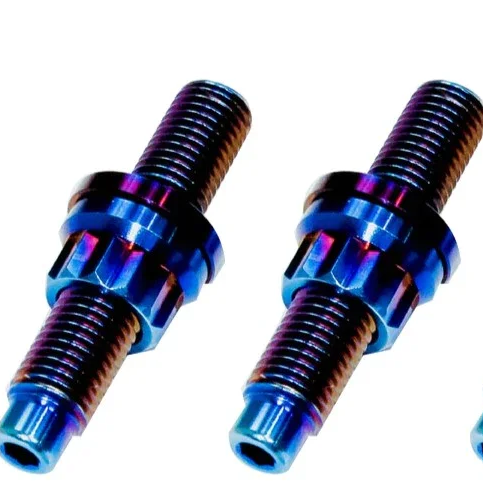
Exhaust Manifold Stud Kits (M8/M10)
- Sizing: M8 × 1.25 / M10 × 1.25
- Thermal Creep: High Stability
- Includes: Studs, Flange Nuts, Washers
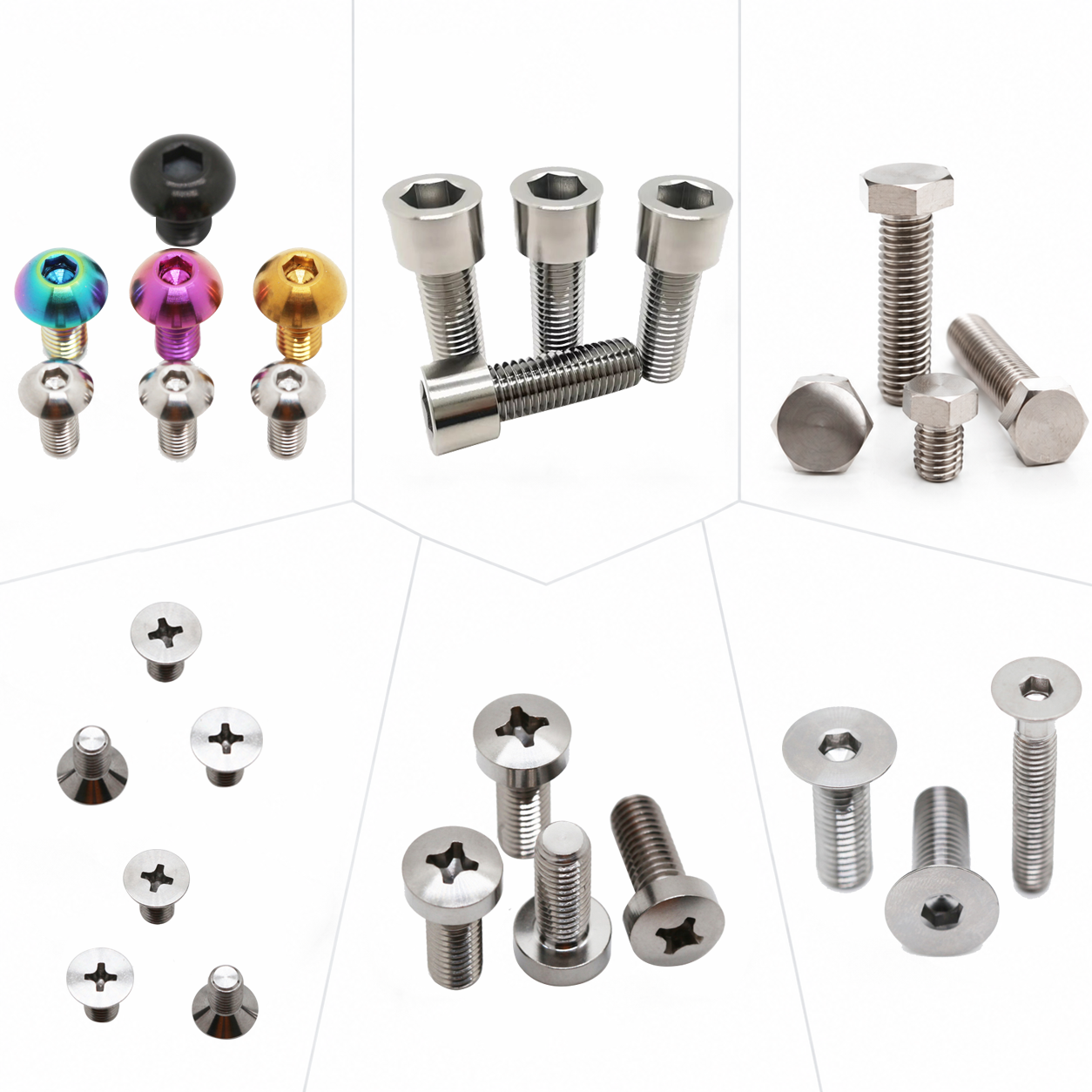
Standard GR5 Factory Fastener Packs
- Standard: DIN 912, DIN 933, ISO 4017
- Certification: EN 10204 3.1 Mill Cert
- MOQ: 20 to 100 Pcs Quick Ship
Structural Metallurgy of Aerospace-Grade Titanium Fasteners
A technical evaluation of mechanical properties, yield-to-density ratios, fatigue limit thresholds, and microstructural grain-flow integrity in mission-critical joint systems.
Alpha-Beta Matrix & Ti-6Al-4V Grade 5 Superiority
In aerospace assembly and high-load mechanical design, fastener selection dictates overall system safety margins. While Commercially Pure (CP) Grade 2 Titanium provides exceptional ductility and near-immunity to chloride and chemical corrosion, its lower tensile threshold (≥ 345 MPa) restricts its role to non-structural fairings, ducting, and chemical fluid housings.
For airframe structures, engine mounts, and structural kinetic linkages, Ti-6Al-4V (Grade 5 / AMS 4928 / AMS 4967) represents the primary alloy standard. Featuring a dual-phase α+β matrix strengthened by 6% aluminum (alpha stabilizer) and 4% vanadium (beta stabilizer), Grade 5 delivers a nominal ultimate tensile strength exceeding 895 to 1,000 MPa with a minimum yield of 828 MPa. Crucially, its density of only 4.43 g/cm³ yields a strength-to-weight ratio that eclipses typical Grade 8.8 and 10.9 structural steels by over 40%.
Rolled Threads vs. Cut Threads: Fatigue Resistance
Thread failure under high-cycle vibrational fatigue is the single most common cause of bolted joint failure in aviation and high-speed transit. Standard machine-cut threads slice through the natural crystalline grain flow of the titanium bar stock, producing micro-notches at the thread root that act as stress concentration vectors.
Our manufacturing philosophy employs hot and cold grain-flow thread rolling post-heat-treatment. By applying continuous radial pressure using precision die sets, the grain flow contours continuously around the thread crest and root without interruption. This imparts beneficial compressive residual surface stresses, increasing fatigue cycle endurance limits by up to 300% compared to single-point CNC turned threads.
| Material Specification | Tensile Strength (MPa) | Yield Strength (MPa) | Density (g/cm³) | Specific Strength (kN·m/kg) | Operating Temp Limit | Fatigue Endurance (Cycles) |
|---|---|---|---|---|---|---|
| CP Titanium Gr2 (ASTM B348) | ≥ 345 | ≥ 275 | 4.51 | 76.5 | Up to 315°C | Moderate / Non-Critical |
| Ti-6Al-4V Gr5 (Annealed / Rolled) | ≥ 895 – 1000 | ≥ 828 | 4.43 | 202.0 | -250°C to +400°C | > 10&sup7; at 450 MPa Stress |
| Ti-6Al-4V ELI (Gr23 / ASTM F136) | ≥ 860 | ≥ 790 | 4.43 | 194.1 | Cryogenic to +350°C | High Fracture Toughness |
| Aerospace Alloy Steel (AISI 4340) | ≥ 1080 | ≥ 930 | 7.85 | 137.6 | Up to 260°C (Corrosive) | Baseline Reference |
| Stainless Steel (A2-70 / 304) | ≥ 700 | ≥ 450 | 7.90 | 88.6 | Up to 400°C | Low-to-Moderate |
Why Tier-1 Engineers Source from Baoji Titanium Valley
Combining primary raw-material smelting clusters with proprietary multi-axis CNC micro-machining centers. Direct mill-to-factory integration ensures absolute chemical and mechanical compliance.
Titanium Valley Epicenter
Situated in Baoji High-Tech Zone, China's core non-ferrous hub. We bypass broker markups and source ingot raw stock directly from prime vacuum-arc remelted sponge mills.
Onsite Verified Operations
Fully audited and verified manufacturing site. Our factory coordinates encompass in-house machining, thread rolling, ultrasonic chemical purging, and optical gauging labs.
Complex Drawing ODM/OEM
From complex hollow-shank fasteners and internal 12-point spline heads to bespoke titanium bicycle spokes and EV battery pack studs, we machine directly from your 3D CAD/STEP files.
EN 10204 3.1 Certification
Every dispatch batch is married to its corresponding physical and chemical spectrometer analysis, verifying exact elemental ceilings for interstitial elements (C, O, N, H, and Fe).
Advanced Surface Treatments
Offering precision titanium anodization (Type II / Type III) in vibrant spectrum shades alongside vacuum PVD sputtering (TiN, TiCN, DLC) to achieve superior thread lubricity and hardness.
Global Logistics Flexibility
Seamless incoterms support covering EXW, FOB, CIF, DDP, and door-to-door express courier. Flexible multi-currency transaction accounts (USD, EUR, GBP, AUD, JPY) simplify procurement.
Emerging Procurement Trends in Titanium Aerospace Fasteners
Strategic purchasing benchmarks for OEM supply managers navigating lightweighting mandates, next-gen airframes, eVTOL air mobility, and automated assembly integrations.
1. The eVTOL & Urban Air Mobility Boom
The rapid commercialization of electric vertical takeoff and landing (eVTOL) aircraft has introduced unprecedented demand for weight optimization. Every gram of reduced chassis mass directly correlates with extended battery range and passenger payload. Procurement teams are systematically replacing standard A286 and 17-4PH stainless hardware with Grade 5 titanium, projecting a compound annual growth rate (CAGR) of over 14% in micro-fasteners through 2030.
2. Closed-Loop Circular Titanium Recycled Stock
Environmental, Social, and Governance (ESG) mandates are transforming aerospace procurement frameworks. Tier-1 buyers increasingly demand verification of sustainable scrap reclamation protocols. By segregating clean titanium swarf and solid drops generated during CNC machining operations in Baoji, manufacturers can re-enter qualified titanium alloy revert into vacuum induction skull melting (ISM) streams, reducing the overall carbon footprint of aerospace fasteners by up to 35%.
3. Digital Thread Traceability & Smart Fasteners
Manual paper mill test certificates are transitioning to automated digital material ledgers. Advanced aerospace suppliers are implementing high-density 2D DataMatrix laser micro-marking directly onto titanium bolt heads. This allows automated vision-guided robotic assembly cells on the shop floor to instantly verify alloy chemistry, manufacturing heat lot numbers, and authorized torque-tightening ceilings before a wrench even engages the drive recess.
Engineering Breakthroughs in Titanium Joint Integrity
Overcoming galling, galvanic coupling, and thermal degradation through advanced metallurgical coatings and precision robotic manufacturing.
Eliminating Galling via Micro-Arc Oxidation & PVD DLC
Titanium has a strong chemical affinity for atmospheric oxygen, forming a passive TiO&sub2; film that provides corrosion resistance. However, under high-load thread engagement, this microscopic oxide layer can shear off under friction, creating direct metal-to-metal contact that results in severe thread galling or total seizure.
Our facility utilizes Physical Vapor Deposition (PVD) Diamond-Like Carbon (DLC) and Micro-Arc Oxidation (MAO) surface engineering. These thin-film deposition techniques create an ultra-hard, ceramic-like boundary layer (hardness > 2500 HV) with an extremely low friction coefficient (μ ≤ 0.10). This enables repetitive assembly and disassembly cycles without thread degradation, eliminating the need for wet lubricants in cleanroom aerospace assemblies.
Mitigating Galvanic Corrosion in Carbon Fiber (CFRP) Jointing
Modern commercial aviation airframes (such as the Boeing 787 and Airbus A350) consist of more than 50% carbon-fiber reinforced polymers (CFRP). Fastening carbon composites with conventional aluminum or low-alloy steel fasteners creates severe galvanic couples, as carbon sits at an active noble potential (+0.2V) relative to aluminum (-0.9V), resulting in rapid sacrificial oxidation of the fastener shank.
Titanium occupies a nearly identical electrochemical potential to carbon (+0.0V to -0.1V in marine conditions), making Ti-6Al-4V the most galvanically compatible structural metal for composite airframes. Our specialized aerospace fasteners feature specialized isolating coatings, chamfered transitions, and flush-head tolerances that prevent delamination and galvanic micro-pitting across thousands of pressurized flight cycles.
Frequently Asked Questions: Titanium Fastener Procurement
Detailed engineering guidelines on torque calculations, anti-galling strategies, hydrogen embrittlement control, and custom OEM manufacturing.
How do tightening torque values differ between titanium fasteners and standard alloy steel?
Titanium has an elastic modulus of approximately 114 GPa, roughly half that of structural steel (205 GPa). This greater flexibility means a titanium bolt will undergo roughly twice the elastic elongation of a steel bolt under the same preload tension. Consequently, clamping torque calculations must account for the specific torque nut factor (K-factor) and surface finish. In general, dry titanium threads possess a higher friction coefficient (μ ≈ 0.30–0.40) and must be torqued using a titanium-compatible anti-seize paste (e.g., molybdenum disulfide or nickel-based paste) to lower the K-factor to approximately 0.15–0.18. Torque levels are typically calculated to achieve 65% to 75% of the bolt's yield strength.
What testing procedures are implemented to prevent hydrogen embrittlement in titanium fasteners?
Unlike steel, which can absorb hydrogen during electroplating and acid pickling, titanium alloys readily absorb hydrogen during chemical descaling, acid cleaning, or elevated thermal cycles above 400°C, precipitating brittle titanium hydrides (TiH&sub2;) along grain boundaries that induce catastrophic delayed fracture. Our plant strictly enforces inert gas vacuum annealing or protective atmosphere furnace heat treatments. Post-chemical processing, fasteners undergo inert gas fusion thermal conductivity testing per ASTM E1447 to guarantee that interstitial hydrogen concentrations remain safely below the strict threshold of 125–150 ppm (0.0125% max).
What is the standard lead time and Minimum Order Quantity (MOQ) for custom-machined aerospace bolts?
For standard catalog items (DIN 912, DIN 7991, ISO 4017 in standard metric M3 to M20), MOQ begins at just 20 to 100 units for stock items, with dispatch occurring within 48 to 72 hours. For bespoke drawing-based OEM orders requiring multi-axis Swiss CNC turning, custom UNF/UNC thread pitches, or complex head light-weighting recesses, initial pilot prototypes can be completed within 7 to 10 business days. Full production orders (5,000 to 50,000+ units) typically ship within 3 to 4 weeks, accompanied by comprehensive dimensional CMM reports and 3.1 mill material certifications.
Can you provide anodized fasteners in custom color ranges without altering thread pitch tolerances?
Yes. Titanium anodizing is fundamentally an electrolytic conversion process that thickens the naturally occurring titanium dioxide (TiO&sub2;) layer. The vivid colors observed (gold, violet, cyan, burnt bronze, blue) are created by optical thin-film light interference rather than organic pigments or heavy electroplated deposits. Because the anodic oxide layer thickness typically measures between 20 to 200 nanometers, it produces zero measurable change on thread pitch diameters. This ensures that 6g, 6h, or Class 3A precision threads remain 100% compliant with Go/No-Go thread plug gauges.
How does hot-forging head formation improve mechanical durability compared to fully CNC-machined bolts?
When a bolt head is machined entirely from solid cylindrical bar stock via subtractive CNC turning, the longitudinal metallurgical grain structure of the titanium is cut across perpendicular to the axis of tension, weakening the critical transition radius between the bolt shank and head. In contrast, our hot-heading process brings the bar ends up to the beta-transus temperature window (approx. 900°C) inside an induction coil before striking them in closed forging dies. This forces the grain lines to flow smoothly around the head geometry and underhead fillet radius, increasing tensile shear resistance by 20% and improving fatigue cycle endurance limits under continuous vibrational shock loads.
Initiate Your Aerospace Fastener Engineering Quotation
Send our metallurgical and production engineers your CAD drawings (.STEP, .IGES, .DWG) or required DIN/ISO/AMS standard specifications. Receive formal factory-direct pricing, material test plan, and delivery lead times within 24 hours.