Featured Industrial Titanium Fasteners & Stud Assemblies
Direct-from-factory catalog engineered for high shear resistance, dynamic fatigue durability, and complete weight-shedding in automotive, aerospace, and cycling engineering.
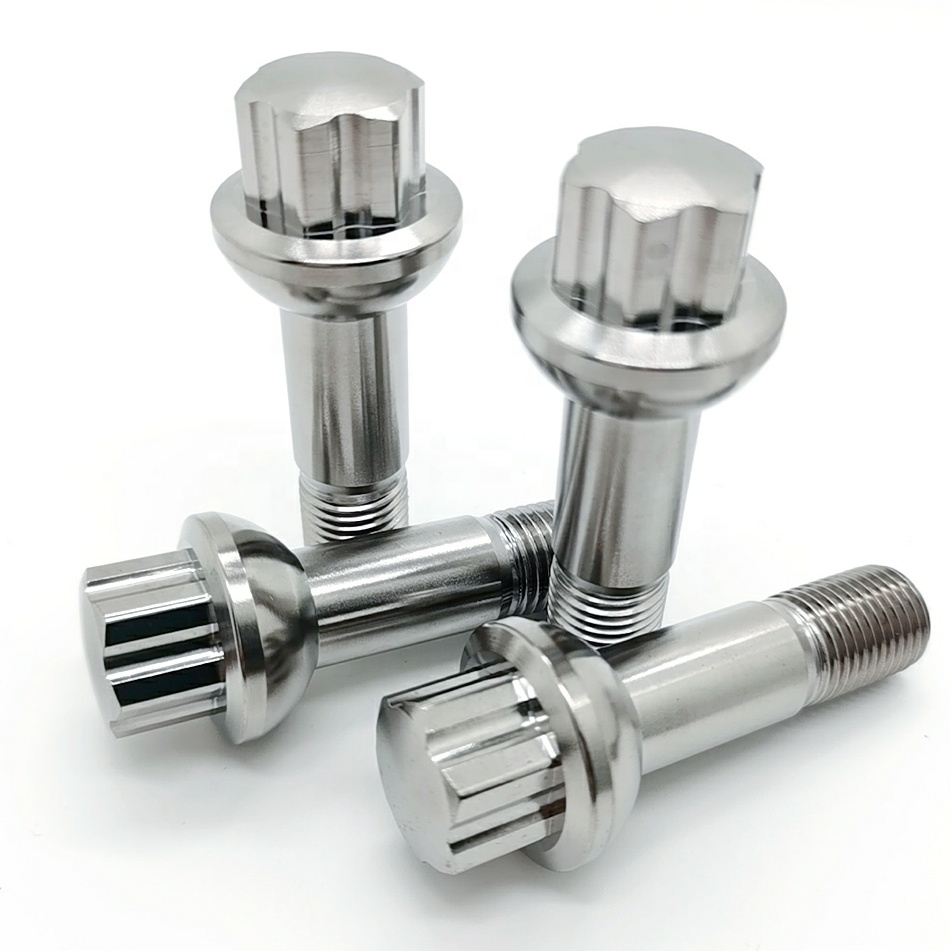
- Thread Standard: M14×1.5 / M12×1.25
- Alloy Grade: Ti-6Al-4V Grade 5
- Seat Style: 60° Conical / Ball Seat
- Tensile Rating: ≥ 950 MPa High Fatigue
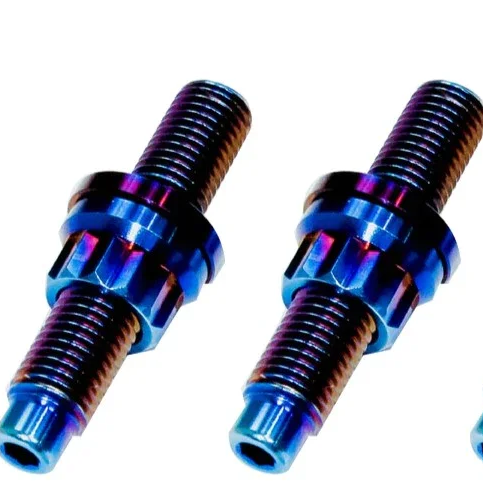
- Dimensions: M8 / M10 Multi-Length
- Thermal Rating: Resists Heat-Cycling Galling
- Nut Configuration: 12-Point Flange Aerotight
- Corrosion Rate: Zero Oxidation at 400°C
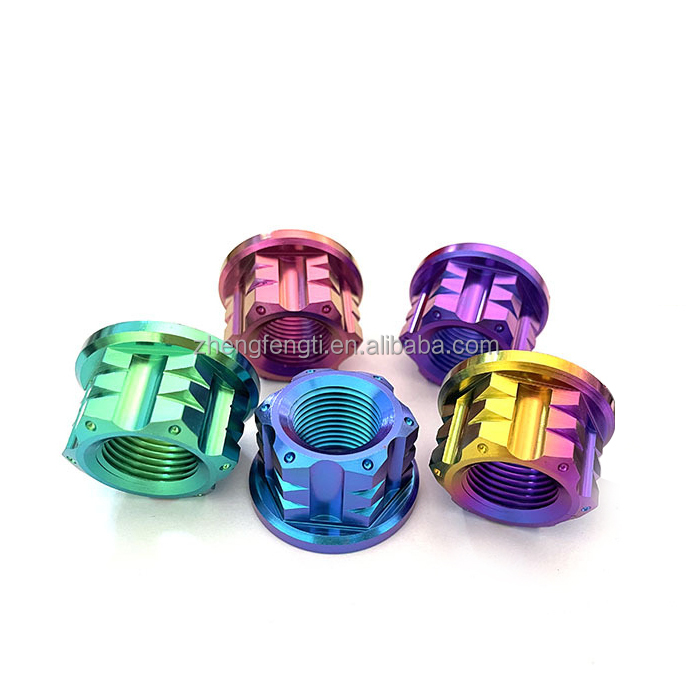
- Sizing Range: M4, M5, M6, M8, M10
- Finish: Plain CNC Machined Surface
- Tolerance: ISO 6H Thread Metric
- Feature: Anti-Loosening Serration Opt.
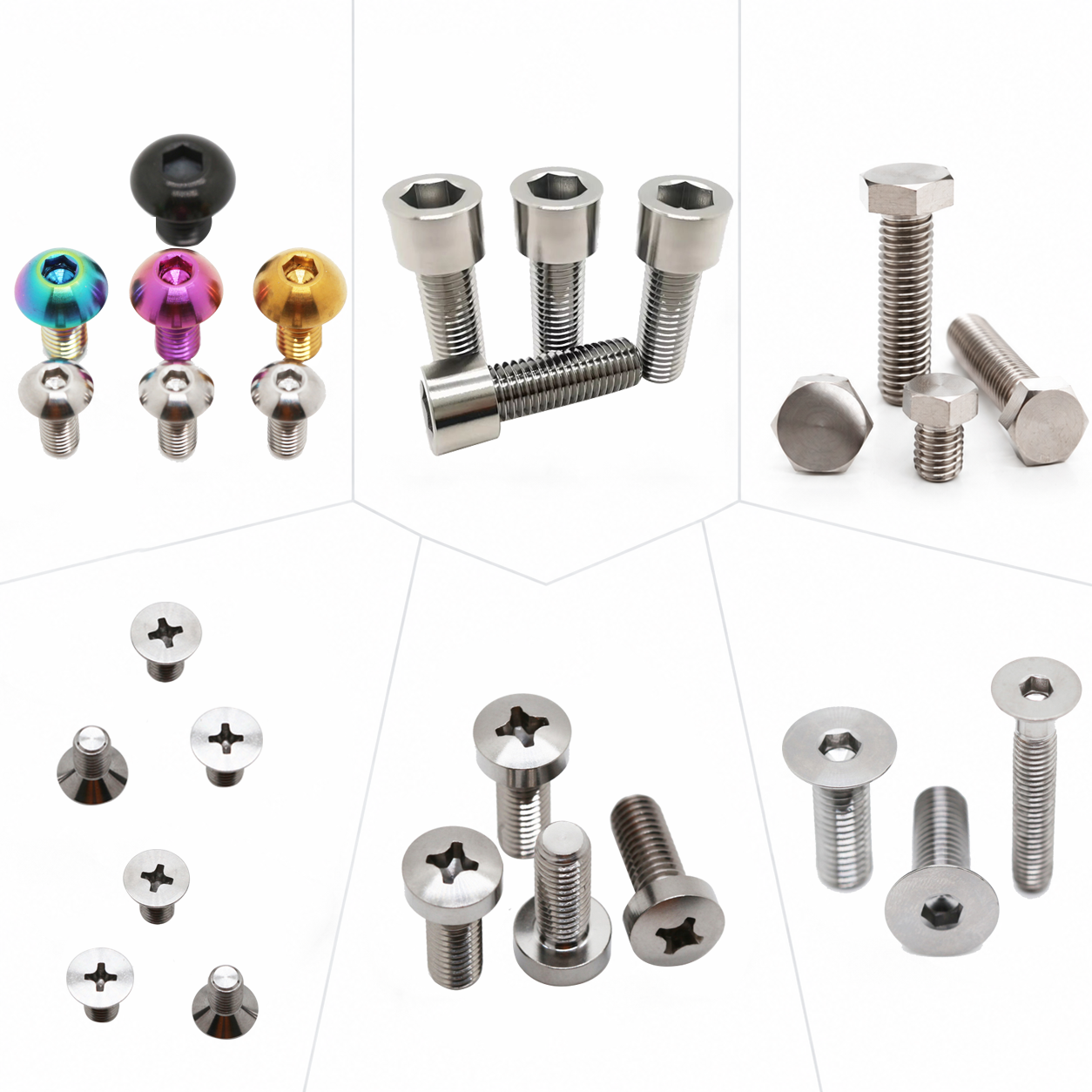
- Inventory: Standard DIN / ISO Ready Stock
- Material: Ti-6Al-4V Certified Bar
- Hex Head: Forged / 5-Axis Lathe Turn
- MOQ: Rapid Dispatch from 20 pcs
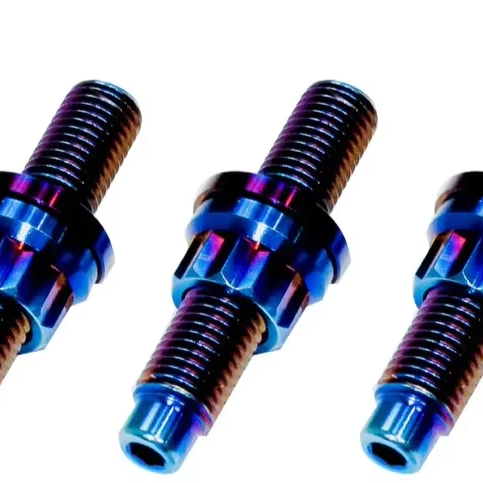
- Application: Road / MTB Stem & Cockpit
- Surface: Electrolytic Polished / PVD
- Thread Precision: Rolled Class 6g Metric
- Weight vs Steel: 44% Total Mass Reduction
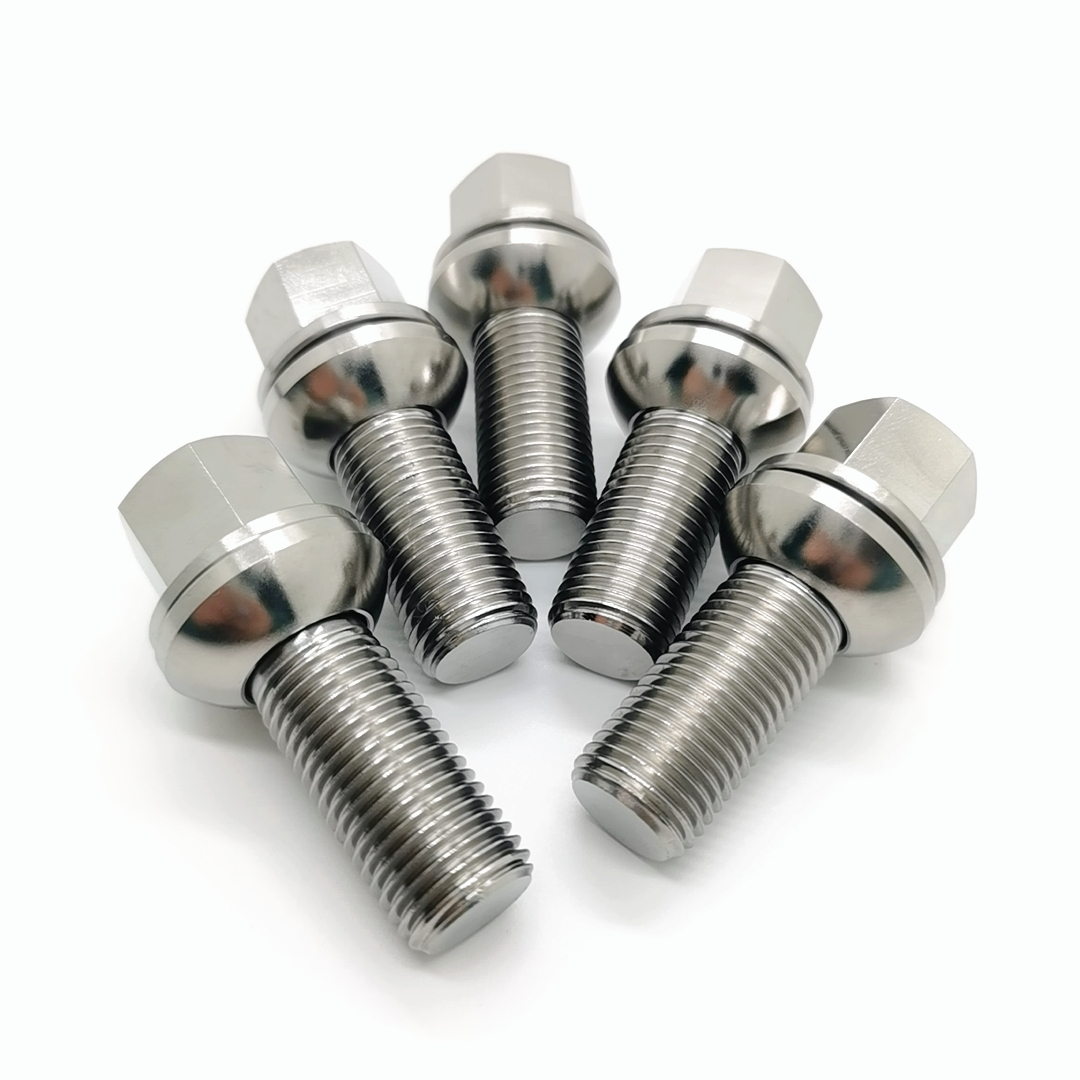
- Dimensions: M12×1.5 / M14×1.5 × 30mm
- Manufacturing: Cold Forged / CNC Finished
- Shear Yield: > 830 MPa Continuous
- Traceability: Mill Test ASTM B348 Attached
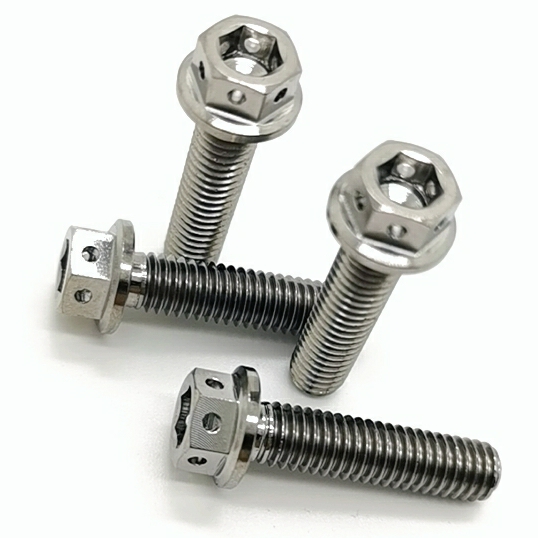
- Drive Style: DIN 912 Allen Socket Head
- Working Medium: Chloride, Marine, Acid Salt
- Thread Type: Full / Partial Shank Available
- Execution: Concentricity ±0.01mm
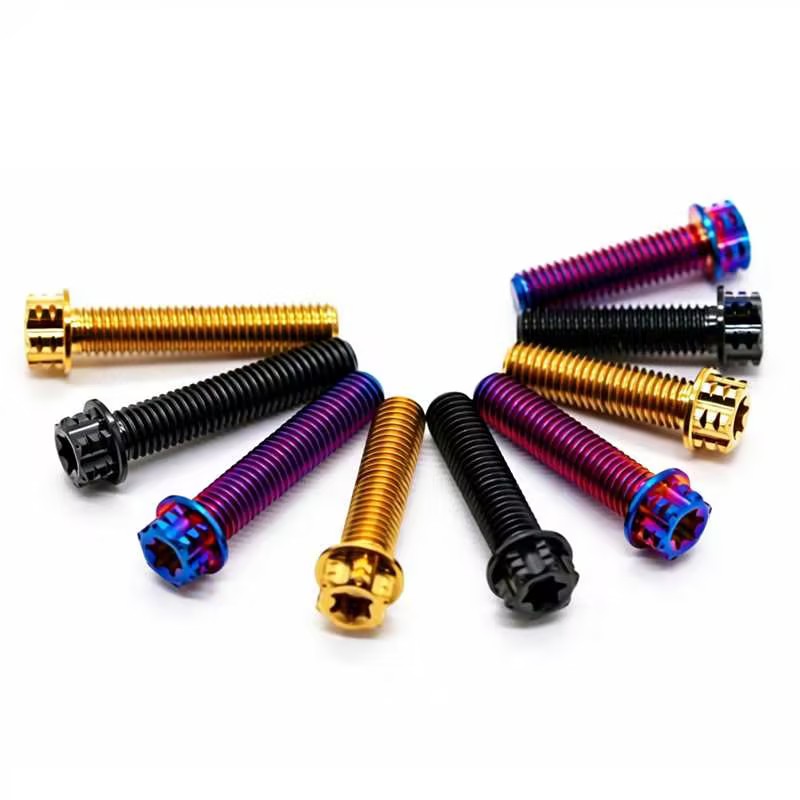
- Head Profile: Low-Profile Star / Torx T25–T40
- Color Coating: Burnt Blue, Gold, Rainbow PVD
- Application: Brake Rotor, Caliper, Fairing
- Fatigue Resistance: Exceeds ISO 898-1 Endurance
Metallurgical Fundamentals of High-Performance Titanium Fasteners
Precision fastening systems across high-performance motorsport, subsea oil and gas, and commercial aerospace demand mechanical predictability under extreme dynamic stresses. As leading Chinese titanium fastener manufacturers operating within China's metallurgical epicenter—Baoji, Shaanxi—our engineering approach is rooted in crystallographic control, raw billet purity, and strictly monitored manufacturing tolerances.
Unlike standard carbon steel fasteners, commercially pure (CP) Titanium Grade 2 and the workhorse alpha-beta alloy Grade 5 (Ti-6Al-4V, UNS R56400) feature distinct physical behaviors. Grade 5 combines aluminum as an alpha stabilizer and vanadium as a beta stabilizer, yielding a minimum tensile strength of 895–950 MPa alongside an ultra-low density of 4.43 g/cm³. This delivers an exceptional strength-to-weight ratio unattainable by standard structural alloy steels.
Mechanical Metallurgy & Alloy Performance Benchmark
When selecting fastener materials for critical shear joints or oscillating cyclic environments, design engineers must contrast core mechanical properties to prevent catastrophic yielding or fatigue failure:
| Material Specification | Yield Strength (Rp 0.2, MPa) | Tensile Strength (Rm, MPa) | Elongation at Break (%) | Density (g/cm³) | Operating Temperature Limits | Marine Galvanic Risk |
|---|---|---|---|---|---|---|
| Titanium Grade 5 (Ti-6Al-4V) | ≥ 828 | ≥ 895 – 1050 | ≥ 10 – 15 | 4.43 | -250°C to +400°C | Noble / Cathodic |
| Titanium Grade 2 (CP Titanium) | ≥ 275 | ≥ 345 – 480 | ≥ 20 | 4.51 | -100°C to +300°C | Noble / Non-corrosive |
| High-Tensile Steel Class 8.8 | ≥ 640 | ≥ 800 – 830 | ≥ 12 | 7.85 | -40°C to +200°C | Corrosive / Anodic |
| Stainless Steel A2-70 (AISI 304) | ≥ 450 | ≥ 700 | ≥ 40 | 7.90 | -196°C to +300°C | Susceptible to Pitting |
Precision-formed titanium fasteners exhibit extraordinary resistance to pitting corrosion in saltwater, chlorinated hydrocarbons, and wet chlorine gas due to their instantaneous reformation of a passive titanium dioxide (TiO₂) surface layer. In dynamic assemblies, such as wheel hubs and brake calipers, the 44% mass reduction drastically diminishes unsprung rotational inertia, improving damper responsiveness and directional wheel stability.
Future Procurement Trends in the Global Titanium Fastener Market
Analyzing how emerging electrification, aerospace decentralization, and global supply chain reconfigurations drive sourcing shifts through 2030.
1. EV Unsprung Mass Optimization
Electric vehicles require heavier battery packs, forcing tier-1 automotive chassis designers to aggressively reduce unsprung weight in wheel hubs, suspension linkages, and brake assemblies. Titanium lug bolts and control arm fasteners have transitioned from niche hypercars into high-volume performance EV applications.
2. Thread-Rolling Mandates
Global procurement teams now specify rolled external threads rather than turned/cut threads. Thread rolling causes plastic deformation along the root radius, directing the metal's grain structure along continuous flow lines, boosting fatigue resistance by up to 300% under high-frequency cyclical vibrations.
3. Direct-from-Source Titanium Valley Hubs
International OEMs are bypassing secondary distributors to establish direct-factory supply chains in primary material clusters. Sourcing from Baoji eliminates multi-tier markups, reduces transit cycle times, and guarantees verifiable ingot-to-fastener chemical certification under strict ASTM/AMS guidelines.
Technological Horizons: Precision CNC Swiss Turning & Surface Engineering
The manufacturing paradigm for precision fasteners has evolved beyond rudimentary multi-station cold headers. Modern industrial applications demand high concentricity, micro-chamfered head transitions, and customized torque geometries like 12-point aerotight flanges and low-profile Torx configurations.
At Yevzo Titanium, multi-axis CNC Swiss-type automatic lathes allow complex features—such as deep internal broaching, rolled precision metric threads (ISO 965-1 Class 6g/4h), and cross-drilled safety wire holes—to be executed in a single clamped setup. This eliminates cumulative concentricity errors and ensures radial runout stays under 0.008 mm.
Tribology and Galling Mitigation Technologies
Titanium's high chemical affinity for other metals can cause adhesive wear (galling) under high friction without lubrication. Modern technological counter-measures employed in high-end fastener manufacturing include:
- Physical Vapor Deposition (PVD) Coatings: Hard DLC (Diamond-Like Carbon), TiN (Titanium Nitride), or TiAlN applied at molecular levels to reduce friction coefficients down to μ = 0.08 while providing lustrous, durable finishes (deep black, burnt blue, or gold).
- Precision Micro-Arc Anodizing: Controlled electro-chemical oxidation generating dense anatase or rutile TiO₂ barrier films that resist thread micro-welding while offering exact color coding without altering pitch diameters.
- Anti-Seize Pre-Coating with Fluoropolymer/Dry Film Lubricants: Application of molybdenum disulfide (MoS₂) or specialized aerospace paste ensuring steady torque-to-tension conversion ratios without thread binding.
Why Global Procurement Leaders Partner with Yevzo Titanium
Direct manufacturing capability based in China's Titanium Valley, verified through rigorous on-site quality certifications and international supply execution.
Located in Baoji's Raw Material Epicenter
Founded in 2013 in the Honeycomb Industrial Park of Baoji, Yevzo is situated where China's titanium sponge and ASTM B348 bar stock originate. We bypass intermediate material trading costs, ensuring verified chemical purity, strict heat-lot traceability, and unmatched raw stock stability.
Turnkey OEM & Drawing-to-Part Capability
Our workshop houses over 100 high-precision CNC machining centers, 5-axis turning-milling units, and cold-heading machines. We engineer custom fasteners according to customer CAD/STEP drawings, adhering to DIN, ISO, ANSI/ASME, and JIS specifications.
Rigorous Metrology & Quality Traceability
Every production batch undergoes comprehensive thread pitch verification via optical profile projectors, digital micrometer checks, tensile load tests, and spectral material analysis. Detailed Mill Test Certificates (MTC) conforming to EN 10204 3.1 accompany every shipment.
Frequently Asked Questions for Engineering & Sourcing Officers
Addressing torque considerations, galvanic isolation, MOQ parameters, and worldwide freight handling.
How do torque specifications for Grade 5 titanium compare to grade 8.8 and 10.9 steel fasteners?
How should galvanic corrosion be mitigated when coupling titanium bolts with aluminum structures?
What are the MOQ standards for custom-machined versus catalog titanium bolts?
Does PVD coating or color anodization impact thread tolerances?
Which international delivery terms (Incoterms) and payment methods are supported?
Ready to Optimize Your Fastener Supply Chain?
Send your specifications, bill of materials, or 2D/3D CAD drawings. Our senior metallurgists and procurement engineers in Baoji will return an official technical proposal, manufacturing timeline, and competitive volume quotation within 24 hours.