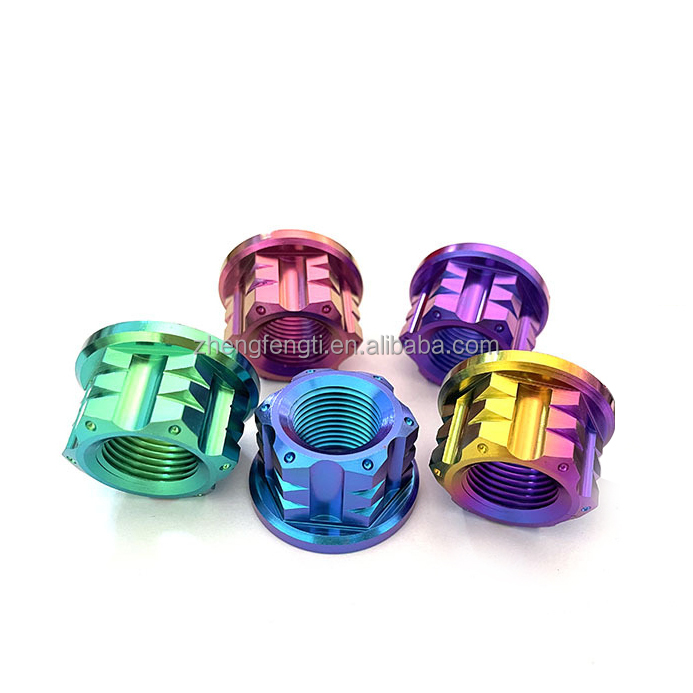
Direct Factory Selection
Featured Titanium Fasteners & Engineered Hardware
Discover our high-precision CNC machined aerospace, automotive, and industrial grade titanium fasteners. Available in standard DIN/ISO metrics and fully customized OEM/ODM specifications.
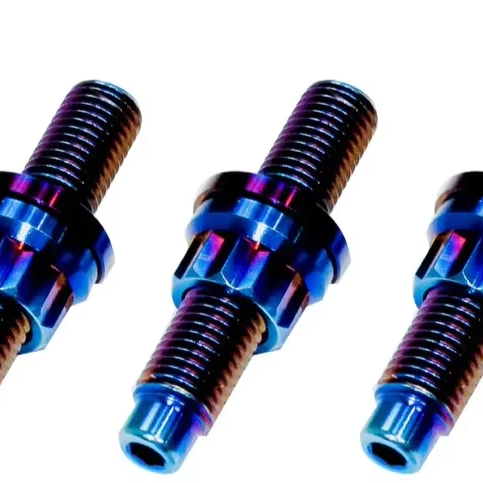
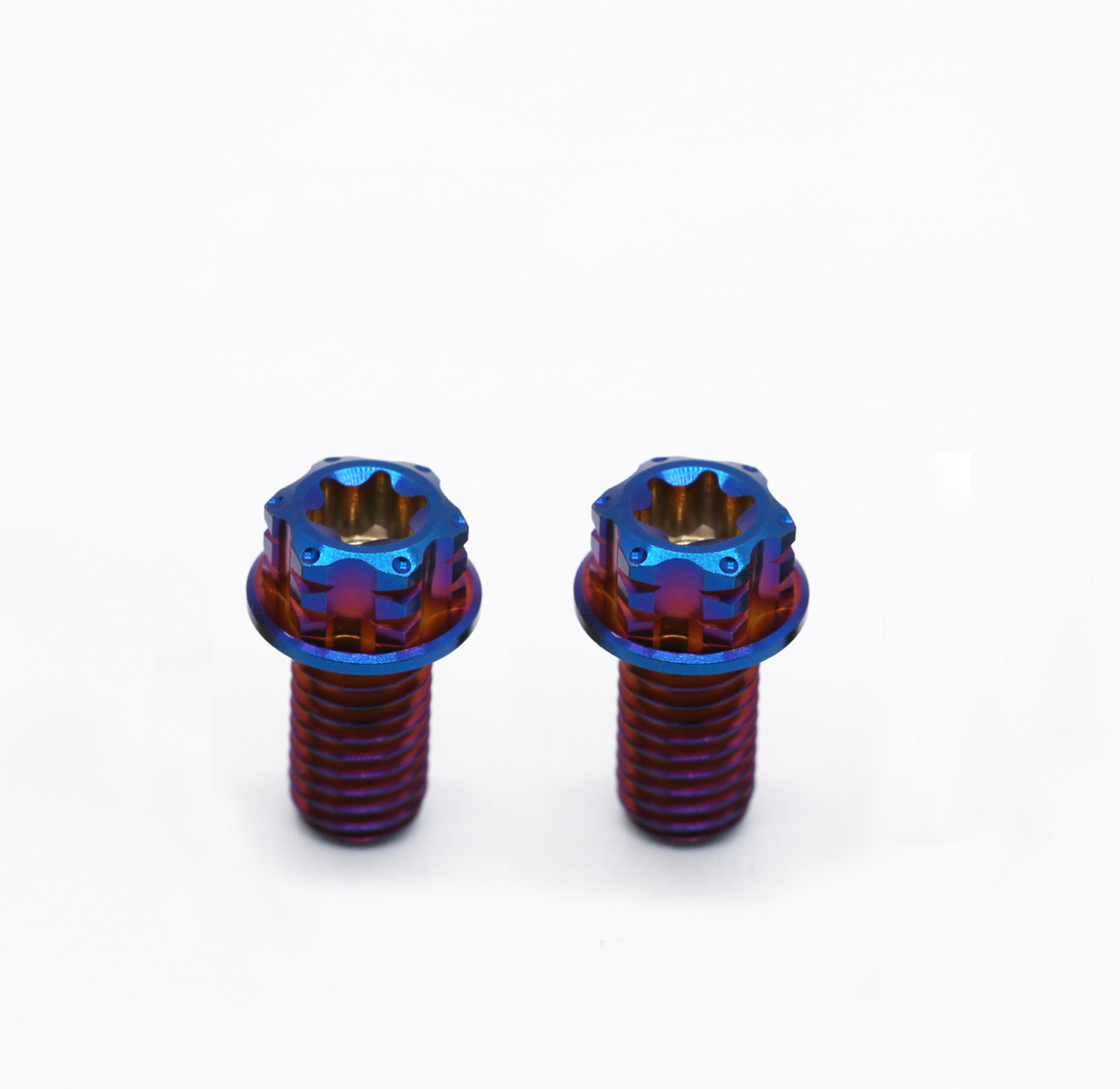
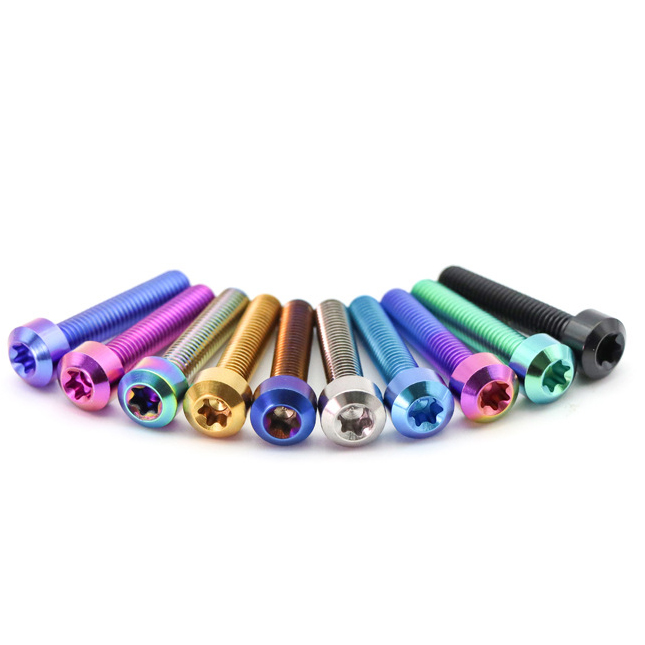
2013
Established in Baoji Valley
100+
CNC Turning & Milling Units
±0.01mm
High-Precision Tolerance
50+
Global Export Destinations
Technical Whitepaper
OEM/ODM Titanium T-Bolts Engineering & Metallurgical Superiority
A comprehensive examination of mechanical yield, clamping dynamics, shear distribution, and manufacturing tolerances in extreme industrial, robotic, and semiconductor environments.
Titanium T-bolts (commonly known as hammer-head bolts, slot bolts, or track fixture fasteners) represent an indispensable engineering solution across modern industrial automation, solar aluminum framing, modular cleanrooms, semiconductor tooling, and automotive performance fixtures. Unlike generic carbon steel or lower-grade stainless steel (such as 304 or 316) alternatives, custom engineered Grade 5 (Ti-6Al-4V) and Grade 2 commercially pure (CP) Titanium T-bolts deliver an unmatched combination of high tensile strength, exceptional resistance to chemical degradation, superior thermal endurance, and weight savings approaching 45%.
As a dedicated source factory rooted directly in Baoji, China—the epicenter renowned globally as "Titanium Valley"—our facility produces precision OEM/ODM T-slot fasteners conforming to stringent international norms, including DIN 787, DIN 186, and custom client CAD drawings. The critical failure mode in standard slot fixtures is often neck shearing or head rounding under excessive rotational clamping torque. By leveraging multi-axis CNC turn-milling and cold heading technologies with cold-rolled threads, we eliminate shear concentrations, ensuring optimal contact pressure throughout the entire surface of the aluminum extrusion or steel machine bed track.
⚙
Microstructural Integrity & Thread Rolling
Our titanium T-bolts are manufactured utilizing strictly certified ASTM B348 titanium bars. Rather than relying entirely on conventional thread cutting which disrupts continuous grain lines, our CNC threading and thread-rolling techniques ensure continuous metallurgical grain flow along the pitch line, yielding a 30% increase in cyclic fatigue resilience and anti-stripping capabilities under extreme dynamic vibrations.
| Mechanical & Physical Property | Titanium Gr5 (Ti-6Al-4V) | Titanium Gr2 (CP-Ti) | Stainless Steel (AISI 316) | Alloy Steel Grade 8.8 |
|---|---|---|---|---|
| Tensile Strength (Min. MPa) | 895 - 1000 MPa | 345 - 450 MPa | 550 - 700 MPa | 800 MPa |
| Yield Strength 0.2% (Min. MPa) | 828 MPa | 275 MPa | 240 MPa | 640 MPa |
| Density (g/cm³) | 4.43 g/cm³ | 4.51 g/cm³ | 8.00 g/cm³ | 7.85 g/cm³ |
| Strength-to-Weight Ratio (kN·m/kg) | 202 (Industry Benchmark) | 76.5 | 68.8 | 101.9 |
| Chloride & Pitting Corrosion | Virtually Immune | Exceptional | Moderate (Prone to Crevice) | Poor (Requires Plating) |
| Magnetic Permeability | Non-magnetic (μ < 1.00005) | Non-magnetic (μ < 1.00005) | Slightly Magnetic when cold worked | Ferromagnetic |
Future Forecasting
Future Procurement Trends in Titanium T-Slot Fasteners
Key strategic developments shaping supply chain allocations for high-performance clamping elements over the next decade.
🖉
1. Rapid Adoption in Semiconductor & Cleanroom Chambers
As semiconductor node lithography demands cleaner vacuum environments, standard steel fasteners that generate microscopic ferrous oxide particles or require outgassing lubricants are being phased out. Grade 2 and Grade 5 titanium T-bolts, naturally shielded by a permanent, self-healing rutile (TiO₂) passivation layer, deliver non-magnetic, particle-free locking inside ultra-clean modular chambers.
🚀
2. Mass-Reduction in Automation & Robotic End-Effectors
High-speed pick-and-place automation and robotic gantry arms suffer from inertia penalties caused by heavy fixture assemblies. Sourcing managers increasingly switch toolpost T-bolts and guide-rail track fasteners to Grade 5 titanium, reducing end-of-arm payload mass by 44% without sacrificing clamping rigidity, thereby directly increasing cycling speeds and motor life.
⚗
3. Specialized Anti-Galling Thin-Film PVD Coatings
Because titanium possesses a high coefficient of friction, traditional threaded joints faced potential cold-welding (galling) risks during high-torque dry assembly. The industry procurement trajectory now heavily favors factory-applied DLC (Diamond-Like Carbon), PVD Titanium Nitride (TiN), and physical anodization layers that drop the sliding friction coefficient below 0.15, ensuring reusable thread integrity across repetitive tooling cycles.
🌍
4. Direct Mill-to-Factory Supply Chain Consolidation & ESG Traceability
Modern enterprise procurement guidelines under ISO 9001 and IATF 16949 strictly reject unverified broker channels. Global buyers are bypassing multi-tier export intermediaries to establish direct OEM/ODM contracts with verified Baoji factories. Complete heat-lot mill test certificates (EN 10204 3.1) stating chemical element breakdowns (Fe, O, C, N, H, V, Al) are now absolute prerequisites to mitigate counterfeit or mixed-scrap risks in safety-critical assemblies.
Manufacturing Evolution
Engineering & Manufacturing Development Trends
How cutting-edge turning, hybrid warm-forging, and metrological inspection technologies are redefining titanium fastener reliability.
The manufacturing process of titanium T-bolts has historically presented notable machining challenges. Titanium's low thermal conductivity concentrates heat directly at the cutting edge of tooling, while its relatively low elastic modulus creates spring-back dynamics that can compromise tight geometrical track tolerances. Over the past five years, substantial breakthroughs in high-pressure through-spindle coolant CNC centers and hybrid warm-forming technology have completely revolutionized production efficiencies at our Baoji facility.
By preheating Grade 5 raw stock in controlled induction chambers prior to head forming, we attain perfect 90-degree underhead shoulders with calibrated fillet radii that seamlessly seat against slot tracks without notch-stress risers. Simultaneously, 5-axis automated machining enables specialized T-head configurations—such as drop-in hammerheads with self-aligning cam contours, knurled locking under-faces, and internal Torx or hex broaching—at unit costs and lead times previously unattainable with conventional batch methods.
🔬
100% Optical Metrology & Thread Class Verification
To eliminate manual inspection variances, every production batch passes through automated high-speed laser optical sortation units. Critical metrics—including pitch diameter, head perpendicularity, lead thread chamfer, and thread class tolerances (metric 6g/6h or unified 2A/3A)—are non-destructively verified at micro-level resolutions, ensuring 100% zero-defect deliveries for high-volume automated assembly lines.
Factory Capabilities
Our Core Manufacturing Strengths in Baoji
Operating continuously since 2013, our integrated manufacturing and export facilities deliver end-to-end technical transparency and reliability.
🏢
Prime Geographic Ecosystem
Located in the High-Tech Development Zone of Baoji, Shaanxi, we sit at the core of the world's most concentrated titanium industrial base. This gives us direct, unhindered access to top-grade sponge titanium, certified VAR/EB vacuum melting ingots, and ASTM B348 bar materials at baseline cost structures without freight markup.
🛠
Extensive Machinery Portfolio
With more than 100 dedicated advanced production units—spanning multi-spindle Swiss CNC lathes, 3-axis to 5-axis machining centers, thread-rolling machines, and automated vibratory deburring baths—we seamlessly scale orders from prototyping batches of 10–30 pieces up to million-unit scheduled procurement runs.
📝
Full In-House Surface Engineering
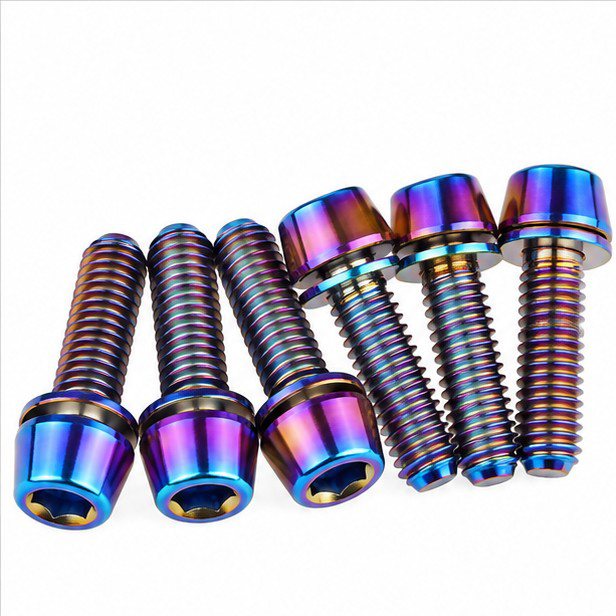
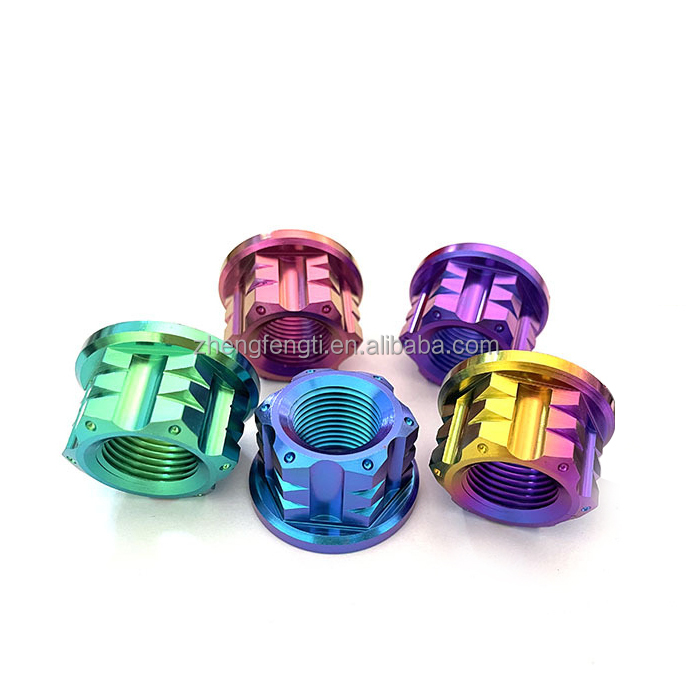
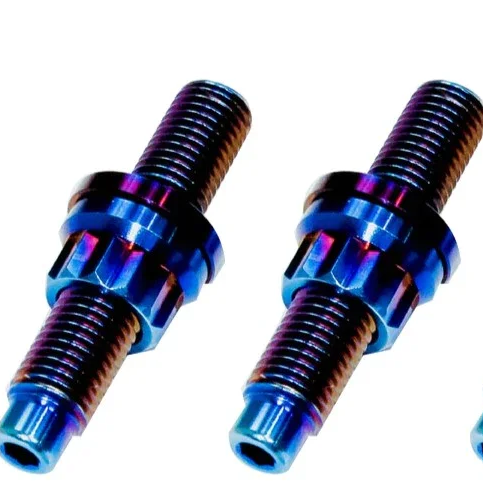
We provide full control over functional and decorative finishes in-house: high-gloss diamond polishing, uniform glass-bead blasting, PVD vapor deposition, micro-arc oxidation (MAO), and multi-hued electrochemical anodization (gold, burnt blue, cobalt, violet, and emerald) without compromising thread gauge tolerance.
📋
Global Export Compliance & Flexible Terms
With an established client base spanning North America, Northern Europe, East Asia, and Southeast Asia, our logistics team manages frictionless export handling under FOB, CFR, CIF, EXW, FCA, CPT, DDP, and DDU terms. We support international settlement via T/T, L/C, D/P, PayPal, and major foreign currencies (USD, EUR, GBP, JPY, CAD, AUD, CNY).
Buyer Assurance
Frequently Asked Questions on Titanium T-Bolt Procurement
Authoritative technical and commercial clarifications provided by our senior mechanical engineers and export coordinators.
Why should an engineer select Grade 5 (Ti-6Al-4V) over Grade 2 for T-bolt manufacturing?
Grade 2 commercially pure titanium features a minimum tensile strength of 345 MPa and yield strength around 275 MPa. While exceptional for low-load chemical exposure tanks or marine fixtures, it lacks the shear endurance necessary for heavy clamping track slots. Grade 5 (Ti-6Al-4V) is a heat-treatable alpha-beta alloy delivering nearly triple that mechanical capacity—with a minimum tensile rating of 895–1000 MPa and yield strength exceeding 828 MPa. Gr5 matches or surpasses Class 8.8 and 10.9 steel bolts while saving 44% in mass, making it the definitive choice for torque-critical clamping slots subjected to dynamic, high-vibration stress.
How do you prevent galling (thread seizing) when assembling titanium T-bolts with titanium nuts?
Titanium has a natural tendency to gall when bare threads interact with bare mating threads under high compressive clamp loads. We solve this across three levels: (1) Applying tight micro-inch surface finishing during CNC thread rolling to reduce micro-asperities; (2) Applying vacuum thin-film PVD coatings (like TiN or DLC) which separate metal-to-metal contact; and (3) Recommending high-pressure anti-seize lubricants containing molybdenum disulfide (MoS₂) or specialized copper-free paste. For automated installations, we can also supply pre-coated anti-friction sealants directly on the bolt shanks.
Can you produce custom T-slot geometries for proprietary aluminum extrusion profiles?
Yes. While we maintain tooling for standard industrial DIN 787 and DIN 186 track dimensions (covering M4, M5, M6, M8, M10, M12, M16, and M20 slot pitches), over 60% of our production consists of customized OEM/ODM profiles. Simply submit your 2D engineering drawing (PDF/DWG) or 3D STEP/IGES model detailing head dimensions (A, B, H), underhead fillet radius, neck width, thread length, and chamfer angles. Our engineering department conducts a full DFM (Design for Manufacturability) review within 24 hours.
What are your standard Minimum Order Quantities (MOQ) and production turnaround times?
For standard catalog metric sizes that utilize in-stock ASTM B348 titanium bars, our MOQ starts as low as 10 to 30 pieces to assist client R&D sampling and prototyping phases. For completely custom-machined or specialty forged OEM production lots, our standard batch MOQ generally ranges from 100 to 500 pieces depending on geometry. Typical sample delivery takes 7 to 10 days, while regular mass production orders are manufactured and dispatched within 18 to 25 working days.
What material verification and quality documentation are provided with each export consignment?
Every export shipment is accompanied by a certified EN 10204 3.1 Mill Test Certificate traceable to the specific ingot and bar heat number. This includes complete chemical composition analysis (spectrometry testing for Ti, Al, V, Fe, C, N, H, O) as well as mechanical property verification (tensile strength, yield strength, elongation percentage, and Rockwell hardness). On customer request, we also provide third-party SGS/TÜV inspection reports, full dimensional CMM inspection sheets, and RoHS/REACH compliance certifications.