Engineering Whitepaper: Engineering Criteria for Modern Titanium Chainring Hardware
Modern bicycle drivetrains are subjected to elevated multi-axial stresses. With the expansion of 1x gravel configurations, high-torque central motor e-bikes (EP8, Bosch CX, Brose), and ultra-wide ratio 12-speed systems, chainring bolts have transitioned from standard commodity items into safety-critical, fatigue-loaded transmission interfaces. As a trusted OEM/ODM Titanium Chainring Bolts Manufacturer & Supplier, Yevzo Titanium leverages metallurgy and strict production protocols to eliminate recurring field failures such as shank fatigue, hex stripping, and micro-fretting.
Chainring Interface Structural Recommendations
Choosing the correct chainring fastener configuration requires a deep understanding of shear stresses, spider recess geometry, and torque limits:
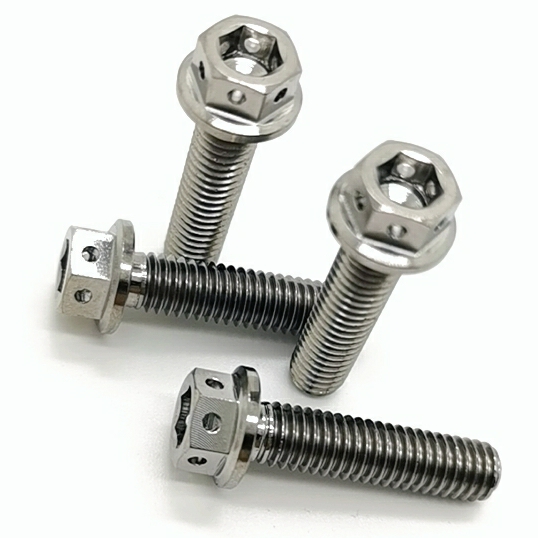
- Single Chainring (1x) Systems (6.5mm – 8.5mm Nut Length): High-stress mountain and cyclocross chainrings endure substantial lateral chain deflection. For single-ring applications, our M8x0.75 fine-thread integrated Grade 5 bolts eliminate the need for spacers, providing continuous thread engagement and preventing back-out under oscillatory loads.
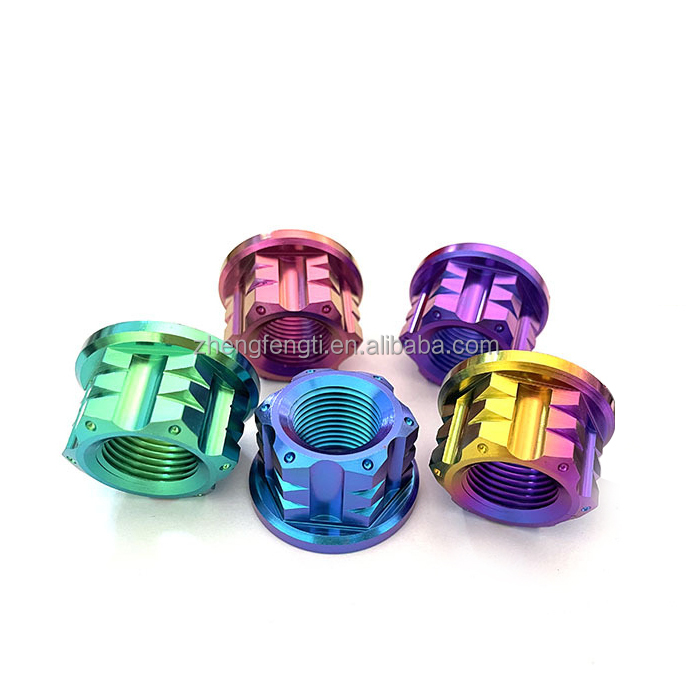
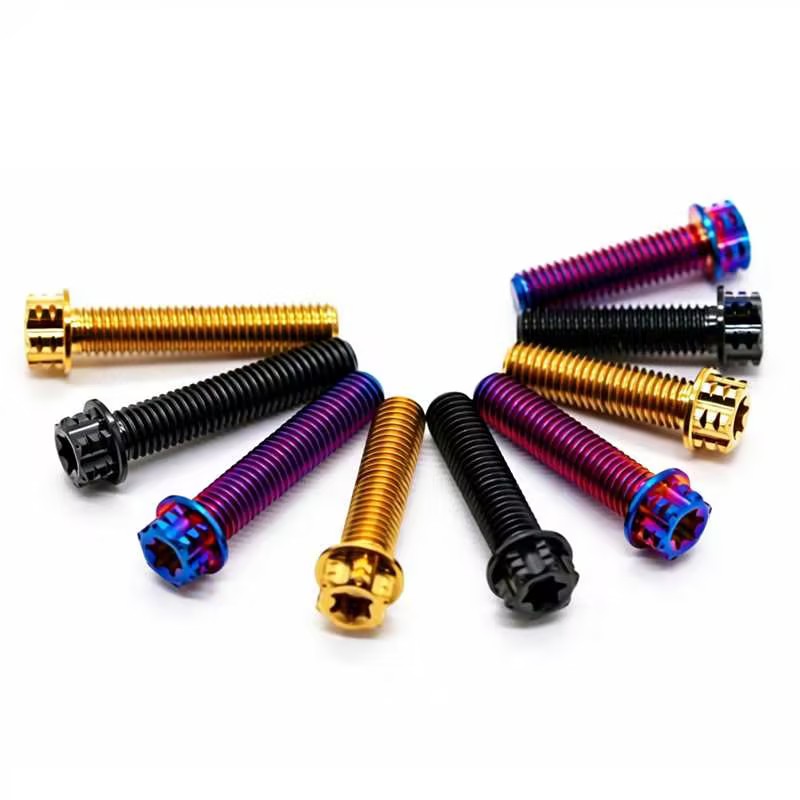
- Double (2x) Road & Compact Cranksets (8.5mm – 10.5mm Nut Length): Traditional multi-ring platforms need flat flange seating profiles. We advise using CNC-machined Grade 5 nuts with knurled or dual-slot anti-rotation flanges to speed up assembly line speeds and maintain clamp load over long service cycles.
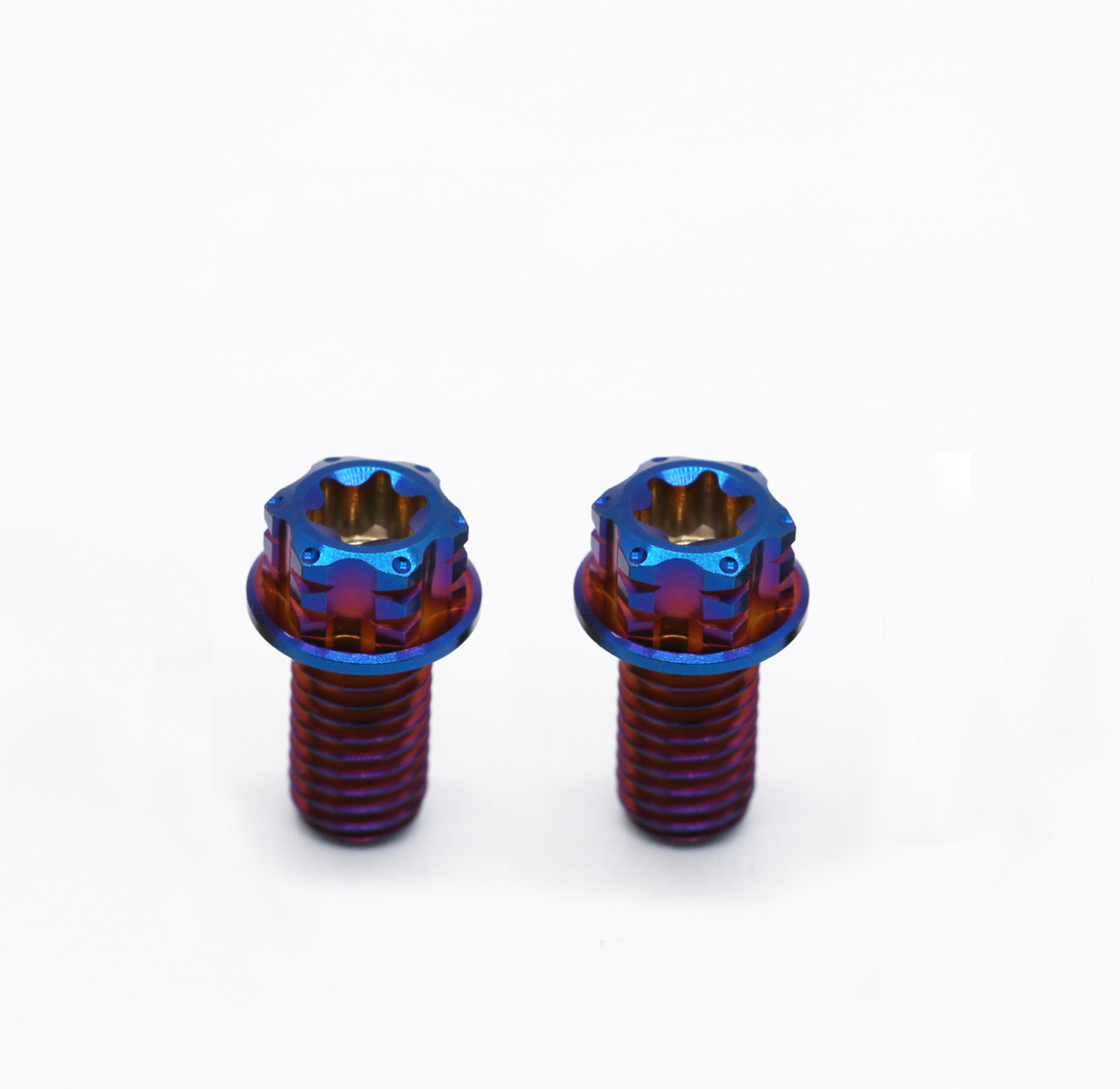
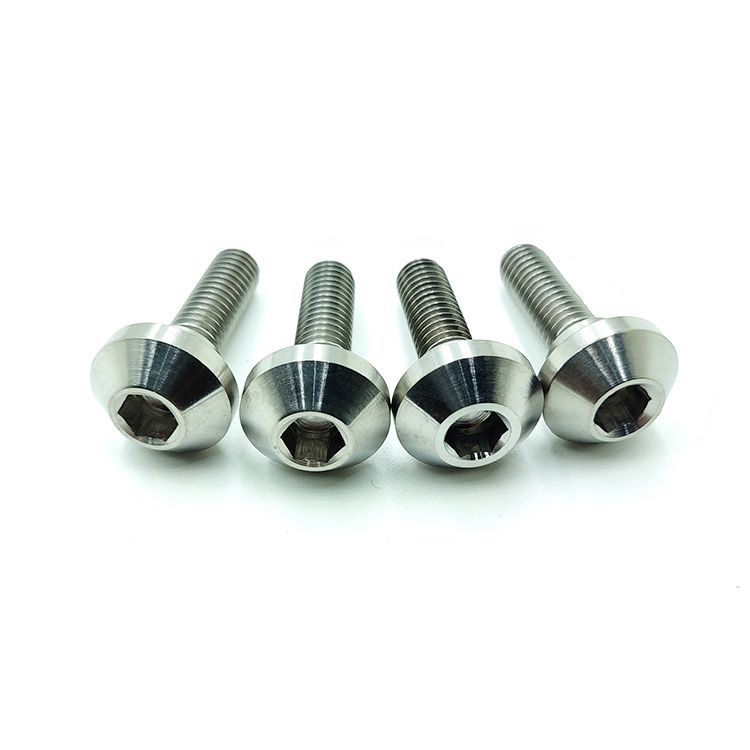
- Torx (T30) vs. Hex Socket Interfaces: Standard 5mm Allen sockets frequently suffer from cam-out when tightened to the 10–12 N·m levels needed for high-power mid-drive ebikes. We advise switching to cold-forged internal T30 or Torx Plus interfaces, which offer a 40% broader tool contact area and preserve head integrity during repetitive maintenance.
| Mechanical Property |
Commercial Titanium (Gr2) |
Aerospace Ti-6Al-4V (Gr5) |
High-Tensile Steel (10.9) |
7075-T6 Aluminium |
| Tensile Strength (Yield) |
275 – 350 MPa |
828 – 910 MPa |
900 – 940 MPa |
480 – 505 MPa |
| Density (g/cm³) |
4.51 |
4.43 |
7.85 |
2.81 |
| Fatigue Limit (Rotating Bending) |
180 MPa |
510 MPa |
420 MPa |
160 MPa |
| Shear Resistance Under Torque |
Low (Risk of Galling) |
Superior (Cold-Forged Threads) |
High (Prone to Rust) |
Poor (Thread Stripping) |
| Electrochemical Noble Potential |
Passive (Non-Corrosive) |
Electrolytically Inactive |
Active (Severe Galvanic Rust) |
Active (Sacrificial Anode) |
*Values shown are gathered under ASTM B348 and ISO 898-1 standards at 20°C. Cold-rolled threading enhances Grade 5 thread shear capacity by approximately 18% relative to cut threading.
Emerging Sourcing & Technical Trends (2025–2030)
The global bicycle manufacturing industry is shifting toward more integrated, lower-maintenance drivetrains. Procurement specialists, framebuilders, and component brand directors should evaluate several developments currently reshaping the market for chainring hardware:
1. The E-Bike Torque Explosion and Central Motor Adaptations
Mid-motor electric pedal-assist bicycles yield immediate torque loads often topping 85 to 110 N·m at the spider interface. Standard 7075 aluminium chainring bolts risk continuous plastic deformation, while plated steel fasteners rust from road spray and salt exposure. Ti-6Al-4V has become the go-to structural metal for mid-drive drivetrains, offering a high strength-to-weight profile and resilience against dynamic shear fatigue.
2. Transition from Traditional Cut Threads to Cold-Forging and Rolled Threads
Precision turning via multi-axis CNC machines remains important for exterior contours, but rolled threads are rapidly becoming an OEM sourcing requirement. Rolled threads retain continuous grain flow throughout the root radius, which raises fatigue resistance by over 30% compared to machine-cut threads. This significantly reduces fatigue-induced shank failures at the thread undercut.
3. Advanced Surface Treatments: PVD and Micro-Arc Oxidation
Traditional wet anodizing offers clear color distinction, but vacuum Physical Vapor Deposition (PVD) coatings—such as Titanium Nitride (TiN, Gold), Titanium Carbonitride (TiCN), and Diamond-Like Carbon (DLC)—are seeing broader adoption. These coatings raise surface hardness up to 2500–3000 HV, preventing galling and offering long-term surface protection against abrasive trail grit.
4. Near-Net-Shape Sustainable Manufacturing & Material Traceability
Procurement teams subject to European CBAM and rigorous ESG rules are looking for reduced manufacturing scrap. Sourcing certified Grade 5 wire rods melted using vacuum-arc remelting (VAR), paired with near-net-shape cold heading, cuts metal wastage down to under 15% (compared to 65% loss in subtractive bar turning). This allows Tier-1 bicycle manufacturers to hit their corporate sustainability metrics.
Baoji Titanium Valley Heartland
Operating since 2013 in the High-Tech Development Zone of Baoji, we secure premium ASTM B348 Grade 5 ingot and bar directly from local mills, ensuring batch consistency and dependable chemical purity.
100+ Machining Fleet
Our workshop houses high-speed Japanese turning centers, 3-axis/4-axis CNC milling setups, and dedicated thread-rolling machines capable of maintaining micron-level tolerances (ISO 965 6g/6H) across volume orders.
Complete Heat & Lot Traceability
We supply every batch alongside genuine 3.1 Mill Test Certificates (MTC), spectrographic chemical analysis sheets, and microstructural inspection records covering tensile yield and fatigue parameters.
Full OEM/ODM Engineering Service
We help you bring new ideas to market, from 2D/3D STEP drawings to rapid pilot runs in 7 business days. Custom head styling, laser-etched branding, bespoke drive interfaces, and tailored packouts are fully supported.
Why choose Ti-6Al-4V (Grade 5) instead of 7075-T6 Aluminium for chainring bolts?
While 7075-T6 aluminium is light, its ultimate tensile strength (roughly 500 MPa) and low shear threshold leave it vulnerable to thread stripping and head shearing during sudden torque spikes. Ti-6Al-4V Grade 5 offers tensile strength exceeding 895–950 MPa and a substantially higher fatigue limit. It is also completely rust-free and won't chemically seize within carbon or aluminium cranks, making it the safer, longer-lasting choice for performance, gravel, and electric drivetrains.
What are the factory's standard MOQs for catalog and custom OEM chainring bolts?
For standard catalog fasteners (M8x6.5mm, M8x8.5mm in natural plain or polished finish), our Minimum Order Quantity starts at just 100 sets. For custom CNC designs—including specialized thin-wall flanges, proprietary drive sockets, unique knurling, or specific PVD color runs—MOQ typically begins at 500 to 1,000 sets, supported by flexible initial prototyping runs.
How does Yevzo Titanium prevent galling (cold-welding) on titanium threads?
Galling occurs when micro-asperities on dry, bare titanium threads generate friction under high clamping loads. We address this through precision cold-rolling (which creates smoother thread roots than cut threads), selective anti-friction PVD coatings, and by including factory-applied thread-lubrication instructions. We recommend quality anti-seize paste (copper- or nickel-based) or medium-strength anaerobic threadlockers during final assembly.
Which surface finishes and custom colors can you provide?
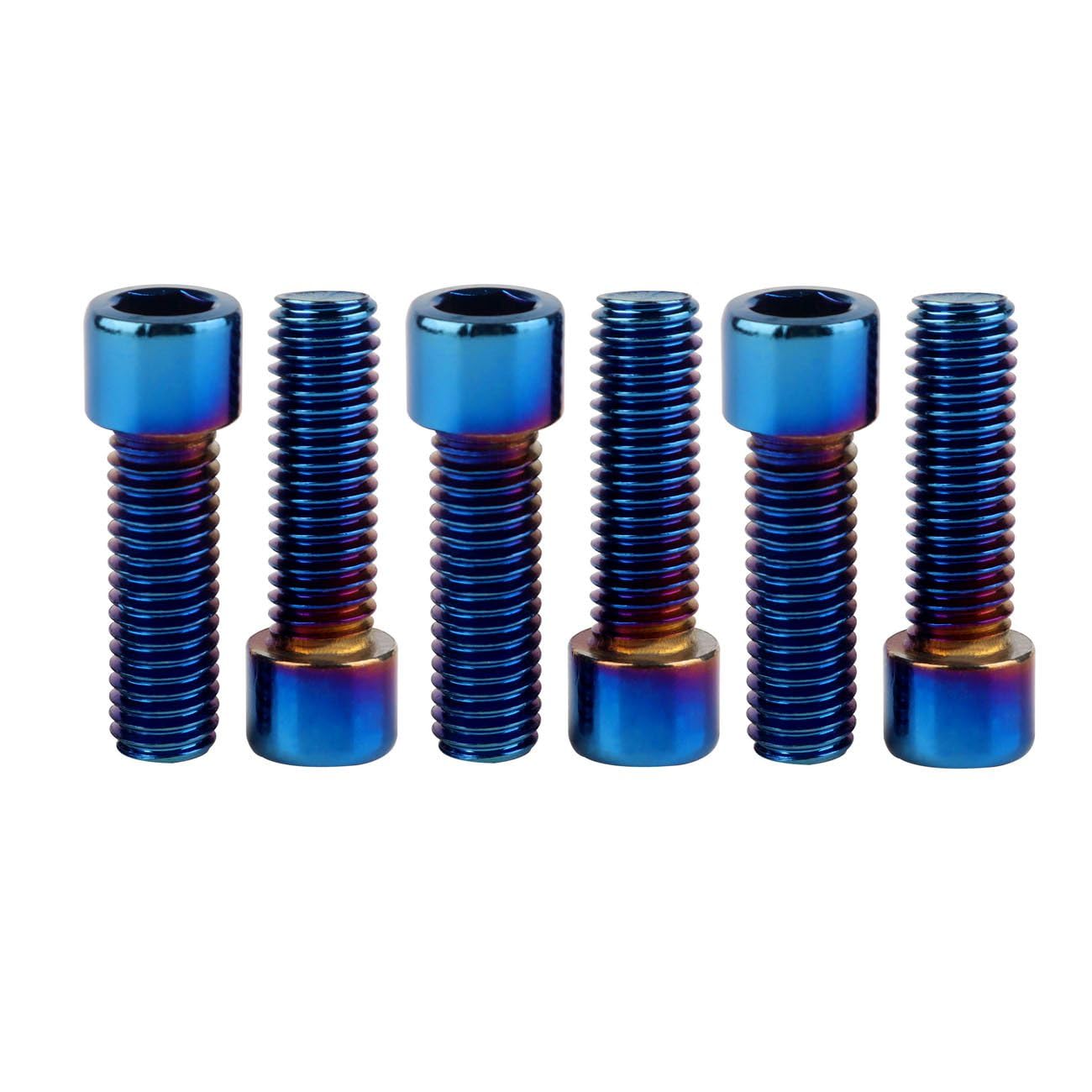
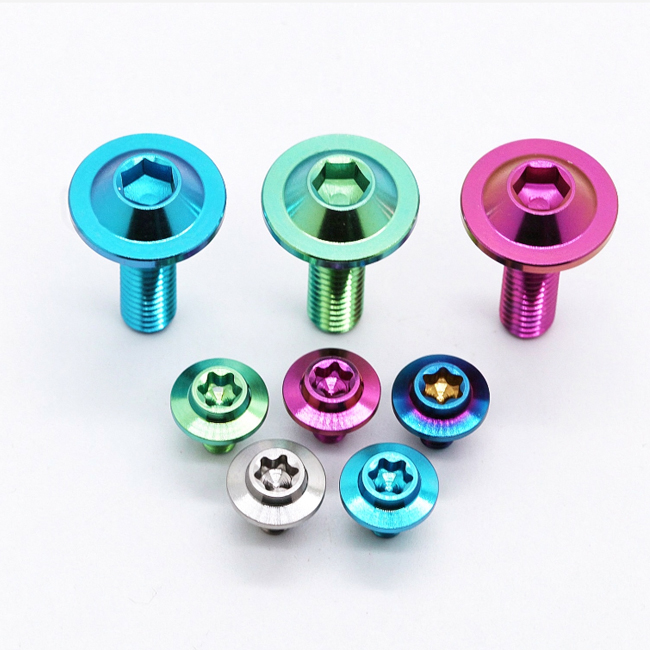
We offer vibratory tumbling, high-luster hand polishing, chemical micro-etching, electrochemical anodization (Gold, Blue, Purple, Rainbow/Burnt, Acid Green), and vacuum Physical Vapor Deposition (PVD Black, TiN Gold, DLC Charcoal). Our anodization process uses no heavy dyes; the vivid colors derive purely from natural light interference within a controlled titanium oxide surface layer, ensuring threads retain their original dimensions.
Which international trade, shipping, and payment terms do you accommodate?
We ship under Incoterms including FOB (Shanghai/Tianjin/Shenzhen), CFR, CIF, EXW, and DDP/DDU to North America, Europe, Australia, and East Asia via DHL, FedEx, TNT air express, or consolidated ocean freight. Payments are handled via T/T wire, L/C, PayPal, or commercial escrow, with multi-currency settlement supported in USD, EUR, GBP, AUD, and CNY.