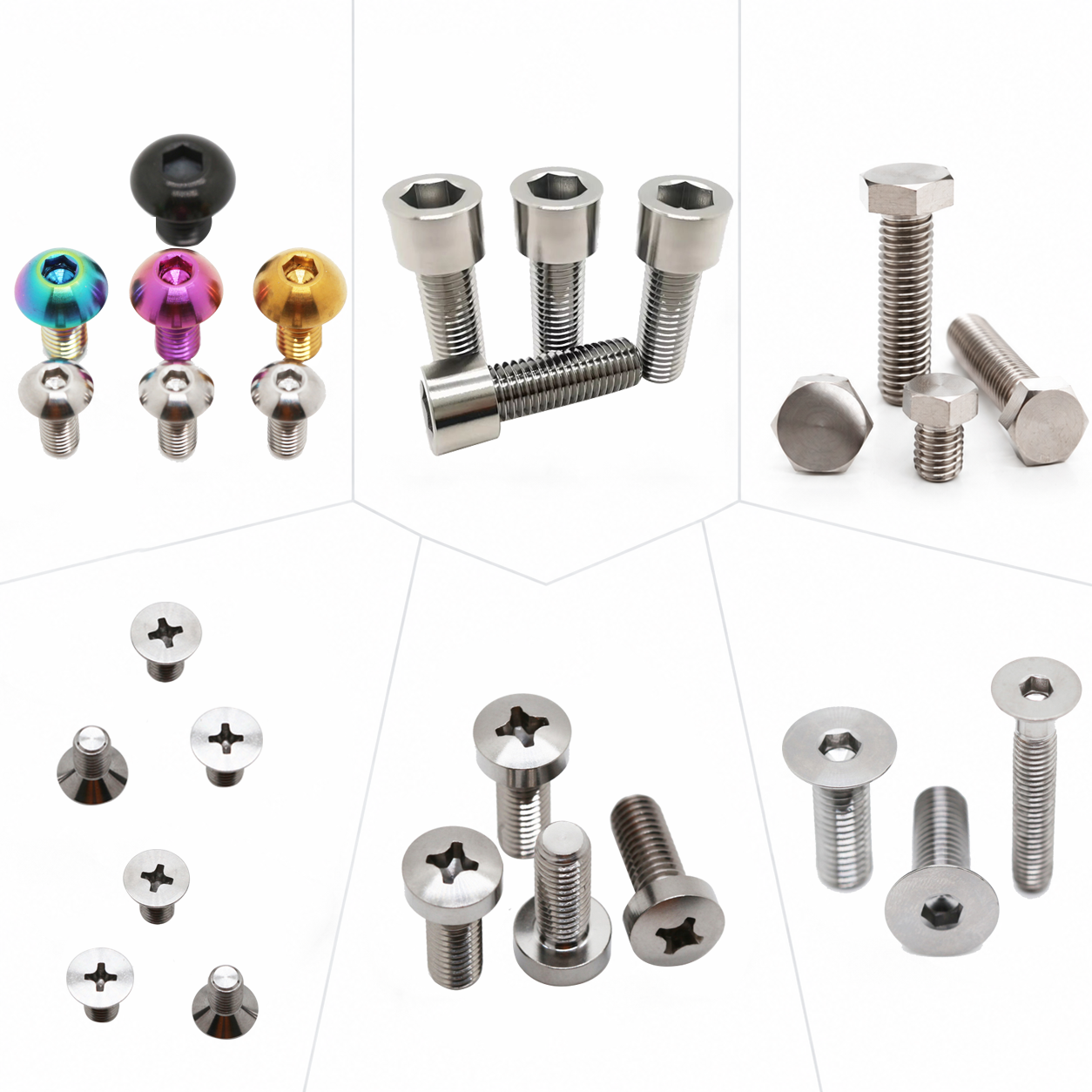
Core Titanium Fastener & Wheel Bolt Portfolio
Sourced from high-purity ASTM B348 certified titanium bar stock, our precision-machined bolts and nuts deliver superior strength-to-weight ratios, high fatigue resistance, and zero corrosion in demanding automotive, motorcycle, and industrial environments.
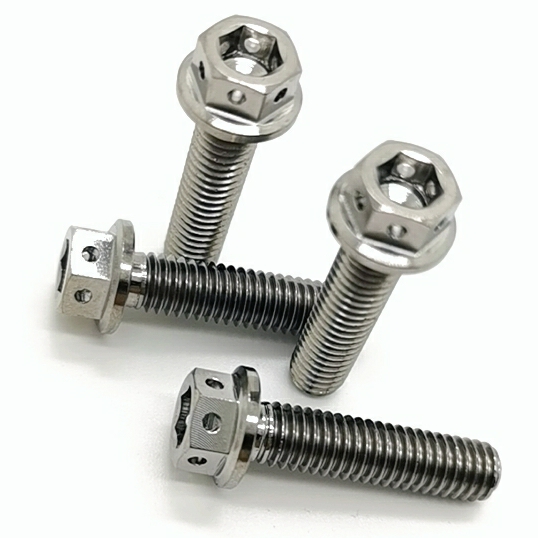
- Grade: Ti-6Al-4V (Gr5)
- Standard: DIN 912 / ISO 4762
- Tensile Strength: ≥ 895–950 MPa
- Finish: CNC Plain / Polished
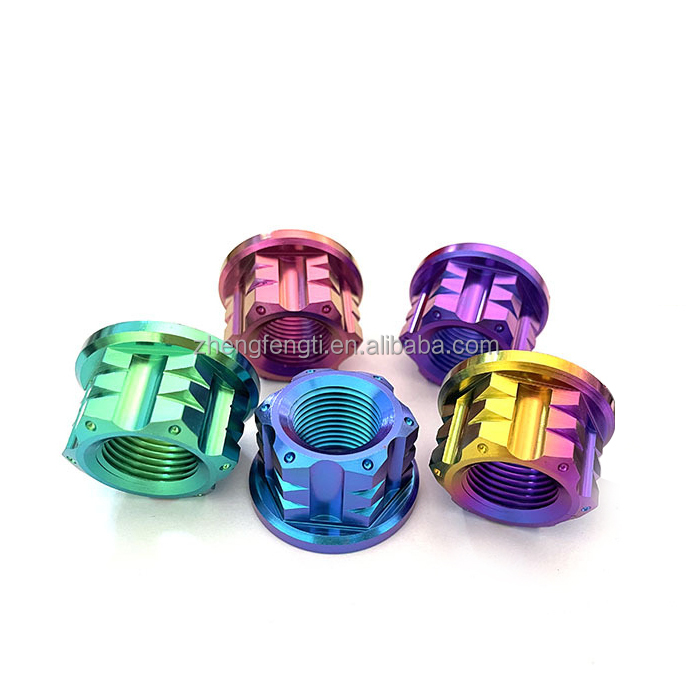
- Sizes: M4, M5, M6, M8, M10
- Yield Strength: ≥ 828 MPa
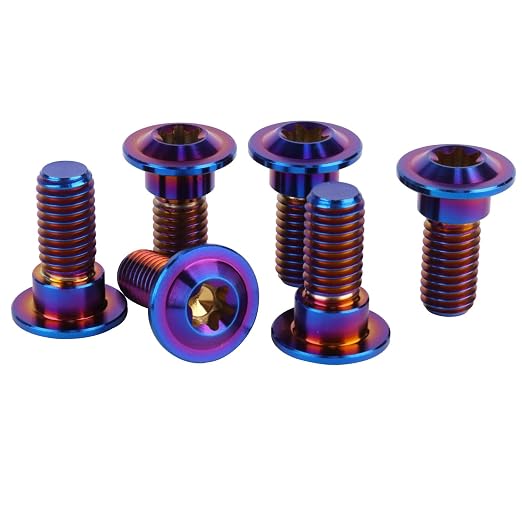
- Structure: Integrated Flange Face
- Application: Chassis & Hub Assembly
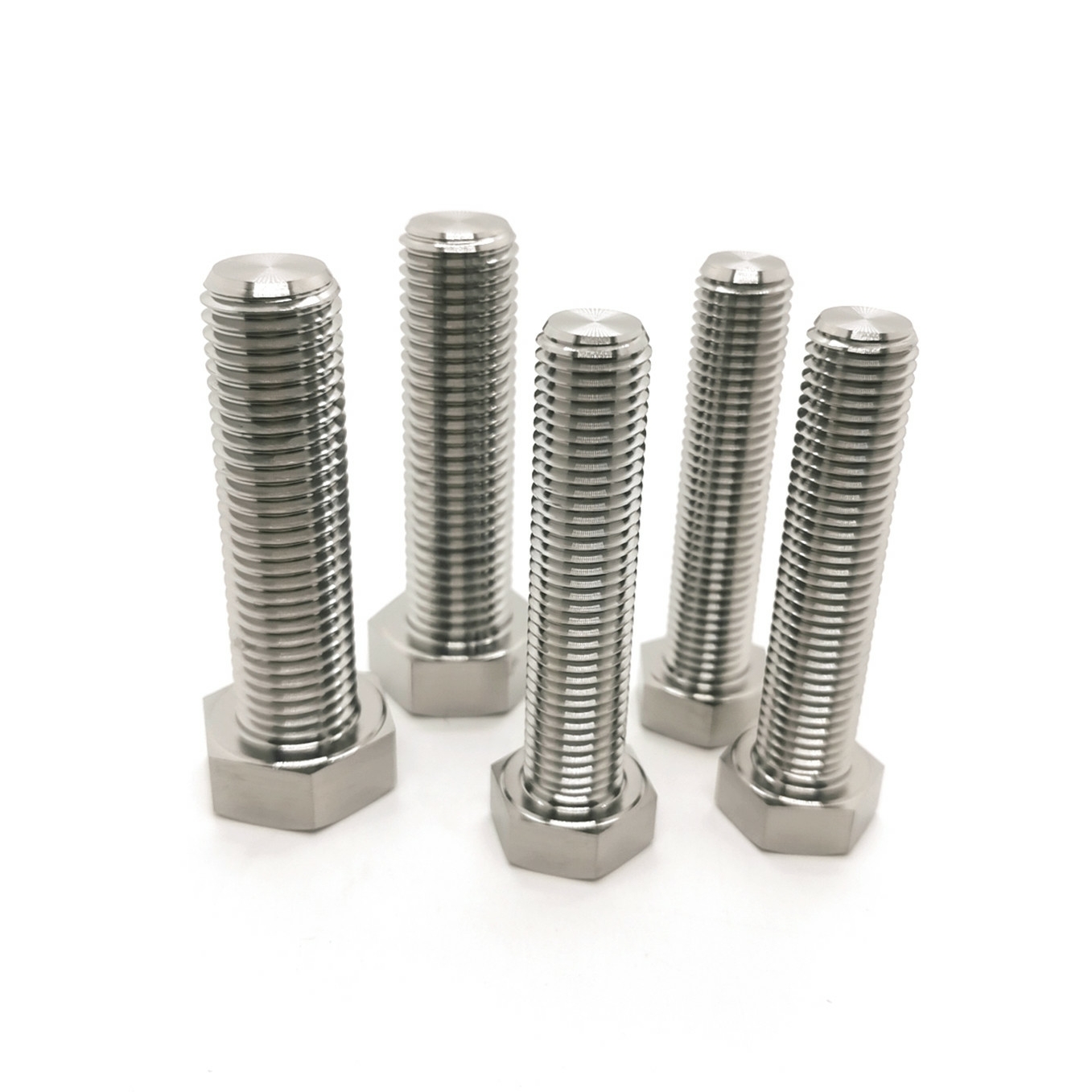
- Dimensions: M8, M10, M12, M14, M16
- Thread Class: 6g Metric Precision
- Corrosion Class: Salt Spray > 1000h
- Finish: Smooth Turned Plain
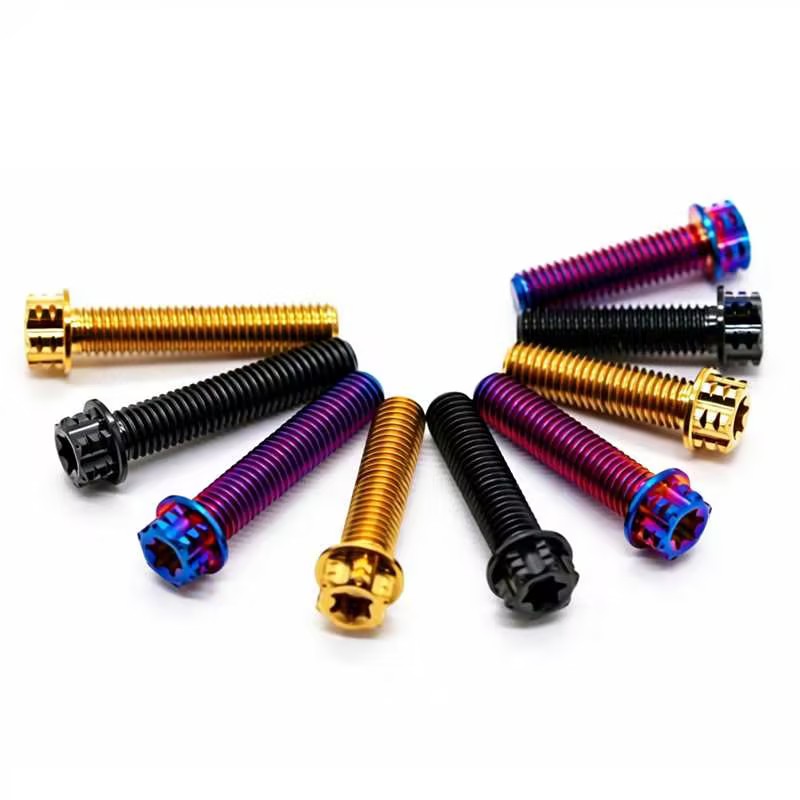
- Head Profile: Torx / Star Drive T25–T50
- Surface: PVD Burnt Blue / Gold / Black
- Density: 4.43 g/cm³
- Application: Motorcycle Tuning & Calipers
- Inventory: 500,000+ pcs Standard Stock
- Thread: Coarse & Fine Pitch (1.25/1.5)
- Hardness: HRC 32–38
- Testing: 100% Go/No-Go Gauge
- Size Spec: M8 × 20mm / 25mm
- Seat Type: Low Profile / Flat Pan
- Thermal Stability: Resistant up to 400°C
- Weight Savings: 44% vs. OEM Steel
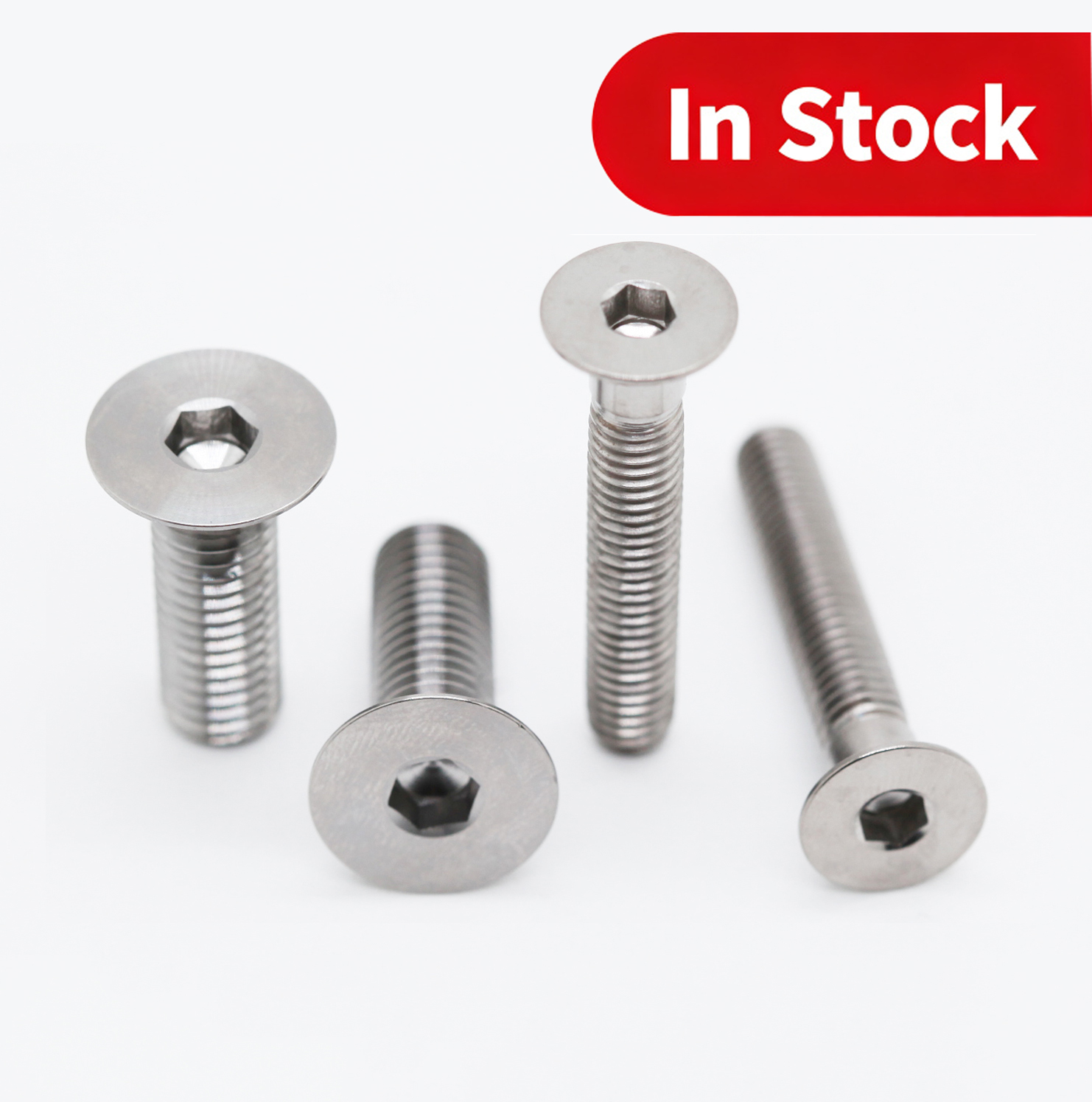
- Sizes: M3, M4, M5, M6, M8
- Head Angle: 90° Countersunk Flush
- Drive: Precision Hex Socket
- Application: Aerodynamic Panels & Hubs
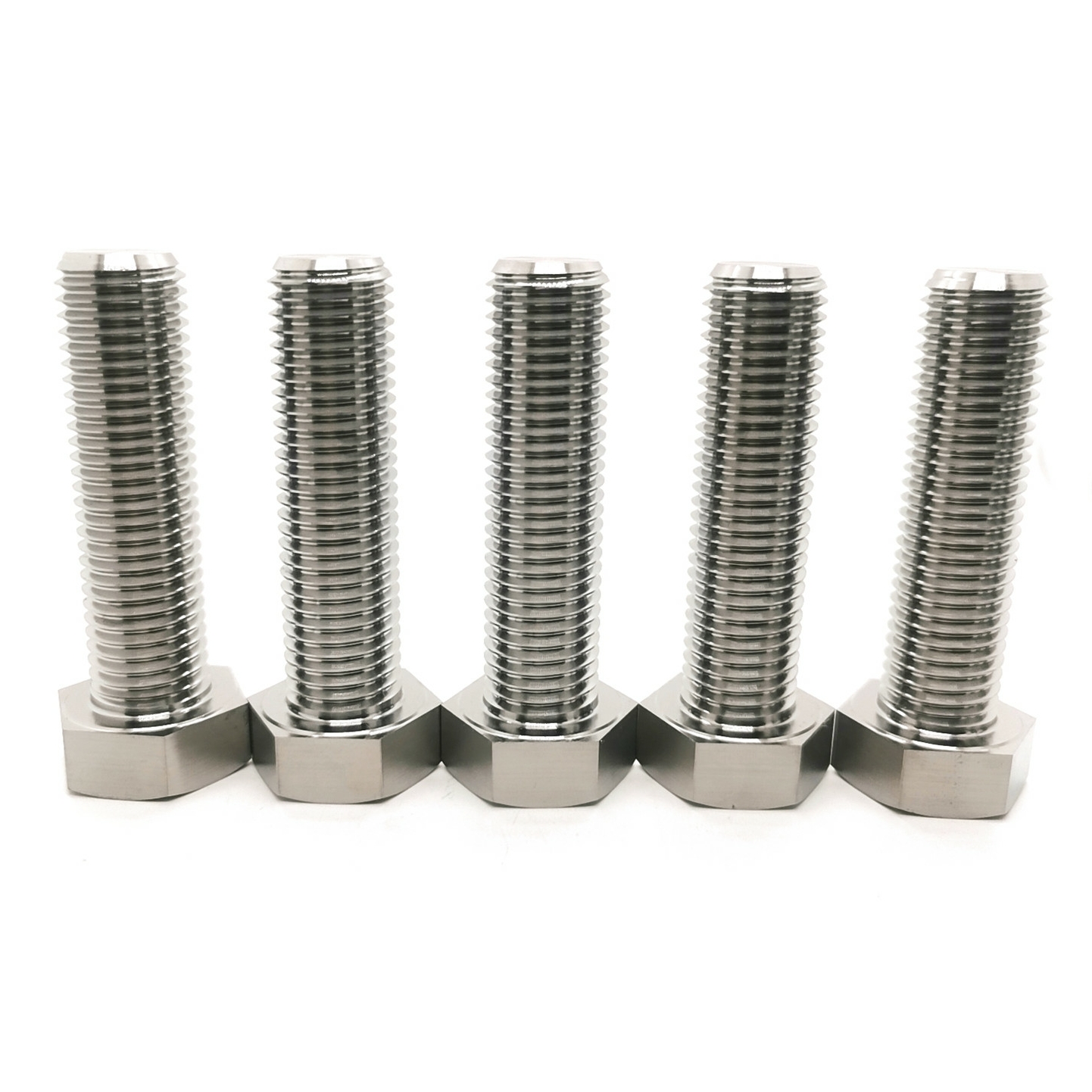
- Diameter Scope: Micro M0.8 up to Heavy M24
- Machining: 5-Axis Turn-Mill Center
- Concentricity: ± 0.01 mm Runout
- Finish: Ra 0.4–0.8 Micro-finish
Structural Dynamics, Clamping Integrity, and Metallurgical Mechanics of Ti-6Al-4V Wheel Lug Hardware
In modern high-performance automotive engineering, motorsport design, and electric vehicle (EV) chassis architecture, wheel attachment fasteners serve as safety-critical structural linkages. Operating under severe cyclic dynamic shear, lateral bending moments, severe thermal fluctuations generated by carbon-ceramic and cast-iron brake rotors, and harsh chemical exposure from road salts, wheel studs and lug bolts demand zero compromise in fatigue life and clamping stability.
1. Comparative Metallurgy: Ti-6Al-4V (Gr5) versus Grade 10.9 & 12.9 Fastener Steels
Grade 5 titanium is an alpha-beta ($\alpha+\beta$) duplex alloy comprising 6% aluminum (alpha stabilizer) and 4% vanadium (beta isomorphous stabilizer). This microstructure generates an optimal balance of ultimate tensile strength ($\ge 895\text{ MPa}$), high fatigue threshold ($\approx 510\text{ MPa}$ at $10^7$ cycles), and remarkable fracture toughness. Unlike hardened carbon steels, titanium does not suffer from hydrogen embrittlement when exposed to galvanic currents or chemical pickling agents.
| Mechanical / Physical Property | Ti-6Al-4V (Gr5 Annealed) | Grade 10.9 Alloy Steel | Grade 12.9 Alloy Steel | Grade 2 (Pure Ti - Ref.) |
|---|---|---|---|---|
| Density ($\rho$) | 4.43 g/cm³ | 7.85 g/cm³ | 7.85 g/cm³ | 4.51 g/cm³ |
| Ultimate Tensile Strength ($R_m$) | 895 – 1000 MPa | 1000 – 1040 MPa | 1200 – 1240 MPa | 345 – 450 MPa |
| Yield Strength ($R_{p0.2}$) | 828 – 910 MPa | 900 – 940 MPa | 1080 – 1100 MPa | 275 – 350 MPa |
| Strength-to-Weight Ratio ($R_m / \rho$) | 214 kN·m/kg | 132 kN·m/kg | 155 kN·m/kg | 88 kN·m/kg |
| Modulus of Elasticity ($E$) | 110 – 114 GPa | 205 – 210 GPa | 205 – 210 GPa | 103 – 105 GPa |
| Thermal Expansion Coeff. ($20\text{–}100^\circ\text{C}$) | 8.6 × 10⁻⁶ / K | 11.7 × 10⁻⁶ / K | 11.5 × 10⁻⁶ / K | 8.6 × 10⁻⁶ / K |
| Corrosion Resistance (CASS 5% NaCl) | Immune (Passivated $TiO_2$) | Rapid Rusting < 96h | Rapid Rusting < 72h | Immune |
2. Elastic Compliance and Torque-Tension Relationship
A pivotal engineering characteristic that distinguishes titanium wheel bolts from steel fasteners is their Modulus of Elasticity ($E \approx 110\text{ GPa}$, roughly half that of steel). This lower modulus endows Grade 5 wheel bolts with superior elastic elongation ($\Delta L$) for any given clamp load ($F$). In racing and high-vibration applications, this elastic compliance acts as a dynamic tension spring: as the wheel hub expands under intense brake rotor heating, or flexes under lateral g-forces, the bolt sustains its clamping preload without plastic yield or catastrophic back-off.
When calculating tightening torque, technicians must account for titanium's distinct thread coefficient of friction ($\mu_{th}$). Sourcing teams must ensure end-users adhere to calibrated torque charts utilizing specialized anti-seize lubricants (e.g., molybdenum disulfide or aluminum/copper-free ceramic paste) to prevent thread galling while achieving predictable clamping forces according to the classical Kellermann-Klein formulation:
Where $P$ is thread pitch, $d_2$ is pitch diameter, $\alpha$ is the flank angle (60° for metric ISO 68-1), and $D_m$ is the mean contact diameter of the conical (60°) or ball (R12/R13/R14) wheel bolt seat. Precision CNC turning of the seat radius is essential to eliminate localized point-contact stress concentrations that could otherwise induce premature fatigue fractures.
3. Microstructure Integrity: Cold Thread Rolling vs. Subtractive Cutting
Yevzo Titanium utilizes multi-stage manufacturing protocols combining cold-heading / hot precision forging with precision thread rolling. Machine-cut threads severance titanium's continuous grain flow, creating notch sensitivities at the thread roots. In contrast, our hydraulic thread rolling machines plasticize the outer diameter of the CNC-turned shank, forcing metallurgical grain lines to contour uninterruptedly through the thread crest and root radius ($r \ge 0.144 \cdot P$). This strain-hardening mechanism elevates root micro-hardness by 15% and increases fatigue lifecycle by over 300% during cyclic rotational testing.
Global Procurement Trends in High-Performance Titanium Fasteners (2025–2030)
As international supply chains evolve toward localized stock buffering, tighter metallurgical accountability, and aggressive vehicle lightweighting, the global wholesale procurement ecosystem for titanium fasteners is undergoing strategic transformation.
1. EV Weight Offsetting & Rotational Efficiency
With electric vehicle battery packs adding 400–700 kg to curb weights, Tier-1 automotive developers and aftermarket tuners increasingly focus on unsprung rotational inertia. Trimming 1.2 kg of revolving wheel hub mass across 20 lug bolts yields measurable improvements in suspension damping frequency, steering telemetry response, and watt-hour per kilometer battery efficiency.
2. Direct Baoji Valley Factory Consolidation
Global procurement executives are systematically bypassing secondary trading intermediaries in favor of integrated source factories located in Baoji ("China's Titanium Valley"). Direct mill integration secures absolute material heat traceability (EN 10204 3.1 MTRs), eliminates spot market price volatility, and guarantees access to ISO/DIN certified 5-axis CNC machining capacities.
3. ESG Compliance & Clean Circular Sourcing
North American and European importers face escalating demands for low-carbon manufacturing disclosures and recyclable alloy verification. Titanium's indefinite service life, imperviousness to road salt degradation, and high scrap re-melting recyclability make it a sustainable, long-cycle investment compared to electroplated zinc/cadmium steel hardware that degrades into hazardous landfill waste.
State-of-the-Art Machining, Surface Physics & Quality Control
Cutting-edge metallurgical processes ensure that every batch of titanium wheel bolts satisfies the zero-defect mandate demanded by international motorsports and safety-critical mechanical applications.
High-Speed Swiss CNC & Thread-Rolling Convergence
Combining multi-spindle sliding-head CNC turning with specialized low-vibration thread-rolling machines enables single-pass machining of complex head geometry (internal star Torx, external hex, reverse sockets) with concentricity tolerances kept within $\pm 0.008\text{ mm}$ and thread pitch accuracy meeting ISO 965-2 6g requirements.
Cathodic Arc PVD & Anti-Galling Ion Nitriding
While traditional anodization creates aesthetic refractive oxide films without dimensional growth, advanced Physical Vapor Deposition (PVD) applies a 2–3 $\mu\text{m}$ thick Titanium Nitride (TiN) or Diamond-Like Carbon (DLC) crystalline layer. This treatment elevates surface hardness above $2200\text{ HV}$, radically lowers frictional drag, and neutralizes thread micro-welding.
100% Non-Destructive Optical & Hardness Verification
Quality assurance includes automated dual-telecentric optical sorting systems that measure all critical dimensions—thread lead error, major diameter, chamfer angle, and seat radius—at line speeds. Raw stock undergoes optical emission spectrometry (OES) to strictly verify chemical composition ($Al: 5.5\text{–}6.75\%$, $V: 3.5\text{–}4.5\%$, $Fe \le 0.30\%$, $O \le 0.20\%$).
Why Tier-1 Importers Partner with Yevzo Titanium Metal
Headquartered in the Honeycomb Industrial Park of Baoji's High-Tech Development Zone, Yevzo Titanium combines an established 10+ year production lineage with expansive direct manufacturing infrastructure.
Baoji Supply Chain Core
Situated in China's "Titanium Valley," our plant accesses premium vacuum arc remelted (VAR) sponge titanium and ASTM B348 bar stock directly, eliminating middle-tier logistics latency.
100+ CNC Machining Units
Equipped with 3-axis, 4-axis, and 5-axis turning-milling machining centers, our floor maintains a monthly output exceeding 350,000 precision titanium bolts, nuts, and custom components.
Full OEM/ODM Prototyping
Our engineering team delivers 2D CAD/3D STEP drawing assessments within 24 hours, rapid prototype batching in 5–7 days, and custom laser brand marking for private-label distributors.
Global Trade Execution
Flexible international terms including FOB, CIF, DDP, and DDU express delivery, paired with secured institutional payment systems (T/T, L/C, PayPal) covering over 50 export nations.
Frequently Asked Questions: Technical & Commercial Evaluation
Detailed engineering and commercial answers to simplify your procurement audit, specification review, and quality verification.
Accelerate Your Titanium Fastener Sourcing
Download our complete OEM/ODM technical specifications, standard inventory dimensional charts, and wholesale pricing schedules. Connect directly with our Baoji manufacturing engineering team today.