2013
Established Baseline
895+ MPa
Gr5 Tensile Integrity
100%
Lot Heat Traceability
Industrial Structural Fasteners & Titanium Anchors
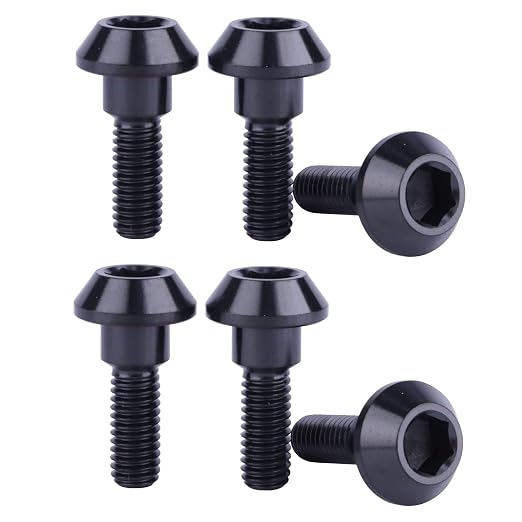
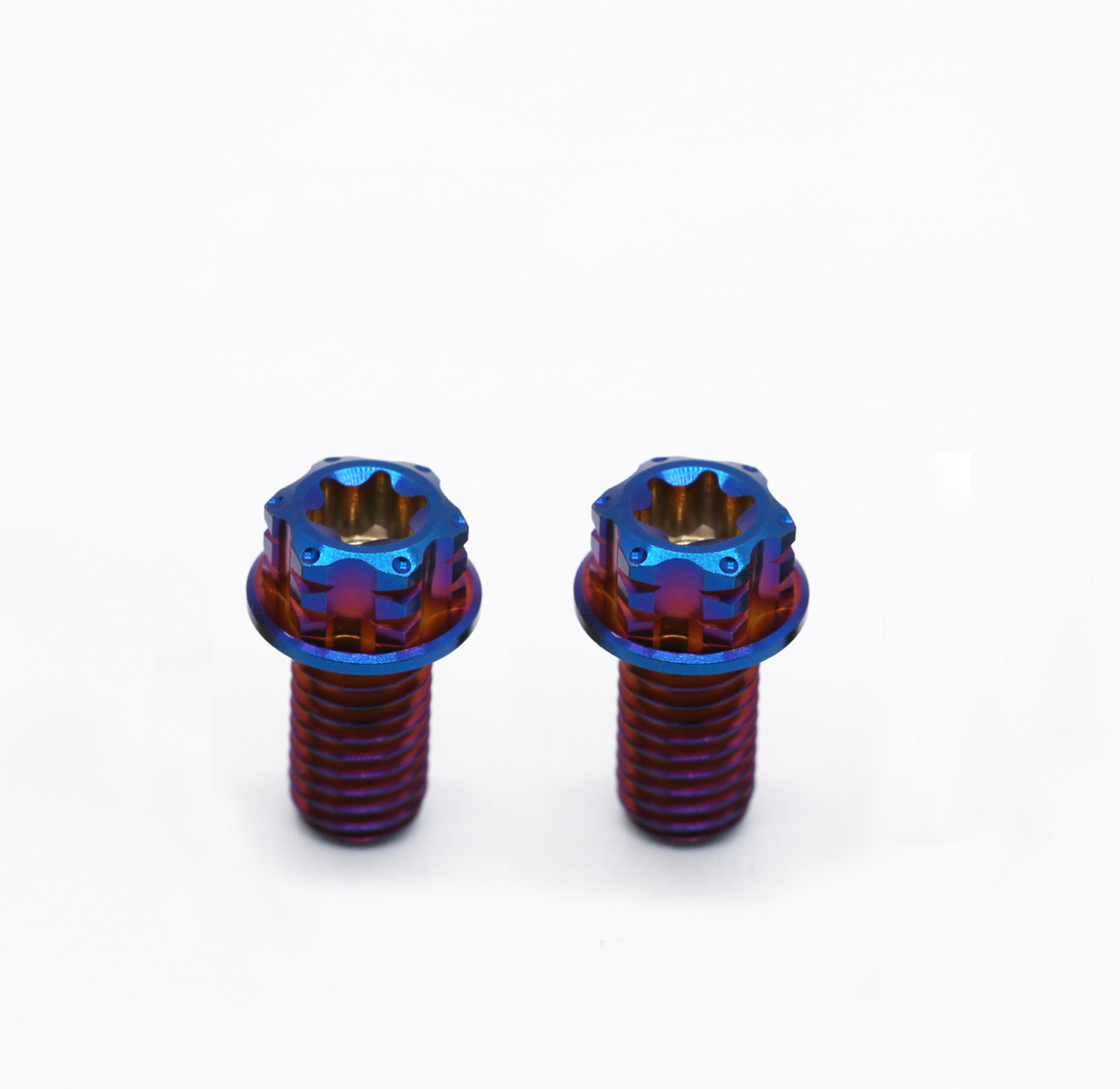
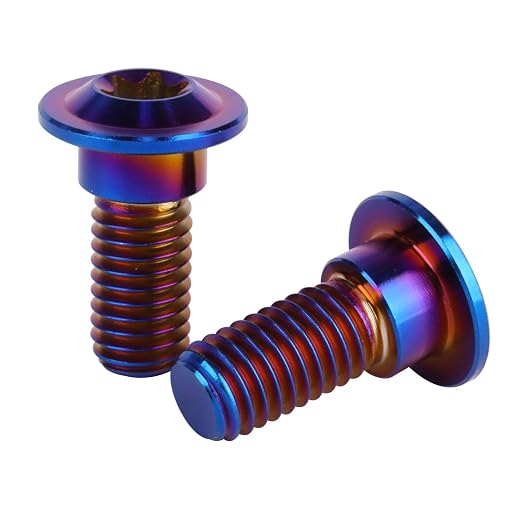
Factory-direct high-tensile fasteners, DIN-spec hex bolts, and specialized anchor hardware machined for extreme thermal, corrosive, and mechanical loads.
The Engineering Shift: Why Titanium Anchor Systems Replace Superalloys
Evaluating the macro-mechanical dynamics, weight-to-yield efficiency, and localized chemical passivity that dictate heavy industry fastener procurement.
Spontaneous Passivation & Crevice Defense
Unlike 316L stainless steel, which relies on a dynamic Cr₂O₃ film prone to halogen breakdown, titanium immediately generates an amphoteric TiO₂ (rutile/anatase) nanometer barrier. When deployed as heavy chemical anchor bolts or offshore foundation ties, Grade 2 and Grade 5 fasteners are immune to pitting corrosion, chloride attack, and microbiologically influenced corrosion (MIC) up to 300°C.
Strength-to-Mass Displacement (45% Savings)
Grade 5 (Ti-6Al-4V) yields a minimum ultimate tensile strength of 895 MPa at a density of only 4.43 g/cm³, vastly outstripping Class 8.8 structural steel (7.85 g/cm³). For seismic building anchors, rapid transport systems, and suspension anchors, replacing steel with titanium removes unneeded deadweight while maintaining yield safety factors under dynamic cyclic fatigue.
Cryogenic Stability & Elevated Thermal Creep
Alpha-beta titanium alloys show almost zero ductile-to-brittle transition temperature down to cryogenic conditions (-196°C), retaining elongation rates above 10%. In LNG regasification plants and cryogenic containment bases, standard galvanized or alloy steel anchor studs turn brittle, whereas certified ASTM B348 titanium bars sustain structural ductility and continuous preloads.
| Mechanical / Physical Property |
Commercial Grade 2 (CP Titanium) |
Grade 5 Titanium (Ti-6Al-4V Annealed) |
Structural Carbon Steel (Class 8.8) |
316L Austenitic Stainless Steel |
| Ultimate Tensile Strength (MPa) |
345 Min. |
895 – 1000 |
800 – 830 |
485 – 580 |
| Yield Strength (0.2% Offset, MPa) |
275 Min. |
828 Min. |
640 |
170 – 220 |
| Density (g/cm³) |
4.51 |
4.43 |
7.85 |
8.00 |
| Thermal Expansion (10⁻⁶/K @ 20-100°C) |
8.6 |
8.6 |
12.0 |
16.5 |
| Chloride Stress Corrosion Resistance |
Immune (<100°C) |
Extremely High |
Very Low (Rapid Failure) |
Susceptible to SCC >60°C |
Macro Procurement Trends: The Next Decade of Fastener Sourcing
How engineering shifts toward hydrogen logistics, gigawatt marine solar, and high-frequency automated CNC milling are changing titanium fastener demand.
Life-Cycle Cost (LCC) Displacement Over Initial CAPEX
Global procurement teams in desalination, chlor-alkali production, and offshore wind foundations are shifting from upfront component costs to total Life Cycle Assessment. While the initial bill of materials for Grade 5 anchor studs exceeds galvanized steel, titanium ends catastrophic down-hole failures, eliminates costly regular recoatings, and avoids maintenance shutdowns—yielding positive ROI within 36 to 48 operational months.
Tightened Flaw-Detection & High-Tolerance Machining
Basic cold-heading operations often cause micro-fissures in titanium’s crystalline lattice. Procurement teams increasingly demand full-shank CNC continuous turning, automated thread rolling, and Class 6g/4h pitch gauges. High-stress anchor pins now require ultrasonic volumetric inspections to ASTM E1444 and dye-penetrant surface testing to eliminate internal voids in heavy-load assemblies.
Near-Source Supply Integration: The Baoji Advantage
Geopolitical challenges and rising supply-chain friction have driven engineers straight to primary production clusters. Sourcing from Baoji ("China's Titanium Valley") provides direct mill-level lot traceability, avoids multiple international markups, and speeds up custom engineering turnarounds on custom ASTM B348 bar and DIN-dimensioned anchor shafts.
Frequently Asked Technical & Sourcing Inquiries
Key engineering details regarding assembly, galling prevention, metallurgy, and global supply terms.
How do engineering teams prevent thread galling during high-torque anchor installation?
Because of titanium's localized ductility and low thermal conductivity, friction during fast, dry power-driving can gall the threads. Sourcing engineers should specify anti-seize lubricants containing molybdenum disulfide (MoS₂), nickel, or copper base carriers. For critical environments, we offer anti-galling PVD coatings, micro-arc oxidation, or specialized solid-film lubricants to keep the threads smooth and ensure reliable clamping preloads without thread seizure.
What controls are applied to reduce galvanic corrosion when anchoring into dissimilar metals?
Titanium is electrochemically noble (+0.05V vs. standard hydrogen electrode). When securing titanium anchor studs into aluminum or structural steel in marine or wet environments, a strong galvanic cell can form. We recommend using non-conductive PTFE/EPDM isolation sleeves and washers, passivated nickel interfaces, or sacrificial anodes to isolate the contact points and safeguard the host structure.
How does Grade 5 (Ti-6Al-4V) behave under high cyclic shear stress compared to Grade 2?
Grade 2 is pure alpha titanium (unalloyed), prized for deep chemical ductilities with modest yield performance (275 MPa). Grade 5 features a balanced dual-phase (alpha + beta) crystalline structure with vanadium stabilizers. This raises shear yield strength above 500 MPa and cyclic fatigue limits past 510 MPa, making Grade 5 the standard choice for anchor ties, structural shear foundations, and dynamic vibration environments.
What metallurgical validation documents are provided with custom export shipments?
Every production lot ships with certified Mill Test Reports (MTR) meeting EN 10204 3.1 standards. These reports detail chemical composition (carbon, nitrogen, hydrogen, oxygen, iron, aluminum, vanadium, and titanium balance) along with verified yield strength, ultimate tensile, elongation, and reduction of area testing. We also supply third-party dimensional inspection reports, ultrasonic non-destructive testing (NDT), and coating depth analyses upon request.
What are the standard order quantities, lead cycles, and international Incoterms?
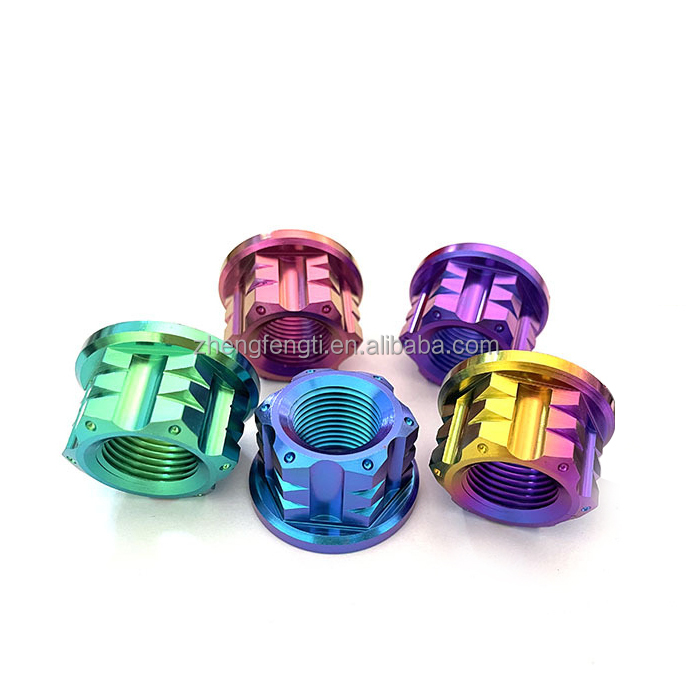
Standard-dimension titanium bolts, hex nuts, and studs typically start at low factory MOQs of 20 to 100 units. Bespoke anchor shapes, specialized embedment hooks, and custom CNC components are quoted per drawing specifications. Production lead times range from 7 to 20 business days depending on tooling runs. We routinely clear cargo under FOB, CFR, CIF, EXW, FCA, and full door-to-door DDP arrangements via sea, air, or global express networks.
The Yevzo Factory Advantage: Certified Baoji Supply Chains
Founded in 2013 in the Honeycomb Industrial Park, our plant integrates raw titanium sponge melting with modern CNC machining lines.
Geographic Raw Material Clustering
Operating in Baoji’s High-Tech Development Zone places our factory next to primary melting and forging plants. We source certified ASTM B348 billets directly, bypass regional distributors, ensure traceable chemistry from ingot to box, and avoid upstream raw material supply bottlenecks.
Multi-Axis Turning & Thread-Rolling In-House
Over 100 dedicated CNC turning centers, three-axis mills, and heavy thread-rolling machines let us handle complex thread geometry, tight Class 4h/6g tolerances, and clean transitions. We eliminate sharp radii at head-shank fillets, cutting the notch stresses that cause joint failures.
Comprehensive Testing & Passivation
Every batch goes through optical coordinate measuring machines, pitch micrometers, ultrasonic flaw checkers, and dedicated chemical cleaning tanks. We wash away residual machining coolants, prevent chloride contamination during storage, and ensure threads engage smoothly upon arrival.
Connect with Our Metallurgical Engineering Desk
Have a custom anchor bolt drawing, specific ASTM/DIN tolerance, or major infrastructure project requirement? Our engineering team reviews technical designs, suggests suitable alloys, and provides quotes within one business day.
Contact Us