Featured Wholesale Titanium Fasteners & Hardware
Manufactured from certified virgin ASTM B348 titanium bars. Our fasteners undergo micro-finish turning, thread-rolling, and optional electrolytic anodizing to deliver tight tolerance fits across high-vibration assemblies.
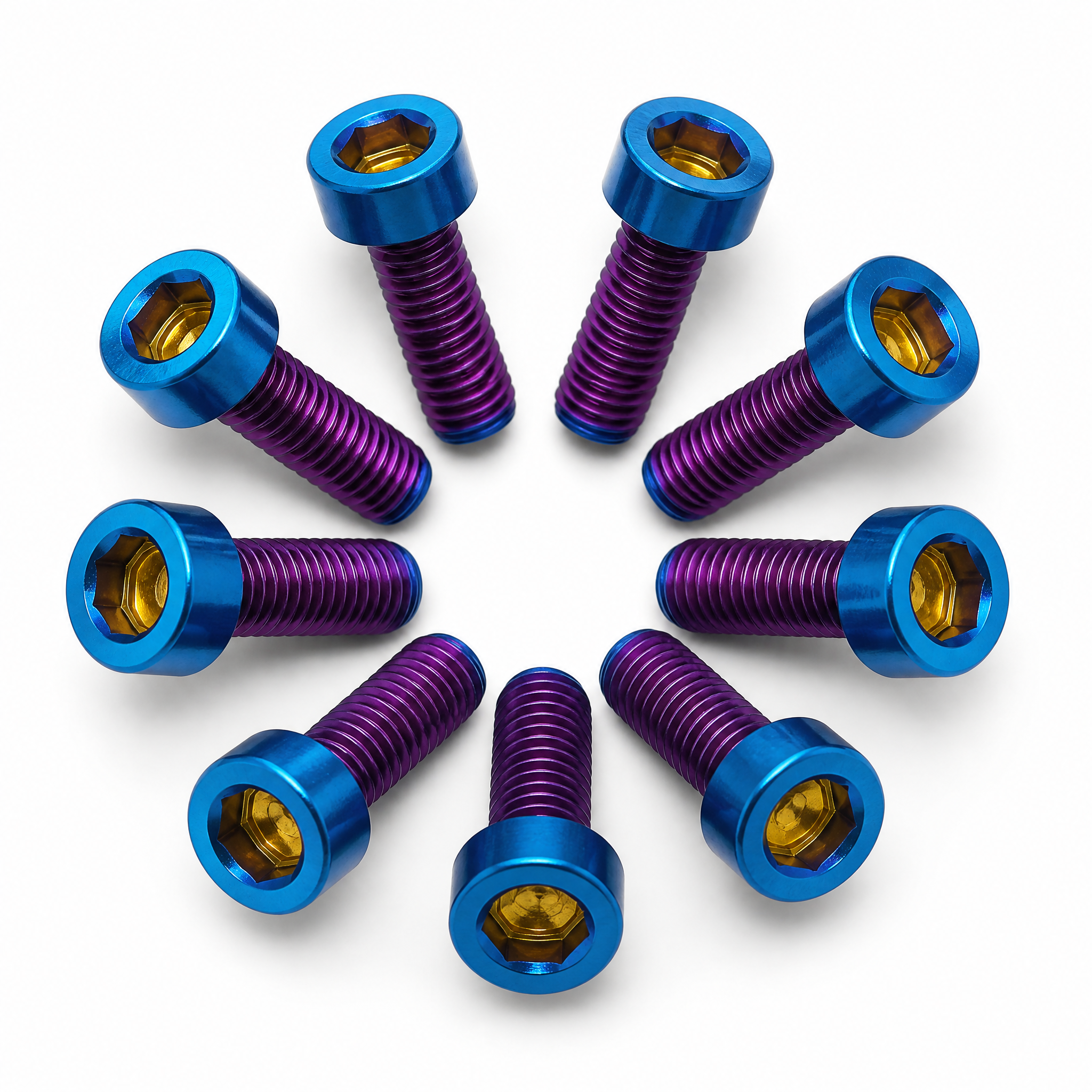
Gr5 Anodized Colored Torx Bolts M4-M6
- GradeTi-6Al-4V (Gr5)
- ThreadM4, M5, M6 × 15mm
- Drive / HeadTorx Star / Low-Profile
- ApplicationMotorcycle / Tuning
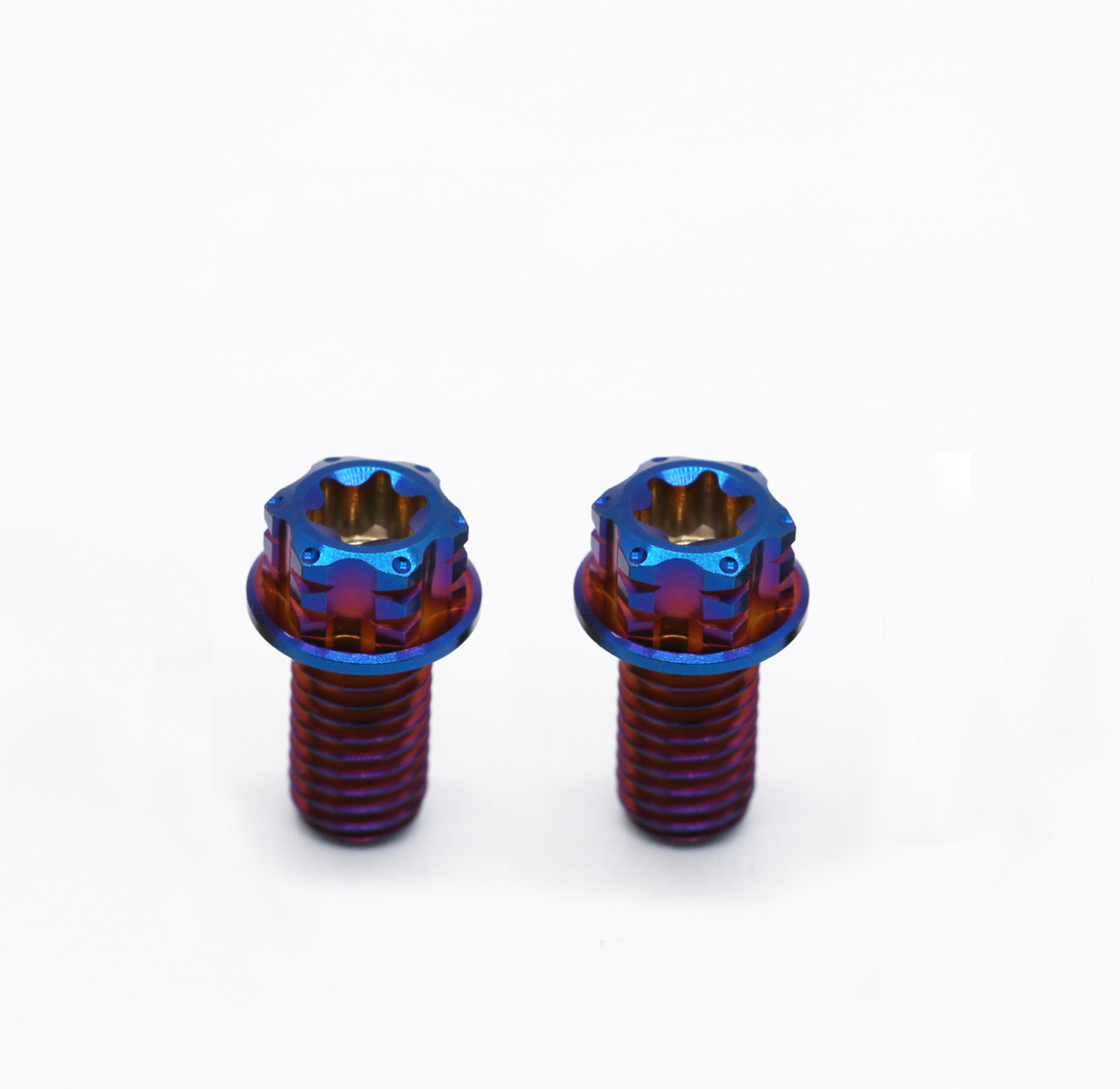
ZFTI High Strength GR5 Flange Bolt M4-M10
- StandardDIN 6921 / ISO 4162
- ToleranceClass 6g / CNC Turned
- SurfacePlain Natural Finish
- QualityISO 9001 Certified
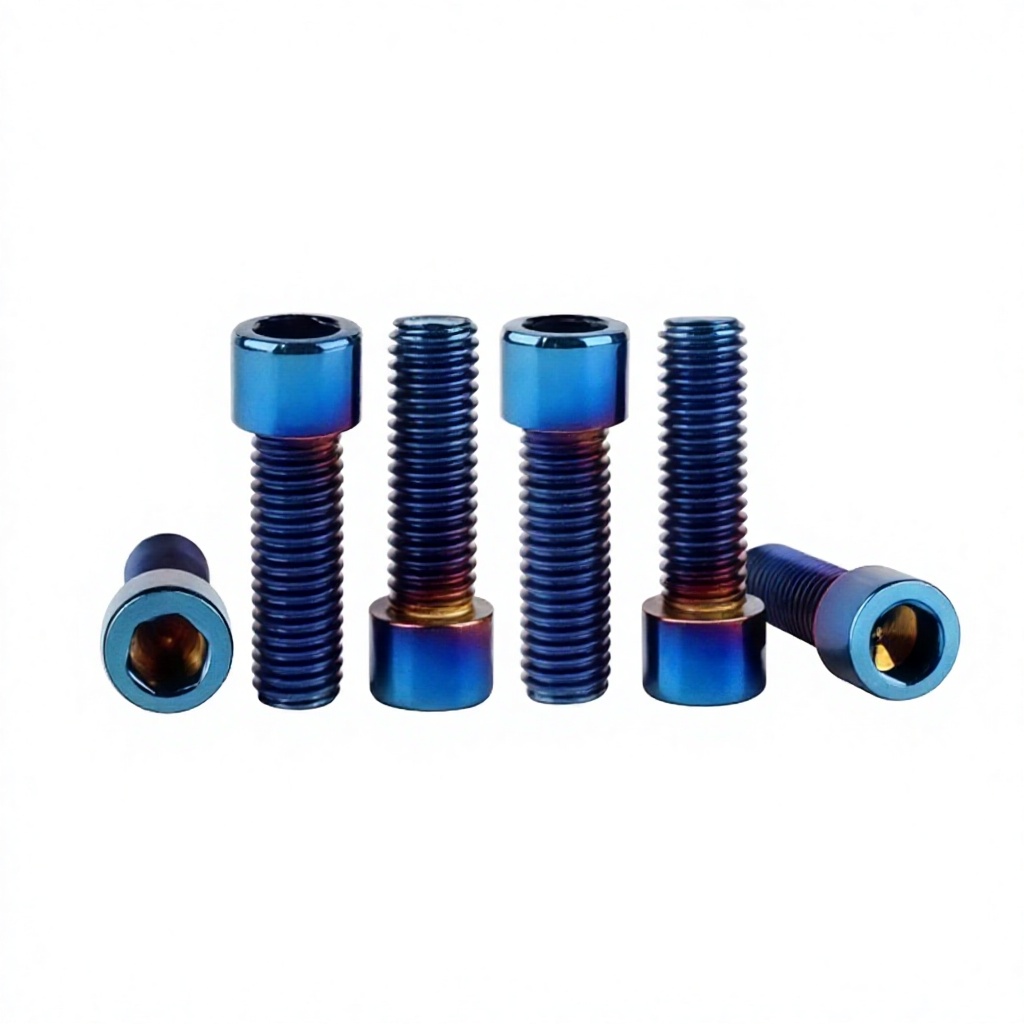
Micro Flat Head Titanium Screws M1.6
- StandardDIN 7991 / Countersunk
- Size RangeM1.6 Micro Industrial
- CoatingPassivated / Engineered
- ApplicationRobotics / Electronics
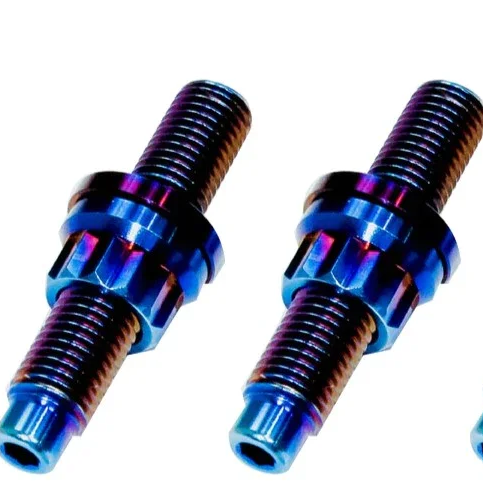
M8/M10 Exhaust Manifold Stud Kits
- Thermal RatingContinuous 400°C+
- ComponentsStuds, Flange Nuts, Washers
- ThreadingRolled High-Fatigue Thread
- ApplicationMotorsport Downpipes
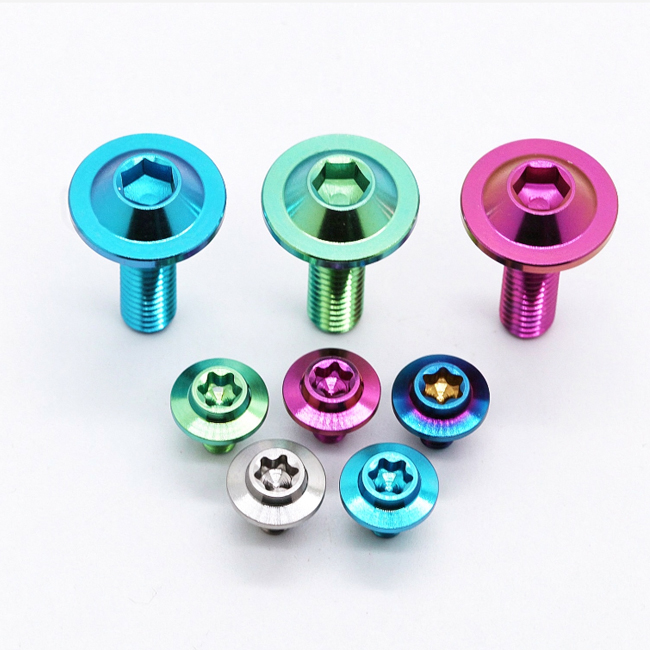
Rainbow Anodized Flange Allen Bolt
- ProcessPrecision CNC Milling
- ColorBurnt Rainbow Oxide
- DriveHex Socket (Allen)
- YieldMin. 828 MPa
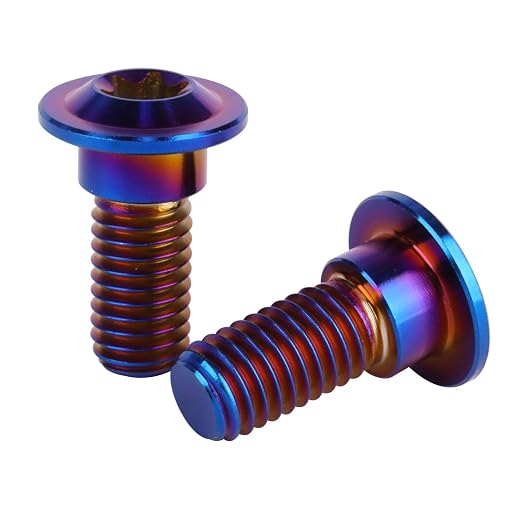
Hex Step Flat Head Disc Brake Bolts M8
- Pitch1.25 Metric Pitch
- DesignStepped Shoulder Alignment
- Shear RatingAerospace Shear Standard
- ApplicationMotorcycle Brake Rotors
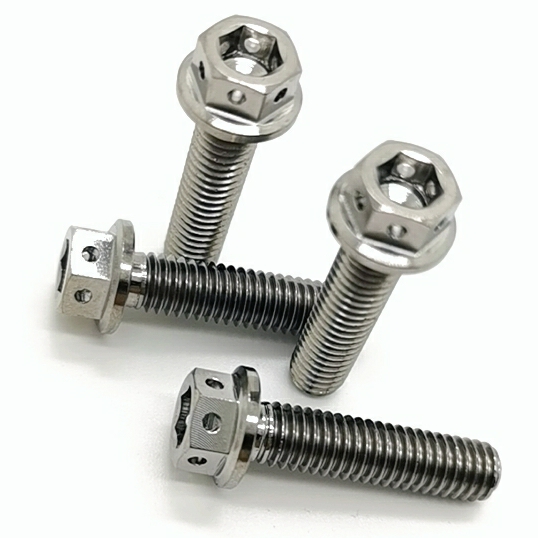
Industrial Socket Head Cap Bolts & Nuts
- Class RatingEquivalent Class 8.8/10.9
- CorrosionZero Crevice Attack in Salt
- Machining5-Axis Swiss Turning
- FinishPlain Degreased & Cleaned
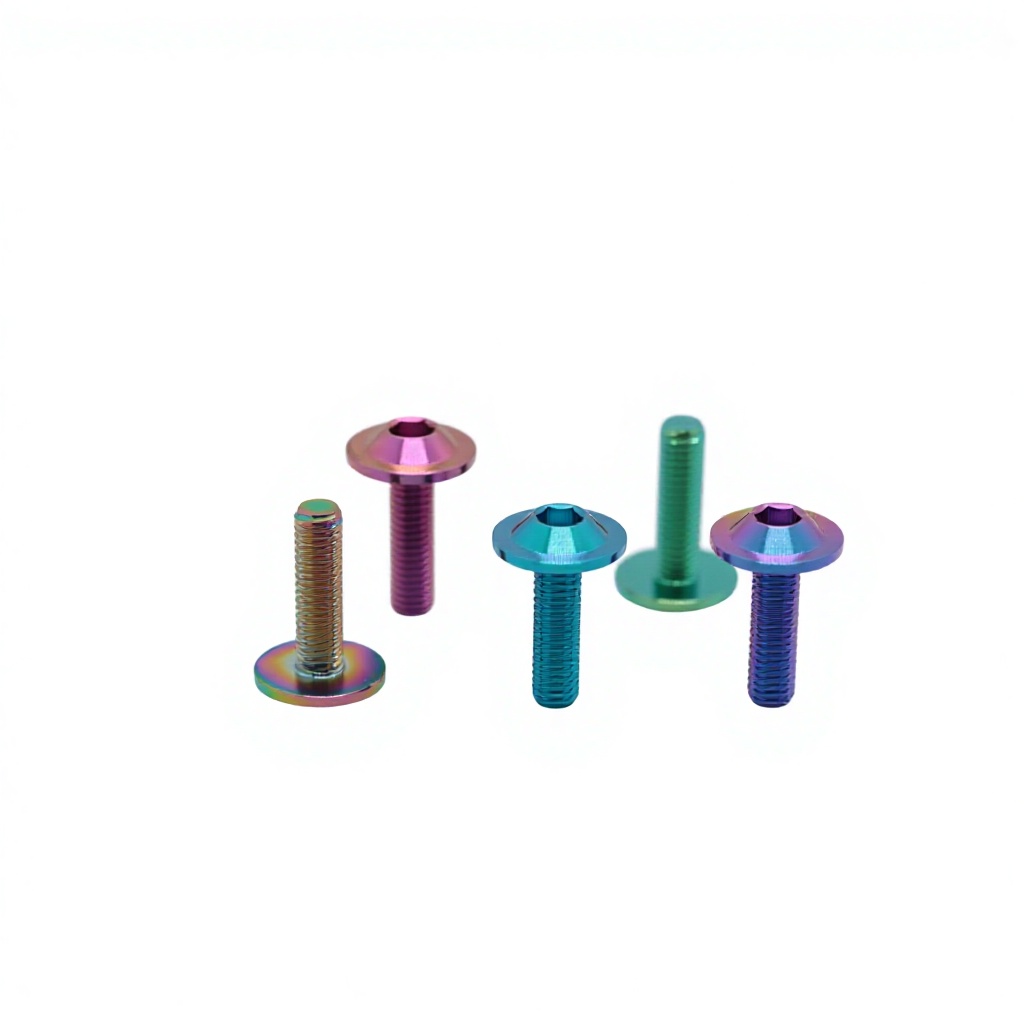
Large Cap Hex Head Fairing Screws
- Head TypeWide Flanged Mushroom Cap
- Load SpreadPrevents Composite Cracks
- Weight44% Lighter Than Steel
- ColorAnodized Purple/Gold/Blue
1. Metallurgical Performance: Pure Titanium (Gr2) vs. Alpha-Beta Titanium Alloy (Gr5)
In modern structural engineering, selecting industrial fasteners cannot rely on basic tensile values alone. Procurement officers and chief mechanical engineers must evaluate specific strength-to-weight ratios, notch sensitivity, shear capacity, and galvanic interaction potential. As an established direct manufacturing mill in Baoji ("China's Titanium Valley"), Yevzo Titanium produces industrial fasteners primarily across two distinct metallurgical classifications: Commercially Pure Grade 2 (UNS R50400) and Alpha-Beta Alloy Grade 5 (Ti-6Al-4V / UNS R56400).
Grade 2 Commercially Pure Titanium possesses an all-alpha crystal matrix providing supreme workability and an exceptional resistance to uniform oxidizing acids, wet chlorine gas, chlorite salts, and turbulent seawater. Its lower yield threshold (275–345 MPa) eliminates susceptibility to stress corrosion cracking, making it optimal for non-structural flange joints in desalination plants, chlorine electrolyzers, and exhaust gas scrubbers.
Conversely, Grade 5 (Ti-6Al-4V) undergoes dual-phase thermo-mechanical processing to yield a fine intergranular dispersion of alpha and beta phases. With tensile strength exceeding 895 MPa and yield strength surpassing 828 MPa, Gr5 fasteners comfortably exceed the structural capacity of Grade 8.8 structural steel bolts while delivering an approximate 44% deadweight reduction. This weight savings drastically lowers unsprung mass and inertia in rotating components, EV wheel hub assemblies, hypercar suspensions, and performance aerospace linkages.
| Property Parameter | ASTM B348 Grade 2 (CP) | ASTM B348 Grade 5 (Ti-6Al-4V) | Grade 8.8 Medium Carbon Steel | AISI 316 Stainless Steel |
|---|---|---|---|---|
| Ultimate Tensile Strength | Min. 345 MPa (50 ksi) | Min. 895 MPa (130 ksi) | 800–830 MPa (116 ksi) | 515–620 MPa (75 ksi) |
| 0.2% Yield Strength | Min. 275 MPa (40 ksi) | Min. 828 MPa (120 ksi) | 640 MPa (93 ksi) | 205–240 MPa (30 ksi) |
| Mass Density | 4.51 g/cm³ | 4.43 g/cm³ | 7.85 g/cm³ | 8.00 g/cm³ |
| Elongation at Break | ≥ 20% | ≥ 10% – 14% | ≥ 12% | ≥ 40% |
| Elastic Modulus (Young's) | 103 GPa | 114 GPa | 205 GPa | 193 GPa |
| Corrosion Resistance in Cl⁻ | Virtually Impervious (<0.01 mm/y) | Exceptional (Immune to Pitting) | Severe Rusting (Needs Plating) | Pitting & Crevice Prone |
A vital distinction in our manufacturing methodology centers on thread creation. Fasteners subjected to dynamic vibration must feature threads produced via cold-rolling rather than thread milling. Thread rolling continuously aligns the metal grain along the contour of the crest and root, preventing micro-stress concentration notches and boosting shear fatigue endurance by more than 35% compared to conventionally cut fasteners.
Why Global Tier-1 Buyers Source Fasteners from Yevzo
Direct sourcing from our Honeycomb Industrial Park facility delivers unmatched pricing transparency, rigid ISO compliance, and agile engineering execution.
Epicenter Sourcing in Baoji
Located in the heart of China's Titanium Valley, we bypass multi-layer metal brokers. We obtain prime sponge-melted titanium ingots and ASTM B348 bars at source cost with verifiable mill certificates (EN 10204 3.1).
100+ Advanced Machining Units
Our workshop houses high-precision Swiss-type multi-axis lathes, cold-heading headers, thread rollers, and optical vision inspection platforms holding dimensional repeatability down to ±0.01mm.
Full Heat-Lot Traceability
Every shipment is mapped to its raw material melt heat number. Chemical analysis (O, N, C, H, Fe, Al, V) and mechanical stress tests are logged to safeguard critical aerospace and subsea installations.
Low MOQ & Rapid Rapid Prototyping
We support distributor initial test programs with stock-order MOQs starting as low as 10 to 30 pieces. Custom CAD/drawing iterations can move from prototype to batch delivery within 12 business days.
Advanced Surface Anodizing & PVD
Our proprietary titanium anodizing produces vivid, non-fading structural colors (burnt rainbow, electric blue, purple, gold, black) without adding paint thickness, preserving exact thread engagement classes.
Worldwide Freight Under Flexible Terms
Seamless international trade execution under FOB, CFR, CIF, EXW, FCA, CPT, DDP, and DDU. Door-to-door express delivery with consolidated customs clearance for North American and European logistics corridors.
2. Strategic Market Trends: Industrial Titanium Fastener Procurement Forecast (2025–2030)
The global industrial titanium fasteners market is experiencing sustained structural growth, shifting from specialized aerospace silos into automotive lightweighting, marine energy, and sustainable chemical processing. Several micro and macroeconomic catalysts shape procurement strategy:
Electric Vehicle Mass Optimization
As battery weight limits EV range, automotive engineers are swapping heavy steel suspension, subframe, and wheel hub bolts for Gr5 titanium fasteners. Reducing unsprung mass at the wheel improves suspension response and energy recovery efficiency.
Hydrogen & Offshore Carbon Capture
Standard marine stainless steels suffer severe stress corrosion cracking in warm, chloride-rich offshore conditions. Titanium bolts (Gr2/Gr12) are rapidly becoming mandatory in green hydrogen electrolyzers and subsea carbon capture structures.
Automated Assembly Compatibility
OEMs now demand fasteners built for high-speed robotic assembly. Titanium hardware requires micro-level tolerance controls on drive sockets (Torx and Allen) alongside anti-friction surface treatments to prevent binding during automated installation.
Smart procurement teams are shifting away from spot purchasing toward annual framework supply contracts with qualified primary factories. By securing annual allocations from Baoji producers, industrial distributors isolate their margins from metal market price fluctuations and avoid long delivery bottlenecks during peak manufacturing quarters.
3. Fastener Manufacturing Evolutions: Cold Heading vs. Multi-Axis CNC Turning
Manufacturing titanium fasteners is notoriously complex due to the metal's low thermal conductivity and pronounced spring-back elasticity. Historically, all aerospace titanium bolts were turned from solid bar on CNC lathes. While turning ensures excellent dimensional accuracy for low-volume runs, it creates continuous material waste (up to 60% scrap rates) and interrupts structural grain flow lines.
High-Yield Cold & Warm Heading Technology: Leading factories now employ automated multi-station warm-forming equipment. Pre-heating Grade 5 titanium wire to precise induction temperatures (600°C–650°C) enables plastic deformation without grain tearing. This process forms the bolt head while preserving continuous molecular grain paths from the shank into the head. The resulting fastener delivers superior head-to-shank shear resistance under severe impact.
Advanced Anti-Galling Thin-Film Coatings: Titanium's passive oxide film can shear under high contact pressure, leading to dry galling against matching nuts. Modern engineering addresses this via Diamond-Like Carbon (DLC) deposits, micro-arc oxidation (MAO), and specialized molybdenum disulfide (MoS₂) dry coatings. These developments reduce thread friction coefficients to μ = 0.10–0.12, allowing accurate torque control without wet anti-seize paste.
Common Engineering & Sourcing Inquiries
Technical guidance compiled by our senior metallurgical engineers to assist procurement managers and equipment designers.
What torque values should be applied to Grade 5 titanium bolts compared to standard steel bolts?
How can engineers prevent galvanic corrosion when mating titanium fasteners with aluminum components?
What are the primary differences between rolled threads and cut threads on titanium fasteners?
Can Yevzo manufacture custom titanium fasteners from non-standard engineering drawings?
What documentation and quality testing certificates accompany an export shipment?
What are the standard international payment, trade, and delivery terms?
Ready to Streamline Your Titanium Fastener Supply Chain?
Submit your 2D/3D technical drawings, standard fastener codes, target quantities, and finish specifications. Our senior engineering team will evaluate manufacturing feasibility and provide a formal price quote within 24 hours.
Send an Inquiry