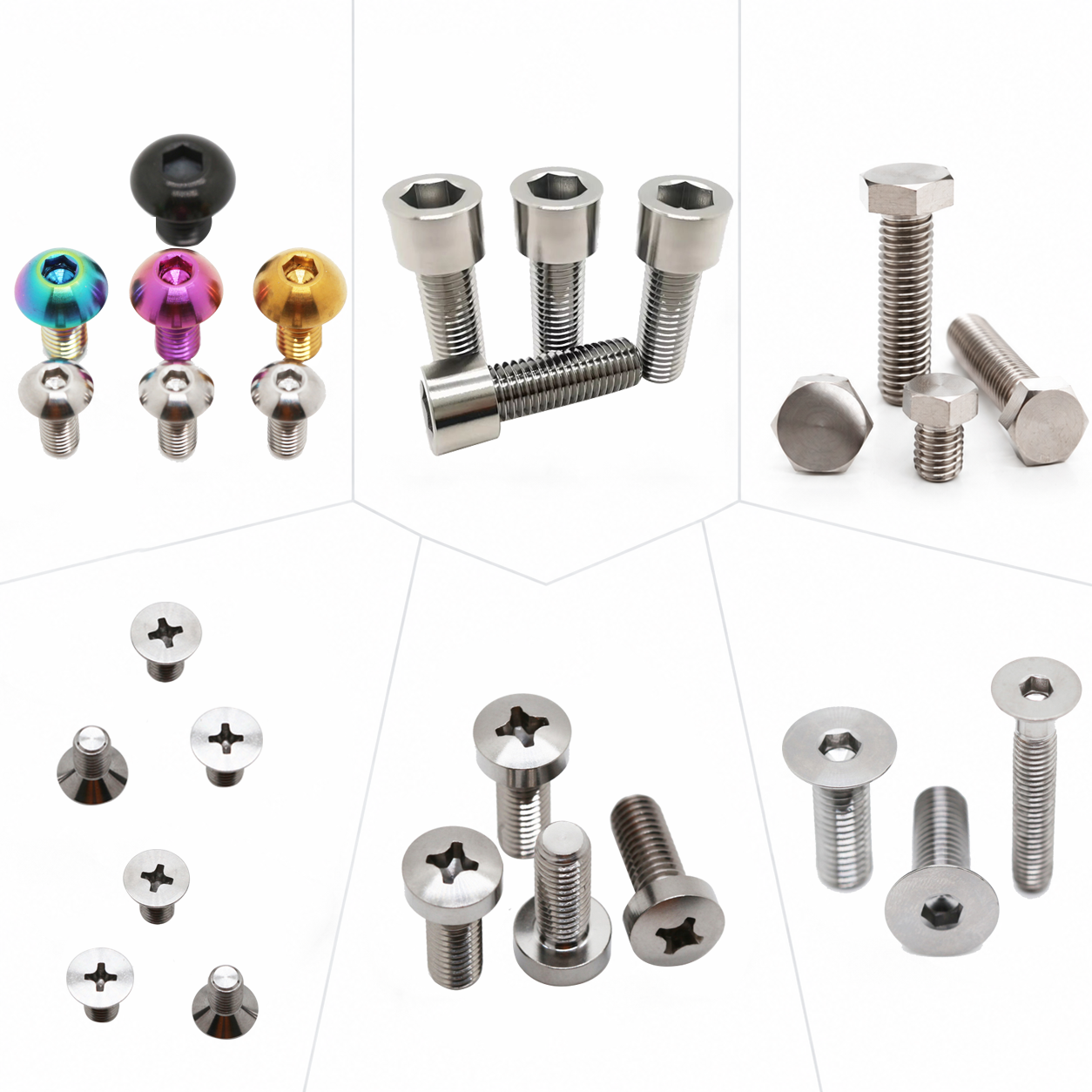
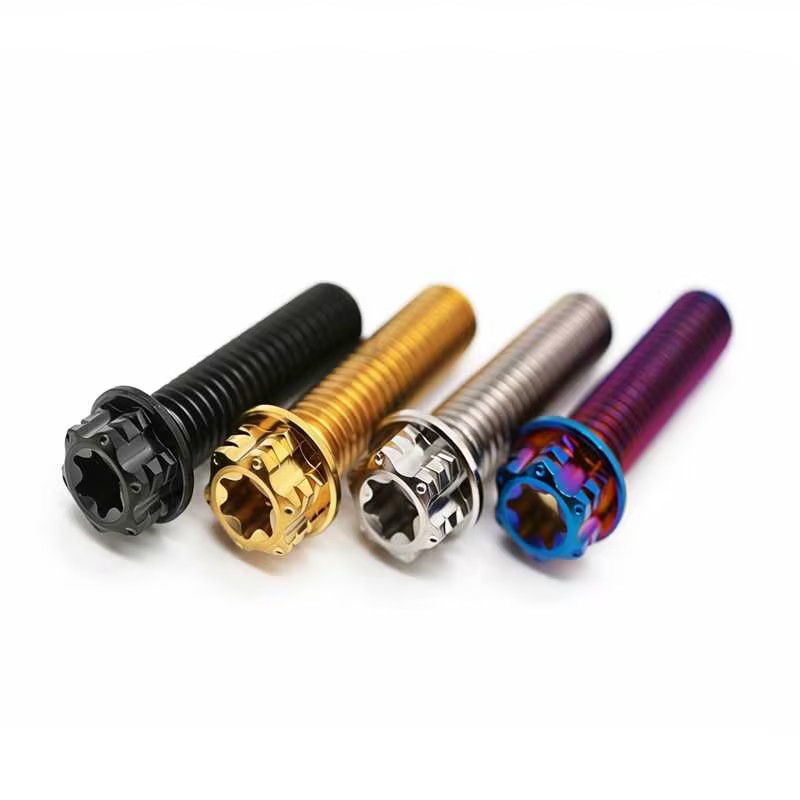
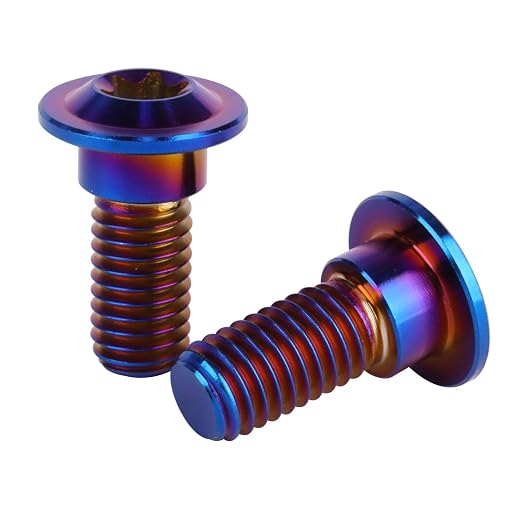
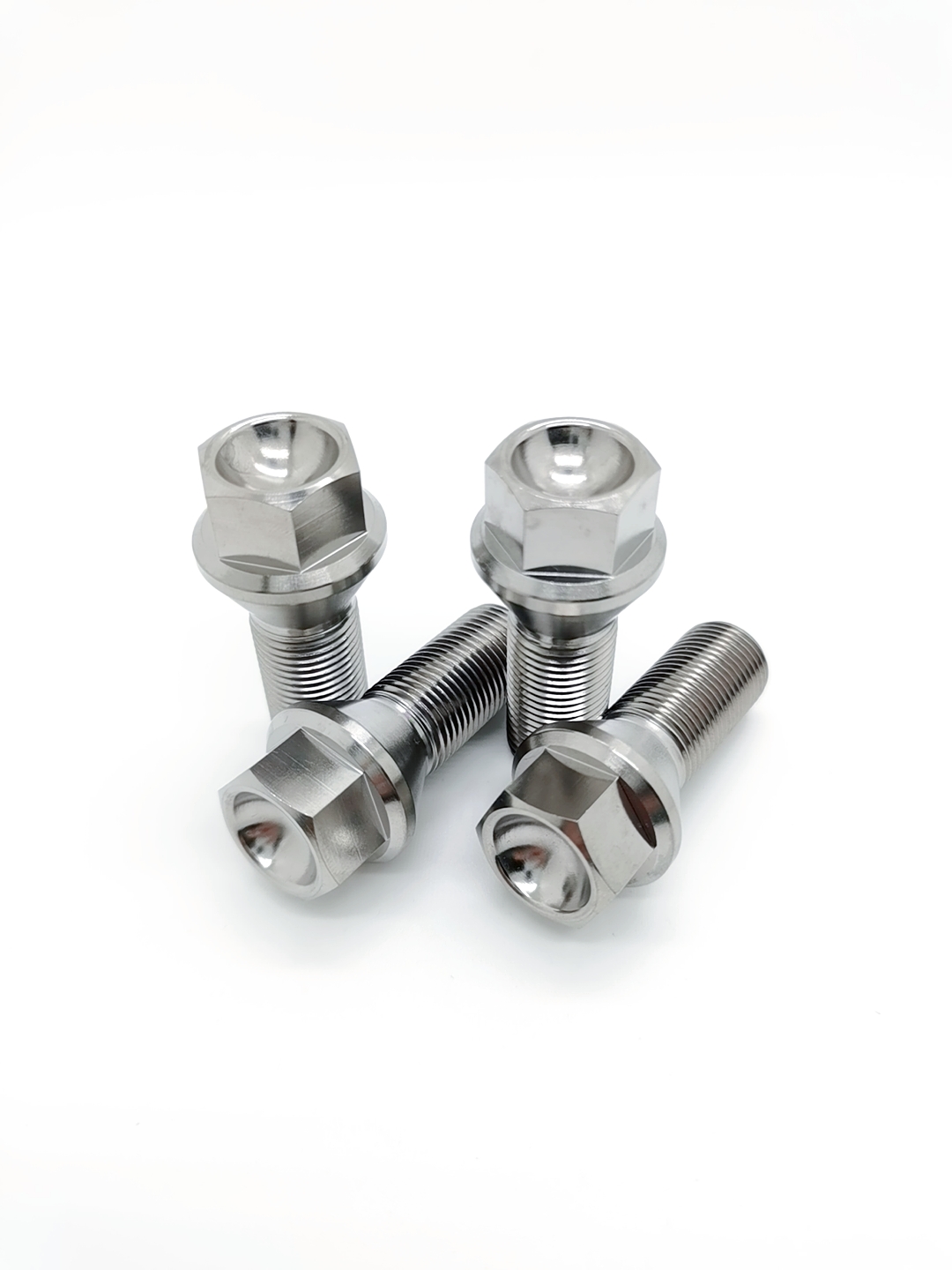
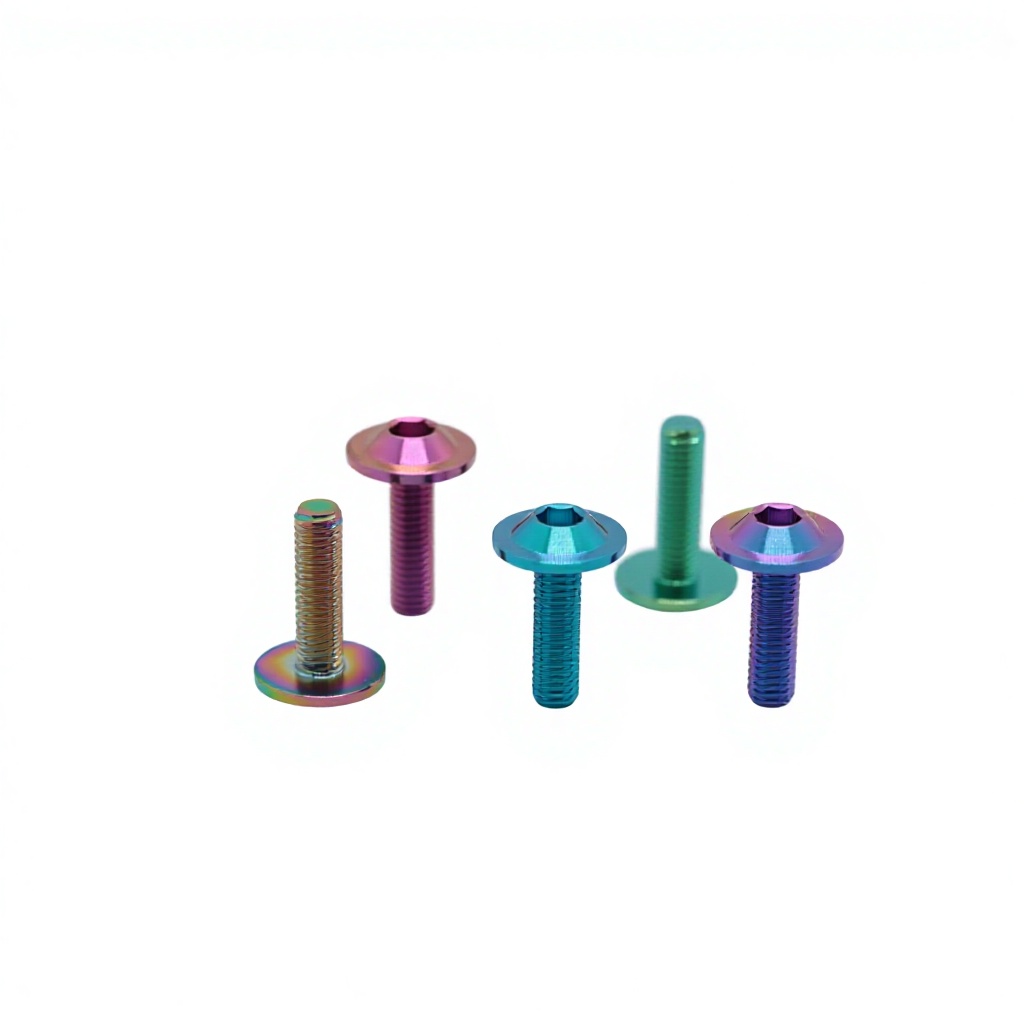
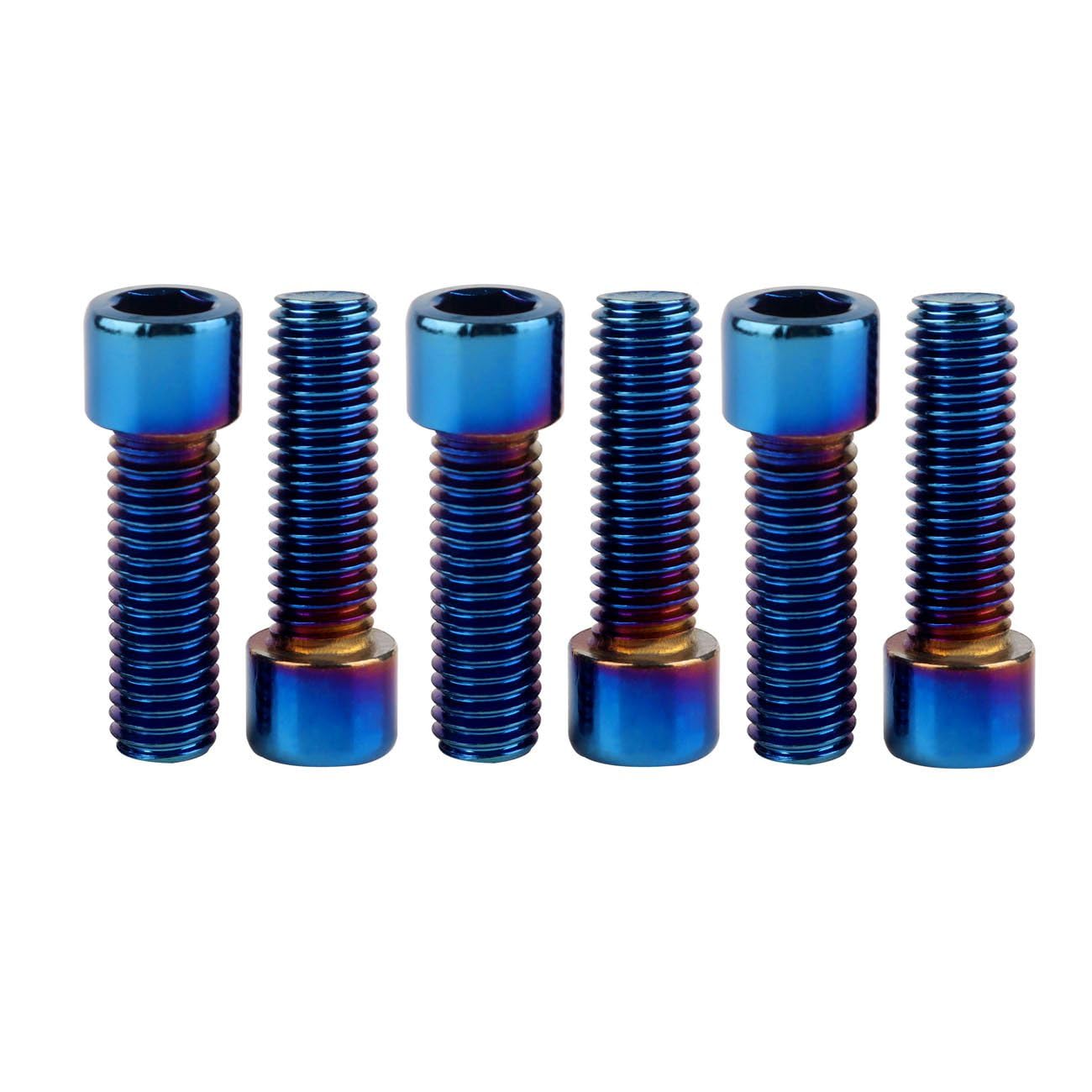
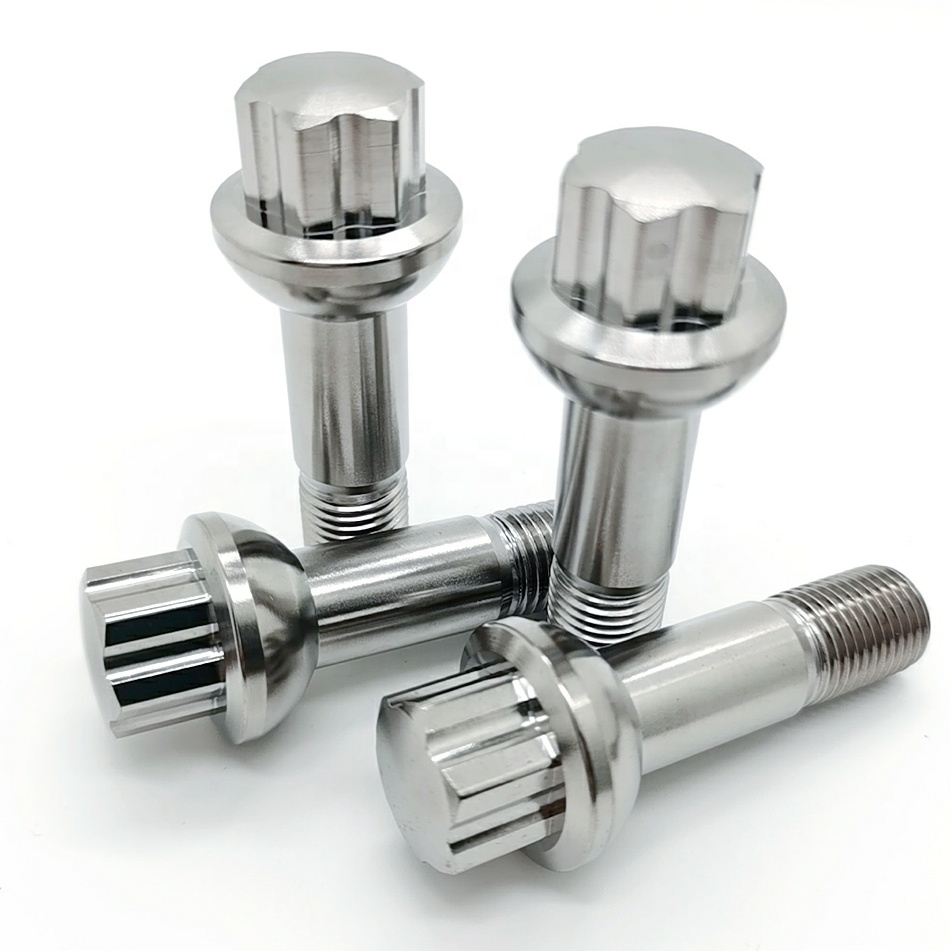
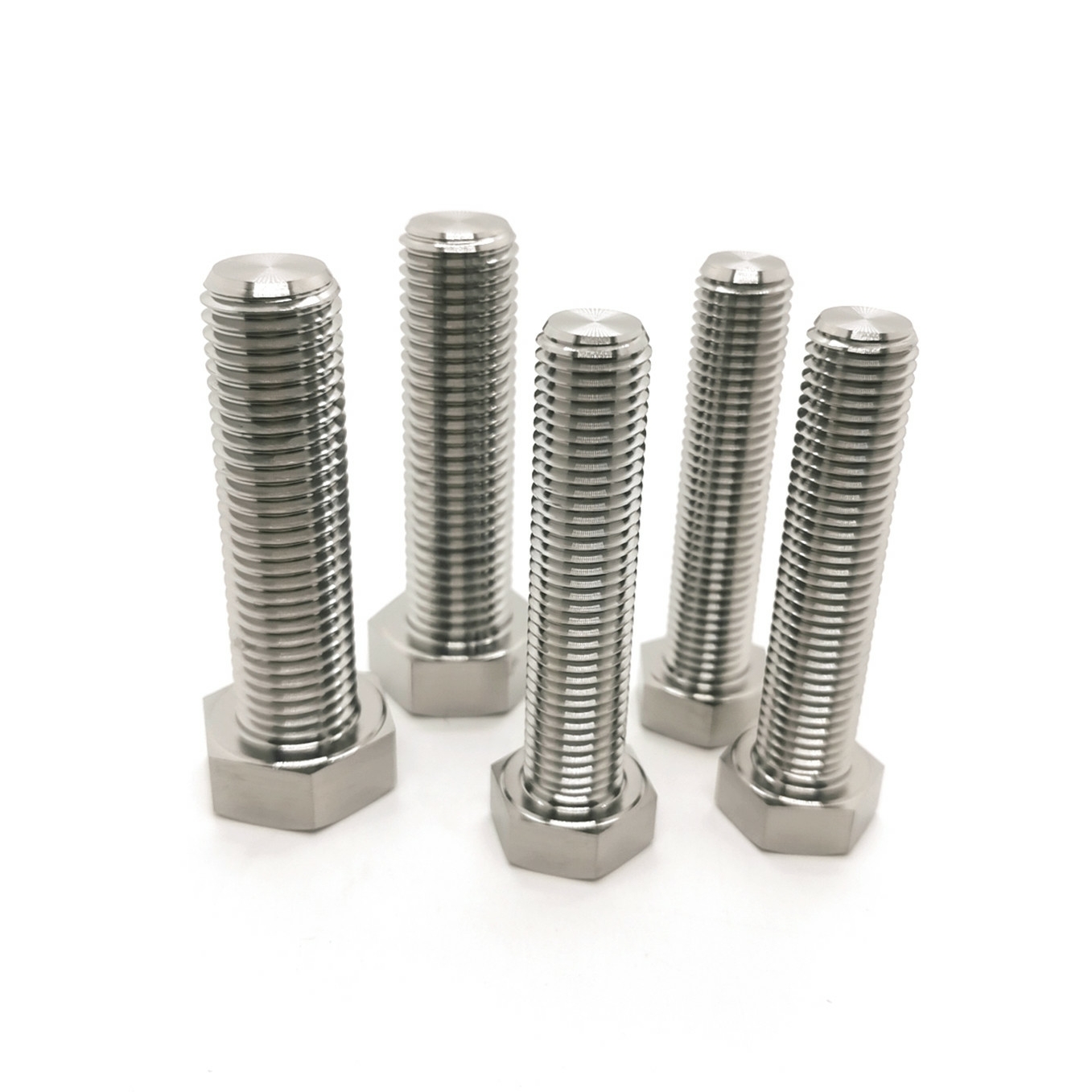
Featured Precision Titanium Rotor Bolts & Fasteners
Explore our primary catalog of high-tensile Gr5 disc rotor fasteners, Torx-drive step bolts, and custom wheel hub components fabricated to DIN, ISO, and customized OEM specifications.
Structural Integrity & European Standards for Titanium Rotor Bolts
Brake disc rotor fasteners operate in one of the most mechanically demanding environments in vehicular engineering. Sourcing CE-certified hardware requires deep technical comprehension of cyclic shear forces, thermal expansion differentials, and microstructural grain integrity.
Material Dynamics: Ti-6Al-4V Grade 5
Unlike commercial purity (Grade 2) titanium, Grade 5 (UNS R56400) is an alpha-beta alloy formulated with 6% Aluminum and 4% Vanadium. Under extreme track deceleration, rotor temperatures can spike above 450°C.
- • Minimum Yield Strength: 828 MPa (guaranteed shear compliance)
- • Modulus of Elasticity: 114 GPa (absorbs brake chatter)
- • High cycle fatigue (HCF) resistance exceeding 10^7 cycles
Rolled vs. Machined Threads
Single-point lathe CNC cut threads disrupt the crystalline grain flow of titanium bar stock, producing micro-notches at thread roots that act as stress concentration zones during rapid brake torque reversals.
- • Thread Rolling: Cold working induces compressive residual stress
- • 35% higher fatigue endurance limit over cut threads
- • ISO 965-1 Class 6g tolerance prevents binding
CE Conformity & EU Mandates
Importing safety-critical automotive or motorcycle brake rotor bolts into the European Union involves stringent regulatory verification under Machinery Directive 2006/42/EC and ECE R90 brake hardware directives.
- • EN 10204 Type 3.1 Inspection Mill Certificates
- • REACH Regulation (EC No 1907/2006) & RoHS compliancy
- • Laser-etched heat code and CE manufacturer traceability
| Mechanical Property | Ti-6Al-4V Grade 5 | Grade 10.9 Steel | 316L Stainless Steel | 7075-T6 Aluminium |
|---|---|---|---|---|
| Tensile Strength (MPa) | 895 – 1050 | 1040 | 580 | 570 |
| Yield Strength (0.2%, MPa) | 828 – 950 | 940 | 220 | 505 |
| Density (g/cm³) | 4.43 (44% Lighter) | 7.85 | 8.00 | 2.81 |
| Shear Strength (MPa) | 550 – 620 | 620 | 350 | 330 |
| Thermal Expansion (10⁻⁶/K) | 8.6 | 11.7 | 16.0 | 23.4 |
| Corrosion in Salt Spray (ASTM B117) | >2000 hrs Zero Rust | Requires Zinc/Nickel | Pitting Risk in Chlorides | Prone to Galvanic Attack |
| CE Automotive Feasibility | Approved (Rotor & Hub) | Approved (Heavy) | Disallowed (Low Yield) | Disallowed (Shear Failure) |
Technological & Strategic Sourcing Trends (2025–2030)
The global shift toward electric vehicles (EVs), unsprung weight optimization, and zero-defect quality systems has radically changed titanium hardware procurement paradigms.
1. Unsprung Mass Optimization in EVs
With high battery pack weights penalizing electric vehicle suspension response, OEM engineers are aggressively eliminating rotational unsprung mass. Titanium rotor step bolts yield up to 45% rotational weight reduction per wheel corner, reducing gyroscopic inertia during steering adjustments.
2. Shift to Cold-Heading & Net-Shape Forging
Historically, titanium fasteners were turned entirely from solid rod stock on multi-axis CNC machines, creating up to 70% material swarf. Leading Baoji manufacturers now employ warm and cold multi-station heading to form bolt heads, achieving seamless microstructural grain flow and lowering unit costs.
3. Torx Plus & Low-Profile Drive Standards
Traditional internal hex (Allen) drives are prone to cam-out and stripping at torque specifications above 25 Nm in lightweight heads. Sourcing is decisively pivoting to Torx (Star) and Torx Plus (EP) drives, distributing radial engagement pressure evenly across titanium lobes during pneumatic factory assembly.
4. PVD DLC and S-Phase Surface Hardening
Uncoated titanium is susceptible to thread galling when driven into aluminum hubs without anti-seize paste. The next frontier in CE-certified fasteners incorporates Physical Vapor Deposition (PVD) Diamond-Like Carbon (DLC) and multi-arc ion plating, yielding a surface hardness up to HV 3000 and friction coefficients below 0.12.
5. Complete ESG & Digital Traceability
The European Carbon Border Adjustment Mechanism (CBAM) and corporate supply chain due diligence mandates compel global procurement teams to trace raw sponge titanium lots back to primary reduction facilities, demanding audited emissions and full alloy chain-of-custody data.
Why Engineering Procurement Teams Partner with Yevzo
Founded in 2013 and situated in Honeycomb Industrial Park, Baoji High-Tech Development Zone, Yevzo Titanium Metal Co., Ltd. sits at the heart of China's primary non-ferrous metallurgical cluster.
Titanium Valley Supply Chain
Direct proximity to local smelting, vacuum arc remelting (VAR), and precision bar rolling mills enables rapid raw material procurement with certified chemical compositions.
100+ Advanced Machining Units
High-precision 3-axis, 5-axis, and Swiss-type turning-milling centers capable of maintaining tolerances within ±0.005mm on critical step diameters and disc locating shoulders.
Onsite Verification & Inspection
Independent third-party onsite verified factory. Internal metrology labs equipped with optical comparator projectors, direct-reading spectrometers, and digital micro-Vickers testers.
Global Incoterms & Fast Freight
Flexible procurement supporting DDP, FOB, CFR, CIF, and express couriers. Full payment flexibility via T/T, L/C, PayPal, and multi-currency accounts across USD, EUR, GBP, and JPY.
Frequently Asked Technical & Sourcing Questions
Essential clarifications on torque-to-yield, galling prevention, galvanic insulation, and custom OEM manufacturing processes for titanium brake rotor hardware.
What specific torque settings should be applied to titanium rotor bolts vs. OEM steel?
How do CE-certified titanium rotor bolts mitigate galvanic corrosion with aluminum wheel hubs?
What is the difference between rolled threads and CNC cut threads on disc brake bolts?
Can Yevzo manufacture custom disc rotor step bolts directly from 2D/3D CAD drawings?
What documentation accompanies an export shipment to satisfy European customs and CE requirements?
What are the minimum order quantities (MOQ) for custom-anodized or PVD-coated rotor bolts?
Request an Engineering Quote for CE Certified Titanium Rotor Hardware
Connect directly with our Baoji manufacturing team. Share your dimensional drawings, target alloy grades, surface coating requirements, and anticipated batch quantities for a rapid technical proposal within 24 hours.