Factory Direct Since 2013 [email protected] Baoji, Shaanxi, China
0%

Choosing Titanium Alloy Fasteners begins with understanding what the joint must handle, not simply choosing the lightest available material. A bracket exposed to salt spray, a vibrating pump housing, and a lightweight aircraft component can demand different grades, dimensions, and installation practices. Titanium offers a useful combination of low weight and corrosion resistance, but those qualities do not make every fastener suitable for every application.

Start by defining the working conditions: expected loads, temperature changes, moisture, vibration, and contact with other metals. Then compare alloy grade, thread size, strength requirements, and product documentation. That choice matters. Titanium fasteners can also gall during tightening, especially when threads are dry or installation procedures are poorly controlled. Suitable lubrication and torque guidance should come from the manufacturer or a qualified engineer, rather than guesswork.

A common planning mistake is treating “titanium” as a complete specification. It is not. The alloy, fastener geometry, mating materials, and assembly method all affect performance. For example, a titanium bolt joined to aluminum may need careful material compatibility review, even when corrosion resistance is a priority. Requirements also vary between industries and projects, so verify applicable engineering specifications before ordering.

This guide explains how to match fastener properties to real project demands, assess grades and environments, and avoid common selection errors. It also highlights where supplier data can help—and where it may leave questions unanswered. A careful choice starts with details.
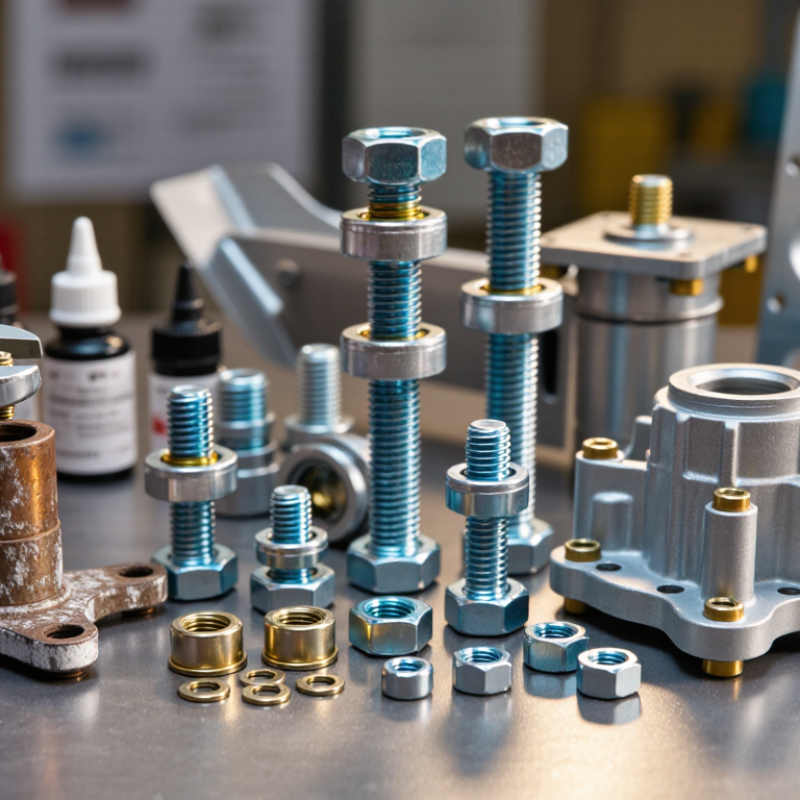
How to Choose Titanium Alloy Fasteners for Your Project

Define Loads, Temperature, and Corrosion Conditions for the Fastener

Start with the joint, not the alloy label. List the loads the fastener will actually see: steady tension, shear, vibration, or repeated starts and stops. A bracket carrying a motor, for example, may face fatigue even when its peak load seems modest. Note the required preload and the thickness and material of every clamped part. Titanium alloys have a lower elastic modulus than steel, so a same-sized fastener can stretch more under load. Torque readings also vary with thread and bearing-surface friction. Verify the tightening method against the design, and test a representative joint when failure would be costly. A tidy calculation can still miss a soft gasket or a flexible mounting plate.

Write down the full temperature range, including brief heat spikes and cold starts. Strength, creep resistance, and useful service limits depend on the specific titanium grade and exposure time; do not assume every alloy behaves alike. Then describe the corrosion environment precisely: salt spray, cleaning chemicals, trapped moisture, or deposits in a narrow gap. Titanium often resists corrosion well, but hot, concentrated chlorides in crevices deserve careful review. Also check for electrical contact with dissimilar metals in a wet environment, since galvanic effects can harm the less resistant material. Small details matter. If the conditions are uncertain, measure them at the joint location rather than relying on a room-level estimate.

Compare ASTM B348 Grade 2 (345 MPa) and Grade 5 (895 MPa) Strength

ASTM B348 Grade 2 and Grade 5 offer very different strength levels. Grade 2 has a minimum tensile strength of about 345 MPa, while Grade 5 reaches about 895 MPa. Grade 2 suits many lower-load applications where ductility and ease of forming matter. Grade 5, a titanium-aluminum-vanadium alloy, is a stronger choice when fasteners must carry higher loads or save weight without sacrificing strength. Stronger is not automatically better.

Check the actual load, temperature, vibration, and exposure conditions before choosing. A small bolt holding a lightly loaded cover may not need Grade 5. For a highly loaded joint, Grade 2 could deform sooner. Also confirm the finished fastener’s material condition and mechanical requirements: ASTM B348 covers titanium bars and billets, so it does not by itself specify every finished-fastener detail. The stated strengths are useful comparisons, not a substitute for checking the applicable product data. Details matter.

Tips: Match the grade to the joint, then verify the fastener specification and test data. Consider galling during assembly; titanium threads can seize, especially when dry. Try a sample joint and inspect it after tightening. I would not choose by strength alone—that can miss fit, installation, and service-life concerns.

Verify Fastener Dimensions and Mechanical Requirements Against ASTM F468

Treat ASTM F468 as a material and mechanical-property checkpoint, not a substitute for the project drawing. The specification covers nonferrous bolts, hex cap screws, and studs, with requirements that vary by alloy and size. Check the fastener’s nominal diameter, thread pitch, length, head dimensions, and thread class against the drawing and applicable dimensional standard. Small details matter. A burr on the first thread can disrupt assembly, even when the bolt looks correct.

Confirm the alloy designation and compare its required tensile and yield properties with the relevant ASTM F468 table. ASTM F606/F606M provides test methods for assessing fastener mechanical properties; request traceable test results when the application demands them. ASM Handbook data put Ti-6Al-4V density at approximately 4.43 g/cm³, a useful reference for checking expected component mass, not proof of strength. I would record the actual measured dimensions and lot identification before installation. A tidy certificate can still leave questions about a mismatched thread or an unclear test basis. That is worth checking twice.

Estimate Preload with T = KFd and Validate Torque for the Joint

The relation T = KFd gives a useful starting point for estimating fastener torque. Here, T is torque, K is the nut factor, F is target preload, and d is nominal fastener diameter. Keep units consistent; mixing millimeters and meters can distort the result. Small changes matter.

For a titanium alloy fastener, K is not a fixed material constant. Lubricant, surface finish, washer hardness, and thread condition can all change friction. A dry fastener may need a different torque from one with anti-seize, and applying lubricant without recalculating can create excessive preload. That can stretch the fastener or damage the joint. The formula is an estimate, not a guarantee.

Validate the torque on a representative joint whenever preload is critical. Use the same fastener lot, finish, lubricant, washer, and mating materials, then measure clamp load with suitable test equipment. Check that the target load stays below the fastener’s allowable limits and that the joint resists separation under service loads. Record the test conditions, because a torque value without them is hard to reproduce. I would also question any single K value taken from a table; real assemblies can behave differently, and that uncertainty deserves attention.

Assess Galling and Galvanic Corrosion at Titanium-to-Metal Interfaces

Titanium alloy fasteners can reduce weight and resist many corrosive environments, but their interfaces need careful attention. Under high clamp loads, titanium threads may gall as surfaces rub and transfer material. The risk rises with repeated assembly, dry threads, and rough or damaged contact surfaces. Small details matter. A nut that turns smoothly at first may still seize before reaching the required preload.

At titanium-to-metal interfaces, galvanic corrosion depends on the metals, moisture, and electrical contact. Salt spray or trapped condensation can make a joint more vulnerable, especially when a small titanium component is connected to a much larger, less noble surface. Titanium’s passive film helps, but scratches and crevices can change local conditions. A materials chart alone cannot predict every service environment.

Before selecting a fastener, identify the mating alloy and inspect whether water can collect around the joint. Consider compatible insulating washers or sleeves when electrical isolation is appropriate, and confirm that they can handle the load and temperature. For galling control, use a suitable lubricant or surface treatment, then verify torque and preload on representative hardware. Test the stack. Record the assembly sequence and inspect threads after trial installation. One limitation is that added coatings can alter friction, so a specification that looks safe on paper may need adjustment after testing.

FAQS

What should be checked before selecting a titanium fastener?

List the joint’s tension, shear, vibration, and repeated starts or stops. Note the preload, clamped-part thickness, and materials. A flexible plate can change the result.

How do Grade 2 and Grade 5 differ?

Grade 2 has a minimum tensile strength of about 345 MPa. Grade 5 reaches about 895 MPa and may suit more heavily loaded joints. Stronger is not always better.

Does the stronger grade always make the best choice?

No. A lightly loaded cover may not need Grade 5. Check the actual load, temperature, vibration, and corrosion exposure before choosing. I might be overlooking fit or service life if I compare strength alone.

What temperature and corrosion details should be recorded?

Record the full temperature range, including brief heat spikes and cold starts. Describe salt spray, cleaning chemicals, trapped moisture, and deposits in narrow gaps. Small details matter.

How can torque be estimated for a fastener?

Use T = KFd as a starting estimate. T is torque, K is the nut factor, F is target preload, and d is nominal diameter. Keep units consistent.

Why can the nut factor change?

Lubricant, surface finish, washer hardness, and thread condition affect friction. Dry threads and lubricated threads may need different torque values. One table value may not fit your assembly.

How should torque and preload be validated?

Test a representative joint using the same fastener lot, finish, lubricant, washer, and mating materials. Measure clamp load with suitable equipment, then record the conditions. A torque number alone is hard to repeat.

What assembly problem can occur with titanium threads?

Threads can gall or seize, especially when dry. Try a sample joint and inspect it after tightening. Anti-seize can also change preload, so the torque may need reassessment.

Conclusion

Choosing Titanium Alloy Fasteners begins with defining the loads, operating temperature, and exposure to moisture, chemicals, or other corrosive conditions. These factors help determine the required strength and environmental resistance. Grade 2 offers a balance of corrosion resistance and moderate strength, with a typical minimum tensile strength of about 345 MPa, while Grade 5 provides substantially higher strength, around 895 MPa, for more demanding loads. Confirm the selected material’s applicable specifications and verify fastener dimensions and mechanical requirements against ASTM F468.

For a preliminary preload estimate, use T = KFd, where T is torque, K is the nut factor, F is preload, and d is nominal diameter. Because friction and joint geometry affect the result, validate the torque for the actual assembly rather than relying on the estimate alone. Also assess galling during tightening and galvanic corrosion where titanium contacts other metals, and choose suitable surface treatments, lubrication, or isolation measures for the service environment.

Amelia

Amelia

Amelia is a marketing professional with a deep understanding of the company’s products and the needs of the people who use them. She works closely with colleagues across the business to turn product knowledge into clear, practical information, helping readers understand available solutions, their......