Choosing a reliable source for Titanium Fasteners in China takes more than comparing prices. Buyers need to understand what each supplier actually makes, how its products are checked, and whether its documentation matches the order. A titanium bolt can look flawless in a sample photo. The alloy grade, thread fit, and material traceability matter more.
This guide examines practical ways to assess Chinese suppliers, from manufacturing capabilities and quality-control records to customization, minimum order quantities, and lead times. It also explains which questions can help clarify a supplier’s experience with your required grades, dimensions, and application. Ask for relevant test reports and material certificates, then confirm that they identify the supplied batch. Details matter. A polished website alone cannot establish production quality, and a certificate should be checked against the product and order rather than accepted at face value.
Communication deserves a closer look, too. Clear drawings, written specifications, and agreed inspection criteria can prevent costly misunderstandings. Samples may help, but they cannot replace checks on repeat production. I would still want to verify important claims independently; no single checklist removes every risk. The following sections offer a grounded framework for comparing suppliers, spotting unanswered questions, and deciding when a factory visit or third-party inspection may be worthwhile. The aim is not to name one universal winner, but to help buyers make a more informed shortlist.
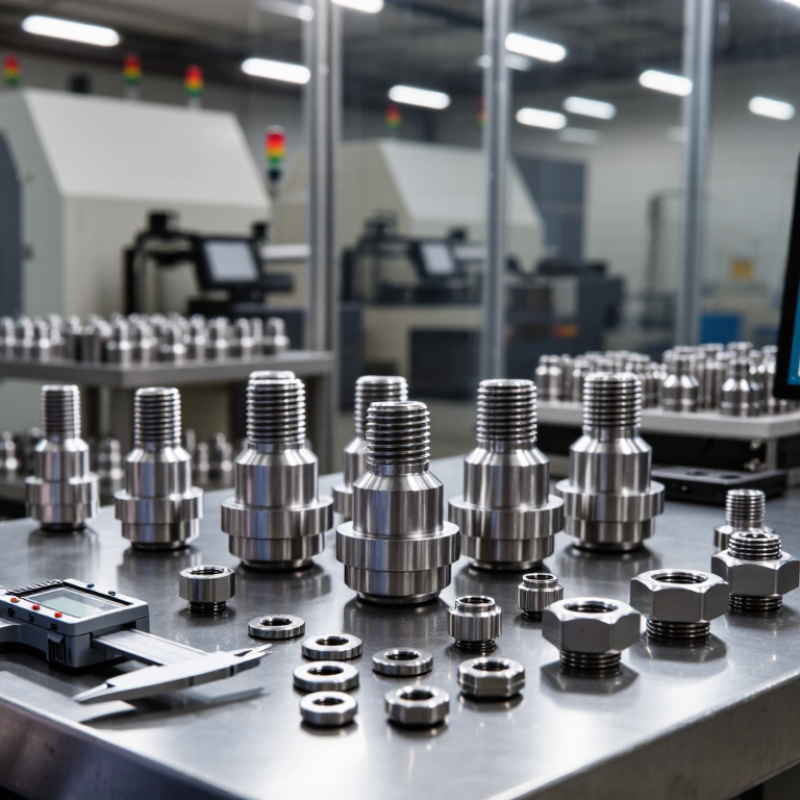
Titanium fasteners are bolts, screws, nuts, and studs made from commercially pure titanium or titanium alloys. They combine low weight with strong corrosion resistance, making them useful where steel may add too much mass or corrode in service. In practice, the alloy and finish matter: a fastener exposed to salt spray faces different demands from one inside a dry instrument housing.
Common uses include aircraft structures, marine equipment, chemical-processing systems, and medical devices. The USGS Mineral Commodity Summaries 2024 estimates global titanium sponge production at about 270,000 metric tons in 2023. That figure describes upstream material, not fastener output, but it shows the scale of the supply chain behind titanium products. For buyers, matching grade, dimensions, and traceable test records to the application is essential. Titanium can also gall during tightening, a detail that is easy to overlook.
Tips: Check the material certificate, thread fit, and installation guidance. For repeated assembly, test a sample joint first; results can vary with surface finish and lubrication.
Choosing a titanium fastener supplier in China takes more than comparing prices. Ask which titanium grade is offered and request a material test certificate linked to the production batch. Check that the certificate’s grade and heat number match the parts you receive. For a sample order, inspect thread fit, head dimensions, surface finish, and any signs of damage. Small details matter.
Ask how the supplier controls machining, inspection, and packaging. A useful answer should name specific checks, such as thread gauges and dimensional records, rather than simply promising “high quality.” Confirm whether inspection results can be shared before shipment. Clarify lead times, minimum quantities, and how out-of-spec parts are handled. I would still verify critical measurements independently; paperwork alone cannot confirm every part.
Tips: Send a drawing with tolerances and application details, then compare the supplier’s written response against it. Request a small sample batch before committing to larger volumes. Speak with a recent customer if possible, and ask about delivery consistency and issue resolution. A polished factory tour helps, but it is not enough. Recheck your assumptions.
China’s titanium fastener suppliers often fall into distinct profiles. Some established manufacturers concentrate on standard bolts, nuts, and washers for recurring industrial orders. Their strengths may include stable tooling, documented production steps, and consistent batch handling. Ask how they verify dimensions and track material lots. Details matter.
Specialist workshops may suit buyers needing short runs, custom dimensions, or machining from technical drawings. They can offer direct engineering communication, but production capacity and lead times may vary. Request sample parts, material certificates, and inspection records before approving a larger order. A drawing alone is not enough.
Export-oriented suppliers often have experience preparing packing lists, product specifications, and shipment documentation. Still, do not assume every supplier handles quality checks in the same way. I would not treat a polished catalog as proof of process control. Compare thread fit, surface finish, and dimensional reports across samples. A simple check with calipers can reveal a mismatch, though it cannot replace proper testing. Clear answers about grade, tolerances, and rejected parts are useful signs of a supplier’s working knowledge.
Density is one useful point of comparison when evaluating titanium fastener materials. Grades 2 and 7 are commercially pure titanium; Grades 5 and 23 are titanium-aluminum-vanadium alloys. Values are approximate and may vary slightly by specification.
When comparing titanium fastener suppliers in China, look beyond a polished catalog. Ask how each supplier controls material identity from incoming stock to packed order. A reliable process links heat or lot numbers to mill test certificates and inspection records. Small details matter. Check that reports identify the actual grade, dimensions, and test methods—not just a generic product description.
Review the supplier’s manufacturing capability against your drawing and application. Ask about available grades, thread production, dimensional tolerances, surface finishing, and capacity for repeat orders. Request samples made using the same process proposed for production. Measure thread fit and critical dimensions, then review tensile or other test results when the application requires them. A sample can look excellent while revealing little about batch consistency. This comparison is not perfectly tidy.
Certifications can support a quality assessment, but they do not replace evidence. Verify that a certificate is current, covers the relevant facility and activity, and matches the work being quoted. Ask for inspection plans, calibration records, nonconformance procedures, and a recent batch’s traceability documents. If a claim is unclear, request clarification in writing. Independent testing may be sensible for critical parts or unfamiliar suppliers. A careful supplier should explain limits as well as strengths, even when that makes the quotation less impressive.
Choosing a titanium fastener supplier in China starts with your project, not a catalog. Define the grade, dimensions, thread type, load, temperature, and operating environment before requesting prices. A bolt used near salt spray may need different material and surface considerations than one inside a dry machine. Small details matter. Ask whether the supplier can provide material certificates, batch traceability, and inspection records tied to the parts you will receive. Documents are useful, but they should match the actual production lot.
Request samples with the same finish and process planned for your order. Check thread fit with your mating parts, measure critical dimensions, and inspect for burrs or uneven coating. For safety-critical or high-load applications, agree on suitable mechanical tests and acceptance criteria with a qualified engineer. Compare lead times, minimum order quantities, packaging, and how the supplier handles defects—not only unit price. Ask who performs inspection and whether production is in-house or subcontracted. Clear answers are a good sign. Vague promises are not. I would also test a small batch before committing to a large run; it adds time, and may feel overly cautious, but drawings alone cannot reveal every production issue. A reliable supplier should discuss limitations openly and respond with specific, verifiable information.
| Evaluation Area | What to Specify or Verify | Useful Evidence to Request | Suggested Weight |
|---|---|---|---|
| Material grade | State the required titanium grade and condition. Commercially pure Grade 2 and Ti-6Al-4V Grade 5 are common choices, but suitability depends on strength, corrosion, temperature, and application requirements. | Material test report identifying the grade, heat or lot number, chemical composition, and applicable material specification. Confirm that the report matches the supplied fasteners. | 20% |
| Product standard and drawing | Define the fastener type, thread system, nominal diameter, pitch, length, head style, tolerances, and any required standard. Do not assume a stainless-steel fastener standard automatically applies to titanium. | Approved drawing or purchase specification; written confirmation of standard edition, dimensions, thread tolerances, and any deviations. | 15% |
| Mechanical properties | Set the required tensile, yield, hardness, or other properties for the selected grade, product form, size, and condition. Values can vary with material and manufacturing route. | Lot-specific test results from an agreed test method, plus details of sampling and acceptance criteria. Request independent testing when required by the project risk level. | 15% |
| Manufacturing capability | Check experience with the requested dimensions, thread type, production volume, and operations such as machining, forming, or rolling. Confirm capability for any special geometry. | Process description, sample parts, dimensional inspection records, and confirmation of which operations are performed in-house or subcontracted. | 10% |
| Quality management | Match quality-system requirements to the project. ISO 9001 certification may be relevant, but it does not by itself verify a specific fastener’s material or performance. | Current certificate and scope, documented inspection process, nonconformance procedure, and lot-level inspection records. Verify certificates with the issuing body where appropriate. | 10% |
| Traceability | Require traceability from finished fasteners to the material heat or lot, especially for safety-critical, regulated, or high-reliability applications. | Sample certificate package showing matching lot identifiers on product, packaging, inspection records, and material documentation. | 10% |
| Corrosion and surface condition | Specify surface finish, cleanliness, passivation or other treatment only when required by the design or applicable specification. Confirm compatibility with the service environment and mating materials. | Written process details, finish acceptance criteria, and test reports if corrosion or surface testing is part of the project specification. | 8% |
| Sampling and first-article approval | Agree on sample quantity, inspection scope, acceptance criteria, and approval before production release for new or critical designs. | First-article inspection report covering agreed dimensions, threads, material identification, and required performance tests. | 5% |
| Capacity and delivery | Compare quoted lead time, minimum order quantity, production capacity, and replenishment plan against the project schedule. Confirm whether lead time starts after drawing and sample approval. | Written quotation with quantity breaks, production lead time, shipment terms, packaging details, and a schedule for the requested order volume. | 4% |
| Commercial and export readiness | Clarify currency, payment terms, Incoterms® rule and named place, export packaging, shipping method, and responsibility for import documentation. | Complete quotation and draft shipping-document list; confirm that product descriptions and declared specifications match the order documents. | 3% |
Suggested use: The percentage weights are a starting-point evaluation model, not a supplier ranking. Score each candidate from 1 (does not meet the requirement) to 5 (fully meets it), then compare weighted scores. For critical applications, make material verification, traceability, and required testing pass/fail conditions rather than trading them off against price.
Match the stated grade and heat number to the parts and production batch. Small details matter.
Check thread fit, head dimensions, surface finish, and visible damage. Use a gauge if available.
Ask about thread gauges, dimensional records, machining controls, and inspection steps. Vague promises are not enough.
Yes. Request samples made with the proposed production process, then compare them with your drawing.
Include tolerances and application details. Compare the supplier’s written response against each requirement.
No. Check that each certificate is current and covers the facility and work being quoted. Paperwork has limits.
Request mill test certificates, inspection records, and heat or lot number links. I may still overvalue tidy paperwork.
Consider it for critical parts or unfamiliar suppliers. Verify key measurements yourself when possible.
Ask about available grades, tolerances, repeat-order capacity, lead times, minimum quantities, and handling of out-of-spec parts. Delivery matters, too.
Titanium Fasteners are valued for their low weight, strength, and resistance to corrosion, making them suitable for applications in industries such as aerospace, marine, chemical processing, and medical equipment. Choosing a supplier in China requires more than comparing prices: buyers should assess product range, material traceability, manufacturing processes, quality controls, production capacity, and experience with the required fastener types and specifications.
A careful comparison of suppliers should also consider relevant certifications, inspection procedures, customization options, lead times, and communication quality. Rather than relying on a supplier profile alone, request documentation and confirm that its capabilities match your project’s technical and delivery requirements. The best choice is one that offers consistent quality, clear support, and dependable production while fitting your budget and intended application.